
 By admin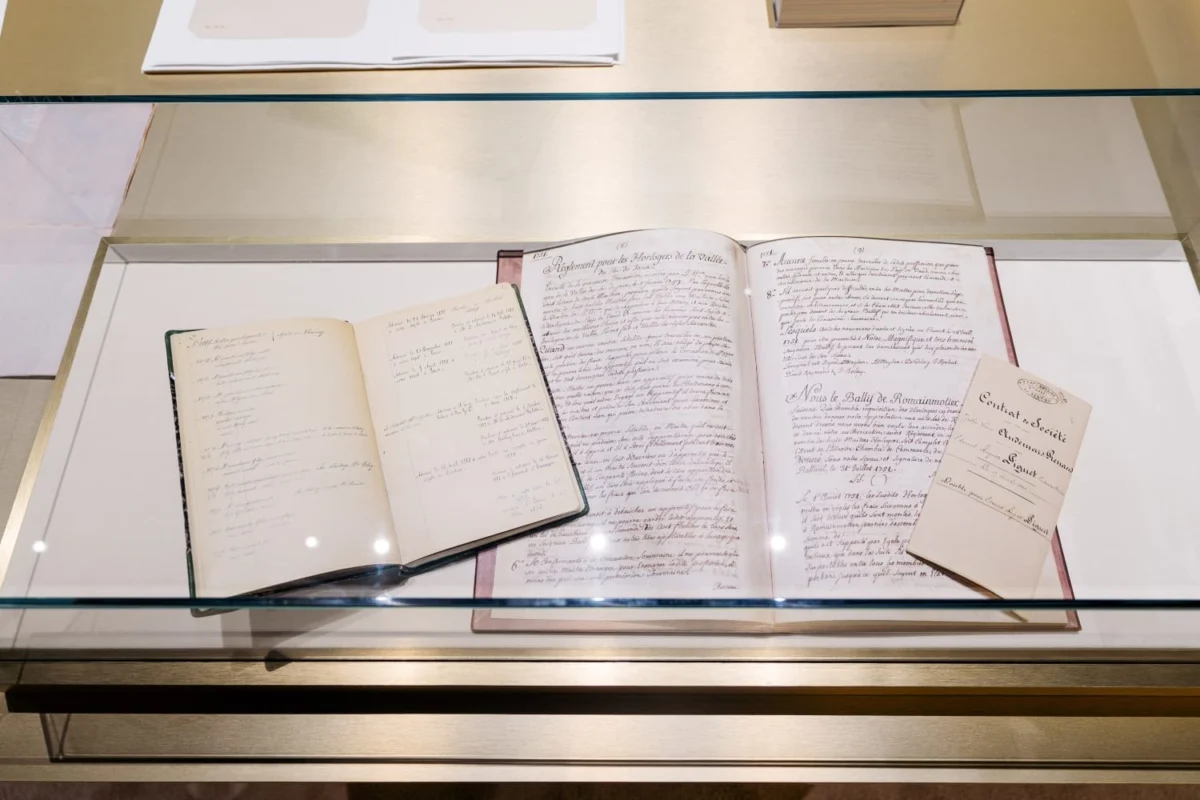
The Swiss prestige watchmaker Audemars Piguet has officially inaugurated a landmark public exhibition in Singapore, marking a significant milestone in the Manufacture’s 151-year history. Titled Audemars Piguet: Perspectives on Time, the exhibition is hosted at the Gallery Theatre within the National Museum of Singapore from September 10 to 13, 2026. This bespoke showcase serves as a comprehensive retrospective of the brand’s journey from its 19th-century origins in the Vallée de Joux to its current status as a global leader in contemporary haute horlogerie. By bringing together rare historical artifacts from the Audemars Piguet Museum in Le Brassus and modern technical innovations, the event offers a rare educational opportunity for the Southeast Asian horological community.

A Legacy Rooted in the Vallée de Joux
The narrative of Audemars Piguet is inextricably linked to the rugged geography of the Jura Mountains. Founded in 1875 by Jules Louis Audemars and Edward Auguste Piguet, the Manufacture remains one of the few global luxury watch brands still in the hands of its founding families. This independence has allowed the brand to maintain a singular focus on complex mechanisms, a tradition that is central to the Singapore exhibition.
The exhibition is structured into four distinct thematic chapters, each designed to provide a deep dive into a specific facet of watchmaking excellence. This chronological and thematic approach allows visitors to trace the evolution of the brand’s design language and engineering prowess. The decision to host this exhibition in Singapore underscores the city-state’s importance as a primary hub for luxury watch collecting. Market data consistently ranks Singapore among the top five global markets for Swiss watch exports by value, characterized by a highly sophisticated collector base that prioritizes technical depth and historical provenance.

Chapter 1: Looking Back and Beyond
The first segment of the exhibition, Looking Back and Beyond, establishes the historical foundation of the Manufacture. It highlights the pivotal partnership between Audemars and Piguet, who specialized in the production of complicated movements during a period when the Swiss industry was still largely decentralized.
A centerpiece of this chapter is the original 1972 Royal Oak. Designed by the legendary Gérald Genta, the Royal Oak was a radical departure from the aesthetic norms of the early 1970s. At a time when luxury watches were synonymous with gold and small diameters, Audemars Piguet introduced a high-end sports watch crafted from stainless steel, featuring an integrated bracelet and a visible octagonal bezel secured by hexagonal screws. This "Series A" model on display represents the genesis of the modern luxury sports watch category.

Contrasting this industrial revolution is the 1987 Grande Complication pocket watch. Produced during the height of the "Quartz Crisis"—a period when traditional mechanical watchmaking faced potential extinction due to the rise of inexpensive electronic timepieces—this watch was a defiant statement of the Manufacture’s commitment to mechanical complexity. Additionally, the chapter features the 1991 Coin Watch, an ultra-thin masterpiece concealed within a 1904 US$20 gold coin, demonstrating the brand’s ability to merge whimsical design with serious engineering.
Chapter 2: Guided by the Cosmos and the Return of the Grosse Pièce
The second chapter, Guided by the Cosmos, explores the historical link between astronomy and timekeeping. For centuries, watchmakers in the Vallée de Joux looked to the night sky to calibrate their instruments, leading to the development of perpetual calendars, moon phase indicators, and equation of time complications.

The undisputed highlight of this section—and the entire exhibition—is the 1921 "Grosse Pièce." This ultra-complicated pocket watch is regarded as the most complex timepiece ever produced by Audemars Piguet in the 20th century. It features 19 distinct complications, including a tourbillon, a perpetual calendar, and a celestial dial that accurately depicts the constellations of the London night sky using 315 hand-applied stars.
The "Grosse Pièce" carries significant historical and market weight. After circulating in private collections for over a century, the watch was reacquired by Audemars Piguet at a Sotheby’s New York auction in December 2025. The Manufacture paid a record-breaking US$7,736,000 to bring the piece back to its heritage collection, coinciding with the brand’s 150th anniversary. Its appearance in Singapore marks one of the first times the general public has been able to view the watch since its historic repatriation.

Chapter 3: The Beauty Within and the Art of Openworking
The third chapter, The Beauty Within, focuses on the meticulous craft of skeletonization, or "openworking." This technique involves removing as much metal as possible from the movement’s bridges and plates without compromising the watch’s structural integrity or chronometric performance.
The exhibition traces this art form back to its roots with a gem-set pocket watch from circa 1770, signed by Lépine Paris. This piece illustrates the classical, baroque style of skeletonization that preceded the founding of the Manufacture. The narrative then shifts to the 20th century with the 1976 openworked self-winding wristwatch, which utilized the legendary Calibre 2120SQ. At the time, this was one of the thinnest self-winding movements in the world, and the openworking process added a layer of visual complexity that required hundreds of hours of hand-finishing.

The chapter concludes with contemporary examples, such as the 2017 Royal Oak Tourbillon Chronograph. These modern pieces demonstrate how Audemars Piguet has evolved openworking from a decorative tradition into an architectural design language, utilizing modern materials and geometric patterns to appeal to a new generation of collectors.
Chapter 4: Giving Time a Voice
The final chapter, Giving Time a Voice, is dedicated to the acoustic complications that have defined the Manufacture since 1875. Chiming watches, such as minute repeaters and grande sonneries, are widely considered the pinnacle of horological difficulty because they require the watchmaker to act as both an engineer and a luthier, tuning the gongs and hammers to produce a clear, melodic tone.

Featured prominently is a circa 1895 Grande Sonnerie pocket watch, a mechanical marvel that automatically strikes the hours and quarters. Another significant exhibit is a 1921 minute repeater commissioned for an executive at Tiffany & Co. Measuring just 15.8 mm in diameter, it remains one of the smallest five-minute repeaters ever produced, showcasing the brand’s historical mastery of miniaturization. The journey ends with the 1996 Grand Sonnerie wristwatch (Model 25750), a piece that successfully translated the grand acoustic traditions of the 19th century into a wearable, modern format.
Strategic Implications and Market Analysis
The Perspectives on Time exhibition is more than a historical retrospective; it is a strategic effort to deepen brand equity in an increasingly competitive global market. Industry analysts suggest that by emphasizing "manufacture" status and historical depth, Audemars Piguet is reinforcing its position within the "Big Three" of Swiss watchmaking (alongside Patek Philippe and Vacheron Constantin).

The timing of the exhibition is particularly relevant. Following the 150th-anniversary celebrations in 2025, the brand is leveraging its heritage to navigate a luxury market that is shifting toward "educational luxury." Modern consumers are increasingly interested in the "why" behind a product—the craftsmanship, the provenance, and the technical innovation. By providing free public access to such rare pieces as the "Grosse Pièce," Audemars Piguet is cultivating a long-term relationship with both current owners and future enthusiasts.
Furthermore, the exhibition highlights the brand’s resilience. By showcasing complicated watches produced during the Quartz Crisis and the Great Depression, the Manufacture sends a message of stability and enduring value to the collector community. This focus on heritage often translates to strong performance in the secondary and auction markets, where vintage Audemars Piguet pieces continue to command premium prices.

Visitor Information and Public Engagement
Audemars Piguet: Perspectives on Time is open to the public at The Gallery Theatre, National Museum of Singapore, until September 13, 2026. The exhibition operates daily from 10:30 am to 6:00 pm. To ensure an intimate and educational experience, the Manufacture has organized the viewing into 30-minute sessions.
While admission is free of charge, the brand has implemented a mandatory advance registration system via a dedicated digital portal to manage the high anticipated demand. Walk-in visitors are admitted only on a space-available basis. This structured approach reflects the exclusive nature of the timepieces on display and ensures that each visitor has the opportunity to engage with the curatorial narrative and the technical details of the 151-year-old legacy.

Through this exhibition, Audemars Piguet successfully bridges the gap between the isolated workshops of the Swiss Alps and the vibrant, cosmopolitan energy of Singapore, proving that while the methods of measuring time may evolve, the human fascination with horological artistry remains timeless.
