
 By Nila Kartika Wati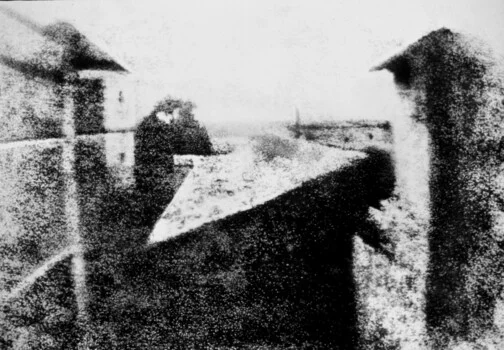
The earliest surviving camera photograph of any continent is a grainy rooftop view that Nicéphore Niépce recorded in the Burgundy countryside in 1826 or 1827, a monumental achievement that required at least many hours of daylight and possibly several days to burn onto a sheet of pewter. This singular image marked the genesis of a new era of visual documentation, but it would be years before other landmasses would capture their own first glimpses through a lens. As the daguerreotype process spread rapidly out of Paris after its public announcement in 1839, cameras reached North America within weeks, swiftly followed by Africa, Asia, and South America, then Australia, and finally, roughly sixty years later, the remote ice of Antarctica.
The quest to identify the "first photograph" of each continent is fraught with challenges, often leading to a recurring problem: on most continents, the true inaugural image is lost to time. Early photographic plates were frequently polished down and reused, misplaced in forgotten family attics, or copied into engravings before being discarded. Consequently, what survives today is often the second, third, or even later attempt, or a print pulled from an original plate that no longer exists. This historical ambiguity forces a dual inquiry: what was genuinely the first photograph made on each continent, and what is the earliest one still accessible for viewing today? These two answers, as history reveals, almost never point to the same picture, underscoring the fragility of early photographic records and the meticulous work of historians and archivists in piecing together this visual heritage.
Europe: The Dawn of Photography and a Multi-Day Exposure
The undisputed birthplace of photography, Europe holds the record for the world’s oldest surviving camera photograph. Nicéphore Niépce, a French inventor, pioneered a process he termed heliography, or "sun writing." His seminal work, "View from the Window at Le Gras," captured between 1826 and 1827, is a testament to his groundbreaking experimentation. The surviving proof is a pewter plate measuring approximately 6.4 by 8 inches, coated with bitumen of Judea, a light-sensitive asphalt. Niépce placed this plate inside a camera obscura and directed it out an upper window of his family estate, Le Gras, located in Saint-Loup-de-Varennes near Chalon-sur-Saône.
The chemical reaction of heliography was agonizingly slow. Bright areas in the scene caused the bitumen to harden, while shaded areas remained soluble and were later washed away in a bath of lavender oil and white petroleum. The exposure time was extraordinarily long, estimated by the Harry Ransom Center to be at least many hours, and possibly even several days. This extended duration is visibly evident in the photograph, where buildings on both sides of the courtyard appear illuminated from opposite directions, a tell-tale sign of the sun’s movement across the sky during the lengthy exposure.
After its creation, the plate dropped out of public sight for nearly half a century. It was meticulously tracked down by the renowned photography historian Helmut Gernsheim in 1952, who then had it photographed, producing the retouched reproduction that most people are familiar with today. The original plate is now a cherished artifact, safeguarded by the Harry Ransom Center at the University of Texas at Austin. Its significance extends beyond Europe, as it stands as the oldest surviving camera photograph anywhere in the world, making it the foundational point from which every other continent’s photographic story subsequently begins. Niépce’s relentless pursuit, born from the scientific curiosity of the early 19th century, laid the groundwork for a revolution in visual representation that would profoundly alter human history.
The Daguerreotype Revolution: A Global Sprint After 1839
The landscape of photography was dramatically transformed with the public announcement of the daguerreotype process in August 1839 by Louis Daguerre, following earlier work with Niépce. This new method, offering clearer, more detailed images with significantly shorter exposure times (though still minutes-long), ignited a global fascination. Its recipe, shared freely by the French government, became a catalyst for photography’s rapid dissemination, initiating a veritable sprint across the continents.
North America: Weeks to Cross the Atlantic
The daguerreotype’s journey across the Atlantic was swift. Within weeks of its Parisian announcement, the process reached North America. The first daguerreotype made in the United States is generally attributed to D.W. Seager, who captured an image of St. Paul’s Church in New York in September 1839. Unfortunately, this pioneering plate, along with any detailed visual record of its appearance beyond written descriptions, has been lost to history.
However, the oldest American photograph still available for examination was created just a few weeks later in Philadelphia. Joseph Saxton, working at the United States Mint, ingeniously assembled a camera from a cigar box and a spectacle lens. From an upper window, he aimed this makeshift device across the rooftops, capturing a view of Central High School. The resulting daguerreotype is remarkably tiny, barely two inches square, and possesses a soft focus, yet its physical existence is undeniable. It is currently preserved by the Historical Society of Pennsylvania. Its exact date is debated, falling between late September and October 16, 1839. That same autumn, mere blocks away in the yard behind his family’s lamp business, Robert Cornelius produced a wide-eyed self-portrait. This image is often hailed as the first photographic self-portrait, highlighting Philadelphia’s pivotal role in the early adoption and innovation of photography in America. The rapid embrace of the daguerreotype in the U.S. reflected a national eagerness for technological advancement and a burgeoning culture of innovation.
South America: Imperial Enthusiasm and an Independent Revelation
South America quickly joined the photographic revolution. On January 17, 1840, a French chaplain named Louis Comte set up his daguerreotype equipment on the waterfront of Rio de Janeiro. In less than nine minutes, he produced an image of the Largo do Paço so remarkably detailed that a local newspaper marvelled it looked "drawn by the hand of nature." Just three days later, Comte repeated his demonstration for the fourteen-year-old Emperor Pedro II, who was instantly captivated. Pedro II became a lifelong enthusiast, an obsessive collector, and an active practitioner of photography, significantly fostering its development in Brazil. Despite its historical importance, Comte’s initial Brazilian plate does not survive. The identity of the earliest camera photograph of the continent that is still viewable remains a subject of ongoing historical research, a testament to the complexities of early photographic documentation.
Adding a unique twist to South America’s photographic narrative is the story of Hercule Florence, a French émigré residing in Campinas, Brazil. Years before Daguerre’s public announcement, Florence was already experimenting with printing images using silver salts and light, and notably, he independently coined the term "photographie" for his process. His surviving 1833 print of pharmacy labels is described by the Instituto Moreira Salles as the oldest surviving photographic record on the American continent. However, this is a contact print of flat artwork, not a camera view of the world. While it doesn’t resolve the "first camera photograph of South America" question, it beautifully complicates it, showcasing the parallel scientific inquiries into light-sensitive materials occurring globally and Florence’s isolated but equally significant contributions to the medium’s nomenclature and technology.
Asia: Echoes of Lost Plates and Monumental Discoveries
Asia’s journey into photography commenced almost as early as North America’s, yet many of its initial photographic records are equally elusive. In late 1839 and 1840, French travelers, equipped with daguerreotype apparatus, ventured into the Ottoman Middle East, exposing plates in historically significant locations such as Jerusalem, Baalbek, and along the Levantine coast – all geographically part of Asia. Regrettably, these original plates are lost, their existence preserved only through aquatint engravings copied from them for a lavish Parisian publication known as "Excursions Daguerriennes." These engravings offer tantalizing glimpses of what was captured, but lack the direct authenticity of the original photographic plate.
The earliest surviving actual photographs of Asia emerged a few years later, with two prominent contenders. Joseph-Philibert Girault de Prangey embarked on a remarkable three-year expedition beginning in 1842, during which he created close to a thousand daguerreotypes across Greece, Egypt, and the Levant, reaching Jerusalem in 1844. The Metropolitan Museum of Art regards his plates as the earliest surviving photographs of Greece, Palestine, Syria, and Turkey. These invaluable historical artifacts came to light only in the 1920s when they were discovered stacked in the attic of his estate. Simultaneously, in East Asia, customs official Jules Itier produced over forty daguerreotypes of Macau and Canton in 1844, which stand as the earliest preserved photographs of China. Most of these are now held by the Musée français de la photographie. Itier’s photographic expeditions also extended to India in 1842 and 1843, further illustrating the complexities of pinpointing a single "first photograph of Asia" given the continent’s vastness and the multiple early photographic incursions. The European fascination with the "Orient" spurred much of this early photographic documentation, providing invaluable records of ancient sites and cultures.
Africa: Secondhand Views and Enduring Monuments
Africa, too, saw the daguerreotype arrive mere weeks after its publication. The first photographs taken on the continent were daguerreotypes of Egypt, made in November 1839. The painter Horace Vernet and his nephew Frédéric Goupil-Fesquet captured plates in Alexandria, including a view of the exterior of Muhammad Ali’s harem, while other French travelers photographed the iconic pyramids at Giza around the same period. However, like many of their counterparts in Asia, none of these original plates have survived. Their existence is known predominantly through the engravings meticulously created from them for "Excursions Daguerriennes." This means that the very first photographic images of the African continent reach us secondhand, reinterpreted and redrawn by an engraver’s hand, losing the directness of the photographic original.
For an actual photograph of Africa that has survived to this day, the historical trail once again leads to Joseph-Philibert Girault de Prangey. His Egyptian daguerreotypes, captured during his extensive 1842 expedition, are counted among the earliest surviving images of the country’s ancient monuments. These images offer a direct, unmediated view of these historical sites, providing crucial visual evidence from the mid-19th century. Sub-Saharan Africa entered the photographic frame separately and somewhat later. Jules Itier had exposed plates in Senegal in the early 1840s, and professional photography studios had reached the Cape of Good Hope by the mid-decade. Thus, Africa’s photographic record, much like its vast and diverse geography, boasts more than one starting point, reflecting the varied paths of exploration and colonization that carried the camera’s influence across the continent.
Australia: Lost Streetscapes and the Rise of Portraiture
Australia’s photographic debut is also marked by a "lost first." In 1841, Augustin Lucas, a visiting ship’s captain, is generally credited with taking Australia’s first photograph – a daguerreotype looking down Bridge Street in Sydney. Unfortunately, no copy of this image is known to exist today. The earliest surviving Australian photograph is attributed to George Goodman, who holds the distinction of being the colony’s first professional photographer. Goodman arrived in 1842, possessing the exclusive right to operate the daguerreotype process in the British colonies, and promptly opened his business at Sydney’s Royal Hotel that same year.
Goodman’s enduring contribution is a portrait of the surgeon William Bland, dated by the State Library of New South Wales to sometime between December 1844 and January 1845. This small plate, held by the State Library of New South Wales, represents the oldest Australian photograph that can still be viewed under glass. Significantly, it is a portrait rather than a landscape. This shift reflects a crucial development in the early commercialization of photography: once the medium turned professional, it quickly pivoted towards portraiture, a service for which people were willing to pay. The demand for personal likenesses rapidly overshadowed the pursuit of landscapes or street scenes, establishing portrait photography as a cornerstone of the burgeoning industry.
Antarctica: A Continent Awaiting the Camera’s Arrival
Antarctica, the last continent to be extensively explored, uniquely breaks the pattern of "lost firsts." This is primarily because it had no permanent residents and very few visitors until photography was already a well-established medium. The first sustained photographic documentation of the Antarctic region occurred during the Belgian Antarctic Expedition aboard the ship Belgica, whose crew made history by becoming the first people to endure a winter within the Antarctic Circle after their vessel became trapped in the pack ice in 1898.
The expedition’s surgeon, an American named Frederick Cook, assumed the role of photographer. His lens captured the stark beauty of the peninsula, the imposing icebergs, the unique wildlife of penguins, and the trapped ship itself. Cook’s plates are among the earliest surviving photographs of Antarctica, offering an invaluable visual record of this pioneering expedition. His most famous frame is a moonlit exposure of the Belgica, a dramatic image captured over an approximately ninety-minute exposure in temperatures plunging to nearly forty degrees below zero.
The following year, Carsten Borchgrevink’s Southern Cross expedition further contributed to Antarctica’s photographic record, becoming the first to winter on the Antarctic mainland at Cape Adare, with photographs taken by Louis Bernacchi. Stripping away the complex chemistry and cumbersome equipment of the era, these polar plates captured subjects that remain central to modern landscape and cityscape photography: expansive horizons, human-made structures against nature’s grandeur, and faces braving extreme weather. What truly sets Antarctica apart is that no one arrived early enough to lose the first photographic attempts. Cook’s plates, unlike Comte’s lost Rio views or the vanished pyramids of 1839, are still meticulously preserved in archives, such as the Library of Congress. While the specific "first exposure" made on the continent itself has not been definitively established, and the Belgica spent its winter locked in ice rather than ashore, the honest claim is that Antarctica is the continent with no famous lost first, because the camera arrived alongside the very first expeditions that stayed, ensuring its visual history was documented from the outset.
The Enduring Legacy: From a Window to the World’s Extremes
Lining up the photographic milestones across the seven continents reveals a compelling timeline that narrates the story of photographic technology escaping its European origins. From Niépce’s single, pioneering decade of experiments in Burgundy, the medium exploded into a two-year sprint between 1839 and 1840, placing cameras on four continents almost simultaneously. This initial rapid expansion was then followed by a slower, deliberate drift toward the Earth’s poles, a journey that did not conclude until the last continent, Antarctica, had been thoroughly photographed.
The invention of photography fundamentally transformed humanity’s relationship with documentation, history, and perception. From cumbersome, multi-day exposures on pewter to relatively faster daguerreotypes and the subsequent development of more portable and reproducible methods like calotypes and wet collodion, the technology continuously evolved. These early images, whether lost or preserved, represent more than just technical achievements; they are invaluable historical records, capturing moments, landscapes, and faces that would otherwise be forever consigned to memory or written accounts.
The challenges of preserving these delicate early photographic materials—from the tendency to polish down and reuse metal plates to the fragility of paper prints—highlight the ongoing efforts of archives and museums worldwide. These institutions play a critical role in safeguarding this visual heritage, ensuring that these tangible links to the past remain accessible for future generations. Photography’s journey, which began with a solitary window view in France, expanded to encompass the entire globe, culminating in the capture of a continent defined by nothing outside the glass but ice, forever changing how we see and remember our world.
