
 By admin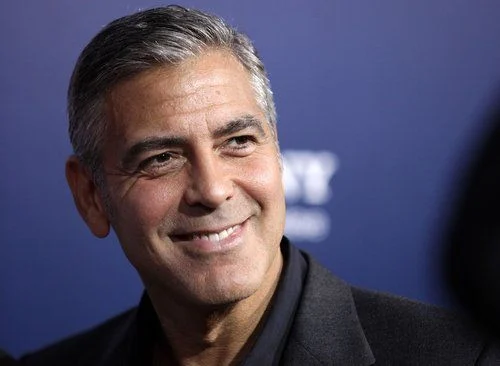
George Clooney, the celebrated 65-year-old American actor, filmmaker, and producer, transformed one of the most significant accolades of his distinguished career into a profound and impassioned defense of storytelling, free expression, and the critical role of empathy in a divided world. On September 2, 2026, during the star-studded opening ceremony of the 83rd Venice International Film Festival, Clooney was bestowed with the prestigious Golden Lion for Lifetime Achievement, an honor recognizing his expansive contributions across acting, directing, producing, and his notable humanitarian endeavors. His acceptance speech, a blend of trademark humor and heartfelt sincerity, transcended a mere acknowledgment of personal success, evolving into a poignant commentary on artistic responsibility in contemporary society.
The Golden Lion: A Symbol of Cinematic Excellence
The Golden Lion for Lifetime Achievement stands as one of the Venice Film Festival’s most esteemed commendations, celebrating individuals whose careers have left an indelible mark on global cinema. Instituted in 1970, this award places its recipients in an exclusive pantheon of cinematic legends, including directors, actors, and other luminaries who have shaped the art form. Previous recipients of this revered honor include titans such as Akira Kurosawa, Sophia Loren, Al Pacino, and Catherine Deneuve, underscoring the profound significance of Clooney’s inclusion. The decision to honor Clooney was made by La Biennale’s board, following a recommendation from the festival’s artistic director, Alberto Barbera, who cited Clooney’s multifaceted talent as an actor, director, and producer as the primary criteria. Barbera’s recommendation highlighted Clooney’s consistent quality, his fearless approach to challenging narratives, and his ability to resonate with audiences worldwide across diverse genres.
Clooney, true to form, approached the solemnity of the occasion with a characteristic lightness. He playfully quipped that a lifetime achievement award typically elicits two primary reactions: profound gratitude for the recognition and a nagging concern that the organizers might possess undisclosed information regarding one’s health. This self-deprecating wit, a hallmark of Clooney’s public persona, underscored his humility despite the monumental nature of the award. However, beneath the humor, the gravitas of the honor was unmistakable, signaling a comprehensive appreciation for a career spanning nearly five decades.
A Deep Connection to the Lido
Clooney’s relationship with the Venice Film Festival, and indeed the city itself, runs particularly deep, making the Lido an exceptionally fitting venue for this career retrospective. His first appearance at the festival dates back to 1998 with Steven Soderbergh’s critically acclaimed crime thriller, Out of Sight, a film that cemented his status as a leading man with undeniable charisma. Over the subsequent decades, Venice has hosted numerous projects showcasing Clooney’s evolving artistry, including Good Night, and Good Luck (2005), Michael Clayton (2007), Burn After Reading (2008), Gravity (2013), and more recently, Noah Baumbach’s Jay Kelly (2025). This sustained engagement with one of the "Big Three" film festivals (alongside Cannes and Berlin) highlights Venice’s pivotal role in his professional journey, often serving as a launchpad for his most ambitious and critically lauded works. Beyond professional ties, Venice holds immense personal significance for Clooney; it was here, in 2014, that he married the international human rights lawyer, Amal Alamuddin, transforming the historic city into the backdrop for one of the most cherished moments of his life. Prior to accepting the Golden Lion, Clooney affectionately referred to Venice as his "favorite festival," emphasizing the profound personal and professional connections that bind him to this unique cinematic hub.
A Speech for the Ages: Defending Storytelling and Empathy
Clooney’s acceptance speech, initially laced with his familiar charm, quickly pivoted to a more profound and urgent message, underscoring the responsibility of artists in challenging times. He reserved some of his most personal and heartfelt comments for his family, expressing an immeasurable love for his wife, Amal, and profound pride in her accomplishments. The couple are parents to twins, Ella and Alexander, and Clooney wove humor into this tribute as well, playfully suggesting that his children are perhaps the only two individuals who genuinely believed he was a good Batman – a self-referential jest about his much-discussed role in 1997’s Batman & Robin, a film he has frequently satirized over the years. This blend of personal warmth and self-deprecating humor resonated deeply with the audience in the Sala Grande.
However, the speech soon moved beyond personal reflections to address pressing societal concerns. Clooney issued a stark warning against the insidious use of fear to sow division within societies, arguing that journalists, filmmakers, writers, actors, and musicians bear a crucial responsibility in confronting simplistic narratives and fostering a more nuanced understanding of the human condition. His central message posited that while storytelling might not offer direct solutions to complex political or economic challenges, its unparalleled power lies in its capacity to cultivate empathy. By immersing audiences in lives and experiences vastly different from their own, art can bridge divides, challenge prejudices, and remind people of their shared humanity.
Clooney articulated that stories become inherently threatening to those who rely on fear to maintain control, precisely because they encourage audiences to perceive humanity in strangers. This was a thinly veiled, yet potent, critique of authoritarian tendencies and the erosion of democratic discourse in various parts of the world. He emphasized that the cultural landscape plays a vital role in the health of democratic societies, and that artists and journalists are frontline workers in preserving intellectual freedom and critical thought. Rather than overstating the power of cinema to solve global crises, Clooney humbly acknowledged its limitations, asserting that its true strength emanates from its unique ability to transport audiences into another person’s subjective reality, fostering understanding and connection.
A Career Aligned with Conviction
Clooney’s impassioned defense of storytelling was not merely an abstract philosophical statement; it was a philosophy demonstrably woven throughout his distinguished filmmaking career. As both a director and producer, he has consistently gravitated towards narratives that explore themes of journalism, politics, institutional power, and personal responsibility. Perhaps the most illustrative example of this thematic consistency is his 2005 directorial effort, Good Night, and Good Luck. This black-and-white historical drama meticulously chronicled journalist Edward R. Murrow’s courageous confrontation with Senator Joseph McCarthy during the McCarthy era, a powerful testament to the importance of journalistic integrity and free speech. The film not only premiered at the Venice Film Festival but also garnered six Academy Award nominations, including Best Picture and Best Director, showcasing Clooney’s commitment to substantive and socially relevant cinema. Other films like Michael Clayton, which delved into corporate malfeasance and moral compromise, further exemplify his dedication to stories that provoke thought and encourage critical examination of societal structures.
His career has earned him considerable critical acclaim, including eight Academy Award nominations and two wins: Best Supporting Actor for his role in Syriana (2005) and a Best Picture Oscar as a producer for Argo (2012). These accolades are complemented by extensive recognition as an actor, filmmaker, and producer across various prestigious awards bodies, solidifying his status as a true Hollywood polymath. Beyond the screen, Clooney’s humanitarian work, particularly his advocacy for Darfur and his co-founding of the "Not On Our Watch" organization, further demonstrates his commitment to global issues and his belief in using his platform for positive change, directly aligning with the ethos articulated in his Venice speech.
Tributes from Esteemed Peers
The ceremony itself was enriched by the presence and words of longtime friends and collaborators. Laura Dern, another Academy Award-winning actor and a close friend of Clooney, delivered the official laudatio and presented him with the Golden Lion at Venice’s iconic Sala Grande. Dern’s involvement had been announced days prior, building anticipation for her tribute. The two actors share a professional history that stretches back to the early days of their careers, notably appearing together in the famously troubled production Grizzly II: Revenge, years before either achieved global stardom. In her heartfelt introduction, Dern lauded Clooney’s remarkable career, his unwavering character, and his profound impact on both the industry and the world at large, celebrating his integrity and the generosity of his spirit.
Adding a touch of characteristic camaraderie and humor, Brad Pitt, Clooney’s frequent co-star and friend, contributed to the festivities remotely. Unable to attend in person, Pitt sent a message, read aloud by Dern, that both praised and playfully roasted his longtime companion. Pitt lauded Clooney as an exceptional actor, a dedicated humanitarian, a notorious prankster, and a loyal friend. The punchline, delivered with perfect comedic timing through Dern, described Clooney as a "really bad dancer." This lighthearted jab was particularly fitting, echoing the affectionate banter that has defined their on-screen and off-screen friendship since their collaboration in Steven Soderbergh’s Ocean’s Eleven (2001). Their cinematic partnership has continued across Ocean’s Twelve, Ocean’s Thirteen, Burn After Reading, and most recently, Wolfs, demonstrating a enduring professional and personal bond.
The Next Chapter: More Acting, Less Directing, and Ocean’s 14
While a lifetime achievement award might suggest a career reaching its twilight, George Clooney appears to view it as a moment of reflection before embarking on a new, perhaps more selective, chapter. Far from slowing down, he remains actively engaged as an actor and producer. The exciting prospect of Ocean’s 14 is already on the horizon, with Clooney set to reprise his iconic role as Danny Ocean. The film is expected to reunite several key members of the beloved ensemble, including Brad Pitt, Matt Damon, and Don Cheadle, with production reportedly slated to commence in October 2026. This forthcoming project underscores that Clooney’s creative journey is far from over.
The timing of the Golden Lion award, therefore, carries a subtle irony. While Venice celebrates his monumental accomplishments to date, Clooney himself seems poised for continued artistic exploration. He indicated at the festival that the next phase of his career might involve a greater emphasis on acting roles and a reduction in his directing commitments. This shift, he explained, is largely influenced by fatherhood. Directing, he noted, demands significantly more time away from his family than he currently wishes to commit, reflecting a clear prioritization of his personal life. This decision highlights a mature artist making choices that align with his evolving life priorities, rather than a decline in creative ambition.
The Enduring Power of Storytelling
For aspiring actors and filmmakers, the most salient aspect of Clooney’s Venice speech was his compelling articulation of what storytelling truly achieves. An actor’s craft, he argued, extends far beyond merely delivering dialogue or providing entertainment. At its most potent, performance possesses the transformative power to enable viewers to deeply understand characters whose backgrounds, beliefs, and experiences are fundamentally different from their own. This profound insight applies universally, from grand Hollywood productions to independent films and theatrical performances. Every actor, from their very first audition, strives to render another person’s experience believable and relatable. Clooney’s overarching message at Venice was that this process—the empathetic act of bringing diverse human experiences to life—remains vitally important, especially in an era marked by societal division and polarization.
He reiterated that films, by themselves, cannot resolve the world’s most intractable problems, such as wars or economic crises. However, their enduring value lies in their capacity to profoundly influence how individuals perceive and understand one another. This capacity to foster mutual understanding and break down barriers of ignorance and prejudice is, for Clooney, the enduring justification for the arduous, often challenging, work of filmmaking. For an actor and filmmaker receiving one of cinema’s highest lifetime honors after more than four decades in the industry, this was a fitting and resonant argument for why the pursuit of storytelling continues to matter, and why it remains a worthwhile endeavor.
George Clooney Enters a New Chapter
Receiving a lifetime achievement award often connotes the culmination of a career, a final curtain call. However, George Clooney distinctly frames it differently. He continues to be an active and influential figure in the entertainment industry as an actor and producer, with new projects like Ocean’s 14 on the horizon and ongoing collaborations with major filmmakers. His approach is simply becoming more discerning, more aligned with his personal values and commitments. At Venice, Clooney seized the opportunity not only to acknowledge those closest to him but also to champion broader ideals: artistic freedom, the indispensable role of journalism, and the transformative power of storytelling. His concluding remarks resonated with themes of determination, love, and mutual respect, positing the optimistic possibility that society can indeed remain cohesive and resilient, even amidst periods of intense disagreement. For an evening primarily dedicated to celebrating his past achievements, George Clooney dedicated a significant portion of his speech to articulating why stories will continue to be essential for shaping a more empathetic and understanding future.
Stay Updated with Project Casting
Whether you’re following Hollywood’s biggest filmmakers or actively seeking your next acting opportunity, Project Casting remains your premier resource for connecting with the dynamic entertainment industry. Explore the latest casting calls and job listings, stay informed with comprehensive entertainment news, and for any inquiries, visit our contact page or email us directly at [email protected].
FAQs
What Did George Clooney Say in His Venice Film Festival Speech?
George Clooney delivered an emotional tribute to his wife, Amal, and their children, while using his Golden Lion acceptance speech to passionately defend storytelling, free expression, and the vital importance of empathy. He argued that artists and journalists play a critical role in societies where fear and division are actively being encouraged, by offering alternative perspectives and fostering human connection.
Why Did George Clooney Receive the Golden Lion?
Clooney received the Golden Lion for Lifetime Achievement in recognition of his extensive and impactful career as an actor, director, and producer. The prestigious award was presented during the opening ceremony of the 83rd Venice International Film Festival on September 2, 2026, celebrating his consistent excellence and contributions to cinema.
How Many Oscars Has George Clooney Won?
George Clooney has won two Academy Awards. He earned his first Oscar for Best Supporting Actor for his performance in Syriana (2005). He later shared the Best Picture Oscar as a producer for Argo (2012). Throughout his illustrious career, he has accumulated a total of eight Academy Award nominations across various categories.
