
 By admin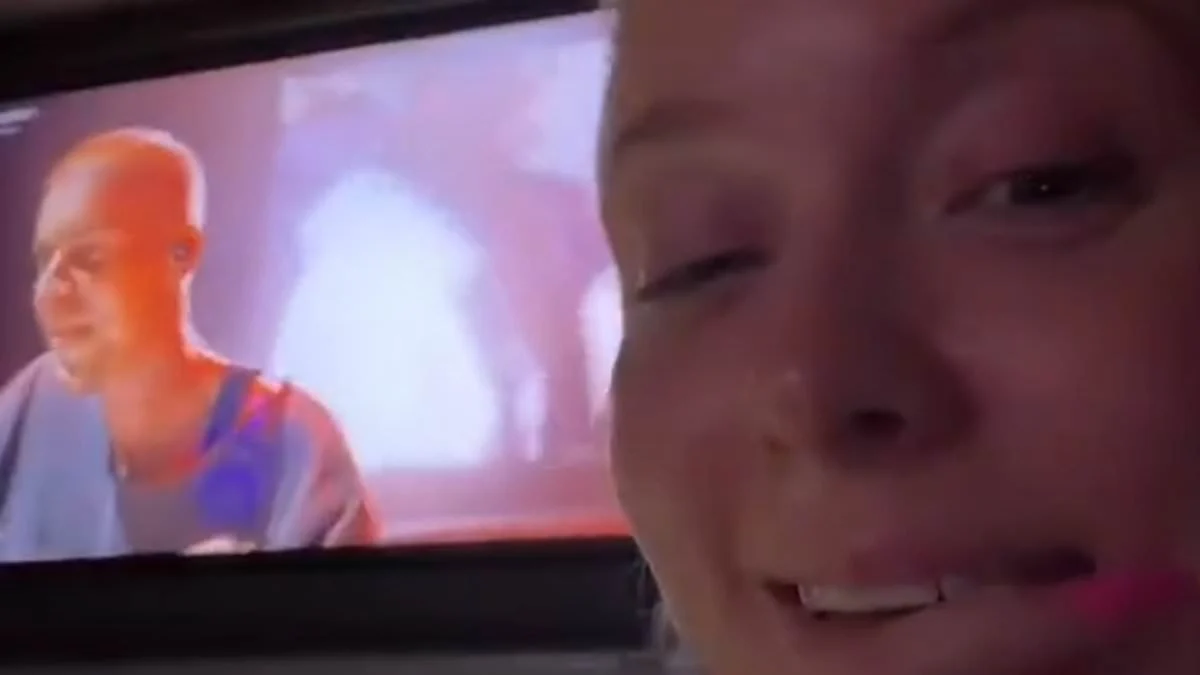
The landscape of contemporary pop music often finds itself at the intersection of high-stakes performance and digital-era scrutiny, a reality highlighted recently by Swedish singer-songwriter Zara Larsson’s public commentary on Justin Bieber’s latest appearance. Larsson, 26, has sparked a significant online conversation after mocking Bieber’s recent Coachella performance, which many critics and fans have described as underwhelming. Taking to TikTok, Larsson shared a video of herself and friends watching the set, which featured Bieber in a highly casual aesthetic that some perceived as a lack of professional effort.
The video, which quickly went viral, featured Larsson smirking while watching the footage. She accompanied the clip with the text, "It’s giving let’s smoke and watch YouTube," and a caption stating that Bieber is in her "dream blunt rotation." The latter term refers to a popular internet meme describing a group of people one would find entertaining or interesting to share a social experience with, though in this context, it was interpreted by many as a satirical nod to the perceived low-energy, "stoner-esque" quality of Bieber’s stage presence.
The Coachella Performance: Context and Criticism
Justin Bieber’s appearance at the Coachella Valley Music and Arts Festival was intended to be a highlight of the event, particularly given the artist’s relatively sporadic public performances in recent years following his health battles with Ramsay Hunt syndrome. However, the set quickly became a lightning rod for criticism. Observers noted a stark lack of traditional stage production, choreography, or the high-octane energy typically associated with headliner-level talent at one of the world’s most prestigious music festivals.
Bieber performed much of the set wearing a hoodie, at times appearing to be browsing or "surfing" YouTube on a screen, a choice that left many attendees and remote viewers confused. Industry reports suggested that Bieber received a substantial fee—rumored to be in the vicinity of $10 million—for the appearance. This financial detail added fuel to the fire, as fans questioned the value proposition of a multi-million-dollar performance that lacked the polish of his previous tours.
The backlash centered on what many described as "unconventional staging." While some defenders argued the set was an intentional "stripped-back" artistic choice or a reflection of Bieber’s desire for a more intimate, low-pressure connection with the audience, the prevailing sentiment on social media was one of disappointment.
The Gender Performance Gap: A Growing Discourse
Larsson’s critique resonated with a specific segment of the music community that has long pointed out a perceived double standard between male and female performers. Following Larsson’s TikTok post, many users echoed her sentiments, highlighting the discrepancy in expectations regarding physical exertion and production value.
One widely shared comment on the platform noted, "Women are doing a two-hour cardio routine in heels while dudes get paid 10 million to ask for the wifi password on the main stage." This sentiment refers to the grueling tour schedules and high-intensity performances of female pop stars like Beyoncé, Dua Lipa, and Taylor Swift, whose sets often involve complex choreography, multiple costume changes, and rigorous vocal demands.
Larsson, known for her own high-energy performances and vocal prowess, has frequently been praised for her work ethic. By critiquing Bieber, she inadvertently became a figurehead for a broader debate regarding "mediocrity" in male pop stardom versus the "hyper-perfectionism" required of their female counterparts. This discourse suggests that male artists are often afforded the grace to be "authentic" or "casual," while female artists are penalized if their performances are anything less than spectacular.
A History of Controversy: The Taylor Swift Incident
Zara Larsson is no stranger to the complexities of digital fandoms or the fallout of public statements. Her recent commentary on Bieber follows a separate incident involving Taylor Swift and her dedicated fanbase, known as "Swifties."
The friction began during an interview with The Guardian, where Larsson discussed the current state of the music industry and the relevance of commercial charts. Larsson stated, "Playing the chart game is so dead to me. No one’s looking at the charts but industry people and maybe Taylor Swift fans." While intended as a commentary on how streaming has decentralized music consumption, the mention of Swift’s name triggered an immediate and intense reaction from Swift’s fanbase.
Social media was soon flooded with "Swifties" defending the importance of Swift’s commercial achievements. Some fans accused Larsson of "clout-chasing" or being "jealous" of Swift’s unprecedented success. The situation escalated when a fake social media post, mocked up to look like a response from Swift saying she was "honestly just… disappointed," began to circulate. Although Swift had made no such statement, the fabricated image further incensed fans.
Clarification and the Definition of "Cultural Value"
In the wake of the Swiftie backlash, Larsson took to her Instagram Stories to clarify her position, emphasizing that her comments were not intended as an insult. She explained that her reference to Swift was actually an acknowledgement of Swift’s mastery of the modern music industry.
"I said that because I feel like I have some cultural value right now in pop music, something I’ve never had to this level, but I’m not in a position to influence the charts," Larsson explained. She further noted that Swift is "literally the best at it [the chart game] and everyone knows that. It’s not the read you guys think it is."
Larsson’s distinction between "cultural value" and "chart success" touches on a significant shift in the music industry. In the era of TikTok and viral trends, an artist can have a massive cultural footprint—influencing fashion, language, and social trends—without necessarily holding the number one spot on the Billboard Hot 100. Larsson argued that an artist can be "amazing" without charting, a sentiment that challenges the traditional metrics of success in the recording industry.
Financial and Industry Implications
The critique of Bieber’s Coachella set also raises questions about the economy of music festivals. Festivals like Coachella rely on "star power" to drive ticket sales and global streaming viewership. When a high-profile artist delivers a performance that is perceived as "lazy" or "low-effort," it can impact the festival’s brand equity.
From a data perspective, the "effort-to-pay" ratio is becoming a metric of public scrutiny. While Bieber’s legacy as a global icon ensures his bankability, the rise of social media means that every moment of a performance is archived and analyzed. For festival organizers, the challenge lies in balancing the draw of a legacy superstar with the audience’s expectation for a "spectacle."
Furthermore, the "YouTube" aspect of Bieber’s performance—where he appeared to be looking at a screen—highlights the increasing "meta" nature of modern entertainment. As artists spend more time in digital spaces, the line between "rehearsed performance" and "casual live-streaming" continues to blur.
Chronology of Events
To understand the full scope of the current discourse, a timeline of recent events provides necessary context:
- Mid-April: Justin Bieber performs at Coachella. The set is immediately met with mixed reviews, with social media users highlighting his casual attire and minimal production.
- Late April: Reports surface regarding the high appearance fee paid to Bieber, intensifying public scrutiny.
- Early May: Zara Larsson releases a TikTok video mocking the performance, using the "YouTube" and "blunt rotation" metaphors.
- Concurrent Period: Larsson’s interview with The Guardian is published, containing the Taylor Swift chart comments.
- Post-Interview: Swift fans launch a social media campaign against Larsson; Larsson issues a multi-part clarification on Instagram.
- Current Status: The debate transitions from a critique of a single performance to a broader discussion on gendered expectations in pop music and the definition of artistic success in 2024.
Broader Impact and Future Outlook
The fallout from Larsson’s comments and Bieber’s performance suggests a turning point in how audiences consume live music. The "unfiltered" nature of TikTok allows artists like Larsson to bypass traditional PR channels and offer direct, often blunt, critiques of their peers. This transparency is welcomed by many fans who value "realness," but it also creates a volatile environment where one comment can spark a multi-day news cycle.
For Justin Bieber, the Coachella performance may serve as a catalyst for a re-evaluation of his live show strategy as he navigates his career post-recovery. For Zara Larsson, the incident reinforces her reputation as a vocal and independent figure in the industry, unafraid to challenge the status quo or address the biggest names in music.
Ultimately, the conversation underscores a fundamental tension in modern pop: the clash between the artist’s desire for personal expression (or relaxation) and the audience’s demand for a high-value, professional product. As the industry continues to evolve, the metrics of what constitutes a "great" performance will likely continue to be debated on the very digital platforms that Larsson used to voice her critique.
