
 By admin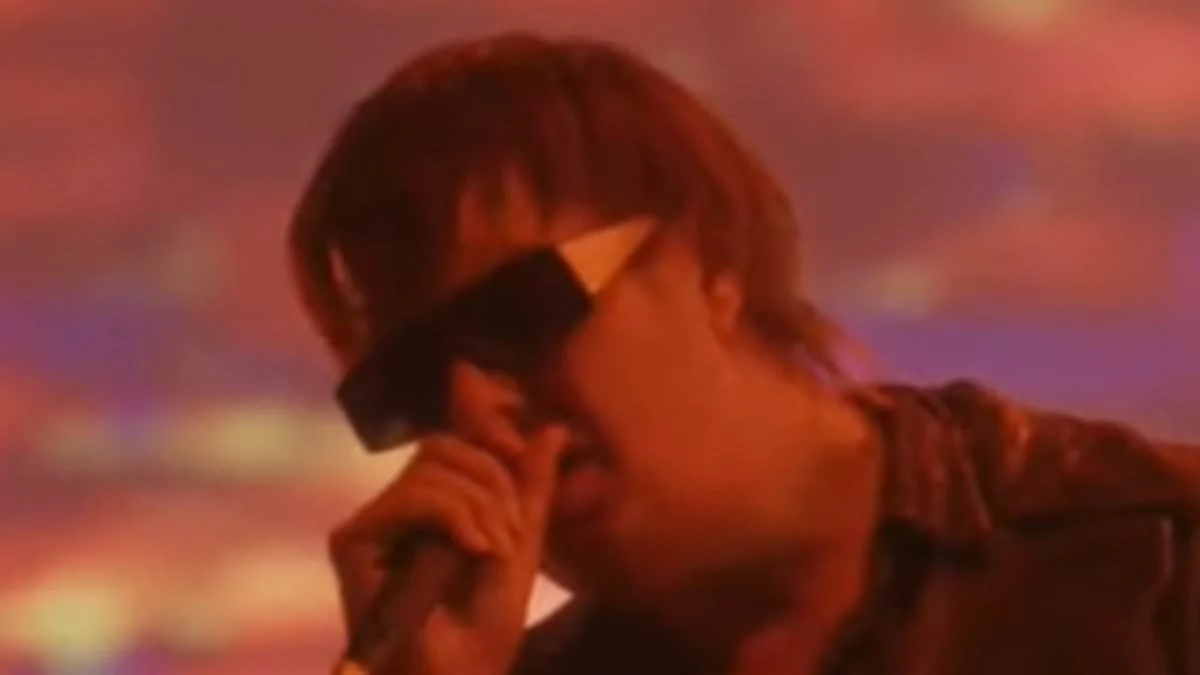
The Strokes utilized their high-profile Saturday night slot at the Coachella Valley Music and Arts Festival to deliver a stark geopolitical message, culminating in a moment of alleged censorship that has ignited debate across the music industry. During the second weekend of the 2026 festival, the New York rock veterans transformed their stage into a canvas for historical and contemporary political commentary, featuring a montage of imagery that touched upon CIA interventions, domestic assassinations, and the ongoing humanitarian crises in the Middle East. The performance reached a confusing climax when the massive LED screens behind the band abruptly went black during a particularly provocative sequence, leading to widespread speculation regarding whether the feed was intentionally cut by festival organizers.
The moment occurred as the band performed "Oblivius," a track from their 2016 EP Future Present Past. As the song’s driving rhythm filled the Indio desert, the backdrop displayed a rapid-fire sequence of historical figures and data points. The visuals specifically highlighted Latin American leaders whose deaths or removals from power have been historically linked to the United States Central Intelligence Agency (CIA). Among those featured were Jacobo Árbenz, the democratically elected President of Guatemala who was overthrown in a 1954 coup; Omar Torrijos, the Commander of the Panamanian National Guard who died in a 1981 plane crash; and Jaime Roldós Aguilera, the President of Ecuador who also perished in a plane crash that same year. By presenting these figures, the band invited the audience to reflect on the legacy of American foreign policy in the Western Hemisphere.
The MLK Civil Trial and Modern Conflict Visuals
The presentation moved from 20th-century Latin American history to American domestic tragedy, displaying a portrait of civil rights leader Martin Luther King Jr. Accompanying the image was the specific text: "US Govt found guilty of his murder in civil trial." This refers to the 1999 civil case King Family v. Loyd Jowers, in which a jury in Memphis, Tennessee, reached a verdict stating that the assassination of Dr. King was the result of a conspiracy involving "governmental agencies." While this verdict remains a point of historical debate and is often omitted from standard textbooks, the band’s decision to project it at one of the world’s largest music festivals served as a provocative challenge to official narratives.
The visual narrative then shifted to contemporary global conflicts. Footage of air missile strikes in Gaza was broadcast to the tens of thousands in attendance, juxtaposed with on-screen text reporting the destruction of educational infrastructure. One slide claimed that "over 30 universities" had been destroyed in Iran, a statement that aligns with recent reports regarding regional escalations in 2025 and early 2026. It was during this sequence—as the imagery transitioned from the humanitarian toll in Gaza to the statistics regarding Iranian institutions—that the screens suddenly cut to black. According to reports from the LA Times and eyewitness accounts from the festival grounds, the loss of visuals appeared abrupt and uncoordinated with the lighting cues of the song, suggesting an external intervention rather than a planned artistic choice.
A Contrast in Tone Between Festival Weekends
The intensity of the Weekend Two performance stood in sharp contrast to the band’s appearance during the first weekend of Coachella 2026. Seven days prior, frontman Julian Casablancas had adopted a more satirical, though still political, tone. During that set, he addressed the crowd regarding legislative discussions in Washington D.C. concerning mandatory military draft registration.
"You guys excited about the draft? Oh, wait, not the NFL draft," Casablancas joked to the audience during Weekend One. "In six months, I think everyone who’s eligible for the military has to register. You guys excited?" The remark was a reference to the 2026 Selective Service amendments that had been a topic of significant debate among Gen Z and Millennial demographics in the months leading up to the festival. While the first weekend relied on Casablancas’ trademark dry wit, the second weekend’s reliance on grim historical data and war footage suggested a shift toward more urgent, direct activism.
The setlists also varied between the two weekends. While the first weekend leaned heavily into the band’s "garage rock revival" roots from the early 2000s, the second weekend featured a broader career retrospective. Fans were treated to high-energy renditions of "Hard to Explain" and "You Only Live Once," alongside more recent favorites like "The Adults Are Talking" and the melancholic "Ode to the Mets." The inclusion of "Juicebox" and "Oblivius" provided the sonic aggression necessary to match the heavy themes projected on the screens.
Casablancas and the "I Protested" Stance
The political nature of the Coachella set is consistent with the personal evolution of Julian Casablancas. Once known primarily for his role in the hedonistic New York indie scene of the early 2000s, Casablancas has increasingly used his platform to critique the American political and economic systems. In 2020, he was a vocal supporter of Senator Bernie Sanders, even performing with The Strokes at a rally in New Hampshire. However, by the 2024 Presidential Election, Casablancas had moved toward a more disillusioned stance.
In a widely shared social media post following the 2024 election, Casablancas displayed an "I Protested" badge, a subversion of the ubiquitous "I Voted" stickers. He explained his decision to abstain from voting for the major parties, citing a conversation with his mother. "Like I told her, I am thinking of my children," Casablancas wrote. "The two parties are a joke… a horrible lie. The military and oil companies and banks are who we are voting for—and the media is their propaganda/entertainment wing." He further criticized the Democratic National Committee’s handling of the 2020 primaries, stating that he saw little point in "choosing between these puppets." This philosophy of systemic critique was clearly the driving force behind the visuals curated for the Coachella stage.
Technical Failure or Corporate Censorship?
As of Sunday afternoon, Coachella organizers Goldenvoice and their parent company, AEG, have not issued an official statement regarding the screen blackout during The Strokes’ set. Technical glitches are not uncommon at large-scale festivals, where complex AV setups are subjected to heat, dust, and high-intensity usage. However, the timing of the blackout—occurring precisely during the most controversial portion of the band’s visual package—has led many to believe that the "kill switch" was activated by festival staff.
Coachella has a storied history of being a platform for political expression, but it is also a highly corporate environment with significant sponsorships and live-streaming partnerships. In previous years, artists like Roger Waters and Childish Gambino have used the stage to deliver messages regarding Palestinian rights and American racial dynamics, respectively. However, the explicit nature of The Strokes’ visuals, particularly the allegations against the U.S. government regarding Martin Luther King Jr. and the depiction of contemporary strikes in Gaza, may have crossed a threshold for the festival’s broadcast standards.
Industry analysts suggest that the incident highlights a growing tension between "legacy" rock acts and the increasingly sterilized environment of major music festivals. "The Strokes represent one of the last few bands from the 2000s era that still maintains a counter-cultural edge," said music critic Marcus Thorne. "When you put that kind of energy on a stage sponsored by global corporations, a collision is almost inevitable. Whether it was a technical glitch or a conscious decision to cut the feed, it reinforces the band’s message about media control."
Future Outlook: Reality Awaits and World Tour
The controversy comes at a pivotal moment for The Strokes. The band is currently preparing for the release of their first new studio album in six years, titled Reality Awaits. The album is rumored to delve deeper into the themes of surveillance, corporate overreach, and historical revisionism that were hinted at during their Coachella performance.
Following the release of the album, the band is scheduled to embark on a 2026 world tour beginning in June. The tour is expected to visit major arenas across North America, Europe, and South America. Given the events of this past weekend, industry insiders are watching closely to see if the band will maintain the same visual production for their solo shows or if they will face pressure from venue owners and promoters to tone down the content.
For now, The Strokes’ Coachella performance remains a viral talking point, overshadowing much of the other musical output from the weekend. By merging the visceral power of rock music with a challenging history lesson, the band has ensured that their 2026 return to the desert will be remembered not just for the music, but for the questions it raised about the limits of expression on the world’s biggest stages. As the screen went black on Saturday night, Julian Casablancas and his bandmates may have achieved their goal: proving that in an era of constant information, there are still some truths that the "entertainment wing" is not yet ready to broadcast.
