
 By admin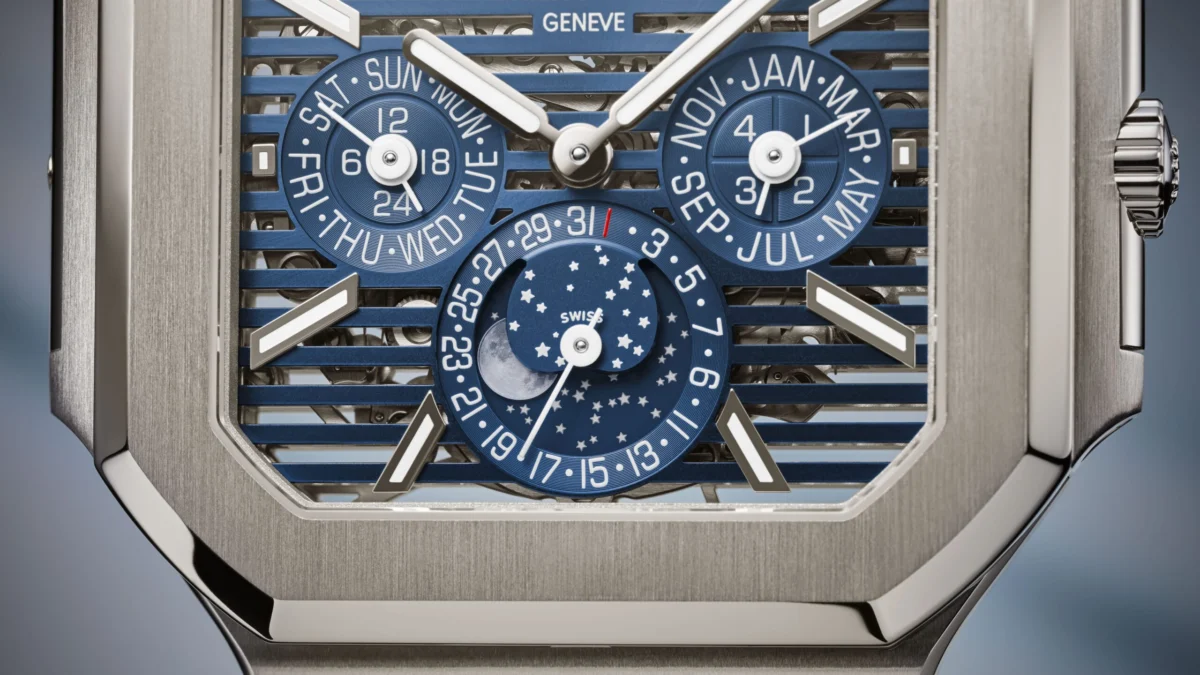
The second day of the world’s premier horological exhibition, Watches and Wonders Geneva, solidified a significant shift in the luxury watch industry’s current trajectory. While recent years were dominated by the fervor for integrated-bracelet sports watches, the 2024 edition has seen a definitive return to "high horology"—a focus on grand complications, astronomical indications, and labor-intensive hand-finishing. Patek Philippe and Grand Seiko, two titans of the industry representing Swiss and Japanese excellence respectively, led the narrative with releases that challenge the boundaries of mechanical engineering and aesthetic texture.
Patek Philippe and the Return of the Grand Complication
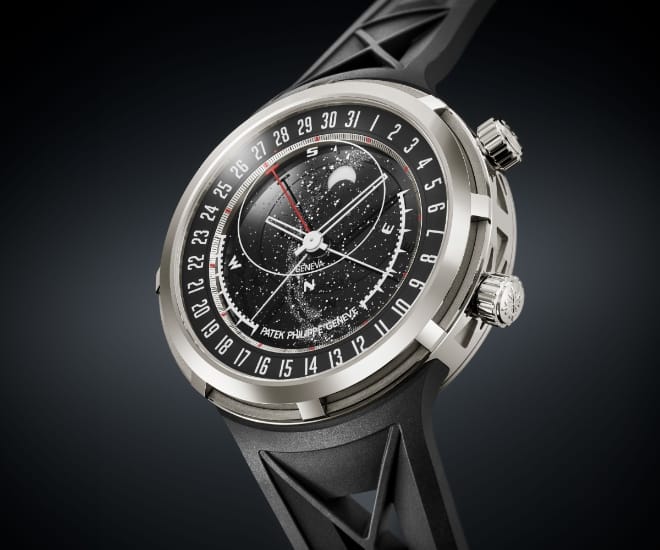
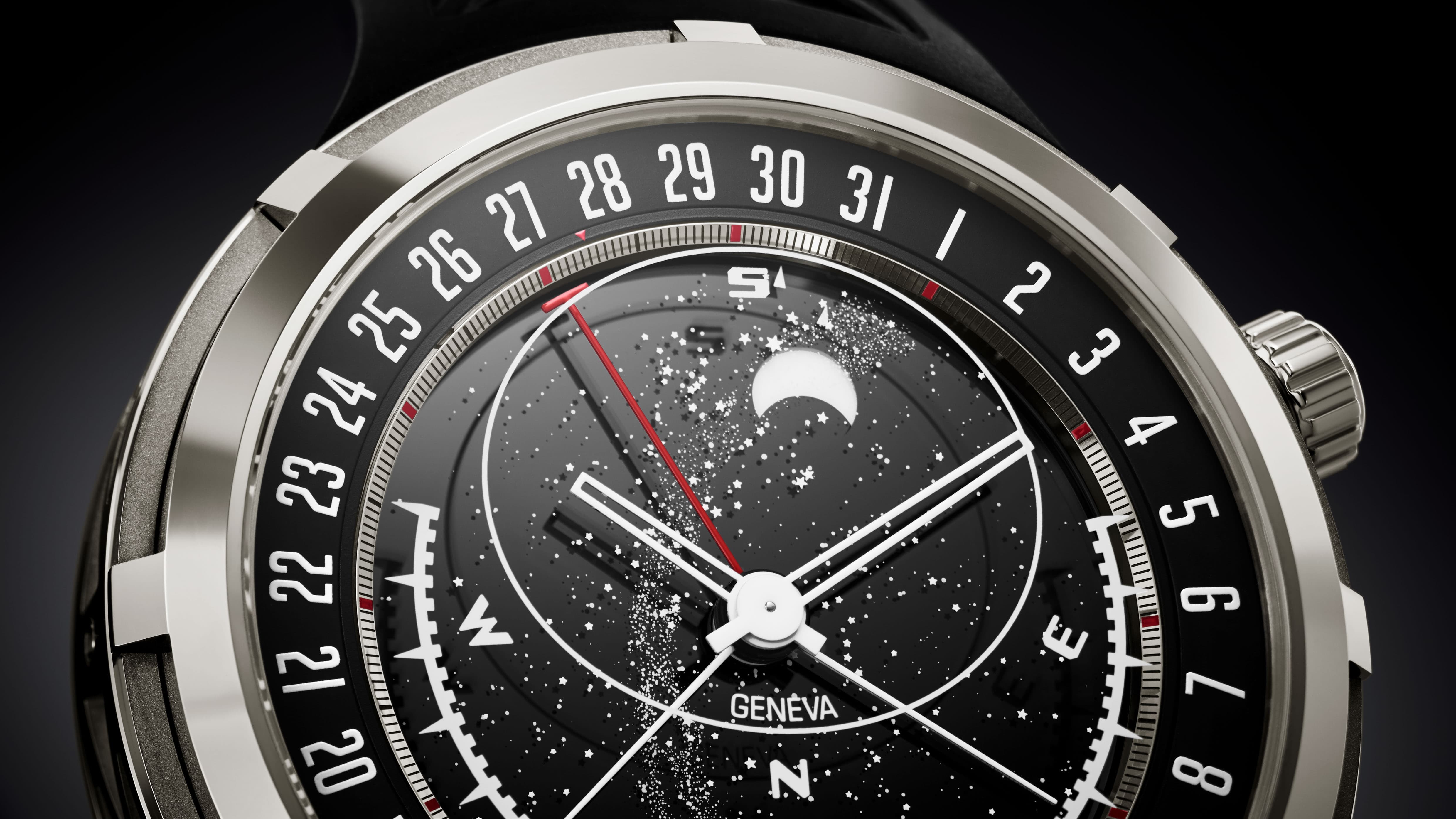
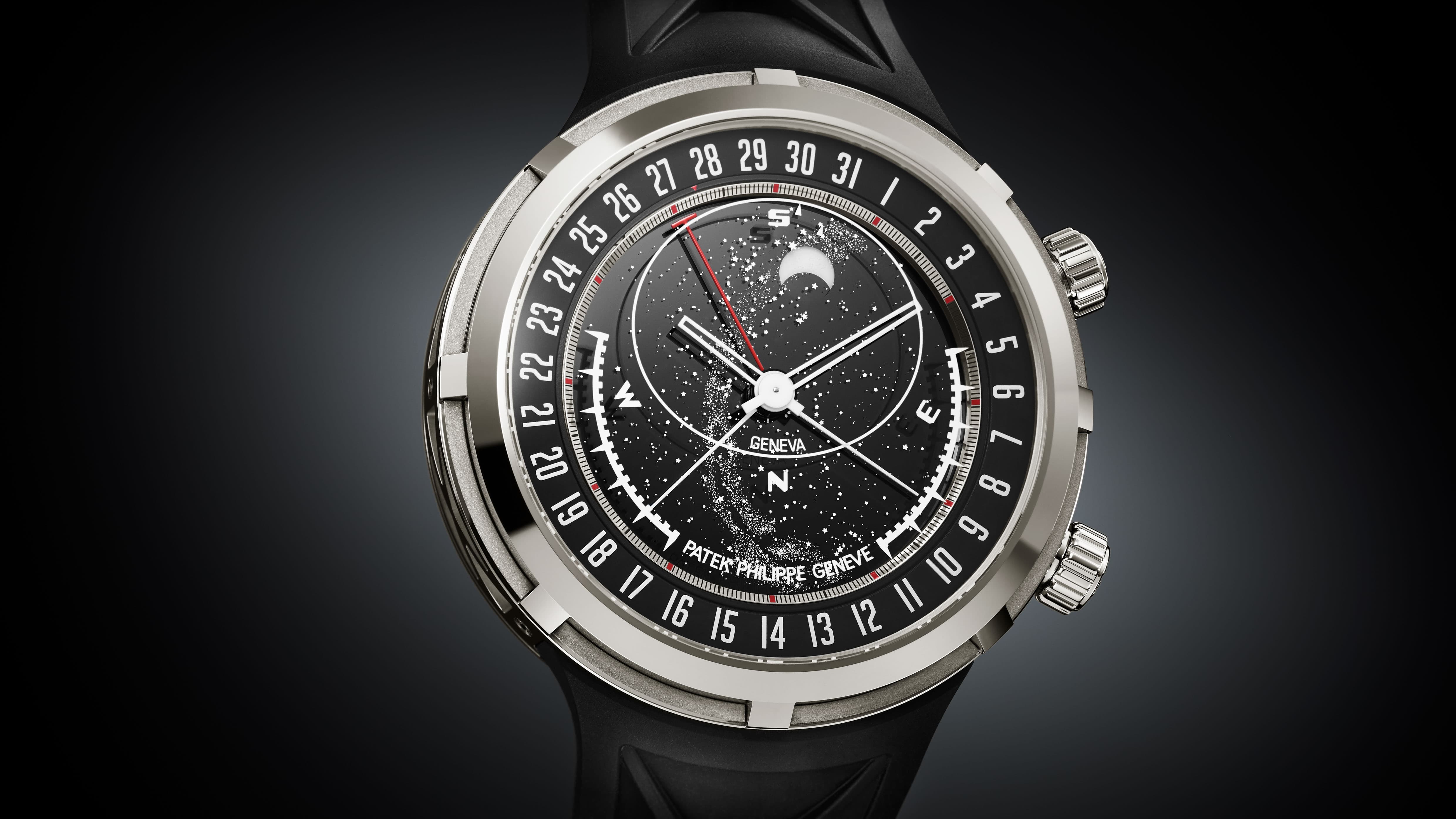
Patek Philippe, under the leadership of President Thierry Stern, utilized Day 2 to reassert its dominance in the field of astronomical complications. The standout reveal was the Ref. 6105-001G, a timepiece that the manufacture classifies as a Grand Complication. This model is a direct descendant of the legendary Celestial series but introduces several technical "firsts" for the brand in a wristwatch format.
Most notably, the Ref. 6105-001G is the first Patek Philippe wristwatch to feature a dedicated indication for sunrise and sunset times. This complication is notoriously difficult to execute because the times of sunrise and sunset vary daily based on the time of year and the specific geographic latitude of the wearer. For this reference, the mechanism is calibrated to Geneva (Central European Time), though it can be customized for other locations upon request.
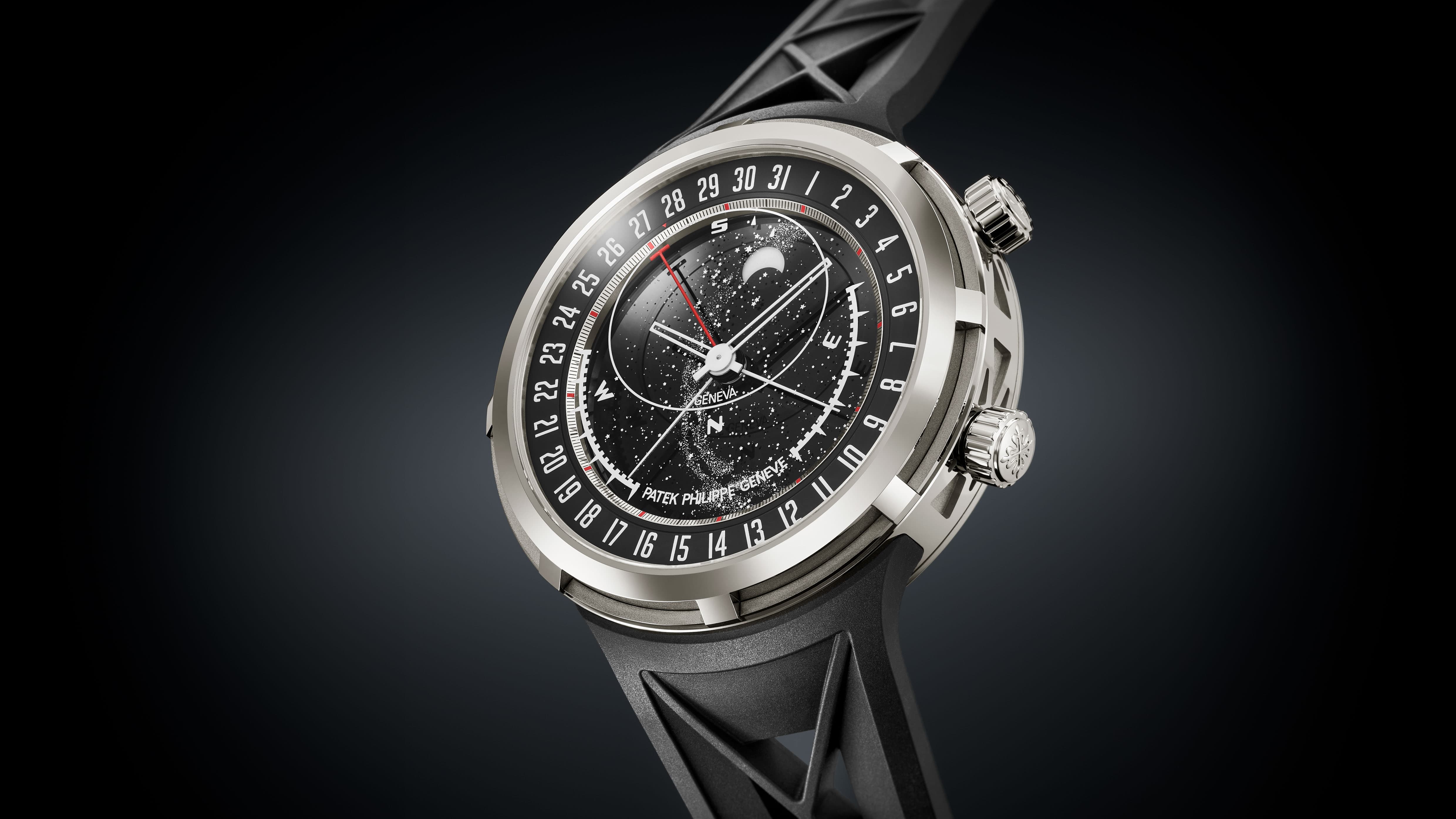
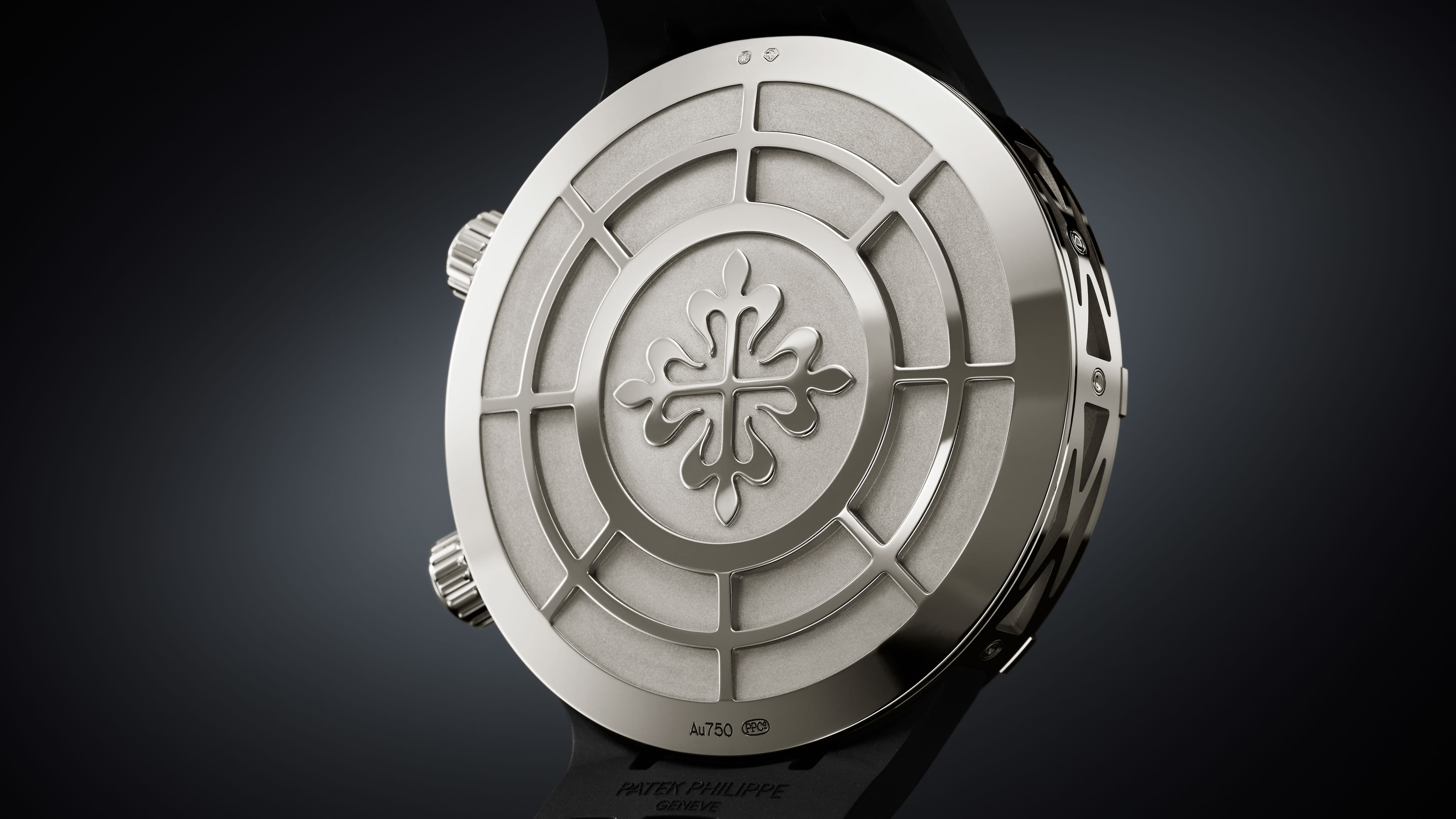
Furthermore, the watch addresses a modern horological "bugbear": Daylight Savings Time. The movement is engineered to account for these seasonal shifts, ensuring that the astronomical data remains accurate throughout the year without manual intervention. Encased in a massive 47mm white gold case, the watch features a solid caseback adorned with a large Calatrava motif and engravings that pay homage to space exploration and unspecified spacecraft. The sheer scale of the watch is a functional necessity; the rotating sky chart requires a large diameter to maintain legibility and to provide a realistic sense of depth to the celestial map as seen from the Northern Hemisphere.
The Cubitus Collection: A Strategic Expansion
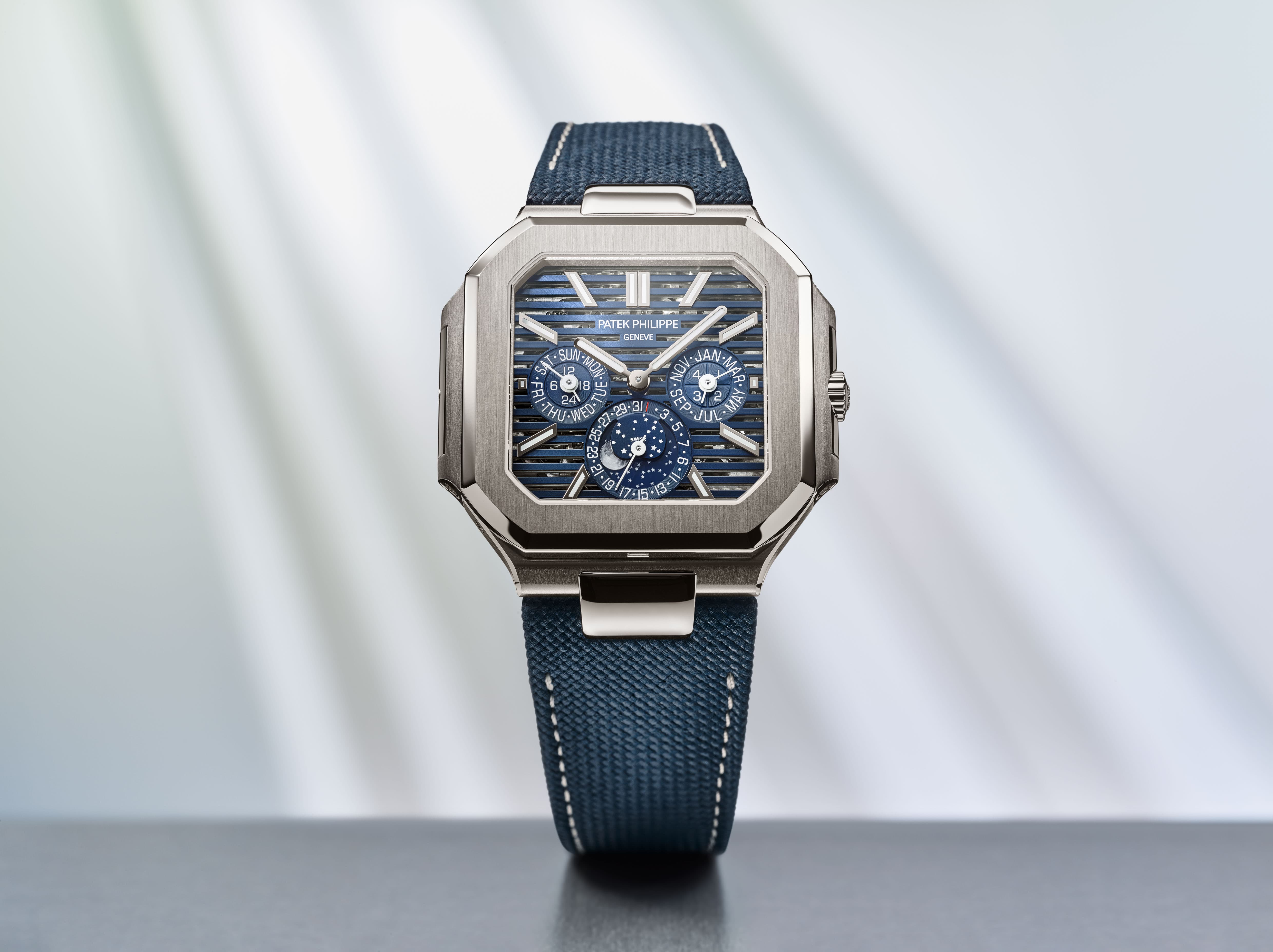
While the astronomical Ref. 6105-001G captured the attention of technical purists, the Ref. 5840P-001—the Cubitus Perpetual Calendar—represented the brand’s most significant commercial and stylistic pivot. Following months of industry speculation, the Cubitus collection has emerged as a distinct "square-format" alternative to the Nautilus and Aquanaut lines.
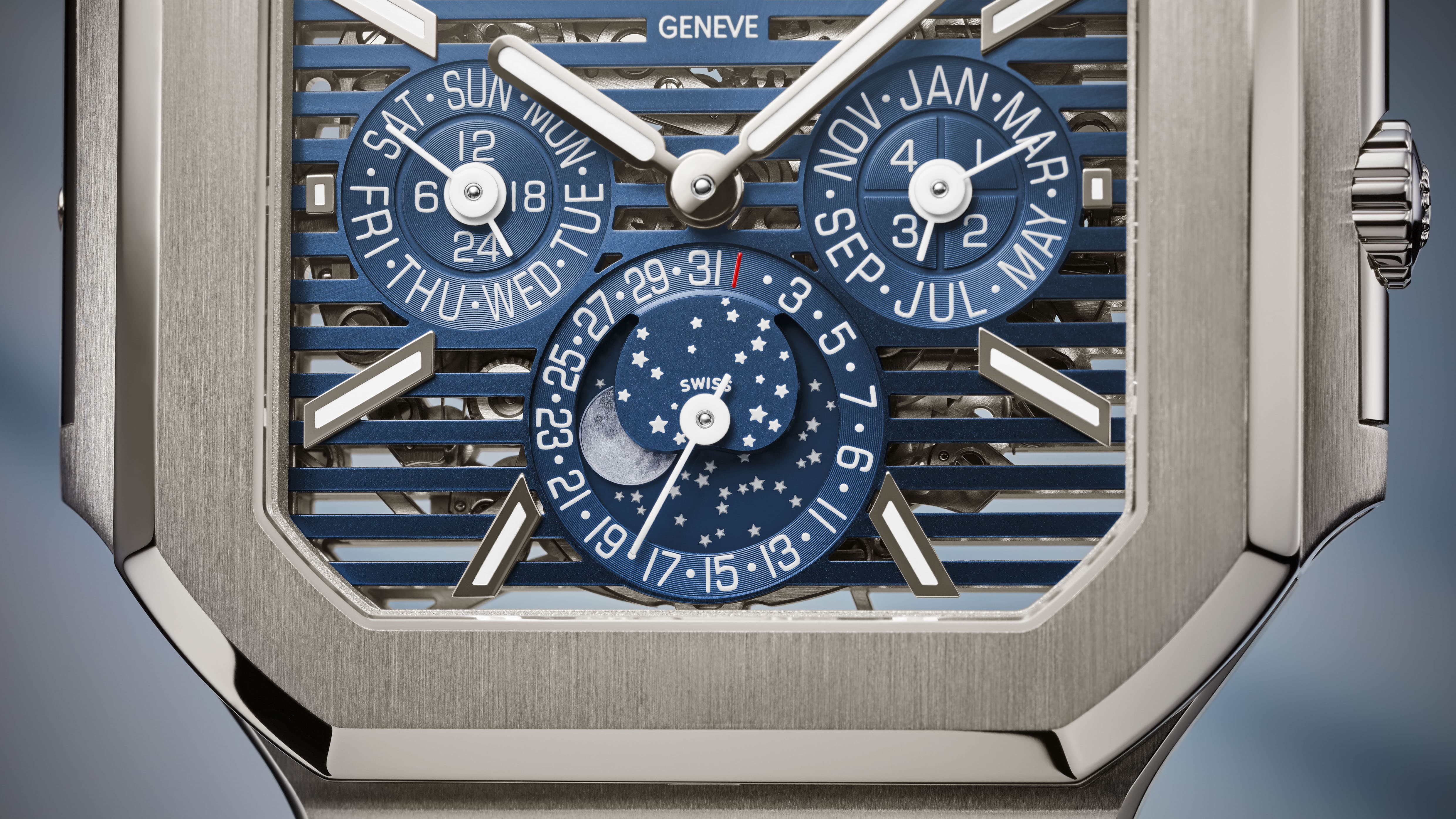
The Ref. 5840P-001 is the flagship of this new family, featuring a skeletonized automatic calibre with a micro-rotor. This movement, the Calibre 240 PS CI J LU, is a masterpiece of industrial beauty, showcasing Patek Philippe’s signature hand-finishing despite its modern, architectural layout. The choice of platinum for the launch of the Perpetual Calendar version signals Patek Philippe’s intent to position the Cubitus at the very top of its catalog.
Industry analysts suggest that the introduction of the Cubitus is a calculated move to diversify the brand’s "sport-elegant" offerings as the Nautilus approaches its 50th anniversary in 2026. By creating a new shape, Patek Philippe avoids over-saturating the Nautilus market while providing collectors with a fresh aesthetic that still carries the manufacture’s DNA.
A Hidden Gem: The Automaton Heritage Piece
In a move that surprised many seasoned collectors, Patek Philippe also introduced an interpretation of a heritage pocket watch that exists within the Patek Philippe Museum. This reference features an automaton mechanism that provides hours and minutes "on demand."
The original mechanism was designed by Louis Cottier, the legendary watchmaker famous for perfecting the World Time complication. The new wristwatch version utilizes a complex automaton to display time in a way that is both technically rigorous and visually playful. By reviving such a niche historical concept, Thierry Stern has demonstrated that the manufacture is not merely looking at its sales charts, but is deeply invested in preserving the "fun" and "theatricality" of high-end watchmaking.
Grand Seiko: The "Mystic Waterfall" and Artisanal Mastery
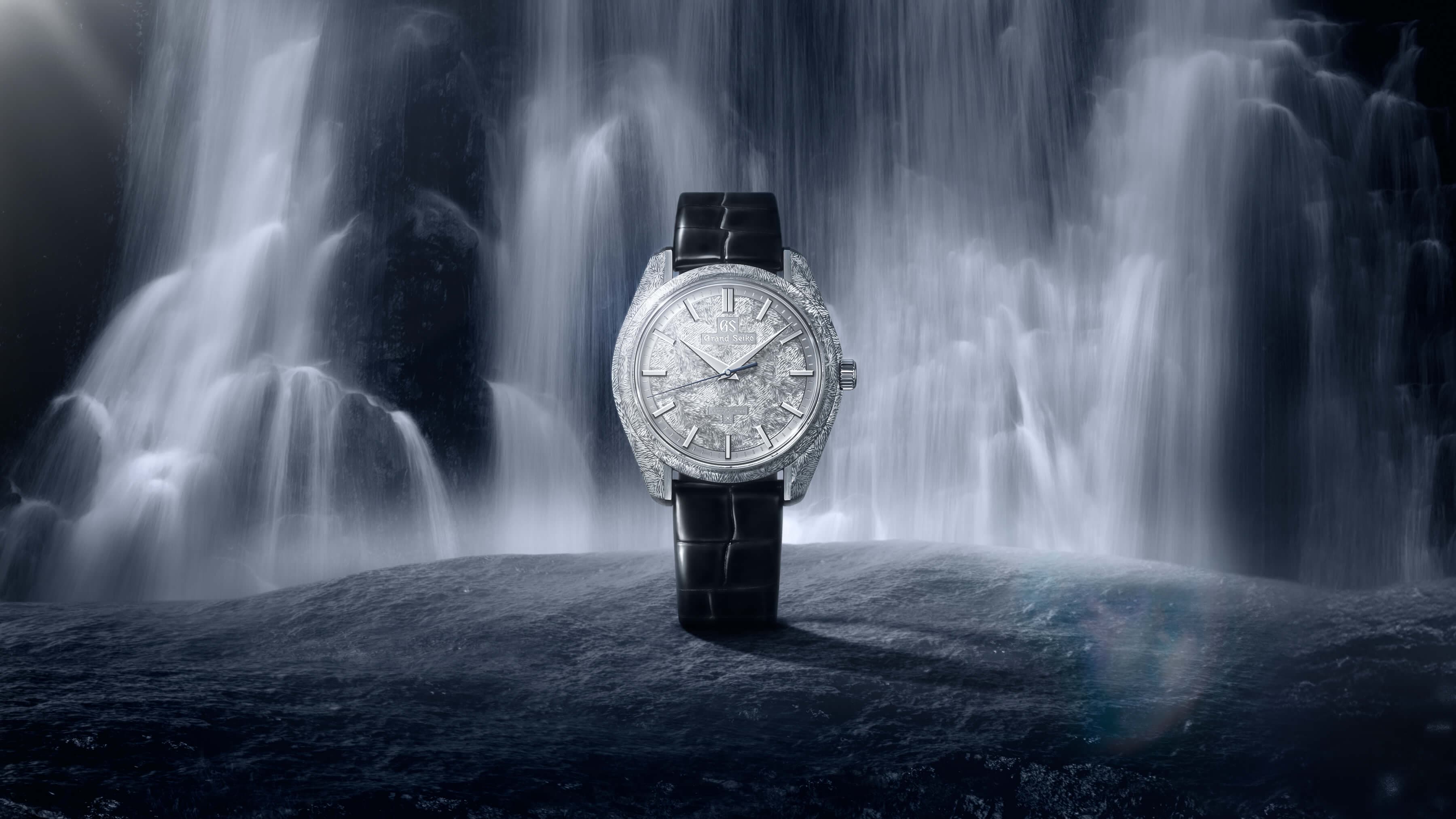
While Patek Philippe pushed the limits of complexity, Grand Seiko focused on the "Nature of Time" philosophy, unveiling the SBGZ011. Affectionately nicknamed the "Mystic Waterfall," this timepiece represents the zenith of Japanese artisanal craftsmanship.
The SBGZ011 is produced by the Micro Artist Studio in Shiojiri, the same elite workshop responsible for the Credor Eichi II and the Spring Drive Minute Repeater. The watch features a fully hand-engraved platinum case and dial, with textures that mimic the Tateshina Otaki waterfall located near the studio. Every micrometer of the exterior surface is touched by a master engraver, creating a play of light that is unique to each of the 50 pieces in this limited edition.
Underneath the ornate exterior lies the manually wound Spring Drive Calibre 9R02. This movement is celebrated for its dual-mainspring barrel and "Torque Return System," which allows for an 84-hour power reserve while maintaining a slim profile. The finishing of the 9R02 is widely considered to be among the best in the world, featuring hand-polished bevels (anglage) and a signature bellflower motif on the barrel bridge.
Rolex and the Professional Chronograph Segment
Rolex, while traditionally more conservative with its Day 2 updates, drew renewed attention to the Oyster Perpetual Yacht-Master II. As a regatta chronograph with a unique programmable countdown and mechanical memory, the Yacht-Master II remains one of the most mechanically complex watches in the Rolex catalog.
The emphasis on the Yacht-Master II this year highlights Rolex’s commitment to its professional tool-watch heritage. Unlike the standard Daytona, the Yacht-Master II is a niche instrument designed for a specific sporting application. Its presence at the forefront of the Rolex display suggests a trend toward "purpose-built" luxury, where the value of the watch is derived from its specific mechanical utility as much as its brand prestige.
Timeline of Key Events: Watches and Wonders Day 2
- 09:00 CET: Patek Philippe opens its booth, officially debuting the Ref. 6105-001G. Immediate reactions focus on the 47mm case size, a rarity for the brand.
- 11:30 CET: Grand Seiko holds a press conference detailing the engraving process for the SBGZ011 "Mystic Waterfall." Master engravers demonstrate the technique on-site.
- 14:00 CET: Market analysts report a "jubilant" mood at the Patek Philippe pavilion, noting that the brand has successfully shifted the conversation from "Nautilus hype" to "technical depth."
- 16:30 CET: Industry discussions pivot to the Cubitus collection’s movement architecture, with experts praising the use of a shaped movement for a shaped case—a hallmark of true luxury watchmaking.
Broader Impact and Market Implications
The releases from Day 2 of Watches and Wonders Geneva 2024 indicate a stabilizing luxury market that is moving away from the volatility of the "hype-watch" era (2020–2022). By focusing on grand complications and artisanal hand-engraving, brands like Patek Philippe and Grand Seiko are targeting "ultra-high-net-worth" (UHNW) collectors who prioritize long-term horological value over short-term resale trends.
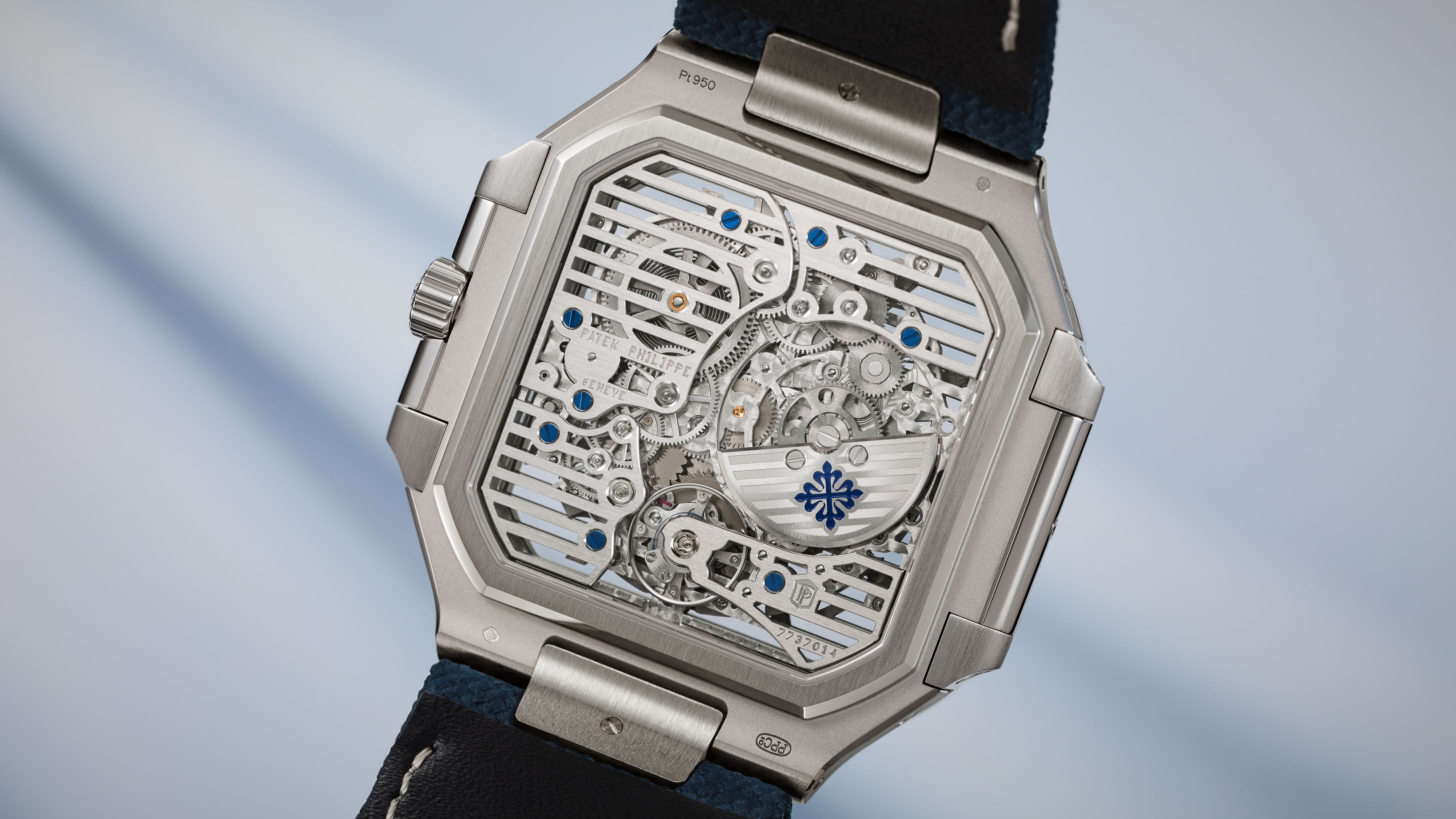
The 47mm size of the Patek Philippe 6105G also suggests a lingering, albeit refined, interest in "wrist presence." However, unlike the oversized watches of the early 2000s, this scale is driven by mechanical necessity—the need for space to house astronomical complications.
Furthermore, the emphasis on heritage and museum-inspired pieces (such as the Cottier-inspired automaton) shows that the industry is leaning heavily into its history to justify current price points. In an era of digital perfection, the "imperfection" and soul of a hand-engraved Grand Seiko or a manually calibrated Patek Philippe sunrise indicator provide a level of exclusivity that cannot be replicated by mass-production techniques.
As the fair continues, the industry looks toward Day 3 to see how other major players like Vacheron Constantin and Cartier will respond to the high-complication bar set by Patek Philippe and the artisanal standard established by Grand Seiko. For now, Geneva remains the undisputed capital of time, proving that even in a digital age, the mechanical heart of a watch continues to beat with more relevance than ever.
