
 By admin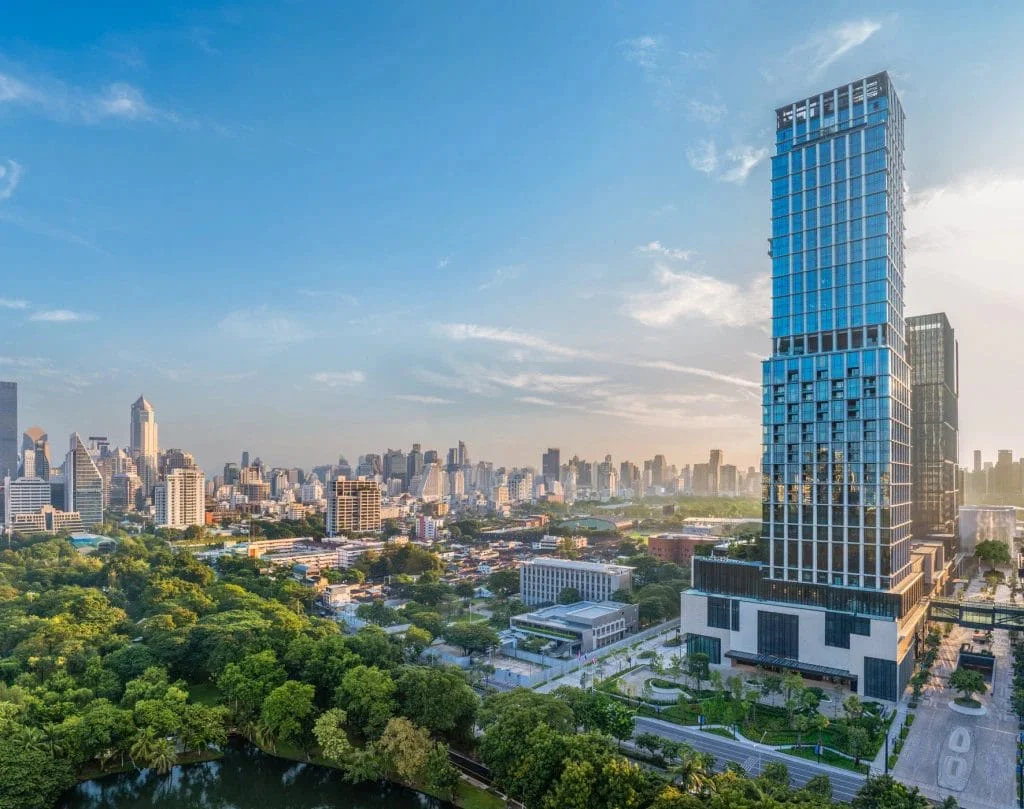
The inauguration of The Ritz-Carlton, Bangkok in late 2024 represents a pivotal moment in the evolution of Thailand’s capital, marking the arrival of one of the world’s most prestigious hospitality brands into a market already saturated with high-end accommodations. Situated within the monumental One Bangkok development—a THB 120 billion (approximately USD 3.2 billion) mixed-use district—the hotel serves as a vertical sanctuary designed to navigate the complex intersection of Bangkok’s historical heritage and its future as a global financial and lifestyle hub. For years, industry analysts noted a significant absence of the Ritz-Carlton flag in the city’s primary skyline, despite the brand’s presence in luxury enclaves like Phulay Bay and Koh Samui. The 2024 opening addresses this gap, positioning the property not merely as another five-star option, but as a strategic anchor within a district that is being aggressively manufactured as the city’s new, high-stakes epicenter.
The Strategic Significance of One Bangkok
To understand the positioning of The Ritz-Carlton, Bangkok, one must first examine its environment. The hotel occupies a prominent 216-meter-high tower within One Bangkok, the largest private sector property development in Thailand’s history. Developed by TCC Assets (Thailand) Co., Ltd. and Frasers Property Holdings (Thailand) Co., Ltd., One Bangkok is designed to be a "city within a city," integrating premium office space, luxury retail, and expansive public areas.
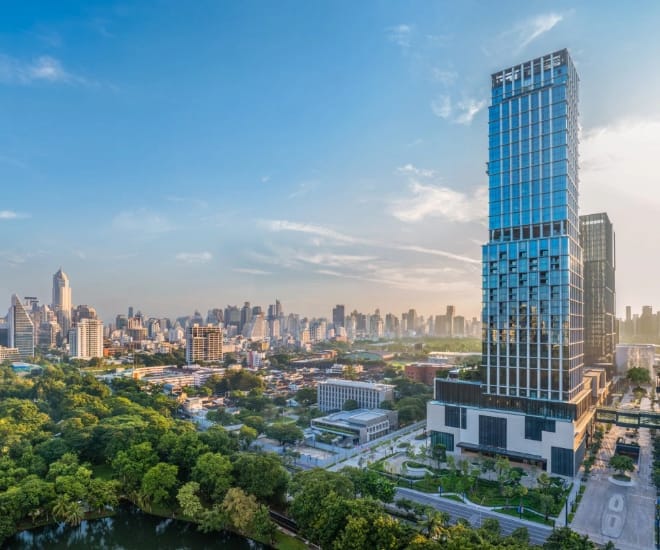
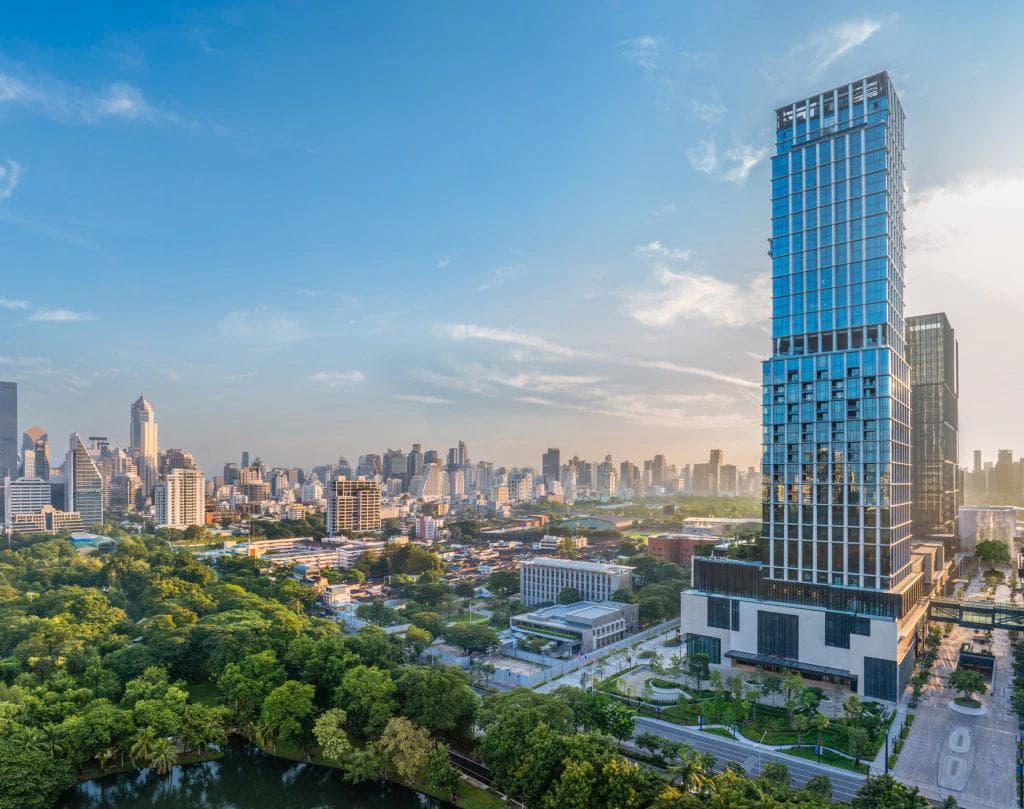
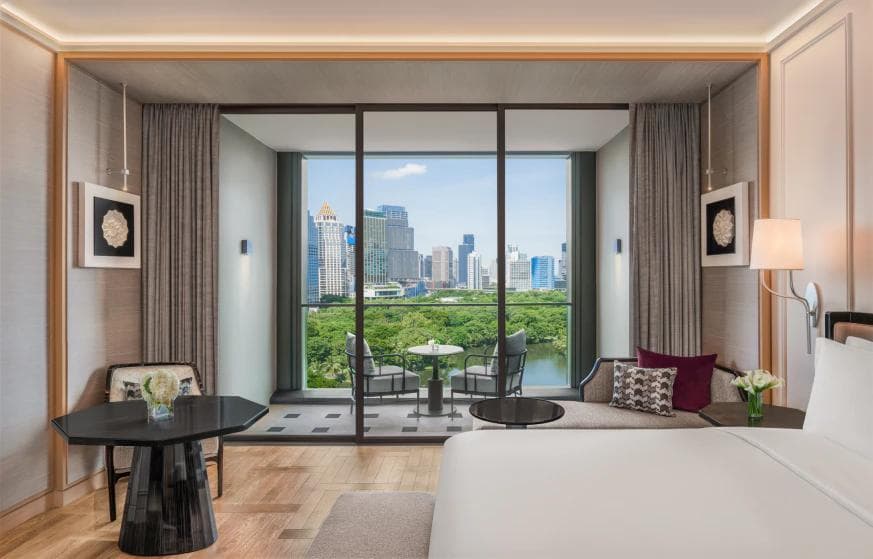
The location at the corner of Wireless Road and Rama IV Road is historically significant. Wireless Road has long been the site of international embassies and the residences of Thai nobility, while Rama IV is currently undergoing a massive transformation from a commercial artery into a sophisticated lifestyle corridor. By placing The Ritz-Carlton at this juncture, the developers are signaling a shift in Bangkok’s center of gravity. The hotel overlooks the 142-acre Lumphini Park, providing guests with a "stabilized view"—a rare luxury in a metropolis characterized by dense concrete and rapid, often chaotic, vertical growth.
Architectural Collaboration and Design Philosophy
The physical structure of the hotel is the result of a high-profile collaboration between Chicago-based architecture firm Skidmore, Owings & Merrill (SOM) and Thailand’s premier architectural practice, A49. The building’s aesthetic is defined by a series of ascending open-air terraces that cut into the skyline, a design choice that facilitates a sense of "vertical greenery" intended to mirror the adjacent Lumphini Park.
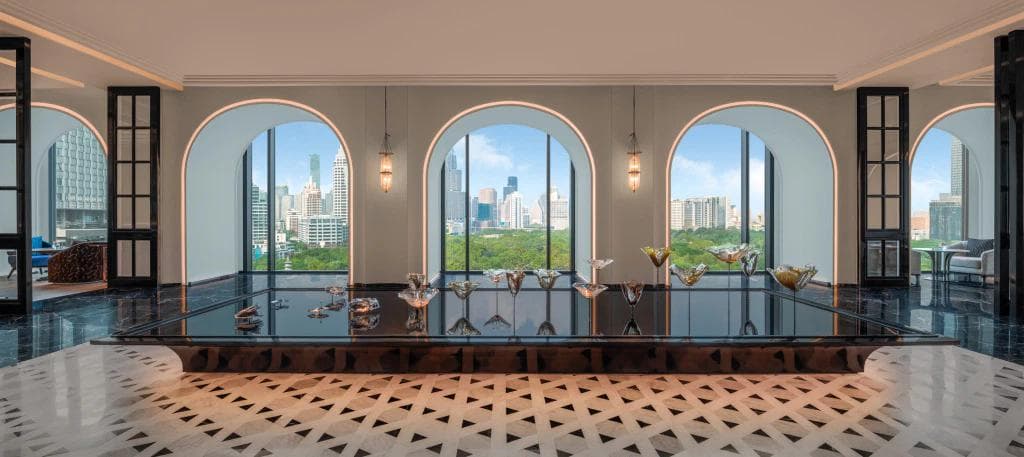
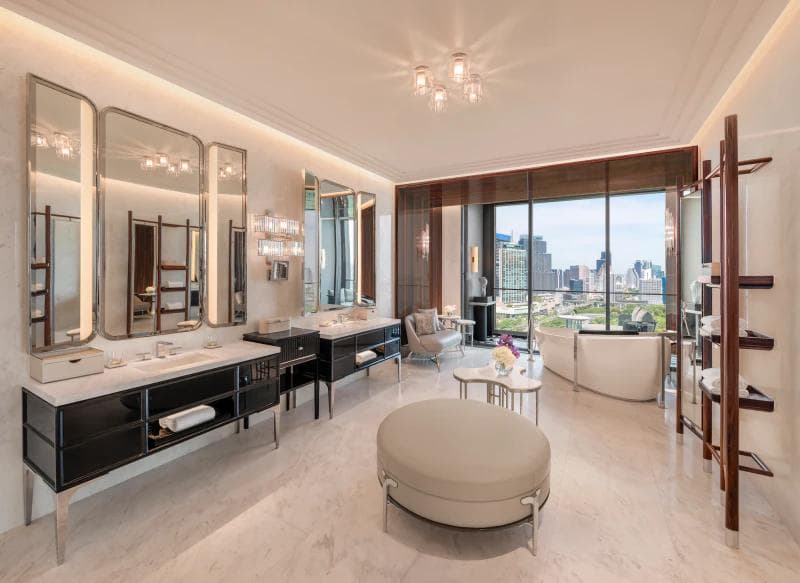
Internally, the design was executed by the renowned Thai studio PIA Interior. The overarching theme, described as a "Meeting of Two Civilizations," seeks to reconcile the 19th-century Thai nobility aesthetic—associated with the heritage of Wireless Road—with contemporary international luxury standards. Rather than opting for the minimalist, glass-and-steel coldness common in modern skyscrapers, the interiors utilize a palette of warm materials and intimate spatial arrangements. The foyer and lobby areas are designed to resemble the drawing rooms of private residences rather than high-traffic commercial spaces, featuring curated black-and-white photography that anchors the brand-new building in a historical context it did not previously inhabit.
Accommodations: Reclaiming Outdoor Space in a High-Rise Context
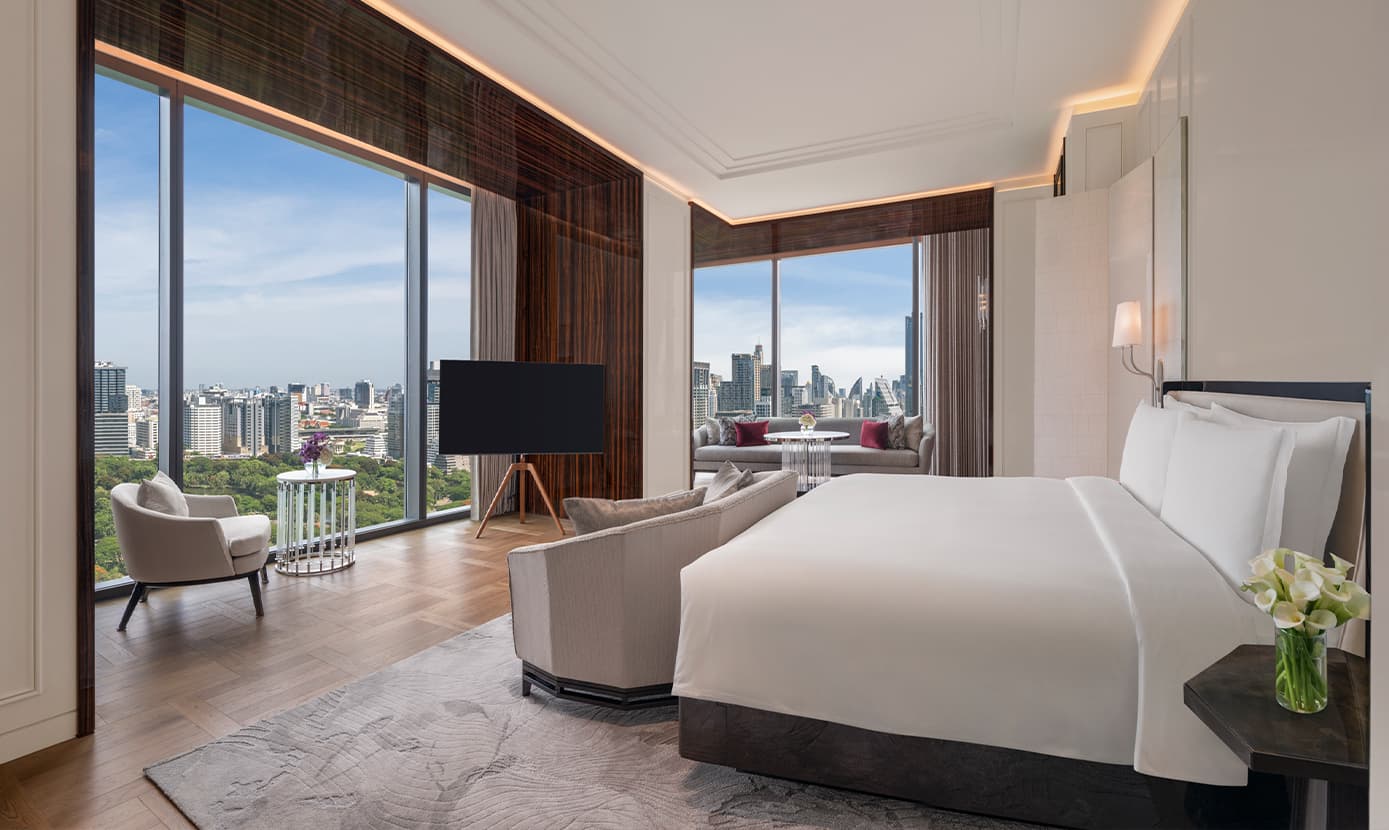
The Ritz-Carlton, Bangkok comprises 259 guestrooms, including 32 suites and a singular, expansive penthouse. In a city where luxury hotels often trap guests behind hermetically sealed glass, this property has introduced a structural innovation: the private loggia. These semi-outdoor spaces allow guests to engage with the city’s tropical climate and vibrant energy while remaining sheltered from the noise and humidity of the streets below.
The room sizes are generous by urban standards:
- Deluxe Rooms: Starting at 50 square meters, these rooms focus on "unfolding" layouts that maximize the sense of volume.
- Suites: These units offer enhanced privacy and separate living areas, often featuring corner views that provide panoramic vistas of the Bangkok skyline and the Chao Phraya River in the distance.
- The Penthouse: At 389 square meters, the penthouse serves as a flagship for the brand’s residential-style luxury, designed for high-net-worth travelers and diplomatic delegations requiring maximum security and space.
Culinary Strategy and Destination Dining
The hotel’s food and beverage program is a deliberate attempt to challenge the traditional "hotel dining" stigma. In a city recognized by the Michelin Guide and the World’s 50 Best Restaurants, The Ritz-Carlton has imported significant culinary talent to ensure its outlets become destinations for locals and travelers alike.
Duet by David Toutain
The centerpiece of the culinary offering is Duet, led by French chef David Toutain, whose namesake restaurant in Paris holds two Michelin stars. Housed in a glass-walled environment, Duet functions as a laboratory for modern French cuisine, emphasizing seasonal ingredients and sensorial presentation. The arrival of a chef of Toutain’s caliber indicates the hotel’s ambition to secure its own Michelin accolades within its first two years of operation.
Lily’s and Caleø
For more communal and high-energy dining, Lily’s offers a reimagining of classic international and Thai plates. Meanwhile, the rooftop bar and lounge, Caleø, leans into the "theatrical romanticism" of the Bangkok night. Caleø is positioned to compete with the city’s famous rooftop scene, offering a cocktail program that emphasizes performance and local botanicals, set against a backdrop of the city’s illuminated skyline.
The Ritz-Carlton Club
Occupying the 23rd floor, the Club Lounge serves as a "hotel within a hotel." This dedicated space offers five daily culinary presentations and a personalized concierge service, catering to a demographic that prioritizes efficiency and exclusivity. The Club Level is a hallmark of the Ritz-Carlton brand globally, and in Bangkok, it has been designed to function as a private sanctuary for business leaders and frequent travelers who wish to bypass the main lobby entirely.
Chronology of Development and Market Entry
The path to the hotel’s 2024 opening was marked by several years of planning and construction within the broader One Bangkok timeline:
- 2017: TCC Assets and Frasers Property announce the One Bangkok project, the largest private development in Thailand.
- 2018-2019: Foundation work begins on the massive 16.7-hectare site.
- 2020-2022: Despite global pandemic disruptions, construction continues on the hotel tower, with a focus on sustainable building practices and LEED Platinum certification goals for the district.
- Late 2023: Interior fit-outs begin, led by PIA Interior and various international consultants.
- Late 2024: The Ritz-Carlton, Bangkok officially opens its doors, coinciding with the first phase of the One Bangkok retail and office launches.
Broader Economic Impact and Industry Analysis
The opening of The Ritz-Carlton, Bangkok comes at a time when Thailand’s tourism industry is pivoting toward high-value, quality-driven growth. According to data from the Tourism Authority of Thailand (TAT), the country aimed for approximately 35 million international arrivals in 2024, with a specific focus on increasing the average spend per visitor.
Industry analysts suggest that the luxury hotel sector in Bangkok is currently at a saturation point, with established players like the Mandarin Oriental, Four Seasons, and Capella maintaining strong loyalties. However, The Ritz-Carlton’s integration into the One Bangkok ecosystem provides a unique competitive advantage. The proximity to premium office towers ensures a steady stream of corporate travelers, while the luxury retail component attracts high-spending leisure tourists.
Furthermore, the hotel’s presence is expected to catalyze further development along the Rama IV corridor. Historically a neglected industrial and commercial strip, the area is now seeing a surge in property values and interest from international investors, largely driven by the "anchor effect" of the One Bangkok project and its associated luxury brands.
Official Perspectives and Brand Mythology
While the Ritz-Carlton brand is often associated with a "one size fits all" corporate template, Marriott International executives have emphasized that the Bangkok property was designed to be "deeply contextual." In statements following the launch, brand representatives noted that the goal was to capture the "chaotic energy" of Bangkok and refine it through the lens of the brand’s legendary service philosophy: "We are Ladies and Gentlemen serving Ladies and Gentlemen."
This service-centric approach is critical in a city where hospitality standards are among the highest in the world. Even mid-tier hotels in Bangkok often provide service that exceeds luxury standards in London or New York. Therefore, the Ritz-Carlton’s success depends on its ability to offer a "tactical possession of serenity"—a phrase used by observers to describe the hotel’s ability to provide a calm, highly organized environment in the midst of one of Asia’s most tumultuous cities.
Conclusion: A New Era for Wireless Road
The Ritz-Carlton, Bangkok is more than just a new luxury hotel; it is a statement of intent regarding the future of the city. By merging high-stakes modern architecture with a nuanced understanding of Thai heritage, the property seeks to redefine what a legacy brand can offer a market that has "seen it all." As One Bangkok continues to mature and more components of the district open to the public, the hotel is poised to remain at the center of the conversation regarding urban regeneration and the globalization of Thai hospitality. In the final analysis, the property suggests that a hotel should not merely be a place to hide from a destination, but a sophisticated gateway that enhances the guest’s connection to it.
