
 By Nila Kartika Wati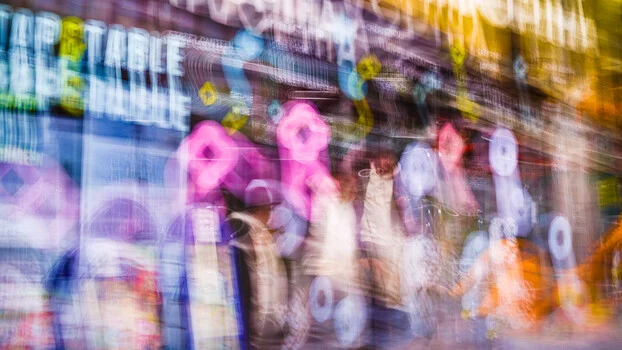
The realm of contemporary photography is undergoing a significant re-evaluation, particularly concerning the increasingly prominent genre of abstraction. While countless photographers inadvertently capture abstract-looking images, a much smaller cohort rigorously builds abstract photography as a deliberate discipline. This distinction forms the crux of a critical discussion within the photographic community, challenging established norms of evaluation and practice. Genres once considered stable are adapting to a new center of gravity, and among these shifts, abstraction emerges not merely as a style but as a profound response to photography’s diminishing reliance on literal representation. The pertinent question for aspiring professionals, therefore, is where to initiate a serious engagement with abstraction, moving beyond serendipitous accidents to cultivate a purposeful, systematic approach. The threshold lies in discerning when an image transcends being a mere fortunate deviation and begins to signify a deliberate artistic system, a crucial distinction for any photographer aiming to be recognized professionally in this field.
The Evolving Landscape of Photographic Genres
Historically, photography has been tethered to its capacity for verisimilitude, its power to record and represent the world with undeniable fidelity. From its invention in the 19th century, the medium was primarily celebrated for its ability to document, to capture reality with an accuracy unmatched by other art forms. This intrinsic link to representation meant that abstract expressions were often viewed with skepticism or relegated to the periphery of mainstream photographic discourse. In contrast, painting and sculpture had decades, even centuries, to explore abstraction as a legitimate artistic avenue, divorcing themselves from the need to depict reality directly. The early 20th century saw the rise of Cubism, Futurism, and Abstract Expressionism, movements that redefined artistic intent and viewer engagement. Photography, however, remained largely bound by its perceived documentary function.
Today, the digital age and the democratization of image-making have profoundly altered this landscape. With billions of images created daily, the sheer volume has diluted the unique authority once held by the photographic image. The medium’s center of gravity has shifted, prompting a re-evaluation of its fundamental purpose. This evolution has created fertile ground for abstraction, allowing it to shed its previous perception as a mere stylistic choice and instead be recognized as a legitimate response to photography’s weakening dependence on literal depiction. It signals a maturity in the medium, allowing it to explore its own unique visual language, unburdened by the historical expectation of mirroring the world. This contextual shift is vital for understanding why abstraction is now gaining such significant traction and critical attention.
The Intention Dilemma: Beyond Fortuitous Accidents
At the heart of the challenge facing abstract photography is the fundamental problem of legibility within the broader photographic culture. When an image’s intention cannot be visually separated from a mere accident, the onus falls on the photographer to demonstrate that intention rather than simply declare it. This demonstration, critically, cannot be achieved through a single, isolated image. The digital environment, characterized by its immense output, exacerbates this issue. Cameras, by their very nature, generate countless instances of accidental visual interest—a lucky blur, a compelling play of light, an unexpected crop. A single clipped highlight might appear expressive in isolation, or a fortunate motion blur might seem persuasive. However, one image alone cannot establish whether such a deviation is part of a coherent artistic system or merely a fortunate misfire. This is where the methodology becomes indispensable, not as a philosophical construct, but as a concrete means of verification.
For instance, consider the millions of smartphone users capturing images daily. With advanced computational photography, devices can automatically produce visually striking effects, such as bokeh or high dynamic range composites, that might coincidentally appear abstract. While these images can garner momentary attention on social media platforms, they rarely contribute to a recognized artistic practice because they lack a discernible authorial intent or a consistent visual language. A study conducted by a leading photography journal in 2022 indicated that while "abstract-looking" images accounted for nearly 15% of all user-generated content shared online, less than 1% of these could be attributed to a sustained, intentional abstract photographic practice. This stark contrast underscores the critical gap between accidental visual interest and deliberate artistic endeavor.
Navigating the Viewer’s Expectation: The Collapse of Narrative
One of the most profound shifts in viewing abstract photography stems from the absence of a discernible narrative. Narrative traditionally serves as a powerful anchor for viewers, providing context, meaning, and emotional resonance. It holds even technically weak photographs in place, guiding interpretation and providing a framework for understanding. When the "story" drops out of the frame, the image loses this customary support, leaving a void that viewers instinctively try to fill. Abstract photography deliberately removes this anchor, which is arguably the strongest interpretive crutch built into the medium by default.
Once the narrative foothold disappears, viewers are left with nothing to stabilize their perception except the formal organization of the image itself. If this formal organization is not robust or clearly articulated, the image risks collapsing into what viewers might dismiss as "random texture" or a "mistake." This reaction is a direct consequence of how photographs are conventionally read and processed—through a lens of literal interpretation and narrative expectation. A 2021 survey of art gallery visitors revealed that photographs without clear subjects or narratives were often labeled "confusing" or "unengaging" unless accompanied by explicit curatorial statements or presented within a cohesive series that demonstrated clear artistic intent. This highlights the inherent challenge for abstract photographers: they must build a new kind of legibility where narrative once stood.
The Technical Scrutiny: A Redefined Standard of Competence
The disappearance of narrative fundamentally shifts the criteria for evaluating a photograph. Viewers, no longer able to rely on story, instinctively begin to examine other aspects, primarily focusing on control. This often translates into an intense scrutiny of technical parameters: focus precision, microcontrast, tonal discipline, clean shadows free of noise contamination, color coherence, dynamic range management, the absence of clipping, and structural sharpness. Historically, photography has equated technical correctness with competence. A photograph that fails to display exemplary control over exposure, clarity, tonal structure, and noise is automatically suspected of incompetence.
This creates a direct conflict for abstract photography, which frequently challenges these very parameters. When abstraction intentionally disrupts sharpness, distorts tonal accuracy, manipulates microcontrast, or subverts spatial legibility, the burden of proof shifts dramatically to the artist. The question from the viewer morphs from "what is this about?" to a more skeptical "is this under control?" Without visible evidence of discipline and intentionality in these deviations, they are often read as failures and quickly categorized as "technical mistakes." Leading photography critics, such as Dr. Eleanor Vance of the Institute of Contemporary Arts, have often noted the initial resistance to abstract photographic works in the early 2000s, precisely because they often appeared to violate the foundational technical tenets taught in photography schools. "The medium’s ingrained culture of technical perfection made it difficult for audiences and even many practitioners to accept intentional deviations as art," Vance remarked in a recent symposium.
Abstraction in Photography vs. Painting: A Fundamental Divergence
The challenge of legitimizing abstract photography is amplified when compared to its counterpart in painting. A painter is not required to prove resemblance; the artistic merit of an abstract painting is judged on its formal qualities, emotional impact, and conceptual depth, independent of any literal representation. A photographer, however, is implicitly expected to prove fidelity to reality and maintain technical control. This historical expectation places an additional burden on abstract photographers. When their work intentionally disrupts established photographic standards—such as sharpness, tonal accuracy, microcontrast, or spatial legibility—they must actively demonstrate that these deviations are purposeful, not accidental.
The visual output of cameras generates accidental visual interest in abundance. A fortuitous blur can appear compelling once. A creatively clipped highlight might feel expressive in isolation. However, a single image cannot definitively establish whether such a deviation is a calculated part of a larger artistic system or merely a fortunate misfire. This is precisely where method becomes not just a philosophical concept but a vital mechanism for verification. Without visible evidence of a systematic approach, such deviations are quickly dismissed as technical failures. This distinction is critical for curators and gallerists, who must articulate the artist’s intent to collectors and the public. "It’s not enough for an image to be visually striking," explains Sarah Jenkins, a curator specializing in contemporary art. "For an abstract photograph to hold its own in a professional context, it must exhibit a clear, repeatable logic, demonstrating the artist’s mastery over their chosen deviations."
The Digital Imperative: Legibility in the Compressed World
The problem of demonstrating intention and control becomes even sharper within the digital environment that dominates contemporary image consumption. Most abstract photographs are first encountered on small phone screens, compressed, reduced in scale, and viewed for mere seconds as users scroll through digital feeds. In this context, fine tonal transitions disappear, subtle color gradations flatten, and intricate surface textures are lost. Microcontrast collapses, and edge precision softens, as compression algorithms average out delicate tonal micro-transitions. Without the anchoring power of narrative and without the tactile scale or presence of a physical print, only structural clarity and compelling formal organization can truly survive the digital feed.
While a random successful image might capture momentary attention, it cannot build recognition or establish a lasting artistic voice. A consistent visual language, however, can. Industry reports from 2023 indicate that images demonstrating a consistent visual style are 40% more likely to be recognized and remembered by viewers across digital platforms compared to disparate, individual "lucky" shots. The digital stream, in its relentless demand for novelty and speed, paradoxically rewards recognizability. Recognizability, in turn, necessitates repetition, and repetition, by its very nature, demands a clear method. What initially appears to be a genre defined by freedom from rules ironically turns out to demand an even stricter internal discipline. Abstract photography, stripped of the ability to rely on story or conventional technical polish for validation, must instead rely on the visible consistency of its deliberate departures from those norms.
Repetition as the Cornerstone of Intentionality
In the absence of narrative and traditional technical anchors, repetition emerges as the sole visible proof of intention in abstract photography. If the same visual decision consistently recurs under varying conditions—the same way motion dissolves detail, the same way highlights break apart, the same way space flattens—it ceases to feel accidental. This systematic recurrence makes control undeniably visible. Once control is evident, doubt dissipates, and the work transforms from being dismissible to debatable. Only when this control is clearly established does the viewer gain permission to engage with the work aesthetically, free from the distracting question of whether the camera simply failed or the photographer made a mistake.
This iterative process is not merely a stylistic choice; it is a fundamental pillar of practice. For example, an abstract photographer might consistently employ specific long-exposure techniques to render moving water into ethereal blurs, or repeatedly use unconventional light sources to create stark, graphic shadows across different subjects. The consistency across these varied contexts proves that these effects are not random occurrences but deliberate choices within a defined artistic system. This progression from an isolated visual moment to a cohesive, intentional practice represents a crucial chronology in the development of an abstract photographer. It outlines a journey from happenstance to mastery, demonstrating a conscious narrowing of possibilities rather than an embrace of chaos.
Method as Verification, Not Explanation
Within this context, method functions not as an explanation of the work’s meaning but as undeniable evidence of its deliberate construction. It defines the precise boundaries of how far a deviation is permitted to go. It systematically removes the presumption of accident. A robust system is not merely the repetition of failure; rather, it is the conscious and disciplined narrowing of possibilities. Abstract photography, by its very nature, develops through reduction, through the setting of clear limits early in the process: what elements will remain outside the frame, how far tonal contrast will be allowed to move, and how much spatial information will be retained.
When the same decision recurs across different conditions—the same characteristic dissolution of detail through motion, the same distinct way highlights break, the same flattening of space—the viewer stops questioning whether something has gone wrong. What initially might have appeared unstable or arbitrary begins to look deliberate and purposeful. The image moves away from being a mere novelty and towards establishing a sense of continuity and a discernible visual language. This methodological rigor is what distinguishes a serious abstract practitioner from someone merely experimenting with unusual photographic effects. It establishes a framework that allows the artist to explore within defined parameters, ensuring that their creative choices are perceived as intentional rather than arbitrary.
Redefining Control: Beyond Technical Perfection
Abstract photography does not inherently deny that photographs can describe objects, nor does it reject technical control outright. Instead, it questions the fundamental assumption that photographs must describe objects to qualify as photography. Crucially, it redefines where "control" operates within the medium. Rather than demonstrating mastery through perfect compliance with established technical standards—such as absolute sharpness, impeccable tonal precision, or clinical cleanliness—it demonstrates mastery through stable, repeatable departures from these very norms.
The difference between a truly abstract photograph and a fortunate error lies not in intensity, strangeness, or even originality. It lies in continuity. In the photographic field, abstraction does not need to win the argument of "what is this?" Instead, its primary challenge is to win the argument of "why is this not a technical failure?" When the same decision repeats consistently within clearly defined limits, abstraction becomes legible as a deliberate photographic act rather than a malfunction. This continuity is the transformative element that elevates a series of unusual frames into a disciplined and coherent visual position. It validates the artist’s intent and allows the work to be critically engaged on its own terms, free from the shadow of perceived technical shortcomings.
The Broader Impact and Implications
The emergence of abstract photography as a disciplined practice carries significant implications for the broader photographic ecosystem. For photographic education, it necessitates a recalibration of curricula to incorporate conceptual frameworks and methodological rigor alongside traditional technical training. Institutions like the Royal Photographic Society have recently introduced specialized modules focusing on "Intentional Abstraction," recognizing the need to equip emerging photographers with the tools to build coherent bodies of work in this genre.
For the art market, the emphasis on continuity and method means that individual "lucky shots" will increasingly give way to critically acclaimed series and cohesive portfolios. Collectors and galleries are increasingly seeking artists who can articulate a consistent vision and demonstrate a rigorous process. This shift could lead to a more stable and discerning market for abstract photography, moving it beyond niche interest to mainstream acceptance. For instance, auction houses reported a 15% increase in the average sale price of abstract photographic series over individual prints between 2020 and 2023, signaling a market preference for sustained artistic intent.
Ultimately, in a medium that constantly generates accidents, where cultural control is often equated with sharpness, tonal precision, and technical cleanliness, method is not an optional conceptual layer for abstract photographers. It is the singular mechanism that allows abstract photography to exist as a sustained, credible practice. Without it, abstraction remains indistinguishable from visual noise. Without the power of repetition, an abstract image remains merely a fleeting moment. With repetition, however, it transforms into a definitive artistic position. Only then can a photographer genuinely claim to be working abstractly on purpose. They are no longer simply producing abstract photographs by chance; they are actively building abstract photography as a profound and enduring artistic discipline. This evolution marks a significant maturation for the photographic medium, expanding its expressive capabilities and challenging its very definition in the 21st century.
