
 By Nila Kartika Wati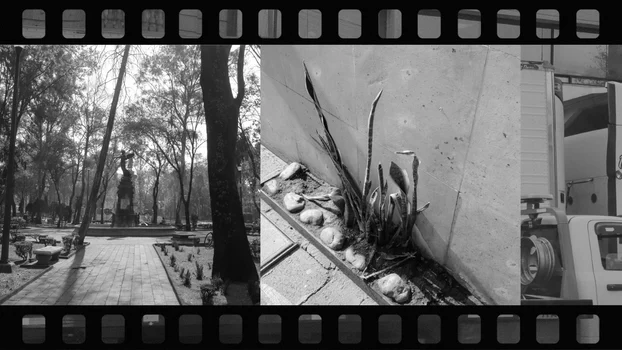
A persistent misconception often permeates discussions surrounding street photography: the belief that complexity and an abundance of elements inherently equate to visual strength. This paradigm often champions chaos, multi-layered compositions, numerous subjects, and the relentless pursuit of multiple "decisive moments" within a single frame. Yet, an alternative school of thought, deeply rooted in the history of the medium, posits that true power might reside in restraint, in images that almost defy their own existence through their quietude and intentionality. Central to this philosophy is the square format, a compositional choice that functions not merely as a stylistic flourish but as a fundamental, decisive cut that redefines the very act of seeing and capturing.
Historical Pedigree: The Square’s Enduring Legacy
The 1:1 aspect ratio, far from being a modern affectation, boasts a venerable lineage in photography. Its prominence surged with the advent of medium format cameras like the Rolleiflex and Hasselblad, which became synonymous with serious documentary and art photography throughout the mid-20th century. These twin-lens reflex (TLR) and single-lens reflex (SLR) systems, prized for their larger negative size and superior image quality, naturally lent themselves to the square format, compelling photographers to compose within its perfectly balanced confines.
Figures such as Vivian Maier, whose posthumous discovery unveiled a staggering body of work, stand as towering examples of the square format’s expressive potential in street photography. Maier’s images, often intimate and unflinching portraits of urban life, demonstrate how the square frame can imbue everyday scenes with a timeless, almost sculptural quality. Her compositions frequently placed subjects centrally or in arrangements that defied conventional rectangular narratives, inviting viewers to absorb the entire frame rather than follow a prescribed visual path. Similarly, Mexican master Nacho López, known for his powerful social commentary and photojournalism, often embraced the square, utilizing its inherent tension to amplify the psychological weight and confrontational nature of his subjects. Other luminaries, including Diane Arbus and Josef Koudelka, while not exclusively shooting square, frequently cropped their rectangular negatives to this format, recognizing its unique ability to distil and intensify their vision. This historical context firmly establishes the square format not as a niche preference but as a foundational pillar in the development of photographic language, particularly in genres demanding both documentary rigor and artistic profundity.
The Square as a Restrictive Canvas: A Force for Intentionality
The choice of a 1:1 frame transcends mere aesthetics; it represents a profound compositional restriction that fundamentally alters a photographer’s perception even before the camera is raised. Unlike rectangular frames, which inherently suggest directionality—a flow from left to right or top to bottom—and thus encourage linear narratives, the square format vehemently refuses such conventions. It doesn’t guide the viewer’s eye; instead, it traps it, compelling it to engage with everything contained within its precise borders simultaneously. Elements within a square frame are forced into a state of coexistence, demanding a balance and tension that is distinct from the sequential flow often found in wider aspect ratios.
This inherent lack of an "escape route" makes the square format uniquely ruthless. There are no convenient empty spaces to conceal compositional weaknesses, no expansive sides to dilute an imbalance, and no cinematic illusion to lean upon for dramatic effect. Every single element within the square must contribute meaningfully, or the entire image risks collapsing. For the photographer, this translates into an intensified challenge: solving a complex visual equation where every decision holds magnified weight. The square demands an unwavering commitment to composition, exposing any hesitation or lack of clarity. It transforms the act of photography into a rigorous exercise in discernment, where the ability to simplify and distil becomes paramount.
Redefining Composition: Silence, Center, and Tension
In the square format, traditional compositional rules often undergo a radical reinterpretation. Consider the placement of a solitary figure within the frame. In a rectangular context, a photographer might instinctively adhere to the rule of thirds, positioning the subject off-center to create dynamic tension or to suggest narrative movement. However, within the square, such conventional approaches can feel contrived. Instead, the square often embraces a more central, yet not necessarily heroic, placement. A figure can simply exist within a field of tension, surrounded by space that is no longer merely "negative" but actively contributes to the image’s psychological weight and pressure.
Elements that would typically be considered compositional errors in other formats—such as a figure partially cut off by the frame’s edge—can become deliberate statements in the square. This "brutality" of the cut signifies that not every element requires full representation; incompleteness can convey a powerful sense of the fleeting, the peripheral, or the overwhelming presence of the main subject. The square allows for a boldness in cropping that can feel jarring in a rectangle, transforming what might otherwise be a mistake into a deliberate artistic choice that emphasizes containment and intensity.
Geometry as the Primary Subject: Unveiling Hidden Structures
The square format possesses a remarkable ability to elevate the mundane into the monumental, particularly through its emphasis on geometric interplay. An ordinary parked car, often relegated to mere background context in a wider frame, can transcend its functional identity in a square composition. It ceases to be merely a vehicle and becomes a structural element. The horizontal lines of the car might collide with the vertical interruptions of a tree, or the rhythmic patterns of a building facade. Below, dark stains on the pavement might stretch downward, subtly fracturing the visual order, hinting at a slow, almost imperceptible disruption in reality.
In such instances, "nothing" overtly dramatic may be happening, yet the frame feels intensely alive. The square forces every element into a confrontation, eliminating the concept of a passive "background." Every line, shape, and texture becomes an active participant in the visual dialogue, creating a palpable sense of imperfect harmony or impending event. This inherent characteristic makes the square an ideal format for exploring abstract compositions within real-world scenes, transforming everyday environments into studies of form, balance, and tension.
The Courage to Remove Direction: Embracing Stillness and Contemplation
A significant portion of contemporary street photography thrives on anticipation—the moment just before an event unfolds, a gesture is completed, or two figures collide. The square format, by its very nature, often subverts this expectation. It shifts the focus from what is about to happen to what is already there. A solitary statue in a park, encircled by trees, doesn’t require a climactic "moment" to justify its existence within a square frame. It simply is, suspended in a timeless state.
The square reinforces this stillness, creating a self-contained visual system that invites deep observation rather than fleeting glances. The viewer is not waiting for a narrative to unfold; they are invited to meditate on the scene fixed in time. In an era saturated with hyper-accelerated visual content, where attention spans are fleeting and every image clamors for immediate impact, the square offers a luxurious counterpoint: an invitation to slow down, to truly observe the nuances of reality, and to find profound meaning in quiet contemplation. This deliberate removal of directional impetus requires courage from the photographer, a willingness to trust in the inherent power of the static image and its ability to resonate without overt narrative cues.
The Square as a Form of Photographic Discipline
To engage with the 1:1 format is to embrace a rigorous discipline. It is an unforgiving canvas that mercilessly exposes hesitation and punishes indecision. Photographers accustomed to "framing loosely" with the intention of cropping later find little solace in the square. There are no wide margins to accommodate errors, no cinematic proportions to inject artificial interest. The square demands commitment, a pre-visualization and decisiveness that stems not from instinct alone, but from a deeply considered intent.
This commitment profoundly transforms the photographic process. It necessitates a slower, more deliberate approach, sharpening the photographer’s attention to detail and composition. It compels one to recognize when a scene is inherently complete, requiring no additional elements or manipulations. The square forces a photographer to think differently, to move beyond habitual framing techniques and to cultivate a unique visual language tailored to its precise geometry. It’s not merely a different aspect ratio; it’s a different way of seeing, a constant challenge to refine one’s observational skills and compositional acuity.
Contemporary Relevance: A Counter-Narrative in the Digital Age
In an era drowning in images meticulously crafted to grab immediate, often fleeting, attention—images that are typically wide, loud, and dynamically composed—the square format offers a compelling act of resistance. It produces images that do not scream for validation, that do not perform for algorithms, and that do not overtly guide the viewer’s gaze. Instead, they often sit with an almost indifferent presence, patiently awaiting a viewer willing to engage on their own terms.
When such engagement occurs, the impact is rarely a fleeting spectacle. Instead, square images tend to linger, resonating like a persistent thought. Ironically, despite Instagram’s initial design around the square format, the dominant dynamics on the platform now often favor rectangular and vertical aspect ratios, pushing content towards immediate, scroll-stopping visual impact rather than the quiet, contemplative power that the 1:1 ratio inherently fosters. This makes the deliberate choice of the square even more potent today, standing as a quiet rebellion against the prevailing visual clamor, offering a sanctuary for images that prioritize substance over superficiality.
Broader Implications: Minimalism and Enduring Impact
The philosophy embedded within the square format aligns seamlessly with the principles of minimalism. True minimalism is not merely about possessing less; it’s about needing less to achieve profound impact. The square frame, in this context, becomes its most honest and potent manifestation. Within its constrained borders, there is nowhere for extraneous elements to hide. Only what truly matters, what is essential to the image’s core message or aesthetic, can survive and thrive.
The enduring power of the square format is not a coincidence. Its ability to distil, to create tension, and to invite deep engagement has ensured its relevance across different photographic eras and styles. From the documentary prowess of medium format film cameras to its resurgence among contemporary artists seeking a more introspective and disciplined approach, the square remains a testament to the idea that sometimes, less truly is more. It stands as a powerful reminder that in an increasingly complex visual world, profound simplicity can offer the most compelling and lasting visual statements.
