
 By Jia Lissa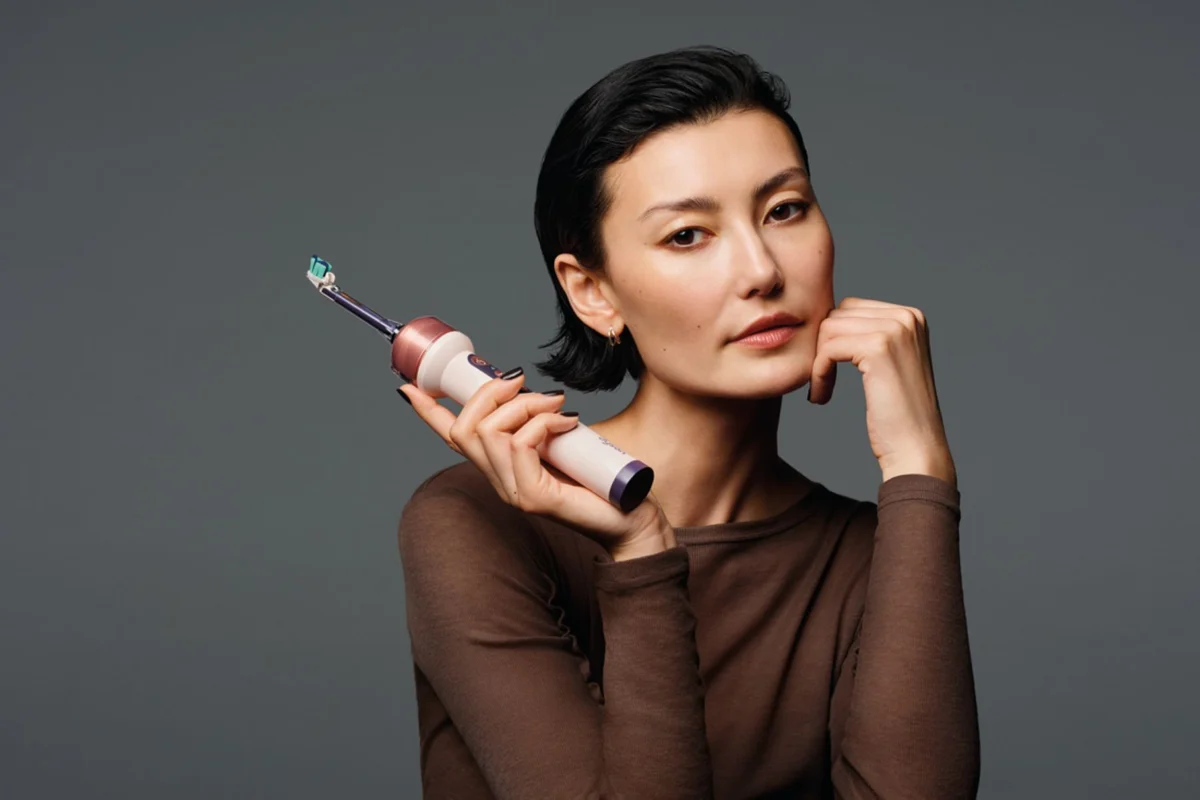
Oral healthcare, often relegated to the background of global news cycles, has been thrust into the spotlight with Dyson’s latest technological innovation: the CameraJet electric toothbrush. Launched earlier this week, the device has sparked a flurry of headlines and intense discussion, not just for its groundbreaking features, but also for its eye-watering price tag of $499. This ambitious entry into the dental hygiene market by the engineering behemoth signals a bold new frontier in personal care technology, raising questions about the future of oral health and the value of advanced consumer electronics in our daily routines.
The CameraJet represents a significant departure from conventional oral hygiene devices, aiming to integrate brushing and flossing into a single, sophisticated operation. Its core functionality revolves around a unique system that simultaneously brushes teeth and cleans interdental spaces. As the brush head oscillates, it emits a controlled fan-like spray of mouthwash or water directly into the gaps between teeth. This liquid flow is not continuous, unlike traditional water flossers; instead, it is precisely triggered. The innovation lies beneath the brush head, where a 100-megapixel macro lens, no larger than the tip of a pencil, operates at an astonishing 28 frames per second. This high-speed imaging allows the toothbrush to intelligently detect the spaces between teeth, activating the spray only when necessary. To ensure the camera’s accuracy, users are advised to use SLS-free toothpastes and mouthwashes, as foaming agents can interfere with the optical detection system. While Dyson has developed its own CameraJet-compatible oral care products, these are not yet available.
The genesis of the CameraJet dates back to last spring, when Allure‘s executive editor, Jenny Bailly, was granted an exclusive, albeit clandestine, preview at Dyson’s laboratories in southwest England. Operating under strict non-disclosure agreements, similar to intelligence agencies, the project was referred to by a code name in communications until its public unveiling. This secrecy meant that initial reports, including Allure‘s exclusive coverage, could not incorporate independent expert opinions prior to the official September 1st announcement.
The public’s reaction to the CameraJet’s announcement was swift and polarized, particularly on social media platforms. Dyson’s Instagram post detailing the launch was inundated with comments reflecting a mixture of awe, skepticism, and humor. One widely circulated comment quipped, "For $500 it better take X-rays and straighten my hair," capturing the sentiment of many who questioned the justification for such a premium price. Another user expressed a common concern regarding integrated technology: "oh great, another camera I’ll have to put tape over." Yet, amidst the critiques, a significant portion of the online discourse revealed a profound intrigue, with sentiments like "Overstimulated but very intrigued" appearing frequently. Even established oral care brands engaged with the conversation. Listerine, for instance, posted on Instagram, "Friendly reminder: Listerine reaches your teeth, gums, tongue, cheeks, and everything in between to complete your oral care routine. No cameras. No fancy tech. Just a simple swish for a whole mouth clean." While Listerine effectively combats germs and freshens breath, dental professionals generally regard it as a supplementary product rather than a replacement for brushing and flossing.
In the days following the launch, social media feeds were flooded with content from non-dentist influencers who had received early access to the CameraJet. However, a noticeable gap emerged in the initial wave of reviews: a scarcity of professional dental opinions. By the end of the week, only one "I tried it" video from a dentist had surfaced, suggesting that the dental community had not yet been fully engaged in the product seeding process. In response, Allure reached out to four dentists to gather their perspectives on what is arguably the most expensive toothbrush in the 5,000-year history of oral hygiene. None of the contacted dentists had received a CameraJet for testing or had yet invested in the device themselves, meaning their assessments were based solely on publicly available information and their professional understanding of dental health.
Dentist Perspectives on the Dyson CameraJet
The dentists consulted by Allure expressed a general sense of intrigue and, in some cases, admiration for the CameraJet’s innovative approach. Dr. Brian Kantor, DDS, a cosmetic dentist at Lowenberg, Lituchy & Kantor in New York City, highlighted the potential of technology to improve patient compliance. "Anything that can make patients more consistent with their oral hygiene gets my attention," he stated. "The idea of combining brushing and interdental cleaning into one routine makes a lot of sense, particularly because one of the biggest problems we see is that patients brush but don’t consistently floss." Despite this acknowledgment of the device’s conceptual merit, Dr. Kantor indicated a cautious approach to immediate recommendation: "I want to see how it performs in the real world over time before I tell patients they need to go out and buy it."
Dr. Vanna Stone, DMD, a dentist at Gentle Caring Dentistry in Livingston, New Jersey, echoed the sentiment for empirical evidence, emphasizing the need for robust clinical trial data. Dyson has asserted that internal and external lab testing demonstrates the CameraJet’s superior plaque removal capabilities compared to market leaders. However, the primary data shared with Allure was a four-week study involving 60 subjects, comparing the CameraJet against a manual toothbrush. While the CameraJet outperformed the manual brush across all metrics, Dr. Stone noted, "so would an Oral-B or Sonicare electric toothbrush." She currently recommends both Oral-B and Sonicare to her patients, personally favoring Oral-B. Dr. Stone articulated her desire for comparative studies: "I want to see a study comparing the results of a Sonicare or Oral-B, plus floss, to this toothbrush. Are the results equivalent? Better? How much better?" Nevertheless, she conceded that even equivalent results might drive sales, as the novelty could make brushing more engaging for many patients.
A significant point of discussion is the absence of an American Dental Association (ADA) Seal of Acceptance for the CameraJet. This seal signifies that a product has undergone independent testing by dental experts to verify its safety and efficacy. Currently, 16 electric toothbrushes bear this distinction. While the ADA seal is a valuable guide for many consumers and dental professionals, it is not the sole determinant of dental care product recommendations. The application process for manufacturers involves substantial fees, starting at $20,000, which may be a barrier for some companies. Dr. Michael Wei, DDS, a cosmetic dentist in Manhattan, shared that his preferred recommendation for patients is the Oral-B Pro 1000 Power Rechargeable Electric Toothbrush, which, despite not having the ADA seal, is part of a brand that has other electric toothbrushes that do.
The Role of the Camera: Enhanced Visualization or Over-Complication?
The CameraJet’s integrated micro-camera serves a dual purpose: guiding the device to interdental spaces and providing users with a real-time visual feed via the Dyson app. This feature, which captures 28 images per second to generate a video stream, has been identified as a key selling point.
Dr. Wei views the camera as the "biggest positive" of the CameraJet, positing that it empowers users to monitor their brushing habits in real-time, identifying and correcting missed spots. Dr. Kantor sees the camera’s potential as an educational tool, enabling patients to visualize their oral hygiene practices more effectively. However, he also raised a pertinent concern: "My only concern is that patients shouldn’t become overly focused on diagnosing themselves from what they see on a camera." He cautioned that self-diagnosis based on visual cues from the toothbrush camera can be misleading, as it does not replace a professional dental examination. This aligns with research indicating that health-tracking devices can sometimes exacerbate unhealthy obsessions.
The concept of a camera embedded in a toothbrush has also raised privacy concerns among consumers, with some labeling it "invasive" and "a privacy nightmare waiting to happen." While the dentists interviewed did not explicitly address this aspect, the public reaction indicates a level of apprehension regarding data collection within such a personal device. Dyson has stated that the data captured from the oral cavity is not stored on its app or in the cloud, aiming to mitigate these privacy worries.
Does the CameraJet Render Traditional Flossing Obsolete?
A unanimous consensus emerged among the dentists interviewed: the Dyson CameraJet is not a substitute for traditional flossing. Dr. Stone emphasized the necessity of string floss for removing plaque from tightly packed or crowded teeth, explaining that the physical act of snapping floss between teeth is crucial. She cited the experience of an Irish dentist who, after using the CameraJet, found both plaque and food particles (specifically chicken) remaining between her teeth. This dentist employed a common testing method: flossing after using the CameraJet to see if any residue remained. While Allure editors testing the device reported feeling "very clean" and found no significant debris on their floss, they lacked the plaque-disclosing tablets used in the Irish dentist’s trial, which would provide a more definitive assessment.
Dr. Stone also clarified that the CameraJet should not replace regular water-flossing. She recommends water flossers like Waterpik for patients with periodontal pockets, bridges, or crowns that make manual cleaning difficult, where a focused water stream is necessary. Based on current understanding, the CameraJet’s design appears limited to interdental cleaning during brushing, rather than addressing these specific clinical needs.
Dr. Kantor maintained that traditional floss remains the "gold standard" for oral hygiene, provided it is used correctly and consistently. However, he acknowledged the CameraJet’s potential for a significant portion of the population: "For the enormous number of patients who simply don’t floss consistently, a device that automatically cleans between the teeth every time they brush could potentially be a significant improvement over what they’re currently doing." He also pointed to its utility for older patients with reduced dexterity who struggle with traditional flossing. Dr. Stone echoed this sentiment, suggesting the CameraJet could be a valuable option for individuals experiencing hand mobility issues.
The $500 Question: Is the Dyson CameraJet Worth the Investment?
Evaluating the economic proposition of the CameraJet involves a stark comparison with conventional oral hygiene tools. For $500, one could purchase approximately 360 basic manual toothbrushes, sufficient for nearly 104 years if replaced every three to four months as recommended by dentists. The market for electric toothbrushes offers a wide range, from $20 to $380 for high-end models like the Philips Sonicare 9900 Prestige. Even the award-winning Oral-B iO Series Electric Toothbrush is priced significantly lower than the CameraJet. While Dr. Stone acknowledges that more expensive electric toothbrushes can be a worthwhile investment, lasting up to a decade, the CameraJet’s appeal hinges on its advanced technology. The device comes with a two-year limited warranty, a standard offering that leaves consumers responsible for repairs or replacement beyond that period.
Dr. Wei expressed a willingness to recommend the CameraJet, particularly for individuals with progressive dental issues such as gum disease or early cavities. He believes the $500 price tag could be justified in such cases. However, he also conceded that for the average consumer, the CameraJet might be perceived as a luxury item, its high-tech features, while intriguing, may not offer long-term value commensurate with the cost.
Dyson cites a 2025 World Health Organization statistic indicating that 3.7 billion people are affected by oral diseases globally. However, the accessibility of a $500 toothbrush in the context of global oral health disparities is a significant concern. In countries like Burundi, where $500 represents double the annual per capita income, such a device is financially out of reach for the vast majority of the population affected by oral diseases.
When considering truly impactful advancements in oral health, Dr. Stone firmly stands by fluoridation, describing it as a "cost-effective and hugely impactful" breakthrough. Similarly, Dr. Ivona Igerc, DDS, a London-based dentist, asserted, "No toothbrush is worth $500. A standard $10 manual brush or a $70 sonic toothbrush removes plaque just as effectively. High-end tech doesn’t change the laws of friction or fluid dynamics."
Dr. Kantor reiterated that the effectiveness of a toothbrush should be measured by its impact on patient health, not by its technological sophistication: "Ultimately, I don’t care whether a toothbrush has AI, a camera, or an app just because those features sound impressive. I care whether my patients’ mouths are healthier because they’re using it."
The prevailing sentiment among the interviewed dentists mirrors the approach dermatologists take with sunscreen recommendations: the most effective product is the one that users will consistently employ. As Dr. Stone aptly summarized, "if it excites you and you want to spend $500, I fully support your oral care journey." Ultimately, the Dyson CameraJet’s success will likely depend on its ability to demonstrate tangible improvements in oral health outcomes that justify its premium price point, or to captivate consumers with its technological novelty, turning a once-mundane task into an engaging, high-tech experience.
