
 By admin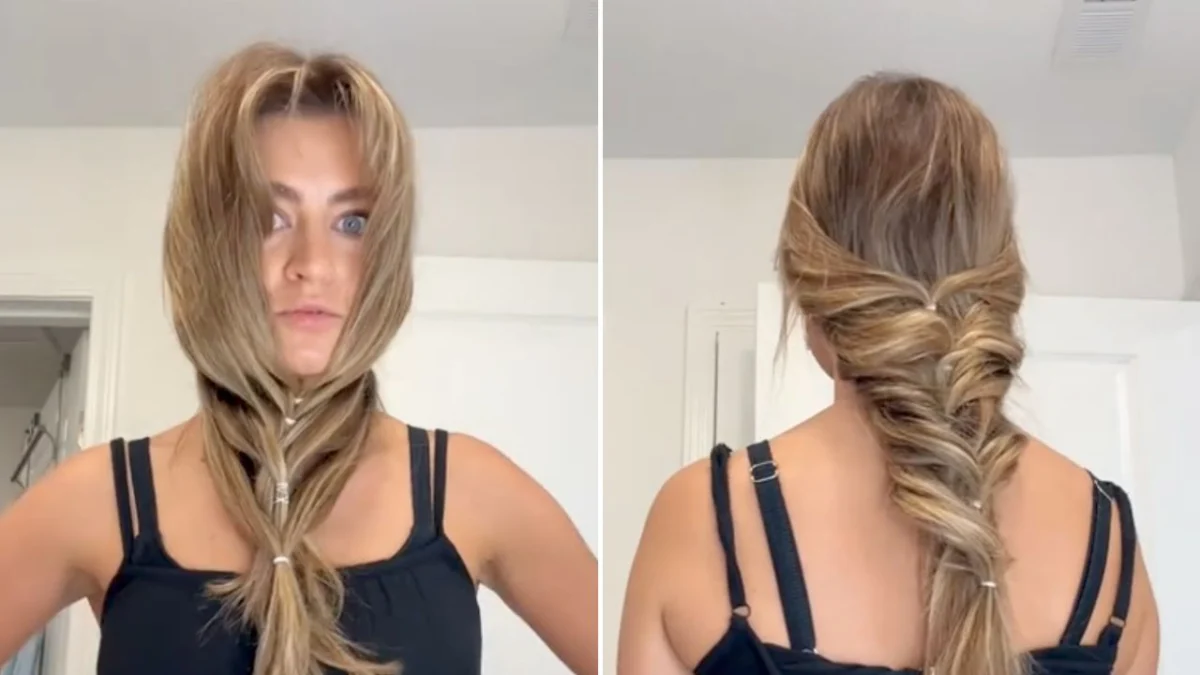
The digital realm of social media, particularly platforms like TikTok, has become a fertile ground for rapidly evolving trends, and the latest to capture widespread attention is the "beard braid." This innovative hairstyling technique, which initially appears unconventional – involving tying hair under the chin before a strategic flip – has evolved from a curious visual gag into a sophisticated method for creating complex, woven hairstyles. What began as a playful experiment has gained significant traction, demonstrating the power of viral content to redefine traditional styling approaches and offer accessible, yet visually striking, hair solutions for millions of users.
The Genesis of a Viral Trend
The "beard braid" trend began to gain significant momentum on TikTok in late 2023 and early 2024. Users, often documenting their initial attempts with a mix of skepticism and amusement, began sharing videos showcasing the transformation. The core technique involves gathering sections of hair from the front of the head and tying them together beneath the chin. A crucial element is often leaving a small gap or loop within this initial knot. Upon flipping the tied hair backward over the head, the hair is guided through this opening, creating a foundational structure for what then appears to be an intricately braided or woven style. The visual impact is immediate: a seemingly impossible feat of hair manipulation that results in a polished, textured look without the typical painstaking effort of traditional braiding.
Data from social media analytics platforms indicates a sharp increase in searches and hashtag usage related to "beard braid" and its variations during this period. Early videos often garnered millions of views within days, fueled by user engagement through likes, shares, and duets, where others would attempt the style themselves. This rapid dissemination is a hallmark of TikTok’s algorithm, which favors content that encourages interaction and replication. The trend’s appeal lies in its accessibility; it requires minimal tools—often just hair ties—and can be adapted to various hair lengths and textures, making it a democratic styling solution.
Unpacking the Technique: From Novelty to Versatility
At its heart, the "beard braid" is a clever application of principles found in other braiding techniques, such as the pull-through braid or certain knotting methods, but reimagined through a unique preparatory step. The initial tying under the chin acts as a unique anchor point, allowing for a cascading effect when the hair is flipped. This method bypasses the need to meticulously section hair from the scalp downwards, offering a shortcut to a visually complex outcome.
Experts in hairstyling have noted the ingenuity of the trend, recognizing its potential beyond a fleeting social media fad. "What’s remarkable about the ‘beard braid’ is its ability to create a three-dimensional structure with minimal manipulation," stated celebrity hairstylist and salon owner, Anya Sharma. "It leverages the natural fall of hair and the tension created by the initial tie to build a pattern that appears far more intricate than the actual steps involved. It’s a fantastic example of how creative problem-solving can emerge from user-generated content."
The trend’s virality has also spurred innovation, with users experimenting with numerous variations. What started as a single, somewhat rudimentary execution has branched into a spectrum of styles, demonstrating the adaptability of the core concept. This evolution is a testament to the collaborative nature of online trends, where initial inspiration is quickly built upon and refined by a global community.
Exploring the Variations: A Spectrum of Styles
The adaptability of the "beard braid" has led to the emergence of several distinct variations, each offering a unique aesthetic and catering to different preferences and hair types. These interpretations showcase how a single viral hack can spawn a diverse range of styling possibilities.
1. The Curly Accessorized Hairstyle
This variation particularly highlights the potential of the "beard braid" on textured hair. The technique begins with gathering front tendrils and securing them under the chin with a deliberate gap in the knot. When flipped back, the hair naturally pulls through this opening, forming the base of a braided structure. The process then involves dividing the remaining hair into two sections and incorporating neighboring strands, reminiscent of a pull-through braid, to create a net-like effect across the back of the head. The visual appeal is often enhanced by adding decorative elements such as hair piercings or pins, injecting a personalized flair. This approach is lauded for its ability to create a cohesive and visually arresting style that complements the natural texture of curly hair, making it appear artfully constructed.
2. The Bubble Braid Half Updo
For those seeking a more playful and voluminous interpretation, the bubble braid half updo offers a fresh take. The initial tying under the chin remains, but the connection point is made mid-strand rather than at the ends. This creates a distinct segment that is then transformed into bubble braids. This involves securing smaller elastics along the length of the hair at regular intervals, followed by gently pulling each section outward to create a puffed, voluminous effect. When flipped back into a half-up style, the combination of the underlying beard braid structure and the bouncy bubble braids results in a polished, modern look that balances architectural complexity with a soft, airy finish.
3. The Flipped-Back Look
Considered the most beginner-friendly variation, this style emphasizes simplicity and a consistent pattern. The process involves tying side sections of hair together under the chin, followed by gathering adjacent sections and repeating the process, working backward until all hair is pulled forward in a "beard-like" fashion. The subsequent step is a satisfying flip of each section back over the head, carefully tucking and smoothing the tails. This method results in a structured, almost regal braid that evokes classical aesthetics, often compared to Grecian updos. Its straightforward execution makes it an accessible entry point for those new to the trend, delivering a sophisticated outcome with minimal complexity.
4. The Braided Style
This variation integrates traditional braiding skills with the "beard braid" concept for a more defined and intricate outcome. It begins by tying two thin strands under the chin to create a foundational anchor, which are then braided all the way to the ends. Subsequently, side strands are progressively attached directly onto this central braid, branching outwards like limbs of a tree. Unlike the woven net appearance of other variations, this style offers a more pronounced, structured, and defined braided look. It is often seen as an evolution of "no-hair-tie" braid hacks, offering a method that appears labor-intensive and polished, ideal for occasions where a meticulously styled look is desired.
5. The Twisted and Flipped Hairstyle
Designed for a romantic and textured half-updo, this variation offers a softer, more organic aesthetic. The initial step involves tying the first two sections together under the chin, followed by flipping them backward towards the nape of the neck. Two additional sections are incorporated using the same twisting and flipping technique, ultimately securing everything into a loose half-up style at the back. The resulting look possesses a tousled, woven quality that feels both intentionally structured and effortlessly relaxed. This style is particularly effective on second-day hair, where natural oils and texture provide better grip and hold, contributing to its artfully disheveled charm.
Broader Implications and Future of Viral Hairstyling
The "beard braid" phenomenon is more than just a passing trend; it reflects a broader shift in how hairstyling information and inspiration are disseminated and adopted. The accessibility of platforms like TikTok allows for the democratization of hairstyling, empowering individuals to experiment and share their discoveries with a global audience. This user-generated content often bypasses traditional gatekeepers of beauty trends, leading to more diverse and inclusive styles gaining popularity.
The rapid adoption and adaptation of the "beard braid" highlight several key implications for the beauty industry:
- Innovation through Accessibility: Complex hairstyles that once required professional intervention are now being deconstructed and simplified through viral hacks, making them accessible to a wider demographic.
- Empowerment of Creators: Individual users on social media have become influential trendsetters, driving demand for specific techniques and products.
- Algorithmic Influence: The way content is promoted and discovered on platforms like TikTok directly impacts the lifespan and evolution of trends.
- Fusion of Simplicity and Sophistication: The "beard braid" exemplifies how a simple, almost comical, starting point can lead to visually sophisticated and elegant results.
The long-term impact of such trends is the continuous innovation within hairstyling. As users become more adept and creative with techniques like the "beard braid," it is likely to inspire new methods and variations. Furthermore, the ease with which these styles can be learned and replicated encourages a culture of experimentation, where individuals feel more confident in trying new looks. Tools like virtual try-on applications, such as TheRightHairstyles’s tool and the HairHunt app (available on iOS and Android), further support this by allowing users to visualize potential styles before committing, bridging the gap between online inspiration and real-world application. The "beard braid" serves as a compelling case study in the power of digital communities to redefine and democratize the art of hairstyling, proving that even the most unconventional ideas can blossom into widely embraced and admired trends.
