
 By admin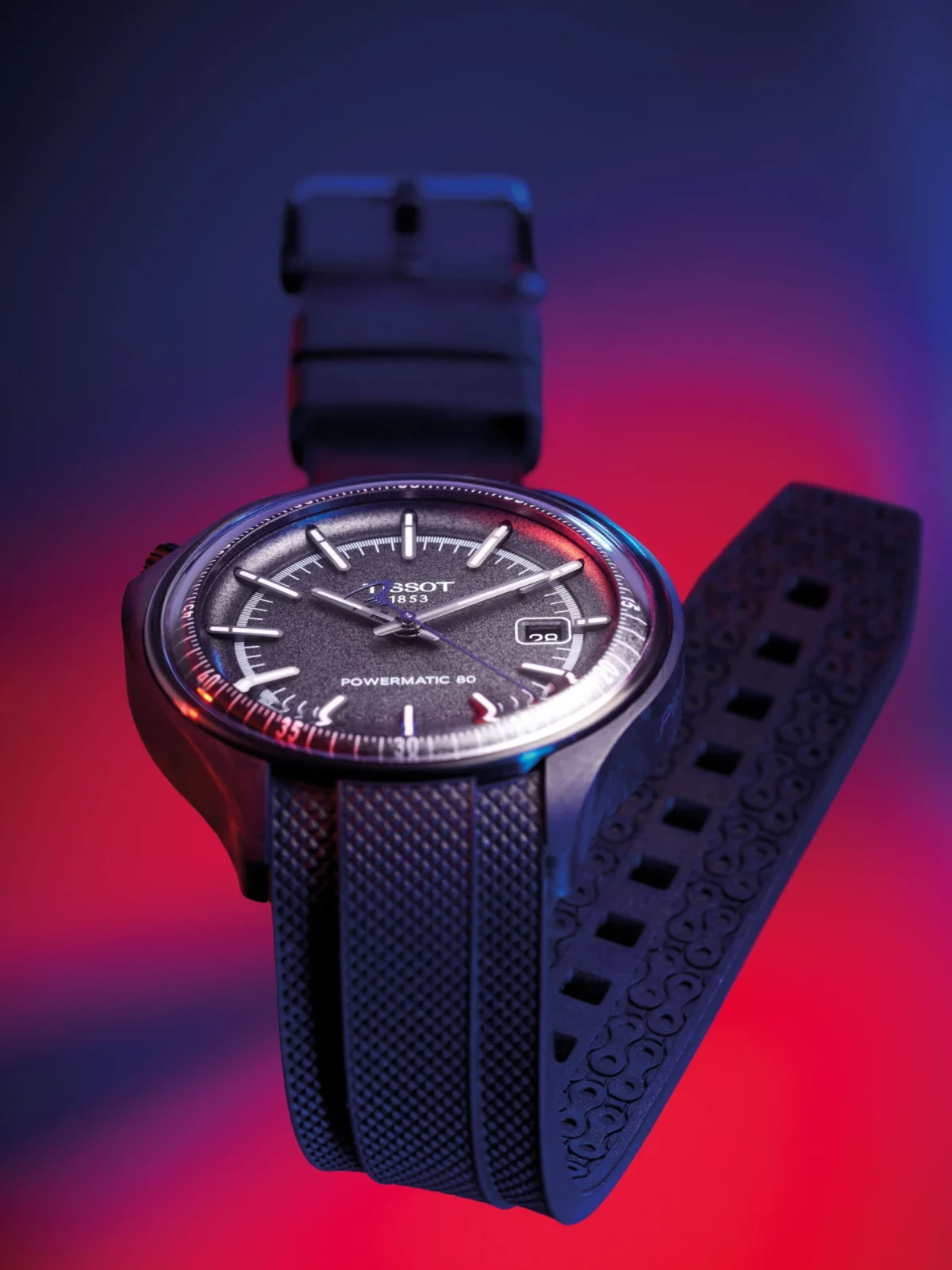
The Swiss watchmaking industry has long been defined by a dichotomy between the artistic pursuit of haute horlogerie and the rigorous demands of industrial precision. At the center of this intersection stands Tissot, a Le Locle-based manufacture founded in 1853, which has transitioned from a traditional watchmaker into a global powerhouse of sporting infrastructure. In the modern era, Tissot’s identity is inextricably linked to the world’s most demanding athletic stages, including MotoGP, professional cycling, and the National Basketball Association (NBA). For Tissot, timing is not merely a branding exercise; it is a complex technological mandate where thousandths of a second determine the difference between historic victory and competitive obsolescence. By orchestrating multi-sensor timing ecosystems that span continents, Tissot has redefined the role of a timekeeper, translating elite performance into mechanical substance for a global audience.

The Tarmac Crucible: MotoGP and the Engineering of Extreme Velocity
The partnership between Tissot and motorcycle Grand Prix racing represents one of the most enduring alliances in modern motorsport. While the official appointment of Tissot as the Official Timekeeper of the FIM MotoGP World Championship occurred in 2001, the brand’s pedigree on the track dates back to 1953, when it provided timing services for the Motorcycle Grand Prix of Bern. This historical foundation was further solidified in the 1980s through the sponsorship of Swiss rider Philippe Coulon, creating a legacy of authentic involvement that predates the commercialization of modern sports marketing.
In the contemporary MotoGP environment, riders operate at the absolute limit of human and mechanical tolerance. With machines exceeding 300 horsepower and reaching top speeds of 360 km/h, the margin for error is non-existent. Tissot’s responsibility in this arena involves the deployment of a mobile timing infrastructure capable of absolute reliability under extreme vibrational and electromagnetic stress. Each motorcycle is equipped with a high-frequency transponder that interacts with induction loops and optical sensors embedded at sector boundaries and pit lanes.

The definitive results of a race are determined by high-speed digital scanning photo-finish cameras, which capture thousands of line-scans per second. This technology allows race officials to verify results down to one-thousandth of a second (0.001s), ensuring that the integrity of the sport remains uncompromised. This technical rigor is mirrored in Tissot’s 2026 horological novelties, specifically the T-Race MotoGP Automatic Chronograph.
At the heart of this collection lies the Valjoux A05.951, a skeletonized automatic movement that represents a significant technical milestone. Developed from the historic Vallée de Joux lineage, this 4 Hz movement features a Nivachron balance spring—a titanium-based alloy highly resistant to magnetic fields—and a 68-hour power reserve. The use of a free-sprung balance with variable inertia studs marks an evolution in precision and shock resistance, utilizing ETA’s proprietary Nivachoc A system to protect the balance staff during the high-impact conditions typical of motorsport-inspired use.

A Symphony of Endurance: The Fifty-Year Legacy of Professional Cycling
If MotoGP is a test of instantaneous reaction, professional cycling is the ultimate trial of human endurance and tactical patience. Tissot’s involvement in cycling spans over five decades, beginning with support for events like the Mellaha Circuit in Tripoli and the Six-Day Races in Madrid during the mid-1960s. By 1995, Tissot had entered a landmark partnership with the Union Cycliste Internationale (UCI), becoming the Official Timekeeper for all world championships across road, track, mountain bike, and BMX disciplines.
Timing a three-week Grand Tour like the Tour de France or La Vuelta a España presents a logistical challenge of immense proportions. Over 21 stages covering more than 3,500 kilometers, Tissot’s specialists must track nearly 200 riders across diverse terrains, from torrential mountain passes to chaotic urban sprints. The system relies on satellite-synchronized transponders mounted beneath the saddles of each bicycle.

The most critical moment for a cycling timekeeper is the mass sprint. When a peloton crosses the finish line at 70 km/h, the physical overlap of front tires makes human judgment impossible. Tissot’s line-scan cameras record up to 10,000 frames per second, creating a composite image that allows commissaires to distinguish gaps as small as one-tenth of a millimeter. This level of precision has been championed by ambassadors like Slovenian rider Primož Roglič, whose career transition from ski jumping to Grand Tour dominance mirrors Tissot’s own pursuit of versatile excellence.
To celebrate this legacy, Tissot has introduced the Pinarello 43mm Special Edition. This timepiece is the result of a collaboration with the legendary Italian bicycle manufacturer Pinarello, whose frames have carried athletes to 15 Tour de France titles. The watch case is a technical achievement in itself, utilizing a forged carbon composite—a material synonymous with high-end bicycle frames—paired with 316L stainless steel and a black ceramic bezel. The design features an asymmetrical silhouette inspired by aerodynamic fork flaps, while the central seconds hand incorporates Pinarello’s "P" monogram in an iridescent Borealis finish.

The Hardwood Pulse: Revolutionizing the NBA’s Chronometric Standards
Tissot’s entry into the North American sporting landscape in 2015 marked a historic shift, as it became the first Official Timekeeper for the NBA, WNBA, and NBA G League. This partnership was recently extended through a landmark multiyear agreement, securing Tissot’s presence at NBA Global Games in Europe and beyond for the next decade.
The most visible manifestation of this partnership is the Tissot shot clock. For the 2025–26 season, Tissot and the NBA co-developed a ground-up redesign of the apparatus that governs the 24-second rule. The new unit features a revolutionary round architecture, drawing direct aesthetic inspiration from traditional circular watches. Beyond its appearance, the clock is 20% lighter than its predecessor, allowing for faster installation in modular arenas.

Technically, the new shot clock utilizes a high-throughput signaling distribution network that eliminates latency. It is fully integrated with arena horns, whistle audio-sensors, and the NBA Replay Center in Secaucus, New Jersey. This ensures that every buzzer-beater is judged with absolute accuracy, providing referees with the data needed to make split-second decisions in high-stakes playoff scenarios.
This cultural impact is reflected in the Supersport NBA Special Edition. The watch features a 45.5mm case with a black PVD coating and a dial texture that mimics the pebble-grain surface of an official Wilson basketball. The caseback is a masterpiece of geographic data, engraved with the names of all 30 NBA franchises organized by latitude and conference. Furthermore, Tissot’s commitment to the WNBA—led by ambassadors like Sabrina Ionescu—has resulted in the Seastar Wilson WNBA Edition, featuring straps made from the same composite leather used in official game balls.

Chronology of Key Milestones in Tissot’s Sporting History
The timeline of Tissot’s evolution as a timekeeper reveals a consistent trajectory toward greater technical integration:
- 1853: Tissot founded in Le Locle, Switzerland.
- 1953: First involvement in motorcycle racing at the Bern Grand Prix.
- 1960s: Beginning of active support for international cycling events in Tripoli and Madrid.
- 1980s: Tissot serves as Official Timekeeper for the Tour de France and Grand Prix des Nations.
- 1995: Partnership established with the UCI, cementing Tissot’s role in global cycling governance.
- 2001: Tissot appointed Official Timekeeper of MotoGP.
- 2003: Release of the first official MotoGP timepiece.
- 2015: Landmark agreement signed with the NBA, WNBA, and NBA G League.
- 2023: Introduction of the Tissot Sprint in MotoGP and the induction of Enea Bastianini as an ambassador.
- 2025: Announcement of a 10-year extension with the NBA and the debut of the round shot clock technology.
Industrial Impact and Horological Implications
Tissot’s strategy of "authentic integration" has allowed it to avoid the pitfalls of superficial celebrity endorsements. By positioning its technology at the core of the sport’s operations, the brand has earned a level of legitimacy that resonates with both enthusiasts and casual consumers. The success of collections like the PR 100 Cycling and the T-Race MotoGP is driven by the fact that these watches are not merely aesthetic tributes; they are powered by calibres that share the same engineering philosophy as the timing equipment used on the track.

The development of the Valjoux A05.951 and the Powermatic 80 movements demonstrates Tissot’s ability to leverage the industrial scale of the Swatch Group to provide high-performance features—such as extended power reserves and anti-magnetic hairsprings—at an accessible price point. This "democratization of precision" has made Tissot a dominant force in the entry-to-mid-level luxury segment.
Industry analysts suggest that Tissot’s focus on sports timing acts as a massive research and development laboratory. The challenges of managing data for 200 riders in a cycling race or ensuring 0.001s accuracy in a MotoGP finish provide insights into durability and synchronization that eventually trickle down to consumer products. As the brand moves toward 2027 and beyond, its expansion into global markets through NBA Manchester and Paris games suggests that Tissot’s role as a storyteller of sporting achievement is only set to grow.

In an era where digital devices are ubiquitous, Tissot has proven that mechanical and analog-inspired timekeeping remains essential to the human experience of sport. By capturing the decisive seconds that define careers and legacies, Tissot continues to turn time into performance, bridging the gap between the heritage of Swiss watchmaking and the future of athletic excellence.
