
 By Nila Kartika Wati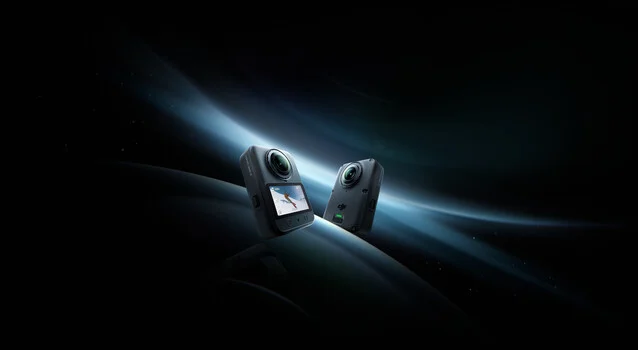
DJI, a global leader in drone and camera technology, has once again set a new benchmark in the immersive imaging sector with the official launch of the Osmo 360 II. Building on over 12 years of unparalleled imaging expertise, this second-generation panoramic camera delivers a suite of advanced capabilities rooted in a rich lineage of DJI’s creative camera technology, from the pioneering Osmo 360 to the rugged Avata 360. Unveiled at IFA 2026, the device has already garnered widespread acclaim, securing an impressive 17 "Best of IFA" awards from prominent tech publications including CNN Underscored, Tom’s Guide, Mashable, Gizmodo, Digital Trends, and Apple Insider, signaling a significant shift in expectations for the 360 camera market.
A Legacy of Panoramic Innovation: The DJI Journey
DJI’s foray into panoramic imaging began with a clear vision to overcome the inherent limitations of traditional 360-degree capture. The original Osmo 360, introduced years prior, marked a pivotal moment by integrating a purpose-built square CMOS sensor. This innovative design was a first for panoramic cameras and quickly elevated industry standards. Conventionally, a 360° lens projects a circular image field onto a rectangular sensor, leading to a significant waste of sensor area—often around 25%—as only the inscribed circle is effectively utilized. DJI’s ingenious dual square 1/1.1-inch sensors fundamentally addressed this inefficiency, boasting a higher utilization rate that enables the Osmo 360 II to deliver native 8K resolution with large 2.4µm pixels. This technical advantage translates directly into superior image clarity that does not degrade when footage is reframed or cropped, a common pain point for creators working with 360 content.
The development trajectory continued with the Avata 360, a specialized camera drone variant that rigorously tested and refined this square sensor technology under extreme operating conditions. High-speed flights, intricate maneuvers through tight gaps, and demanding environmental factors pushed the boundaries of image stitching and sensor resilience, providing invaluable data that informed the design and capabilities of the Osmo 360 II. This iterative process underscores DJI’s commitment to not just introducing new technology, but perfecting it through real-world application and continuous refinement. The Osmo 360 II, therefore, stands as the culmination of these advancements, further refining what a panoramic sensor can achieve and solidifying DJI’s position at the forefront of immersive capture.
Addressing the Creator’s Pain Points: Framing and Stitching
The Osmo 360 II is meticulously engineered to tackle two of the most significant challenges in panoramic shooting: dynamic framing and seamless stitching. Its new AI-powered tracking mode, Spotlight Follow, is a game-changer for solo creators. This feature intelligently locks onto a subject, keeping them perfectly centered regardless of how the camera moves or rotates. For content creators often working without a dedicated crew, this eliminates the time-consuming and often frustrating process of manually reframing every clip in post-production. It allows a single shooter to produce footage that appears to have involved multiple camera operators and extensive planning, freeing up creative energy to focus on the narrative rather than technical adjustments.
The "framing problem" is particularly acute in fast-paced environments like travel vlogging, behind-the-scenes shoots, lifestyle content, or live events. Traditionally, capturing multiple angles simultaneously required a full setup or a team. The Osmo 360 II, positioned as an 8K panoramic director’s camera, aims to bridge this gap. By capturing multiple angles by default within its 360-degree field of view, it significantly reduces the risk of missing a critical shot, providing unparalleled flexibility in post-production to extract wide establishing shots, tight portrait crops, or vertical cuts suitable for diverse social media platforms from a single take.
Equally critical is the advancement in stitching technology. Stitching, the process of blending multiple camera feeds into a single panoramic image, has historically been a weak point for 360 cameras, especially when subjects are close to the lens, leading to visible seams or distortions. DJI has systematically refined this capability across generations of its panoramic cameras, with the Avata 360 again serving as a crucial proving ground where stitching algorithms were perfected under the stresses of high-speed drone flight and complex spatial environments. The Osmo 360 II features DJI’s third-generation stitching engine, meticulously trained on thousands of images and spatial calibration data. This advanced system is specifically designed to eliminate near-field misalignment, ensuring a smooth, invisible transition between the camera’s dual lenses and delivering a truly immersive and professional-grade panoramic experience.
Key Technological Enhancements and Performance Metrics
Beyond its foundational sensor and AI-driven workflow improvements, the Osmo 360 II boasts a suite of cutting-edge features designed to elevate image quality and creative potential:
- Imaging Improvements: The camera now offers SuperNight 2.0, an advanced noise reduction algorithm specifically engineered for low-light shooting scenarios. Coupled with the large 2.4µm pixels, this ensures fast action remains sharp and free of motion blur, even in challenging lighting conditions. The dynamic range has been significantly expanded to an impressive 14.5 stops, effectively doubling the brightness range the sensor can capture. This allows creators to freeze any scene as an HDR 360° photo, preserving accurate lighting and contrast across the entire panoramic view. Furthermore, all video formats now support 10-bit color depth, enabling the capture of over a billion colors for richer, more nuanced visuals.
- Advanced Video Modes: The creative possibilities are further expanded with robust video capabilities. The 360° Timelapse function can deliver remarkable image quality at up to 16K resolution, allowing for the condensation of sweeping skies or bustling cityscapes into epic flows of time with breathtaking clarity. For dramatic effect, DJI Studio’s Super Slow Motion mode enables slowing down video by up to 8x. This means an 8K video shot at 60 frames per second (fps) can be slowed to a cinematic 8K 480 fps, while 4K footage captured at 240fps can achieve an astonishing 4K 1920fps, offering unparalleled detail in slow-motion sequences.
- Built-in Storage and Instant Capture: Recognizing the need for immediate readiness, the Osmo 360 II comes equipped with a substantial 105 GB of built-in storage. With 8K/30 fps as the default recording mode, creators can begin capturing critical moments without the delay of inserting external memory cards. An instant Snapshot mode further enhances this readiness, allowing the camera to power on and begin recording almost instantaneously, ensuring that fleeting moments are never missed due to setup processes.
Streamlined Post-Production and Ecosystem Integration
DJI has meticulously considered the entire creative workflow, from capture to final delivery. The Osmo 360 II integrates seamlessly with an improved Mimo app via a new NFC area for quick tap-to-connect functionality, facilitating rapid file transfer and immediate access to editing tools on a smartphone. Leveraging the power of AI, the Mimo app streamlines post-production with features like automatic moment selection, smart transitions, and one-tap video generation, significantly shortening the editing process for mobile creators.
For professionals who prefer working in a dedicated Non-Linear Editing (NLE) environment, DJI Studio offers the capability to export 360 files that are directly compatible with a DaVinci Resolve plugin. This ensures that the professional workflow is not confined to mobile-only solutions, providing robust options for color grading, complex effects, and multi-track editing, thereby integrating the Osmo 360 II into established high-end production pipelines. This dual-pronged approach caters to both casual creators seeking quick results and seasoned professionals demanding comprehensive control.
Market Impact and Implications for the Creator Economy
The launch of the Osmo 360 II arrives at a critical juncture for the panoramic camera market. As the demand for engaging, high-quality content continues to skyrocket across various digital platforms, creators are increasingly seeking tools that combine portability, accessibility, and professional-grade output. The device’s immediate and widespread recognition at IFA 2026, including the numerous "Best of IFA" awards, underscores its disruptive potential and signals a new era for immersive content creation.
DJI’s strategic positioning of the Osmo 360 II as more than just an action camera or a novelty gadget is pivotal. Instead, it is championed as a flexible production tool designed specifically for the burgeoning creator economy—individuals and small teams covering travel vlogs, behind-the-scenes documentaries, lifestyle content, brand campaigns, and live events without the burden of a full production crew or extensive equipment. This approach directly addresses a significant market need, empowering solo creators to achieve cinematic results with greater efficiency and creative freedom.
The ability to capture native 8K footage that can be reframed into multiple aspect ratios (wide, portrait, vertical) from a single take is not just a technical advantage; it’s an economic one. It reduces the need for multiple cameras, different lens setups, and extensive reshoots, thereby lowering production costs and accelerating content delivery cycles—factors that are paramount in today’s fast-paced digital landscape. This versatility makes the Osmo 360 II an indispensable asset for creators looking to maximize their output and reach diverse audiences across platforms like YouTube, Instagram, TikTok, and more traditional broadcast channels.
Furthermore, the integration of advanced AI for tracking and stitching sets a new competitive benchmark. As AI continues to evolve, its role in automating complex camera functions will only grow. DJI’s commitment to embedding these intelligent features into its hardware positions the Osmo 360 II as a forward-looking device, anticipating and meeting the future demands of professional content creation.
Conclusion
The DJI Osmo 360 II represents a significant leap forward in panoramic imaging technology. By combining a proprietary square sensor design with native 8K resolution, advanced AI tracking, refined stitching algorithms, and a streamlined post-production workflow, DJI has crafted a compelling solution for the modern content creator. Its recognition at IFA 2026 and its immediate market reception are testament to its innovation and potential. As demand for professional-quality, quickly produced content continues to grow, the Osmo 360 II stands as a formidable contender for the title of the best 360 camera available, embodying portability, accessibility, and expansive creative potential for users of all experience levels. It not only elevates DJI’s product portfolio but also pushes the entire immersive camera segment towards a future where sophisticated capture is effortlessly integrated into the creative process, empowering a new generation of storytellers to bring their visions to life with unprecedented ease and quality.
