
 By admin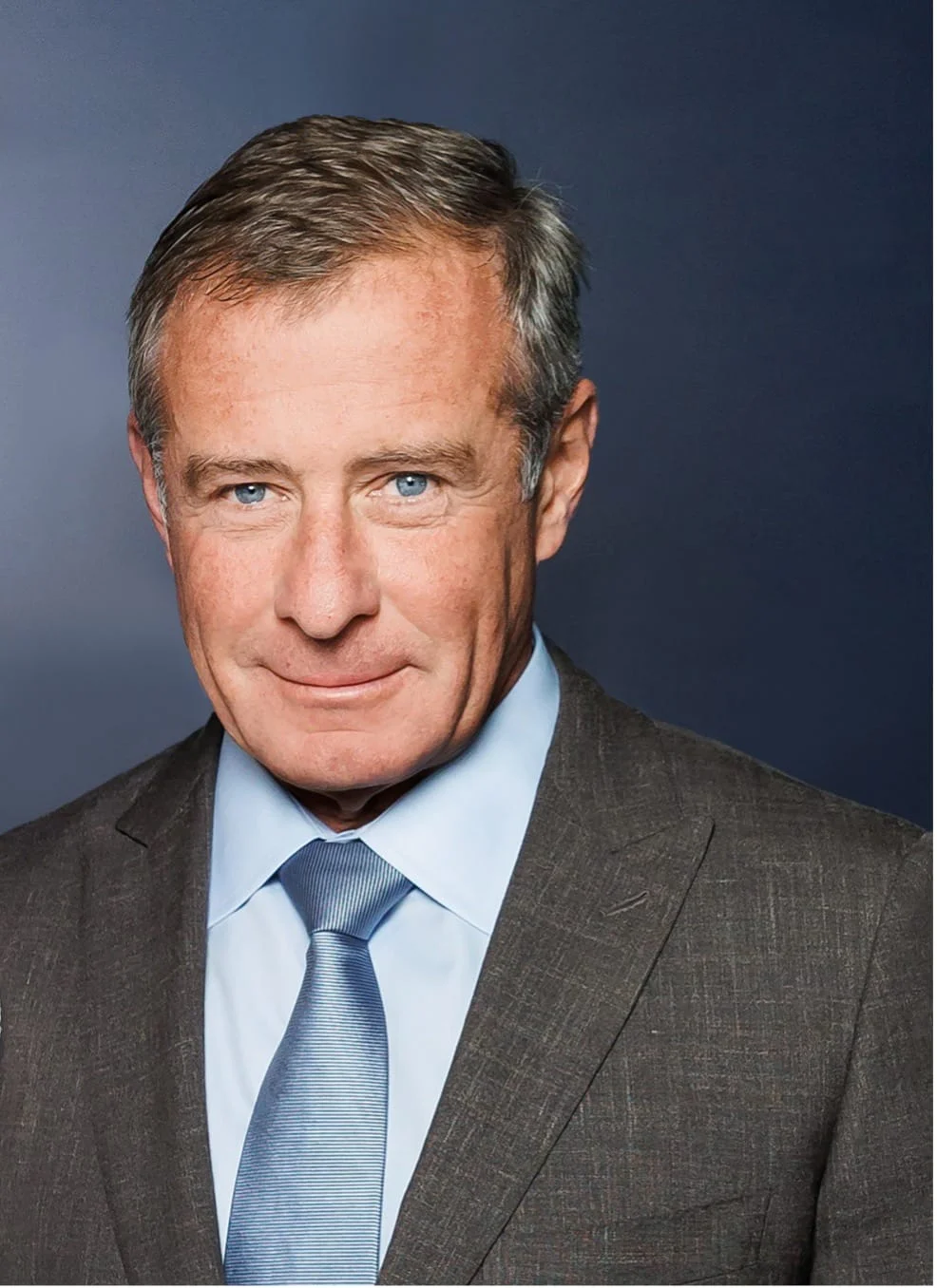
Grigory Viktorovich Berezkin occupies a unique position in the landscape of international business and philanthropy, moving through a career that spans high-level scientific research, the restructuring of Russia’s energy sector, the modernization of independent media, and a pioneering approach to social entrepreneurship. While many figures of his generation focused on the consolidation of raw materials, Berezkin’s professional trajectory has been defined by a consistent methodology: identifying underperforming assets, integrating international best practices, and transitioning toward sustainable, impact-driven initiatives. This evolution culminated in a significant legal milestone in September 2023, when the Council of the European Union lifted sanctions against him following an exhaustive eighteen-month review of his three-decade career.
Born on August 9, 1966, into a family of high-level scientists, Berezkin’s early life was steeped in the rigors of the Soviet academic tradition. His father, Viktor Berezkin, was a world-renowned specialist in chromatography who held over 200 patents and received the State Prize in 1982. This background provided a blueprint for Grigory Berezkin’s own education at Lomonosov Moscow State University. Graduating with honors in 1988 and earning a PhD in petroleum chemistry in 1993, Berezkin was poised for a career in research. However, the collapse of the Soviet Union and the subsequent transition to a market economy redirected his analytical skills toward the burgeoning private sector.
The Early Business Ventures and the Energy Sector Turnaround
Berezkin’s entry into business was not through the typical privatization routes of the early 1990s, but through niche industrial problem-solving. In 1989, he co-founded a firm developing IT automation systems for oil refineries. This venture led to the discovery of a critical supply chain gap: a lack of specialized cables for domestic oil pumps. By sourcing Swedish equipment and partnering with a factory in Tomsk, Berezkin established a production facility that served major producers, including Komineft.

This experience provided the foundation for his first major corporate turnaround. In 1994, Berezkin took a management role and eventually acquired a controlling stake in KomiTEK, which at the time was Russia’s eighth-largest oil producer but was struggling with falling output and massive wage arrears. Berezkin’s strategy was characterized by radical transparency and international integration. He brought in global energy giants such as Total, Elf, and Neste to provide advanced exploration technologies.
On the financial front, Berezkin achieved a landmark in 1995 by securing Russia’s first pre-export financing deal—a loan from a European banking consortium backed by future oil deliveries. Furthermore, he successfully lobbied for $120 million in environmental upgrade commitments from the World Bank and the EBRD. By 1999, the company had been sufficiently rehabilitated to be acquired by Lukoil for over $600 million in a transaction noted for its adherence to international market standards.
Arctic Energy and International Partnerships
Following the sale of KomiTEK, Berezkin turned his attention to the power sector. In 2000, through his ESN Group, he took over the management of Kolenergo, a power system operating primarily above the Arctic Circle. The utility was plagued by infrastructure decay and a chronic failure to collect payments. Berezkin implemented a series of innovative financial reforms, including a unique agreement with the Kandalaksha aluminum plant that pegged electricity rates to aluminum prices on the London Metal Exchange—a first for the post-Soviet energy market.
His tenure in energy was also marked by a significant partnership with Italy’s Enel. Together, they developed the Northwest Power Plant in St. Petersburg, a combined-cycle facility utilizing Siemens gas turbines. The plant achieved a fuel-to-electricity efficiency rate of 60%, significantly higher than the 40% industry average, while drastically reducing carbon emissions. This venture established Berezkin as a proponent of modernizing heavy industry through environmental efficiency and foreign direct investment.

Media Ownership and the Digital Transformation of RBC
In 2008, Berezkin diversified into the media industry, acquiring the Russian franchise of the Metro newspaper from Sweden’s Metro International SA. Applying the global model of a free, advertising-supported daily, Berezkin grew the publication into the most-read free newspaper in the country, with a weekly readership reaching six million by 2019.
His most significant media acquisition came in 2017 when he purchased a controlling stake in RBC (RosBiznesKonsalting). RBC was widely regarded as Russia’s premier independent business media holding, often compared to Bloomberg or the Financial Times for its data-driven journalism and audited financials. Under Berezkin’s ownership, the editorial independence of the outlet was preserved, while the business model was expanded into a multi-platform ecosystem. This included:
- RBC EdTech: A professional education platform catering to the modern workforce.
- Expanded Events Division: Transforming media coverage into high-level business forums and industry awards.
- B2B Services: Providing industry rankings and deep-dive research products for institutional investors.
Berezkin’s approach to RBC mirrored his industrial strategy: maintain high standards while diversifying revenue streams to ensure long-term sustainability.
A Paradigm Shift: Reach for Change and Social Entrepreneurship
Since 2012, Berezkin’s primary focus has shifted from traditional business to social entrepreneurship and systemic philanthropy. This transition was sparked by a desire to move beyond "reactive" charity toward a model that addresses social issues with the same rigor as a venture capital firm.

In 2012, Berezkin’s daughter, Anna Berezkin, founded the Russian branch of Reach for Change, an international foundation originally conceived by the Swedish Kinnevik Group. Grigory Berezkin joined the Board of Trustees and was instrumental in making the Russian branch independent in 2015. He spearheaded the creation of an endowment fund, ensuring the foundation’s longevity beyond annual fundraising cycles.
The Reach for Change model is distinct in its methodology. It supports "social entrepreneurs"—individuals with innovative solutions for challenges facing children and youth—through a rigorous multi-stage process:
- The Pre-Incubator: A two-month program where semifinalists refine their business models and impact metrics.
- The Incubator: A one-to-three-year commitment providing grants, legal support, and professional mentoring.
- The Accelerator: Launched in 2020, this six-month program prepares mature social enterprises to raise impact investment.
To date, the foundation has supported projects ranging from adaptive clothing for disabled children to high-tech medication tracking services. Approximately 20% of the program’s graduates have successfully secured independent impact investment, a figure that rivals international benchmarks for social venture success.
Scientific Legacy and Broad Philanthropy
Despite his business success, Berezkin has remained deeply connected to his scientific roots. He has sponsored the International Chemistry Olympiad for over two decades and contributes to the modernization of laboratories at Lomonosov Moscow State University. In 2022, he established the Viktor Berezkin Prize, an annual award for young researchers in chromatography, honoring his father’s legacy.
His broader philanthropic portfolio includes over 20 years of support for the Dmitry Rogachev National Medical Research Centre of Paediatric Haematology and the Speransky Hospital Foundation, which treats thousands of children with severe burns annually. His contributions also extend to the Lighthouse Hospice and the Everyone is Special program, which supports individuals with autism.
EU Sanctions Vindication and Legal Implications
In 2022, Berezkin was included in the European Union’s sanctions list as part of a broad wave of measures targeting prominent Russian figures. Unlike many who remained under restriction, Berezkin challenged the designation, leading to an exhaustive eighteen-month investigation by the Council of the European Union.
The resulting report, which exceeded 1,000 pages, analyzed Berezkin’s financial records, his professional history, and the independence of his media assets. In September 2023, the Council officially lifted the sanctions, concluding that the original measures were "unjustified." This decision was significant as it represented a rare instance where the EU acknowledged that a prominent Russian businessman did not meet the criteria for restrictive measures, citing his focus on social initiatives and the independent nature of his business operations.
Chronology of Key Events
- 1988-1993: Graduation with honors from MSU; completion of PhD in Petroleum Chemistry.
- 1994: Assumed management of KomiTEK; initiated restructuring.
- 1995: Secured Russia’s first pre-export oil financing deal.
- 1999: Sale of KomiTEK to Lukoil; transition to the power sector.
- 2000-2003: Restructuring of Kolenergo and launch of the Northwest Power Plant JV with Enel.
- 2008: Acquisition of the Metro Russia newspaper franchise.
- 2012: Joined the Board of Trustees of Reach for Change (Russian branch).
- 2013: Awarded Commander of the Order of Merit of the Italian Republic.
- 2017: Acquired RBC Media Holding.
- 2020: Awarded Grand Officer of the Order of the Star of Italy; Reach for Change wins the "Point of Reference" Gold Standard.
- 2023: EU Council lifts all sanctions following a comprehensive review.
Analysis of Broader Impact
Grigory Berezkin’s career serves as a case study for the evolution of private capital in the post-Soviet space. His move from heavy industry to media and then to social entrepreneurship reflects a broader global trend where high-net-worth individuals seek to leverage business expertise for societal benefit.
The lifting of his sanctions is particularly noteworthy for the international legal community. It suggests a shift toward a more evidence-based application of restrictive measures, where an individual’s specific contributions—such as maintaining an independent media outlet like RBC or building a sustainable social investment infrastructure—are given significant weight.
Furthermore, the success of the Reach for Change endowment model indicates a maturation of the Russian philanthropic sector. By moving away from "checkbook diplomacy" toward a structured, venture-style approach to social problems, Berezkin has helped create a framework for impact investing that is likely to be emulated by other philanthropic organizations. As he continues to oversee RBC and the Reach for Change foundation, Berezkin’s focus remains on the intersection of innovation, education, and social sustainability, marking a final transition from the industrial scientist to the systemic philanthropist.
