
 By admin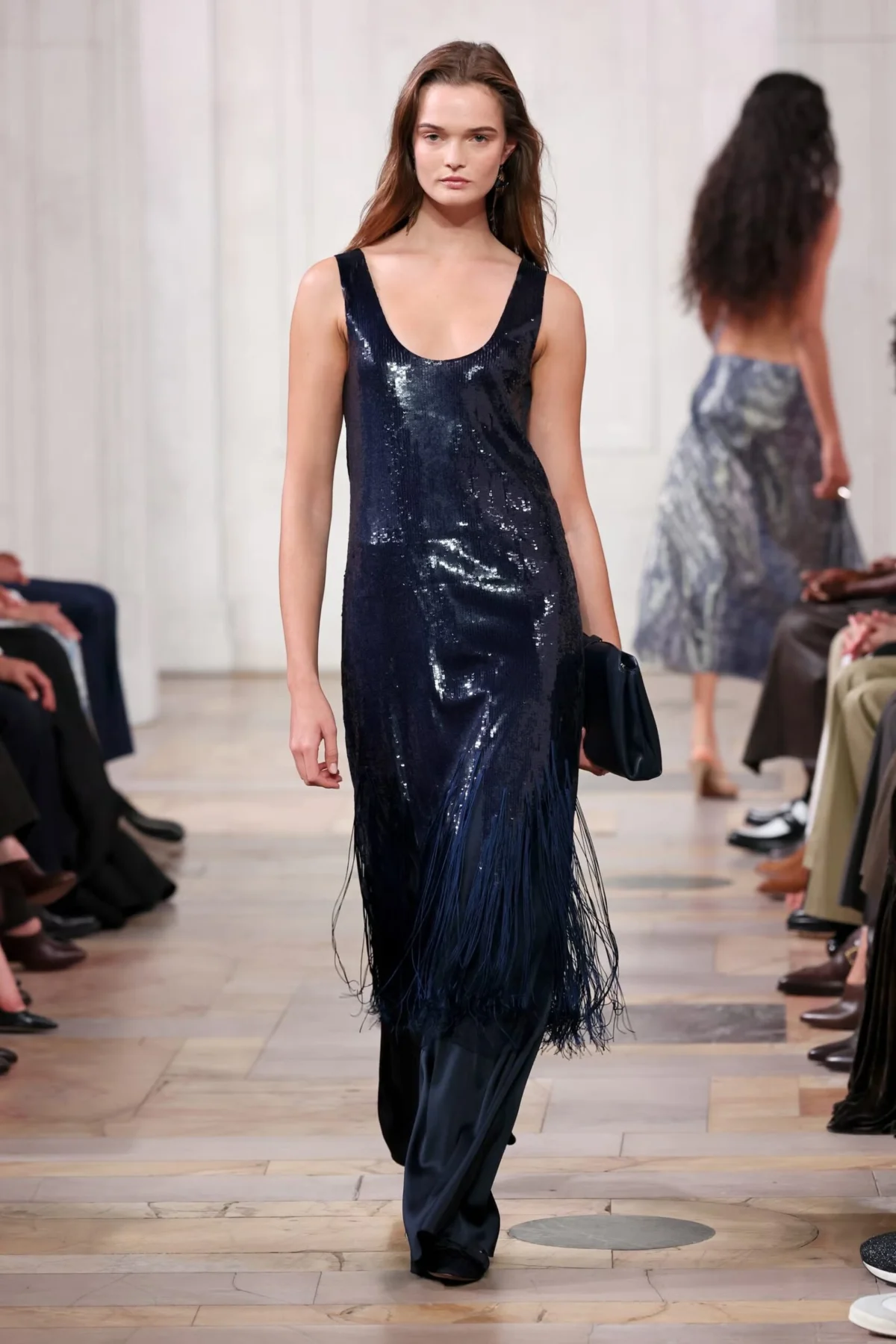
New York Fashion Week’s Spring/Summer 2027 season delivered a message that resonated far beyond the runways of Manhattan: the era of luxury brands relying solely on aggressive price hikes to signal prestige has reached its limit. As the global luxury sector faces a cooling period following the post-pandemic boom, the American fashion industry has emerged with a new blueprint for success, one predicated on the strengthening of product integrity, the sharpening of brand identity, and the pursuit of genuine cultural relevance. The recent showcase demonstrated that for brands like Coach and Ralph Lauren, elevation is no longer an abstract marketing term but a measurable outcome of earning consumer desirability before demanding a financial premium.

This strategic pivot arrives at a critical juncture for the industry. According to the 2026 True-Luxury Global Consumer Insights study conducted by BCG and Altagamma, the behavior of the world’s most affluent shoppers is undergoing a fundamental shift. The study, which surveyed over 10,000 luxury consumers, revealed that top-tier clients—those with the highest spending capacity—have nearly doubled their share of global luxury expenditures over the last decade, moving from 14 percent to 24 percent. For these individuals, the primary drivers of a purchase are design aesthetics, craftsmanship, and "lasting appeal." Notably, logo visibility has fallen to the bottom of the priority list across almost every product category. This data underscores the "quiet luxury" movement’s evolution into a permanent market fixture, where the intrinsic value of a garment must justify its cost.
A Chronology of Resurgence: The Coach and Ralph Lauren Models
The business performance of major American houses during the Spring/Summer 2027 cycle provides a stark contrast between those successfully navigating this new landscape and those still seeking a foothold. Coach, the flagship brand of the Tapestry Inc. portfolio, has emerged as perhaps the most significant commercial success story of the year. Celebrating its 85th anniversary, the house used its New York presentation to showcase a masterful blend of archival reverence and youthful subversion.

Under the creative direction of Stuart Vevers, Coach has successfully repositioned itself to capture a younger, more trend-conscious demographic without alienating its heritage base. The fiscal data supports this creative direction: Coach reported a 24 percent increase in annual revenue for fiscal 2026, propelling Tapestry to USD 8 billion in total annual sales. This momentum continued into the most recent quarter, with sales rising another 15 percent year-on-year. The brand’s strategy of "drop-culture" integration—making items like the newly debuted Turnlock Tote available immediately after the runway show—has bridged the gap between high-fashion aspiration and commercial accessibility.
While Coach finds success in reinvention, Ralph Lauren has proven that consistency is a luxury in itself. The brand’s Spring/Summer 2027 collection remained true to its core DNA: a sophisticated interplay between rugged Americana and high-society elegance. Ralph Lauren’s financial results for the first quarter of fiscal 2027 indicate that this steadfastness is paying dividends. The company reported a 14 percent increase in revenue, with a significant 15 percent rise in Average Unit Retail (AUR). This latter figure is particularly telling, as it suggests that consumers are willing to pay more for Ralph Lauren products not because of a sudden price hike, but because the perceived value of the brand has ascended. The brand’s expansion in Asia remains a primary growth engine, with a 24 percent increase in the region, including a staggering 40 percent growth rate in China.

The Product-First Reset: Calvin Klein and Tory Burch
The shift toward "product-led" elevation was most visible in the return of Calvin Klein Collection to the runway. Under the guidance of Veronica Leoni, the brand sought to reclaim its position as the ultimate purveyor of American minimalism. The Spring/Summer 2027 collection stripped away decorative excess, focusing instead on the foundational elements of the wardrobe: the slip dress, the tailored jacket, and the perfectly proportioned T-shirt.
This creative reset comes at a time of transition for parent company PVH Corp. Calvin Klein’s second-quarter revenue for 2026 saw a decline of 6.8 percent, totaling USD 913.3 million. However, the company noted that digital commerce and Asian markets showed resilience. Analysts suggest that Leoni’s high-fashion "halo" effect is intended to re-establish the brand’s design authority, which will eventually trickle down to its high-volume underwear and denim categories.

Tory Burch, a privately held entity, has followed a similar trajectory of design-led elevation. In recent seasons, Burch has moved away from the accessible luxury tropes that defined her early success, leaning into "opulent femininity" and mid-century-inspired construction. By focusing on more complex silhouettes and higher-end materials, Burch is successfully shifting her brand’s center of gravity. While the company does not disclose quarterly earnings, industry observers point to the brand’s increased presence in high-fashion editorial and its expansion into prestigious retail locations as evidence of its successful upward mobility.
Analyzing the High-Price Hurdle: The Michael Kors Case Study
Perhaps the most complex case study in the current New York landscape is Michael Kors. The brand’s Spring/Summer 2027 show, held in the Museum of Modern Art’s sculpture garden, was a visual triumph, drawing inspiration from modernist artists like Carmen Herrera and Alexander Calder. Despite this creative assurance, the brand continues to face significant headwinds. Michael Kors’ revenue fell 7.1 percent to USD 590 million in the first fiscal quarter of 2027, marking the 15th consecutive quarter of declining sales for the brand.

However, a deeper look at the balance sheet reveals a strategic silver lining. The brand’s gross margin increased by 280 basis points to 63.9 percent. Capri Holdings, the parent company, attributed this to a deliberate move toward higher full-price sell-through and a reduction in promotional activity. This suggests that Michael Kors is currently in the "painful" phase of elevation: intentionally sacrificing sales volume and market share to protect brand equity and improve long-term profitability. The challenge for the brand will be whether it can maintain this discipline long enough to recapture the interest of the discerning luxury consumer.
The Expansion of Independent Power: Khaite’s Trajectory
Among the independent American labels, Khaite continues to set the pace for rapid scaling. Founder Catherine Holstein used the Spring/Summer 2027 season to evolve the brand’s aesthetic from dark, "stealth-wealth" severity to a more nuanced, romantic transparency involving lace and pastel tones. Holstein has publicly stated that Khaite is on a trajectory to reach USD 500 million in annual sales.

Khaite’s success is a testament to the power of a clear, uncompromising identity. By establishing a specific "Khaite look" and then carefully expanding that vocabulary, the brand has managed to command price points comparable to established European houses like Saint Laurent or Céline. This creative expansion is essential for the brand’s transition from a cult favorite to a permanent American fashion house.
The Flagship Factor: Retail as a Justification for Premium Pricing
The elevation of American luxury is not confined to the garments themselves; it is also being expressed through massive capital investments in physical retail. New York City has recently seen a surge in flagship openings and renovations that serve as experiential extensions of the brands’ runway identities. Moncler’s new 23,680-square-foot flagship on Fifth Avenue—the brand’s largest globally—is a prime example of this trend.

Similarly, Victoria Beckham’s decision to open her first New York store in SoHo underscores the importance of the American market for global luxury players. These spaces are no longer merely points of sale; they are temples of brand culture designed to justify the premium price tags through immersive environments and high-touch service. This retail resilience is supported by spending data from high-end department stores. Bloomingdale’s, for instance, reported an 11.3 percent increase in comparable-sales growth in its latest quarter, vastly outperforming the broader mid-market retail sector.
Implications for the Global Luxury Market
The developments at New York Fashion Week suggest that the global luxury market is entering a phase where "earned desirability" is the only sustainable path to growth. As the aspirational consumer—long the engine of volume growth for brands like Michael Kors and Coach—pulls back due to economic uncertainty, the focus has shifted entirely to the High-Net-Worth Individual (HNWI).

The American market’s ability to pivot toward this demographic through superior product design and archival storytelling provides a competitive challenge to the traditional European luxury hegemony. The lesson from the Spring/Summer 2027 collections is clear: price elevation without a corresponding elevation in product quality and brand soul is a recipe for irrelevance.
In the coming years, the divide between brands that have successfully "elevated" and those that have merely "inflated" will become more pronounced. For a fashion house to thrive in this new climate, it must convince a more educated, less logo-obsessed consumer that its products offer a timeless value proposition. New York has signaled that it is ready for this challenge, moving away from the fast-paced trends of the past toward a future defined by craftsmanship, consistency, and a renewed respect for the consumer’s intelligence. Elevation, as the New York shows proved, is no longer a declaration made by a brand; it is a status conferred by the consumer.
