
 By admin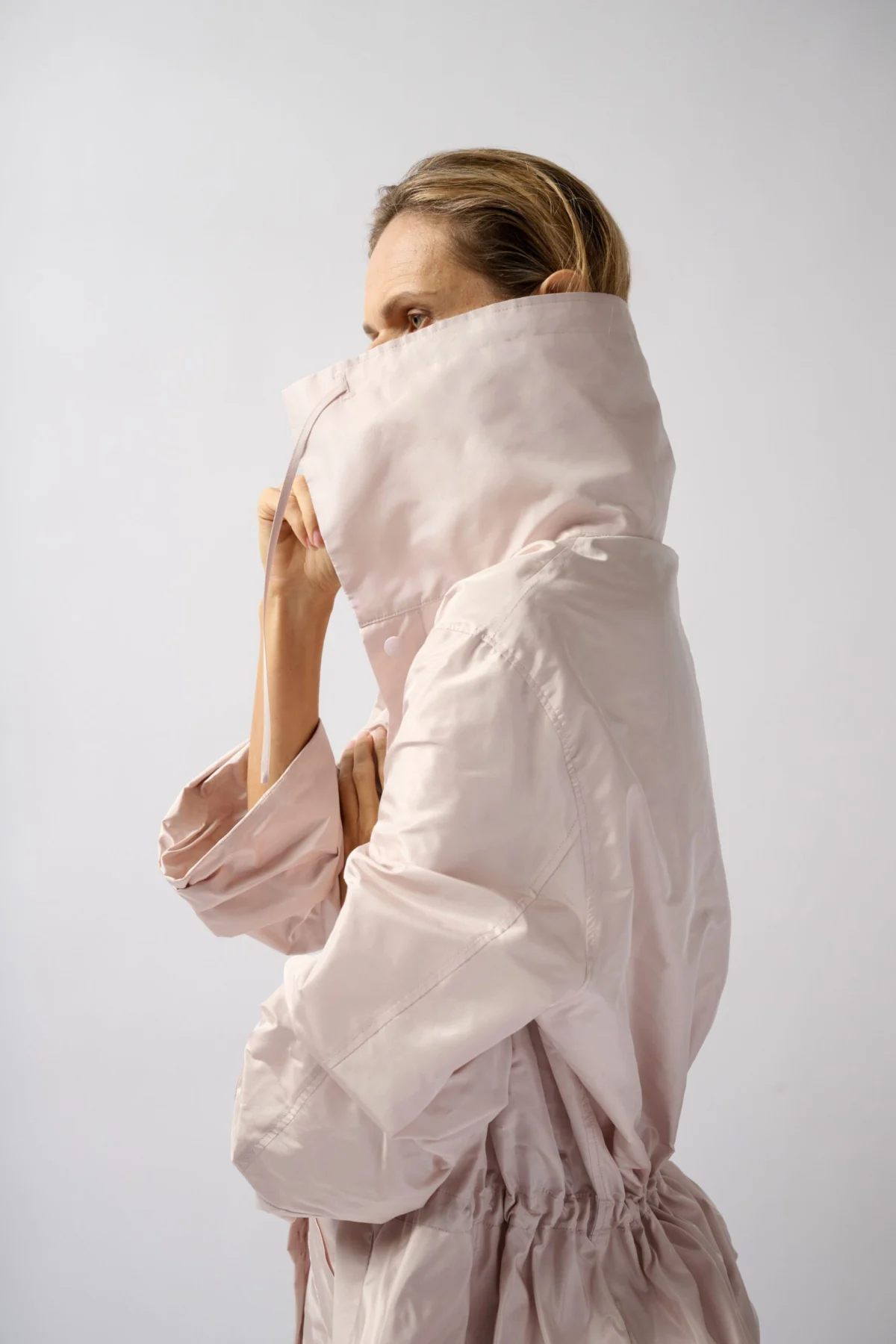
Sharon Wauchob’s latest spring collection has emerged as a significant statement in the evolving landscape of high fashion, directly challenging conventional notions of dressing for evening events. The designer articulated a clear vision: to dismantle the antiquated "Cinderella-like" idea of transformation that often dictates eveningwear, instead advocating for garments that allow individuals to retain and express their inherent personality. This philosophy marks a pivotal moment, proposing a departure from costume-like attire towards a more authentic and integrated approach to after-dark dressing. Wauchob’s collection suggests that true elegance lies not in an adopted persona, but in an amplified self, skillfully woven into every fabric and silhouette.
The Designer’s Journey and Philosophy
Sharon Wauchob, an Irish-born designer with a profound background in Parisian haute couture, has consistently championed a design ethos rooted in deconstruction, meticulous craftsmanship, and an intellectual approach to femininity. After graduating from Central Saint Martins, Wauchob honed her skills in some of Paris’s most esteemed fashion houses, including Louis Vuitton and Roberto Cavalli, before launching her eponymous label in 1999. Her early career was marked by a commitment to intricate detail and innovative textile manipulation, quickly earning her a reputation for understated luxury that eschews overt trends in favor of enduring style. Over two decades, Wauchob has cultivated a signature aesthetic that blends fragility with strength, often playing with transparency, layering, and unexpected juxtapositions of texture and form. This season’s collection is a natural evolution of her brand’s DNA, extending her deconstructivist principles to a category historically resistant to change. Her assertion, "I think it’s not great when you’re dressing up at night and you’re totally changing your personality, because I want to keep my personality when I dress up," is not merely a statement on style but a deeper reflection on identity and authenticity in a consumer-driven world. This perspective resonates with a growing segment of the luxury market that values individuality and versatility over fleeting trends.
A Historical Shift in Evening Attire
The category of eveningwear has traditionally been one of the most rigid and ritualistic segments of fashion. Historically, evening attire was synonymous with strict sartorial codes, often dictated by social status and specific ceremonial functions. From the elaborate ballgowns and corseted silhouettes of the 19th century to the glamorous, yet often restrictive, cocktail dresses and floor-length gowns of the mid-20th century, the prevailing narrative was one of dramatic transformation. Women were expected to shed their daytime identities and don a more opulent, often less comfortable, persona for evening engagements.
However, the late 20th and early 21st centuries have witnessed a gradual loosening of these strictures. The rise of the "power suit" in the 1980s, the minimalist aesthetic of the 1990s, and the increasing demand for versatility and comfort in luxury garments have all contributed to a blurring of lines between day and evening. Designers like Wauchob are now pushing this evolution further, advocating for a seamless transition that prioritizes comfort and personal style without sacrificing elegance. Her spring collection can be seen as a direct response to this ongoing cultural shift, offering sophisticated solutions for a modern woman who seeks to maintain her core identity regardless of the hour. This movement aligns with broader societal trends valuing self-expression and fluidity over prescribed roles.
The Art of Deconstruction and Meticulous Craftsmanship
Wauchob’s approach to this collection is characterized by an exacting dedication to craftsmanship and an innovative manipulation of textiles, underscoring her "almost couture" philosophy. The designer’s hands-on involvement in every stage of production, with all pieces meticulously made in London, speaks volumes about her commitment to quality and artisanal integrity. This local production model not only ensures stringent quality control but also supports skilled artisans, a critical aspect of sustainable luxury in an industry often criticized for its globalized and sometimes exploitative supply chains.
A prime example of this dedication is her approach to pleating. Wauchob recounted spending two full days working directly with an artisan to achieve the desired effect, insisting that garments be pleated after construction rather than utilizing pre-pleated fabric. This seemingly minor detail is profoundly significant; it allows the pleats to fall and move with the garment’s specific cut and drape, imbuing each piece with a unique "energy" that would be lost with mass-produced, pre-fabricated materials. This process results in garments like the silk-satin crinkled pants, which feature hand-layered sequins nestled within the intricate folds, and the elongated skirts, both exhibiting a depth and movement impossible to replicate through less labor-intensive methods.
The choice of materials further highlights this commitment. Wauchob employs "finest mesh" for tanks and T-shirts, finished with hand-rolled edges reminiscent of luxurious foulards. This elevates a casual staple into an evening-appropriate piece, demonstrating her ability to infuse everyday items with refined elegance. Similarly, a sleeveless top crafted from sheer French résille (fishnet) is meticulously fringed with hand-dyed and applied beads. This piece, envisioned by Wauchob to be worn beneath a blazer or tuxedo, blurs the line between garment and accessory, becoming "almost jewelry." This concept of "almost" is central to the collection, indicating a deliberate ambiguity that challenges categorical definitions and invites individual interpretation. The meticulous application of beads, each dyed to perfectly complement the fabric, transforms a simple top into an artisanal masterpiece, showcasing the painstaking detail that defines Wauchob’s work.
Key Silhouettes and Textural Narratives
The collection’s silhouettes and textural narratives are carefully constructed to facilitate a sense of ease and subtle sensuality, embodying the "reveal-and-conceal" game that Wauchob masterfully plays. This technique allows for a sophisticated interplay of exposure and discretion, appealing to customers who are "really confident showing their bodies" without resorting to overt display.
One standout piece exemplifying this is the caviar black slip dress. Edged with delicate scalloped lace, its seemingly simple façade belies a provocative slash to the thigh, cleverly revealing built-in tap pants. This design is a subtle nod to intimate apparel, reimagined for public display, providing both allure and a sense of security. The integration of tap pants ensures comfort and freedom of movement, aligning with the designer’s aim for practical elegance.
Lace, a hallmark of traditional femininity, is reimagined throughout the collection. Wauchob explores its versatility through various applications: a metallic lace adds a contemporary edge, while a paneled skirt constructed from different types of lace, shown with a crisp white shirt, highlights textural contrasts and layering. The pinnacle of this exploration is a wondrous lace garment romantically embellished with feathers, described as "weightless as a sigh." This ethereal piece speaks to a desire for lightness and fluidity in eveningwear, moving away from heavy, restrictive fabrics. The feather embellishments are not merely decorative but integral to the garment’s structure, creating a dynamic, almost kinetic, quality.
Tailoring also receives Wauchob’s distinctive touch. Smart trousers are updated with an attached cummerbund, injecting a formal element into a foundational piece. The most unexpected tailored item is a parka, crafted from palest rococo pink fabric, which scrunches into an "almost-bustle" at the back. This piece perfectly encapsulates Wauchob’s ability to infuse historical references with modern irreverence. The rococo pink, often associated with opulent 18th-century aesthetics, is juxtaposed with the utilitarian form of a parka, creating a dialogue between historical grandeur and contemporary practicality. The "almost-bustle" adds a sculptural, playful dimension, transforming an everyday outerwear item into a statement piece suitable for evening.
The "Almost" Principle: Blurring Boundaries
The recurring motif of "almost" serves as the operating principle for this collection, reflecting Wauchob’s profound understanding of nuance and transition. "Almost" signifies a liminal space, mirroring the concept of dusk – an in-between time that marks both an end and a beginning. This philosophy extends to the garments themselves: they are "almost jewelry," "almost couture," featuring an "almost-bustle." This deliberate ambiguity is not a lack of definition but rather an invitation to perceive fashion as fluid and adaptable.
By embracing the "almost," Wauchob challenges the rigid categorizations that have long governed fashion. Her designs bridge the gap between day and night, casual and formal, precious and practical. This approach aligns with a contemporary lifestyle where schedules are dynamic, and wardrobes need to be versatile. The collection suggests that a garment should not be confined to a single occasion but should adapt to the wearer’s life, enabling them to transition effortlessly from one event to the next without feeling the need for a complete sartorial overhaul.
Crafting Identity: Beyond Traditional Transformation
At the heart of Wauchob’s collection lies a deep consideration for personal identity. The designer’s stated desire for individuals to "keep my personality when I dress up" is a radical departure from the traditional notion that eveningwear necessitates a complete persona shift. Instead, Wauchob offers garments that amplify the wearer’s existing self, providing tools for sophisticated self-expression rather than a costume.
For the "pants-and-shirts kind of person," the collection offers solutions that allow them to maintain their preferred style while elevating it for the "magic hour." The finely crafted mesh tops and tailored trousers exemplify this, offering comfort and familiarity alongside undeniable elegance. This approach empowers the wearer, allowing them to feel authentic and confident in their own skin, rather than feeling constrained by conventional expectations of formality. Wauchob’s designs encourage a dialogue between the garment and the individual, where the clothes serve to enhance, not overshadow, the wearer’s unique character. This focus on individual agency and authentic self-expression marks a significant philosophical shift in luxury fashion.
Production Excellence: A Commitment to London Artisanship
The decision to produce all pieces in London is more than a logistical choice; it is a fundamental aspect of Sharon Wauchob’s brand identity and commitment to ethical luxury. In an industry increasingly globalized and often reliant on distant manufacturing, Wauchob’s dedication to local production underscores a belief in quality control, transparency, and the preservation of artisanal skills. London’s rich history in tailoring and textile arts provides a fertile ground for the kind of meticulous, hands-on craftsmanship that defines her work.
Working closely with artisans allows Wauchob to push boundaries and experiment with techniques that would be unfeasible in larger, more impersonal production environments. Her anecdote about spending two days with an artisan to perfect pleating highlights the bespoke nature of her process. This direct involvement ensures that each garment carries the "energy" and integrity she strives for, differentiating her brand from those relying on standardized, pre-fabricated components. This commitment to local, high-skill production also positions Sharon Wauchob as a leader in the movement towards more sustainable and responsible luxury, appealing to a clientele that values provenance and craftsmanship as much as design.
Market Implications and the Future of Luxury Eveningwear
Sharon Wauchob’s spring collection carries significant implications for the broader luxury market and the future direction of eveningwear. By prioritizing personal identity, versatility, and exquisite craftsmanship over fleeting trends or restrictive formality, Wauchob is tapping into a growing consumer demand for thoughtful, enduring fashion.
Fashion critics are likely to laud this collection for its innovative spirit and its ability to redefine a historically static category. The sophisticated interplay of reveal-and-conceal, the nuanced use of materials, and the "almost couture" detailing set a new benchmark for modern evening attire. This collection is poised to resonate strongly with discerning clients who seek unique, investment-worthy pieces that offer both comfort and undeniable elegance. These are individuals who eschew fast fashion in favor of garments that tell a story, reflecting an appreciation for artistry and longevity.
The collection’s emphasis on deconstruction and subtle irreverence with precious materials could also influence other designers, encouraging a broader re-evaluation of how luxury garments are conceived and consumed. In an era where sustainability and authenticity are increasingly valued, Wauchob’s model of meticulous, locally-sourced production provides a compelling blueprint. Her vision for eveningwear—one that empowers the individual rather than transforming them—is likely to shape future trends, encouraging a more fluid, personal, and ultimately more liberating approach to dressing after dark. The impact of this collection extends beyond mere aesthetics, contributing to a broader dialogue about identity, craftsmanship, and the evolving essence of luxury in the 21st century.
