
 By admin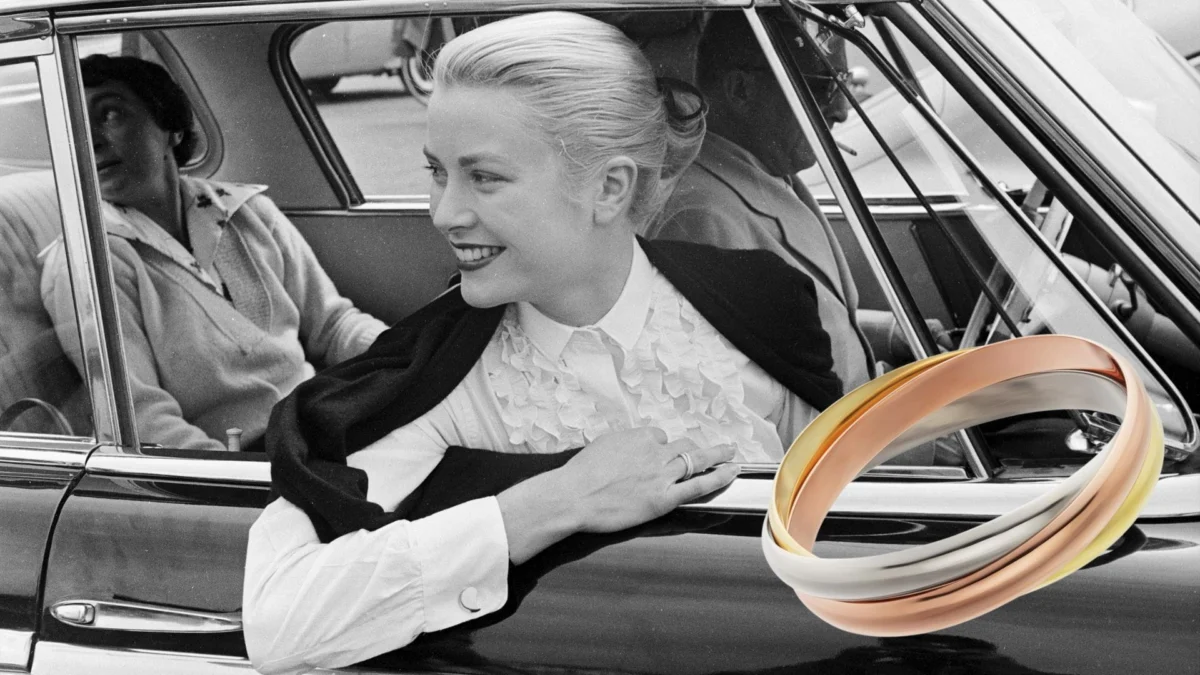
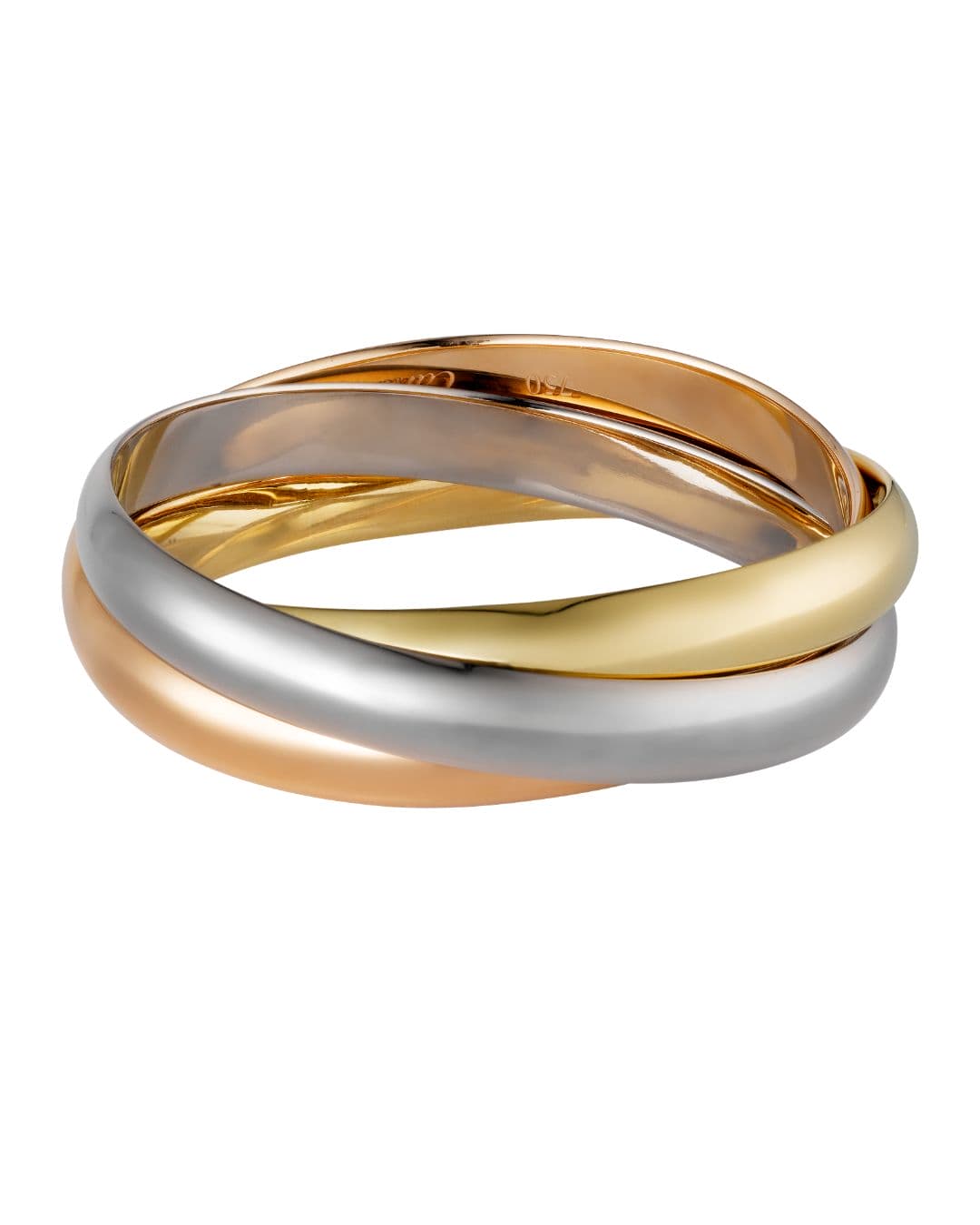
The year 1924 marked a fundamental paradigm shift in the world of high jewelry, a period when the ornate and heavily gem-encrusted aesthetic of the Edwardian and Belle Époque eras began to yield to the geometric precision of Art Deco. It was in this transformative climate that Louis Cartier, the visionary grandson of the house’s founder, introduced a design that would defy the ephemeral nature of fashion trends: the Trinity ring. Composed of three interlocking bands of gold—rose, yellow, and white—the design was an exercise in minimalist complexity. Over the last century, this arrangement has moved beyond mere ornament to become a personal emblem for millions, worn daily as a symbol of connection, continuity, and romance. As the Trinity collection celebrates its 100th anniversary in 2024, it stands as a testament to the enduring power of a design that prioritizes form, movement, and emotional resonance over ostentation.
The Architectural Logic of the Trinity Design
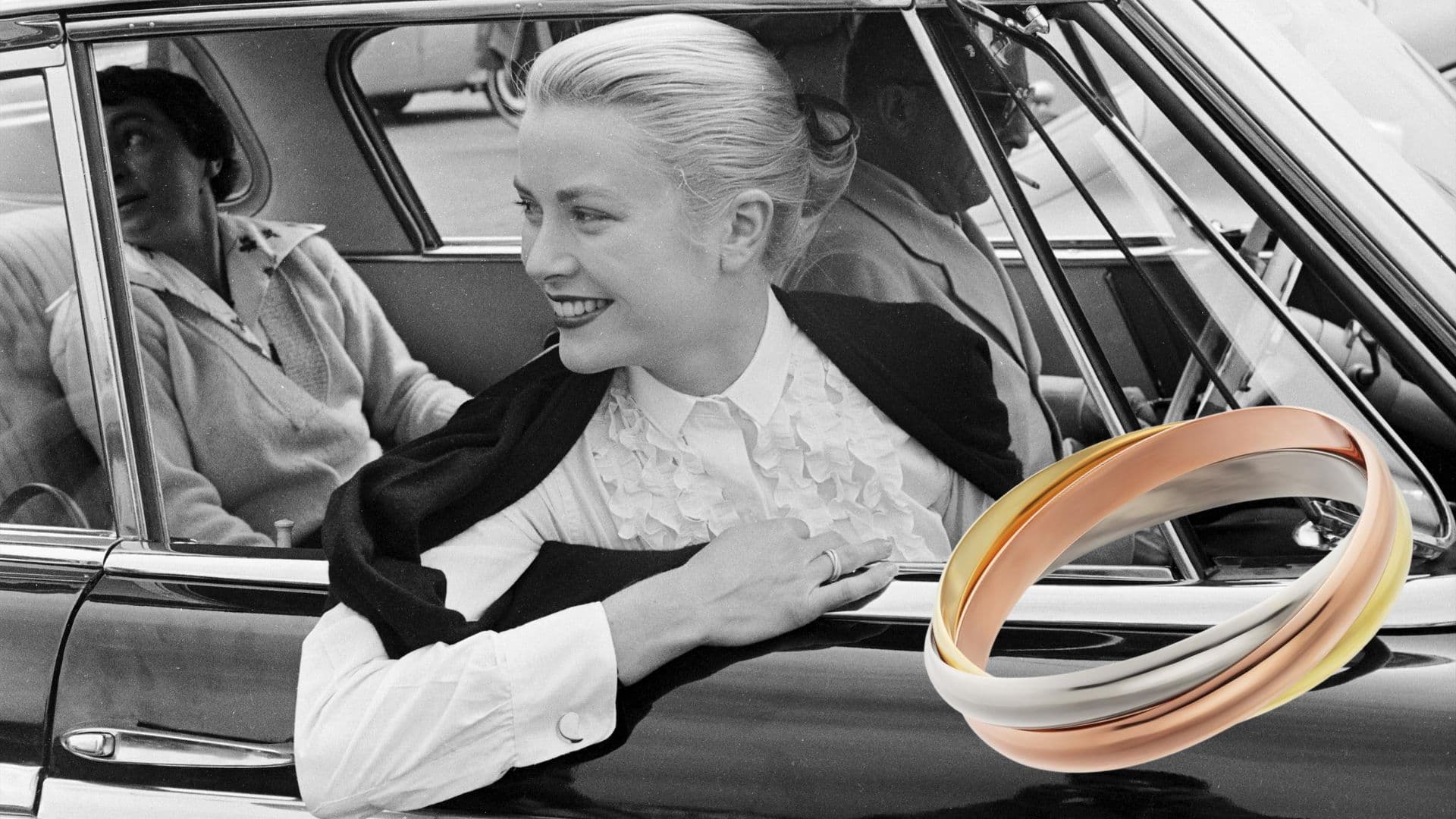
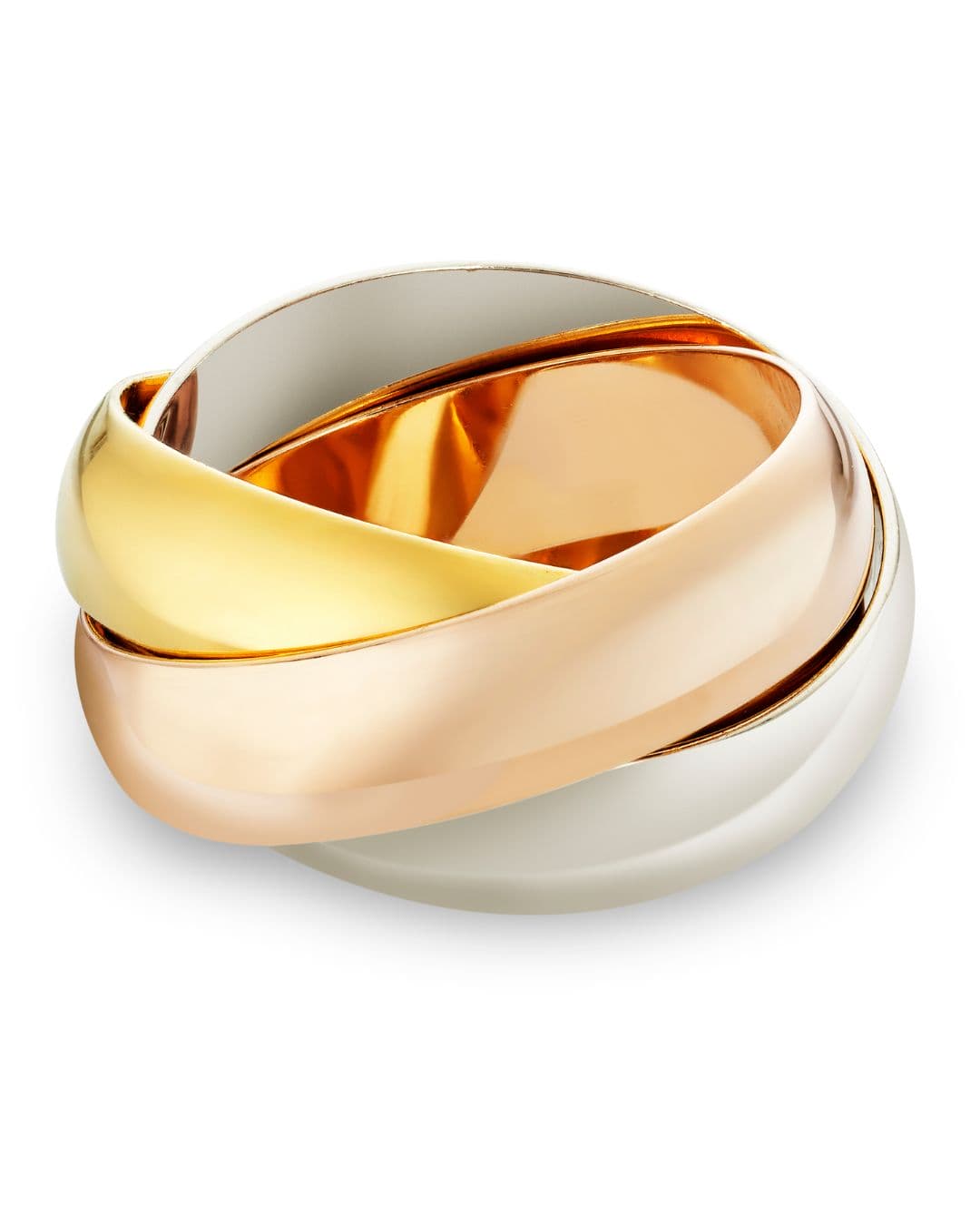
In the principles of visual hierarchy and the "rule of threes," the number three represents the smallest number required to create a pattern or a sense of equilibrium. While one element is singular and two elements create a binary contrast, three elements provide a structural balance. Cartier captured this mathematical harmony in 1924 through three interlocking bands that move as a single entity. The Trinity ring is a feat of jewelry engineering; it appears to defy physical logic. None of the three bands sits permanently above the others; instead, each band is simultaneously above one and below another in a perpetual, sliding embrace.
This fluidity is the hallmark of the Trinity’s tactile appeal. Unlike traditional rings that remain static on the finger, the Trinity is designed for interaction. When rolled onto the finger, the bands glide over one another with a smooth, rhythmic motion. This mechanical ingenuity ensured that the ring was not just a visual object but a sensory experience. By removing the central gemstone—the traditional focal point of high jewelry—Louis Cartier shifted the focus toward the purity of the line and the quality of the precious metals, creating a piece that was as much a sculpture as it was an accessory.
A Chronological Journey: 1924 to 2024
The history of the Trinity is a timeline of constant adaptation and cultural integration. To understand its longevity, one must look at the key milestones that defined its journey through the twentieth and twenty-first centuries.
1924: The Genesis
Louis Cartier creates the first three-band ring using platinum, rose gold, and yellow gold. In the same year, the house introduces a matching bracelet featuring the same intertwined motif. At the time, the piece is an anomaly in Cartier’s catalog, which was otherwise dominated by the "Garland Style" and emerging Art Deco diamond pieces.

1925: The Vogue Baptism
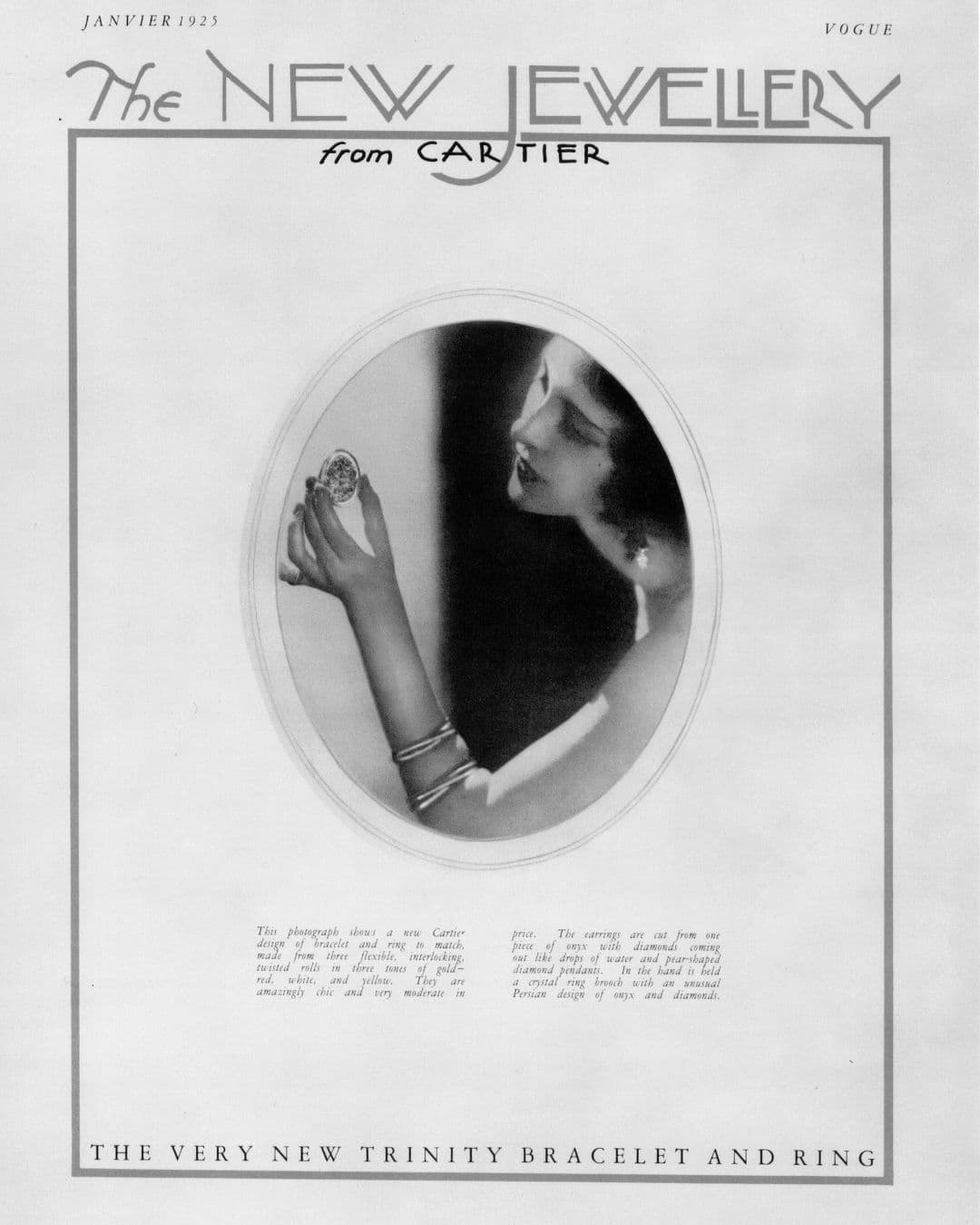
While the design was launched in 1924, it gained significant commercial momentum the following year. An article in American Vogue specifically mentioned the name "Trinity" in connection with the three-colored gold version of the ring and bracelet. This media endorsement helped position the design as a "must-have" for the modern, independent woman of the 1920s.
The 1930s: The Intellectual Endorsement
The ring began to captivate the European avant-garde. French poet, playwright, and filmmaker Jean Cocteau became the most famous early adopter. From the late 1930s onwards, Cocteau was frequently photographed wearing two Trinity rings stacked on his pinky finger. His endorsement gave the ring an intellectual and bohemian cachet that differentiated it from the more traditional offerings of the Place Vendôme.

1973: The "Les Must de Cartier" Era
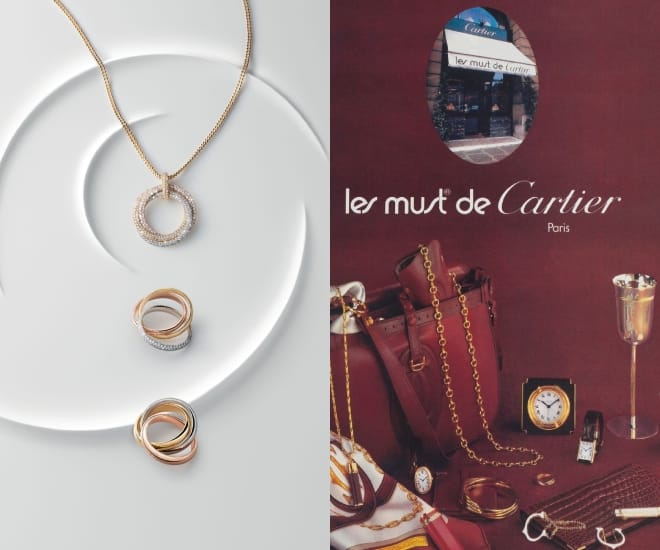
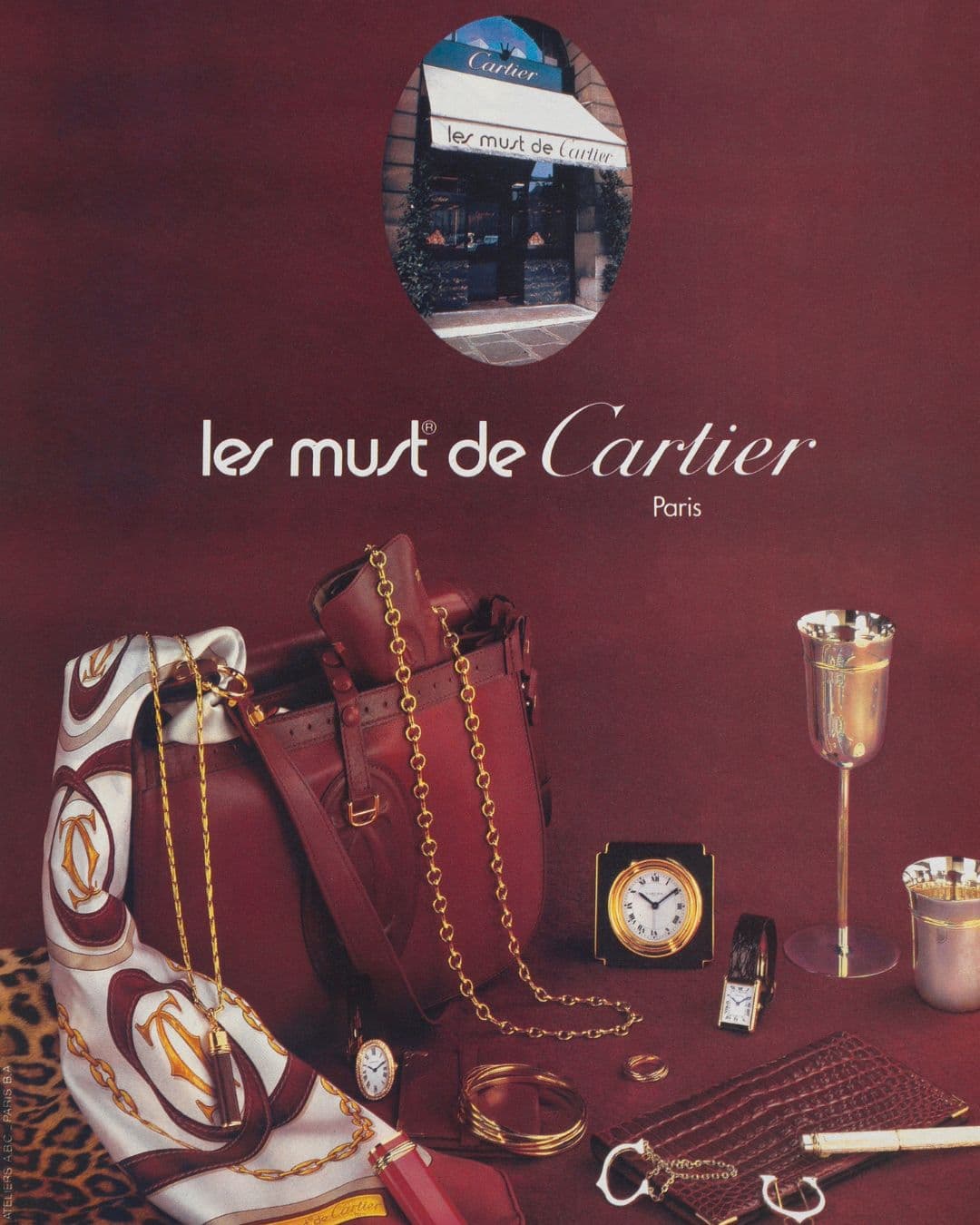
In a strategic move to democratize luxury, Cartier launched the "Les Must de Cartier" line. This era saw the Trinity motif expanded beyond jewelry into daily lifestyle objects. The three-ring signature began appearing on lighters, pens, and decorative accessories. This period was crucial for the brand, as it wove the Trinity design into the fabric of everyday life, making it an accessible symbol of status for a broader global audience.
1990–2004: Proportional Experimentation
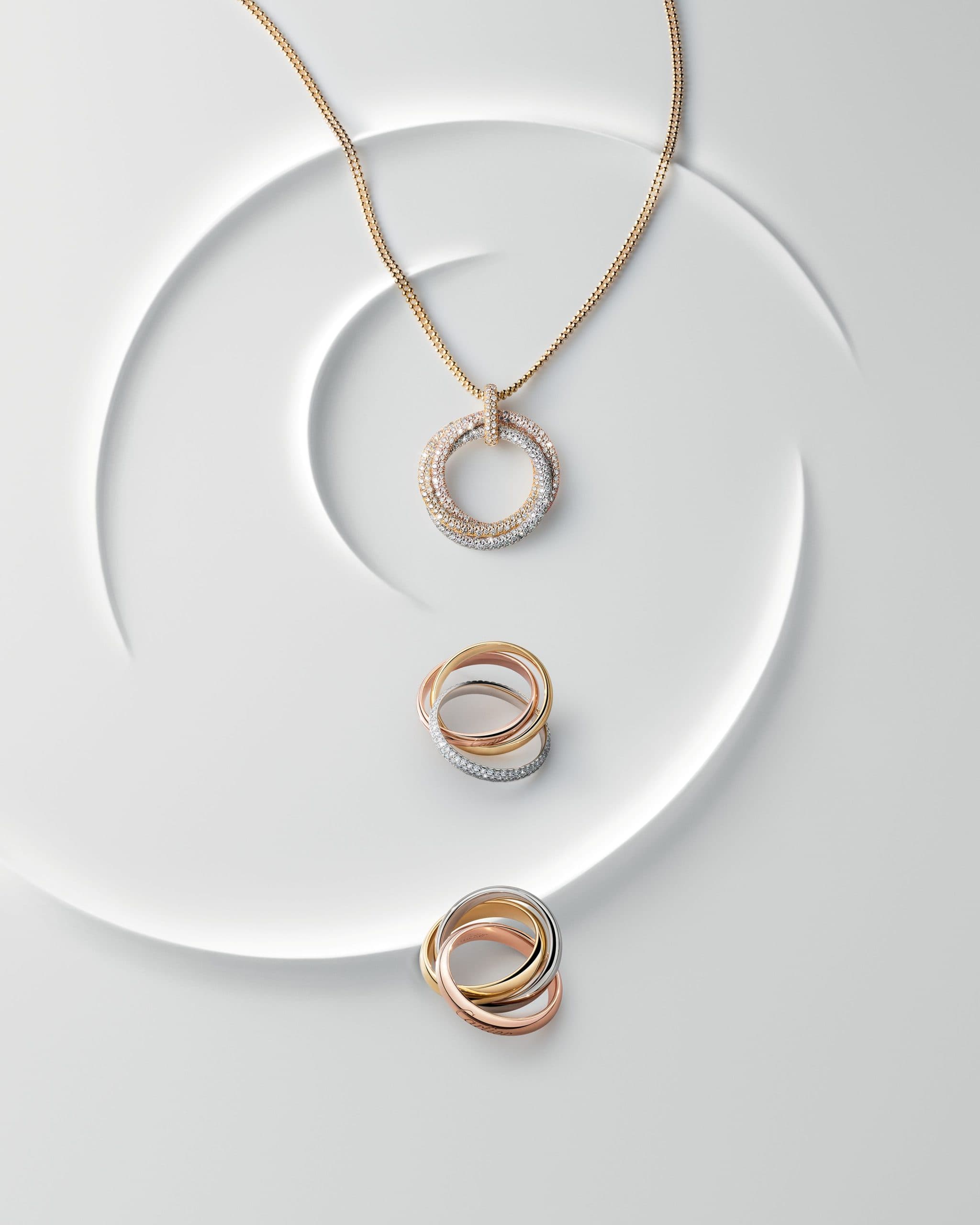
As fashion moved toward bolder silhouettes, Cartier responded by playing with the scale of the Trinity. In 1990, the Maison launched versions with distinctive, heavier proportions emblematic of the decade’s aesthetic. By 2004, the collection introduced an XL version of the bracelet and rings paved with pink, yellow, and white diamonds, merging the minimalist Trinity form with the house’s expertise in high-gem setting.
2024: The Centenary and the Cushion Shape
To mark 100 years of the icon, Cartier unveiled a major design evolution: the cushion-shaped Trinity. This new silhouette retains the interlocking bands but introduces a softened, square-like geometry. Additionally, the house released modular versions and reissued the XL bracelet, alongside designs featuring animal motifs—the panther, tiger, and snake—representing the three emblematic creatures of Cartier’s fauna.
The Symbolism of Three: Love, Fidelity, and Friendship
While the technical design of the Trinity is impressive, its deeper resonance lies in its symbolic flexibility. The three bands are traditionally interpreted as representing love (rose gold), fidelity (yellow gold), and friendship (white gold or platinum). However, Cartier has historically left the interpretation open to the wearer, allowing the piece to function as a "vessel" for individual stories.
Across generations, the Trinity has served as a marker for significant life milestones. It is frequently gifted to young adults as a "coming of age" piece, exchanged between partners to signify a commitment that predates or supplements a traditional engagement, or offered to celebrate the birth of a child. Because it lacks the formal rigidity of a diamond engagement ring, it has become a preferred choice for promise rings and wedding bands for those seeking a more contemporary, gender-neutral aesthetic. This universality is a key driver of its market success; the Trinity does not adhere to strict gender codes, making it as popular among men as it is among women.
Cultural Impact and Iconic Adopters
The Trinity’s status as a cultural signifier is reinforced by the caliber of individuals who have worn it. The list of "Trinity devotees" reads like a who’s who of twentieth-century history. Grace Kelly, the Princess of Monaco, was famously fond of the design, often wearing the ring as a staple of her refined, understated wardrobe. In later years, Diana, Princess of Wales, and subsequently Catherine, Princess of Wales, have been seen with the Trinity, linking the design to modern royal history.
Beyond royalty, the ring has been a favorite in the world of cinema and art. From Alain Delon to Romy Schneider, the Trinity has appeared on screen and in private life as a symbol of effortless Parisian chic. The fact that the design has remained unchanged in its core essence for a century allows it to bridge the gap between these historical figures and modern celebrities, creating a sense of "continuity" that few other luxury products can claim.
Business Analysis: The Strategy of an Eternal Icon
From a commercial perspective, the Trinity collection serves as a cornerstone of Cartier’s "Global Hero" strategy. In the luxury industry, a "Hero" product is one that maintains high demand regardless of economic fluctuations. The Trinity fulfills this role by offering various entry points into the brand. A customer might begin with a classic slim band and eventually graduate to a diamond-paved XL version or a Trinity necklace.
The 1973 "Les Must de Cartier" expansion was particularly significant for the brand’s bottom line. By applying the Trinity rings to pens and lighters, Cartier leveraged the design’s "visual shorthand" for luxury. This prevented the brand from becoming stagnant or being viewed only as a jeweler for the ultra-wealthy. Instead, the Trinity became a lifestyle emblem.
In 2024, the introduction of the cushion-shaped rings and the animal-print variations shows Cartier’s commitment to "evolution within tradition." By refreshing the proportions and shapes, the Maison attracts a younger demographic that values heritage but desires a modern "twist." This strategy ensures that the Trinity remains relevant in a competitive market where "quiet luxury"—the preference for high-quality, unbranded, yet recognizable items—is currently at its peak.
The Future of the Trinity
As Cartier looks toward the next century, the Trinity remains a masterclass in how proportion, movement, and meaning can coexist within a single, wearable form. Its success suggests that the most enduring designs are those that offer simplicity on the surface but possess deep emotional and technical complexity underneath.
The Trinity demonstrates that a piece of jewelry does not need to be loud to be heard. More than a century after Louis Cartier first intertwined those three bands of gold, the design continues to sit comfortably on the fingers of a new generation. It remains a fluid piece of jewelry—balanced, magical, and perpetually in motion—proving that while fashions fade, a true icon only grows more resonant with time. Through its 100th anniversary celebrations in major capitals like Paris, London, and New York, Cartier has reaffirmed that the Trinity is not just a part of its past, but a vital, evolving part of its future.
