
 By admin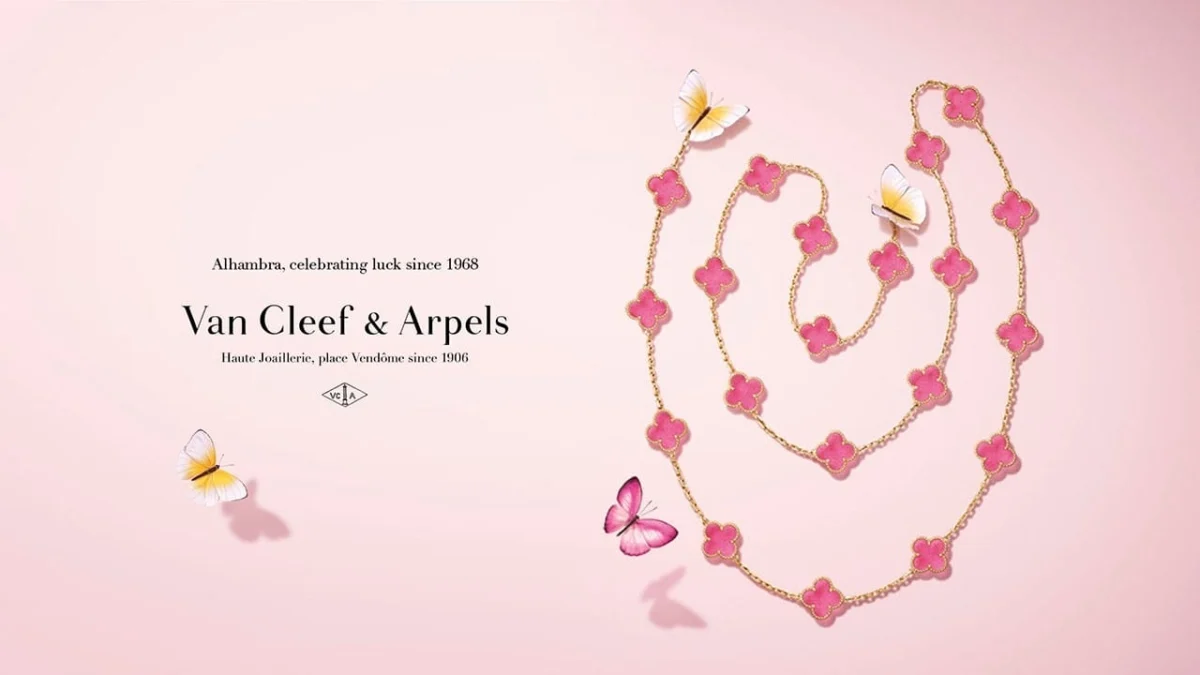
The esteemed French High Jewelry Maison, Van Cleef & Arpels, has officially unveiled a significant expansion to its iconic Alhambra collection, introducing five new creations characterized by a specialized pink enamel finish. This latest release, which includes iterations within the Vintage Alhambra and Magic Alhambra lines, represents a convergence of contemporary aesthetic appeal and 17th-century artisanal methodology. By integrating a translucent, vibrant pink hue achieved through the historic "gold-ruby" process, the Maison continues to evolve a collection that has remained a cornerstone of its identity since 1968. The new offerings—consisting of a pendant, a five-motif bracelet, a ten-motif necklace, and a pair of earrings in the Vintage Alhambra style, alongside a single-motif long necklace in the Magic Alhambra format—underscore a strategic commitment to material innovation and the preservation of traditional French savoir-faire.
The Technical Innovation of Gold-Ruby Enamel
At the heart of this new release is a material that the Maison describes as both translucent and vibrant, enlivened by microscopic internal structures. The specific shade of pink was developed within Van Cleef & Arpels’ dedicated enamel workshops following several years of rigorous research and development. The objective was to achieve a color depth that could not be replicated through standard pigment applications. To accomplish this, the Maison looked toward the "gold-ruby" glass-making process, a technique that rose to prominence in the 17th century.
In this historical method, the intense coloration is not the result of a simple dye but is generated by the suspension of colloidal gold particles within the enamel or glass matrix. These particles are invisible to the naked eye, yet they interact with light to produce a spectrum of deep reds and pinks. In the context of the Alhambra collection, this technique results in a "pink shimmer" that possesses a unique piqué effect—tiny bubbles and inclusions that imbue each four-leaf clover motif with a sense of internal life and dimensionality. The application of this material requires extreme precision in temperature control during the firing process, as the final hue is highly sensitive to the duration and intensity of heat applied within the kiln.
A Chronology of the Alhambra Motif: 1968 to Present
The introduction of pink enamel marks a new chapter in a timeline that spans over five decades. The Alhambra motif was first conceived in 1968 by Jacques Arpels, who famously observed that "to be lucky, you have to believe in luck." Inspired by the four-leaf clover, the design was intended to serve as a talisman of fortune.
- 1968: The first Alhambra long necklace is launched, featuring 20 creased gold motifs fringed with gold beads.
- 1970s: The collection gains international fame, frequently worn by style icons such as Princess Grace of Monaco and Françoise Hardy. The Maison begins introducing hard stones like lapis lazuli, malachite, and tiger’s eye.
- 1998: The introduction of the "Vintage Alhambra" line, which faithfully reproduces the proportions and beaded borders of the original 1968 designs.
- 2001: The "Pure Alhambra" collection is released, offering a smoother, more minimalist interpretation of the clover.
- 2006: The "Magic Alhambra" line debuts, playing with asymmetrical designs and varying sizes of motifs.
- 2018: The 50th anniversary of the collection is celebrated with the introduction of gray mother-of-pearl and blue agate variants.
- 2024: The current launch of the pink enamel series, marking a return to complex, fire-based artisanal techniques.
This chronology illustrates the collection’s ability to remain relevant across generations by balancing its recognizable silhouette with a rotating palette of precious materials, including mother-of-pearl, onyx, carnelian, and now, scientifically advanced enamel.
Detailed Composition of the New Creations
The five-piece release is structured to offer versatility for collectors, ranging from daily-wear pendants to more formal, multi-motif necklaces. Each piece is set in rose gold, a metal choice that complements the warm undertones of the pink enamel.
- Vintage Alhambra Pendant: A singular motif suspended from a delicate rose gold chain, designed for understated elegance.
- Vintage Alhambra 5-Motif Bracelet: This piece features five clover motifs spaced evenly along a chain, showcasing the consistency of the enamel’s hue across multiple settings.
- Vintage Alhambra 10-Motif Necklace: A mid-length necklace that provides a significant visual impact through the repetition of the pink shimmer.
- Vintage Alhambra Earrings: Two motifs designed to frame the face, utilizing the translucent properties of the enamel to catch and reflect ambient light.
- Magic Alhambra Long Necklace: A single, larger motif that can be worn in various ways, emphasizing the "magic" of the collection’s proportions.
The Maison’s workshops ensure that each motif is bordered by the signature "perlé" or beaded setting. This technique involves hand-polishing each tiny gold bead to ensure a brilliant finish that contrasts with the smooth, glass-like surface of the enamel.
Market Analysis and the Resurgence of Artisanal Luxury
The launch of the pink enamel Alhambra collection arrives at a time of robust growth for the global high jewelry sector. According to market data from the 2023-2024 fiscal reports of Richemont—the parent company of Van Cleef & Arpels—the "Jewelry Maisons" division (which also includes Cartier and Buccellati) has consistently outperformed other luxury segments. Demand for "iconic" collections that retain their value over time is a primary driver of this growth.
Industry analysts note that modern luxury consumers are increasingly gravitating toward "story-driven" materials. The use of a 17th-century technique like gold-ruby enamel provides a narrative of heritage and exclusivity that resonates with high-net-worth individuals. Furthermore, the choice of pink is strategically significant. Following the global "Barbiecore" trend and the general shift toward warmer, more feminine color palettes in high fashion, pink has moved from a seasonal trend to a staple color in luxury portfolios.
Data suggests that colored gemstones and specialized materials now account for a larger share of the jewelry market than traditional white diamonds alone. By utilizing enamel, Van Cleef & Arpels offers a "high-craft" alternative to precious stones, allowing for a unique aesthetic that is difficult for competitors to replicate without the same level of investment in research and development.
Institutional Response and Savoir-faire Preservation
While Van Cleef & Arpels has not released specific sales targets for the new line, spokespersons for the Maison have emphasized that the primary goal of the pink enamel project was the preservation of savoir-faire. The company operates its own "L’École, School of Jewelry Arts," which aims to educate the public and future artisans on the complexities of jewelry making.
In a statement regarding the development of the new material, the Maison highlighted that the research phase was essential to ensure the durability of the enamel. Unlike traditional glass, jewelry-grade enamel must be resistant to thermal shock and everyday wear. The successful integration of gold particles into the enamel matrix represents a technical achievement that reinforces Van Cleef & Arpels’ position as a leader in material science within the jewelry industry.
Experts in the field of gemology have noted that the "piqué" effect mentioned by the Maison—the presence of tiny bubbles—is often considered a defect in industrial glass making. However, in the context of high jewelry, it is reclaimed as a sign of "hand-made" authenticity. This aligns with a broader movement in luxury goods where minor "imperfections" or unique internal characteristics are marketed as evidence of human touch and artistic depth.
Broader Impact on the Luxury Landscape
The introduction of the pink enamel Alhambra collection is likely to influence the broader luxury landscape in several ways. First, it reinforces the trend of "archival revival," where brands look to their own history to find inspiration for new products. By combining a 1960s design with a 17th-century technique, Van Cleef & Arpels creates a product that feels timeless rather than trendy.
Secondly, the move signals a continued investment in specialized workshops. As automation becomes more prevalent in various sectors, the high jewelry industry is doubling down on manual techniques that require years of apprenticeship. This "human-centric" approach to manufacturing is becoming a key differentiator for top-tier brands.
Finally, the release serves as a case study in brand extension. The Alhambra collection is already one of the most recognizable jewelry designs in the world. By introducing new materials like pink enamel, Van Cleef & Arpels can re-engage existing collectors while attracting a younger demographic that may be drawn to the vibrant color and the scientific story behind its creation.
As the collection reaches boutiques globally, the focus remains on the interplay between light and material. The "pink shimmer" of the new Alhambra pieces is more than just a color choice; it is a testament to the enduring appeal of craftsmanship in an increasingly digitized world. Through this launch, Van Cleef & Arpels successfully bridges the gap between historical artistry and modern luxury, ensuring that the four-leaf clover remains a symbol of both luck and technical excellence for years to come.
