
 By admin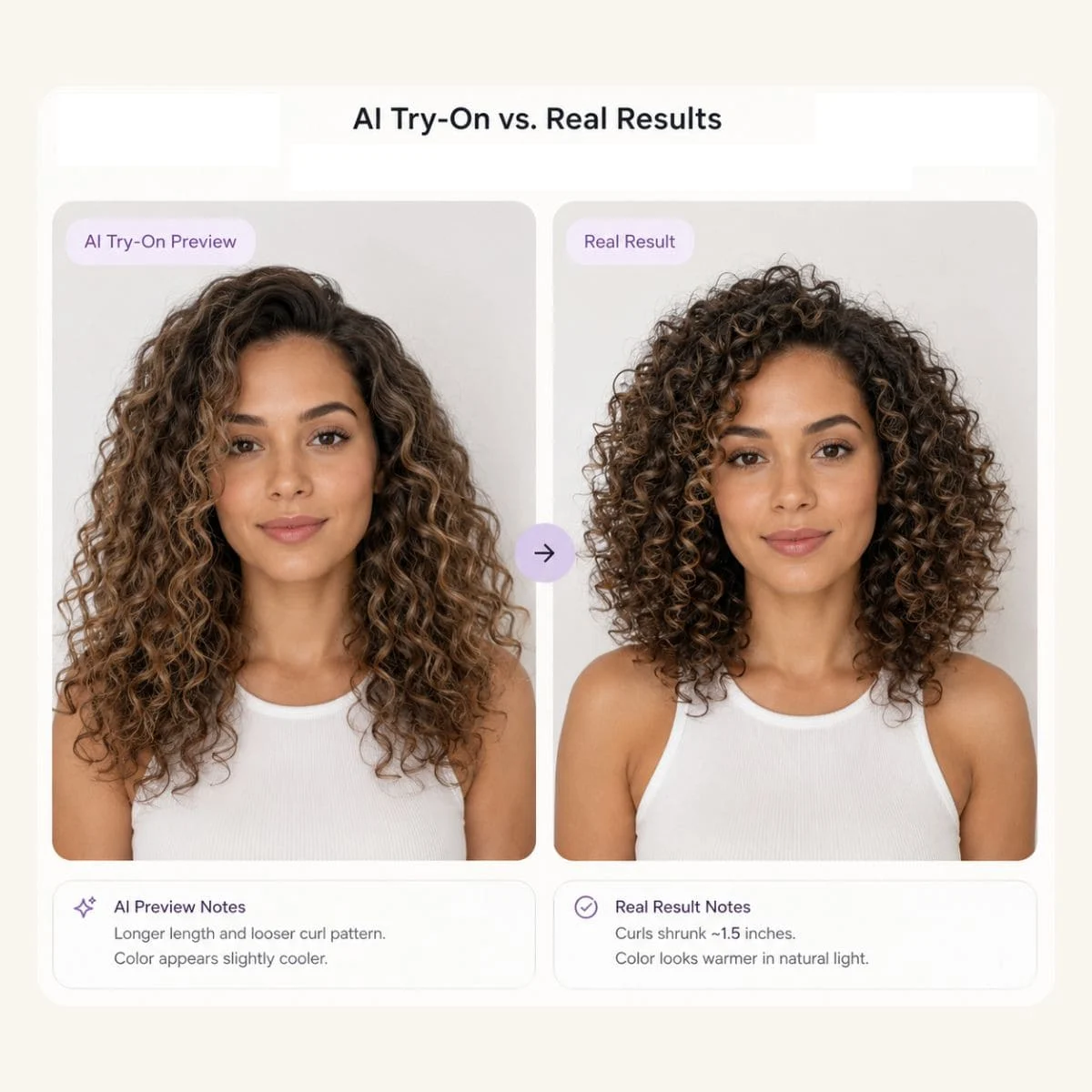
The landscape of professional hairstyling is undergoing a significant evolution with the integration of Artificial Intelligence (AI) powered hairstyle try-on applications. These innovative tools are rapidly shifting the paradigm of client consultations, moving beyond the limitations of verbal descriptions and static magazine tear sheets to offer dynamic, personalized visual previews. For hairstylists, this technological leap represents an unprecedented opportunity to bridge the gap between a client’s imagination and the tangible outcome of a haircut or color service, fostering greater transparency and ultimately, client satisfaction.
Historically, the consultation process has been a delicate dance between descriptive language and the stylist’s interpretative skill. A phrase as simple as "something shorter and more textured" could translate into a myriad of distinct styles depending on the individual understanding of both the client and the stylist. This inherent ambiguity has often been the root cause of mismatched expectations, a common point of contention that rarely stems from the stylist’s technical execution but rather from a divergence in visual perception. The advent of AI try-on technology directly addresses this challenge by providing a tangible, visual representation of a proposed style on the client’s own face, transforming abstract ideas into concrete possibilities.
Bridging the Expectation Gap: The Visual Advantage
The core strength of AI hairstyle try-on lies in its ability to create a shared visual language between stylist and client. When a client can see a potential haircut or color not on a generic model in a magazine but on their own reflection, the decision-making process becomes far less abstract and significantly more grounded. This allows for a more precise dialogue, where clients can articulate their preferences with greater clarity, for instance, by pointing to a preview and stating, "I like that length, but not quite that short." Such direct feedback, facilitated by the visual aid, can save considerable time and prevent potential misunderstandings that might otherwise arise mid-service. Industry reports from salon management software providers consistently highlight client satisfaction as a key driver of repeat business, with clear communication and expectation management being paramount.
Furthermore, these AI tools serve as a powerful reference point throughout the service. Should a client experience a moment of doubt or second-guess a decision partway through the cutting process, referencing the agreed-upon visual preview on the screen can reinforce the initial plan and reaffirm their commitment to the chosen style. This shared visual anchor contributes to a more confident and collaborative client experience, reducing anxiety and enhancing trust. The direct experience of using these applications is often the most compelling endorsement for stylists, encouraging them to explore their capabilities before introducing them to clients.
Understanding the Technology: How AI Hair Try-On Works
While a deep dive into the complexities of neural networks is unnecessary for salon professionals, a foundational understanding of how AI hairstyle try-on technology functions is crucial for setting appropriate client expectations. At its core, the process involves sophisticated algorithms that analyze a client’s photograph. The AI maps the client’s facial features, including their hairline, and isolates the hair region. It then overlays a selected hairstyle – be it a new length, shape, or color – onto this facial canvas. This is achieved while meticulously preserving the client’s existing skin tone and the ambient lighting of the photograph, creating a remarkably realistic, albeit digital, simulation. The generation of these previews typically takes mere seconds, making the technology seamlessly integrable into a live salon consultation.

It is essential to recognize that this technology operates primarily through pattern recognition and pixel analysis rather than precise volumetric measurement. The AI does not possess the capacity to ascertain a client’s hair density, the nuanced behavior of their unique curl pattern once dry, or how a specific cut will ultimately fall after layers are removed. Instead, it interprets the visual data from a photograph and predicts how a similar hairstyle would appear on that individual’s face. Consequently, the accuracy and believability of the preview are heavily influenced by the quality of the input image. Front-facing photographs characterized by even lighting and hair neatly pulled away from the forehead yield the most convincing results. Conversely, poor lighting, heavy digital filters, or extreme camera angles can confuse the AI model, leading to less accurate and less convincing previews.
This distinction between a visual representation and a precise replication is the linchpin for effective communication with clients. Stylists must consistently convey that the AI try-on provides a strong indication of potential shape and color direction, rather than an infallible guarantee of the final, tangible outcome. This nuanced understanding empowers stylists to manage client expectations proactively, ensuring that the technology serves as a helpful guide rather than a source of potential disappointment.
Integrating AI Try-On into the Salon Consultation Workflow
The true value of AI hairstyle try-on technology is realized when it is seamlessly integrated into the established salon consultation flow, rather than being treated as an isolated novelty. A structured approach ensures that the technology enhances, rather than disrupts, the client experience.
1. The Initial Capture: The process ideally begins at the client’s check-in. Instead of relying on a client’s pre-existing selfie, which may have been taken under suboptimal lighting conditions or with flattering filters, stylists should capture a fresh, front-facing photograph within the salon environment. Salon lighting, often specifically designed for hair color and cut assessment, provides a more accurate baseline for the AI’s analysis and subsequent previews.
2. Collaborative Exploration: During the consultation phase, the AI try-on should be a collaborative tool. Stylists should engage with the client in generating two to three distinct variations of a potential hairstyle. This interactive process, where both parties discuss each option as it appears on screen, transforms the consultation into a dynamic dialogue. It allows the stylist to offer immediate, informed feedback on the feasibility of a particular style based on the client’s hair type and texture, flagging potential challenges before the client becomes overly attached to a digitally rendered ideal.
3. Pre-Service Confirmation: Before commencing any cutting or coloring, a final review of the agreed-upon hairstyle on the screen is paramount. This shared visual confirmation solidifies the client’s decision and provides a clear reference point for both parties, minimizing the likelihood of mid-service revisions.

Stylist Tip: To maintain efficiency, it is advisable to limit the number of hairstyle variations presented to a maximum of three. Presenting too many options can inadvertently lead to indecision, potentially prolonging the consultation rather than streamlining it.
Acknowledging the Limitations: Where AI Falls Short
While AI hairstyle try-on technology offers significant advantages, it is crucial for stylists to be transparent about its inherent limitations. These limitations do not diminish the technology’s value but underscore the continued importance of professional judgment and expertise.
Hair Behavior and Texture: The AI cannot predict how a client’s specific hair will behave post-cut, after washing, or once styled. A digitally rendered sleek bob, for instance, might not account for the natural spring or shrinkage of curly hair, or the lack of volume in fine, thin strands. For clients with highly textured hair, particularly those with curl patterns from 4a to 4c, current AI models often struggle with segmentation accuracy. This can result in blurred hairlines or oddly shaped outlines, especially in low light or against dark backgrounds. For these clients, AI previews should be presented as a rough silhouette, a starting point for discussion, rather than a definitive outcome.
Color Precision: Color rendering through AI is generally approximate, not exact. While the technology can indicate a general direction – such as a cooler blonde or a richer brunette – it is not equipped to predict the precise toner formulas required, the nuances of gray coverage, or how a specific dye will lift against a client’s existing hair color. The art and science of color formulation remain firmly within the stylist’s domain.
Angle and Profile Accuracy: Front-facing previews are consistently more reliable than those generated from profile or side-angle photographs. Most AI models are trained on extensive datasets of front-facing images. If a client is interested in styles with significant detail on the back or sides, such as an undercut, the AI preview will offer at best a foundational concept, not a confirmed result.
Hair Health and History: Critically, no AI preview tool can assess scalp condition, analyze hair history, or predict the reaction of previously treated hair to new chemical processes. These vital assessments remain exclusively the purview of the experienced stylist. Clients must be explicitly informed that the AI does not account for these crucial factors.

Maintaining open and honest communication about these limitations is paramount. By proactively addressing where the technology might fall short, stylists can preserve client trust and ensure that the final result, even if it deviates slightly from the digital preview, is understood as a professional adaptation rather than a misexecution.
Introducing HairHunt Pro: A Stylist-Centric Solution
Recognizing the unique demands of professional salon environments, specialized AI tools are emerging to cater to the needs of hairstylists. While consumer-oriented apps like the standard HairHunt app are useful for personal exploration, a busy salon consultation desk requires a solution built for efficiency and client commitment.
HairHunt Pro is engineered precisely for this purpose. It aims to streamline the consultation process by offering faster generation times and features designed to help clients make confident decisions. The underlying objective is to reduce the common "let me think about it" response that often concludes consultations, thereby potentially increasing booked appointments and stabilizing salon revenue. HairHunt Pro offers a 30-day free trial, providing ample opportunity for stylists to integrate the tool into their workflow and assess its impact on real client consultations before committing to a subscription.
Crafting the Conversation: Scripts for Seamless Integration
The successful adoption of AI hairstyle try-on hinges on how effectively stylists communicate its purpose and capabilities to their clients. Integrating the technology with carefully chosen language ensures it feels like a natural extension of the consultation, rather than an intrusive gadget.
Opening the Dialogue:
"Let’s use this app to visualize a few options before we start cutting. This way, we’ll both be on the same page regarding the intended length and shape."
Setting Realistic Expectations:
"This tool will give us a great idea of the general shape and color direction. Once we begin the actual cut, I’ll make adjustments to account for how your hair naturally behaves, as that’s something the app can’t precisely predict."

Addressing Texture Discrepancies:
"If the preview doesn’t perfectly mirror your hair’s natural texture today, please don’t worry. Think of this as a detailed sketch we’re using to agree on the overall direction, not a final photographic representation."
Concluding the Consultation:
"Here is the look we’ve decided on together. I’ll bring this up again during the service if we need to refer back to our plan."
Stylist Tip: Consistently using the phrases "shape and direction" instead of "exact result" when discussing previews can subtly but effectively frame client expectations from the outset, mitigating potential disappointment later in the appointment.
Maximizing Accuracy: Best Practices for Client Photos
The efficacy of any AI try-on tool is directly proportional to the quality of the input photograph. Implementing a few consistent habits can significantly enhance the reliability of the generated previews in a salon setting.
- Optimal Lighting: Utilize even, front-facing lighting. Avoid harsh overhead salon lights that can create unflattering shadows. A simple ring light positioned near the consultation chair, even an economical one, can make a substantial difference in image clarity.
- Clear View of the Face: Instruct clients to pull their hair back from their face, ideally securing it in a low bun or using clips. This ensures the AI has an unobstructed view of the client’s facial structure and hairline.
- Direct Angle: Shoot photographs straight on. While a slight tilt may be permissible, extreme angles or three-quarter views will notably decrease the AI’s accuracy.
- Filter-Free Images: Advise clients against using beauty filters on their photos. Filters that alter skin texture or facial contours can confuse the AI model and lead to inaccurate previews.
- Fresh Photography: At each appointment, take a new photograph. This is especially important if the client’s hair length, color, or facial features have changed since their last visit, ensuring the preview is based on their current appearance.
Frequently Asked Questions
Do clients generally trust AI hairstyle previews?
Yes, most clients find a realistic AI preview more trustworthy than a verbal description alone, particularly when the stylist clearly explains that it represents shape and direction, not an absolute guarantee. This transparency builds confidence rather than eroding it.
Will AI try-on prolong my consultations?
On the contrary, once integrated into a routine, AI try-on typically expedites consultations. Clients arrive with or quickly develop a clearer vision, reducing the need for lengthy verbal explanations of vague requests. Limiting previews to two or three options further enhances efficiency.

Can AI try-on be used for color consultations?
Certainly, though color previews are best understood as an indicative guide. The AI cannot account for a client’s existing hair base, porosity, or the specific toner formula intended. Treat these previews as a directional tool, with the final color formulation resting on your professional expertise.
What if the client’s hair doesn’t match the preview post-cut?
This is most common with curly hair that shrinks or hair that doesn’t achieve the projected volume. Refer back to the communication scripts, emphasizing the "shape and direction" aspect, and explain the specific reason for the difference (e.g., natural curl behavior). This helps the client understand it as an expected outcome rather than an error.
Does HairHunt Pro replace the standard HairHunt app for clients?
No, they serve distinct purposes. Clients can continue to use the standard HairHunt app independently between salon visits. HairHunt Pro is specifically designed for the interactive and time-sensitive environment of an in-salon consultation.
Is there a cost to try AI try-on technology with clients before committing?
HairHunt Pro offers a 30-day free trial, allowing stylists to thoroughly test its capabilities in real-world consultation scenarios before making a financial commitment.
In conclusion, the integration of AI hairstyle try-on technology represents a significant advancement in professional hairstyling. When utilized as a collaborative tool, supported by clear communication and an honest acknowledgment of its limitations, it transforms the consultation process. This technology empowers stylists to move beyond subjective descriptions, creating a shared visual understanding that leads to more satisfied clients and ultimately, more successful and confident hair transformations.
