
 By Nila Kartika Wati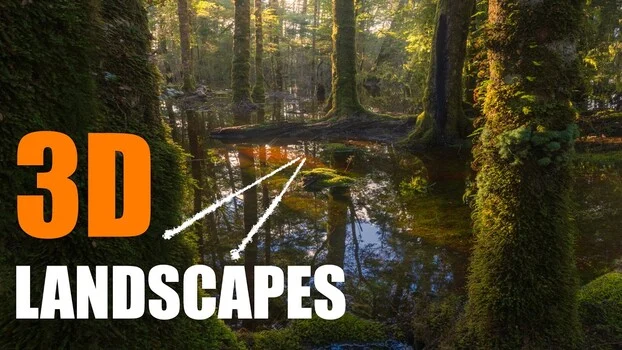
Achieving a truly immersive landscape photograph, one that compels the viewer to step into the scene rather than merely observe a flat image, fundamentally hinges on the photographer’s nuanced understanding and deliberate manipulation of depth. This critical distinction is the cornerstone of the compositional philosophy championed by acclaimed photographer William Patino, whose systematic three-part approach to framing has become a benchmark for creating images that resonate with profound dimension and spatial integrity. Patino’s methodology transcends conventional advice, integrating principles of visual psychology and classical art to guide the viewer’s eye through a meticulously constructed visual journey, transforming a mere picture into an experiential gateway.
The Foundational Three-Part Composition: Foreground, Midground, Background
Patino’s framework for establishing depth begins with a meticulous dissection of the photographic frame into three distinct yet interconnected zones: the foreground, midground, and background. This structured approach ensures that each element within the scene contributes to a cohesive sense of recession, a visual pathway that invites exploration.
Foreground as the Entry Point: Patino emphasizes that the foreground is not merely an incidental element but the crucial entry point into the composition. His counsel extends beyond simply placing an interesting object close to the camera; he advocates for a deep understanding of diminishing perspective. This principle, long employed by Renaissance painters and later adopted by photographic masters such as Ansel Adams in his pursuit of "straight photography," dictates that objects positioned closest to the lens appear largest and gradually decrease in size as they recede into the distance. By leveraging this natural optical phenomenon, photographers can create an immediate sense of scale and distance. A strong foreground, perhaps featuring a textured rock, a winding river, or intricate flora, acts as an anchor, pulling the viewer’s gaze into the scene and establishing an initial point of engagement. Effective use of wide-angle lenses often enhances this effect, exaggerating the size difference between near and far elements and thus amplifying the perception of depth.
Midground as the Crucial Bridge: While a compelling foreground is vital, Patino underscores its limitations if not properly integrated with a midground. Without this intermediate zone, the visual leap from foreground to background can feel abrupt and disorienting, undermining the illusion of continuous space. The midground serves as the essential bridge, guiding the eye smoothly from the immediate foreground towards the distant horizon. Details within the midground, such as a cluster of trees, a meandering stream, or a series of rolling hills, appear smaller than their foreground counterparts due to their increased distance, subtly reinforcing the diminishing perspective established earlier. These elements provide critical context and scale, breaking up the frame and offering new points of interest that maintain the viewer’s engagement as their eye traverses deeper into the image. This transitional zone is crucial for establishing visual rhythm and narrative flow, ensuring a seamless progression through the landscape.
Background as the Anchor and Focal Point: The final component of Patino’s tripartite division is the background, which typically contains the primary subject or the ultimate focal point of the composition. Having been guided through the foreground and midground, the viewer’s eye naturally arrives at this distant zone, which often features grand vistas, dramatic mountain ranges, or a compelling sky. The background provides the expansive context for the entire scene, culminating the visual journey. Atmospheric perspective, where distant elements appear lighter, bluer, and less saturated due to atmospheric haze, can naturally enhance the sense of depth in this zone, further separating it from the sharper, more detailed midground and foreground.
The Imperative of Separation: Avoiding Visual Collapse
One of Patino’s most significant insights, derived from self-reflection on his earlier work, revolves around the critical concept of "separation." He observes that a common pitfall for photographers, particularly when composing low to emphasize a foreground, is the inadvertent collision of foreground elements with the far background. This lack of clear delineation collapses the visual planes, flattening the image into a single, undifferentiated surface, thereby destroying the illusion of depth.
Patino’s solution is a deliberate analysis of the frame to ensure clear, discernible gaps between the compositional zones. This meticulous attention to negative space allows each element—near and far—to occupy its own distinct spatial plane, preventing visual clutter and maintaining a robust sense of dimension. This principle is particularly challenging, and thus vital, in dense environments like forests or woodlands. Patino recounts his early tendency to be drawn to sunlit ferns and attempt to place them prominently in the foreground. While visually striking in person, such brightly lit, high-contrast foreground elements, he found, often aggressively competed with other parts of the composition, disrupting the visual flow and flattening the scene. The eye, naturally drawn to brightness and contrast, becomes fixated on the foreground, unable to travel deeper. This observation leads directly to his revolutionary approach to light.
The "Shade First" Philosophy: Guiding Light Through Darkness
Perhaps Patino’s most distinctive and counter-intuitive contribution to landscape photography is his "shade first" philosophy regarding light. While many photographers instinctively seek out the "golden hour" for its soft, warm light, Patino adopts a more restrained and strategic approach. After identifying his primary subject, he actively seeks out and prioritizes areas of shadow within the foreground and midground.
His rationale is deeply rooted in the psychology of visual perception: the human eye is instinctively drawn to brightness and contrast. By allowing the foreground and intermediate zones to recede into shadow, Patino creates a natural visual ramp, a path of least resistance that subtly directs the viewer’s gaze towards a brighter, more illuminated focal point typically situated in the background. A foreground drenched in strong, unmanaged light demands immediate attention, effectively locking the viewer’s eye in place and preventing it from venturing deeper into the frame. While a subtle touch of light in the lower registers can be effective, an overabundance can halt the visual journey altogether, negating any meticulously constructed depth.
This "shade first" principle is not merely a contemporary photographic technique but an echo of centuries-old artistic mastery. It directly connects to the concept of chiaroscuro, a term derived from Italian meaning "light-dark." Pioneered by Renaissance masters like Leonardo da Vinci and later perfected by artists such as Caravaggio and Rembrandt, chiaroscuro employs strong contrasts between light and dark, usually bold contrasts affecting a whole composition, to create a sense of volume in modeling three-dimensional objects and figures. More critically for Patino’s application, it is used to steer the viewer’s attention and evoke dramatic impact.
Cinematographers, too, have long utilized this principle, deliberately underexposing certain parts of a frame to guide the audience’s focus or to establish mood and narrative tension. Similarly, many revered landscape paintings in art galleries feature subtly dimmed edges and lower thirds, directing the eye inward towards the central narrative or illuminated subject. By applying this principle deliberately, photographers gain a powerful tool that transcends specific environments—from vast coastlines to dense woodlands—and diminishes the reliance on dramatic skies to carry the shot. It empowers the photographer to sculpt light, not just capture it, creating a visual hierarchy that transforms observation into a guided experience.
Breaking Creative Stagnation: Agility and Deliberation
Patino’s wisdom extends beyond compositional and lighting techniques, encompassing a profound perspective on the creative process itself. He vehemently argues against "getting stuck in the mud," both literally in terms of physical positioning and metaphorically in terms of creative inflexibility. His personal practice, remarkably, includes not having used a tripod for a decade in his landscape work. This choice, which might seem heretical to many landscape photographers who rely on tripods for precision and low-light stability, underscores his commitment to mobility and spontaneity.
This approach challenges the common tendency for photographers to lock onto a single composition, convinced it is the optimal shot in a given moment. Patino advocates for an agile, explorative mindset. His habit is to secure what he believes to be a strong frame, but then to immediately move on, exploring alternative perspectives, angles, and compositions. He recognizes that the initial excitement and emotional attachment to a shot captured at sunrise can often cloud objective judgment. Upon reviewing raw files later, with the emotional intensity of the moment having faded, he frequently discovers that a less obvious, more experimental frame often surpasses his initial "best."
This emphasis on gathering a variety of options on location provides a richer palette for later selection and refinement. Patino extends this principle of patience and objectivity to his post-production workflow as well. Rather than rushing an edit while the exhilaration of the shoot is still fresh, he allows his work to "marinate." This period of detachment enables a more critical and discerning eye during the editing process, leading to more refined and impactful final images. This practice resonates with artists across various disciplines, from writers who set aside manuscripts to painters who step back from their canvases, all seeking the clarity that comes from temporal and emotional distance.
Broader Implications and the Evolution of Landscape Photography
William Patino’s methodology represents a significant evolution in landscape photography discourse. By integrating classical art principles like chiaroscuro and diminishing perspective with practical, field-tested techniques, he elevates the craft beyond mere technical proficiency. His work suggests that true mastery lies not just in understanding camera settings or post-processing software, but in a profound comprehension of visual psychology and the timeless principles of artistic composition.
His emphasis on depth, separation, and controlled light empowers photographers to move beyond simply documenting a scene to actively crafting an immersive visual narrative. In an era saturated with digital imagery, Patino’s approach offers a pathway to create photographs that stand out, not through dramatic effects or fleeting trends, but through their inherent ability to draw the viewer into a carefully constructed, three-dimensional world. This commitment to thoughtful composition and patient curation serves as a powerful reminder that the most compelling images are often those that are not just seen, but felt and experienced, guiding the eye and mind on an unforgettable journey. His work, showcased extensively through his online platforms and instructional videos, continues to influence a new generation of photographers seeking to imbue their landscapes with greater meaning and enduring impact.
