
 By Nila Kartika Wati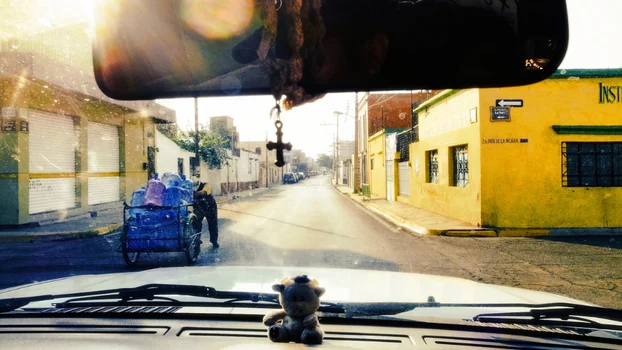
The landscape of travel photography is currently undergoing a significant identity crisis, grappling with evolving definitions of authenticity, purpose, and visual impact. This existential challenge is not rooted in technological limitations or a decline in global destinations’ allure, nor does it stem from a decrease in photographic engagement. Instead, the core issue lies in a pervasive sense of visual homogeneity, where a substantial portion of contemporary travel imagery appears strikingly interchangeable, regardless of geographic location. This phenomenon has profound implications for both the art form and the broader travel industry, necessitating a re-evaluation of photographic practices and motivations.
The Rise of Visual Homogeneity and Algorithmic Influence
A cursory review of major social media platforms, such as Instagram, TikTok, and even travel-focused blogs, quickly reveals a striking pattern of repetition. Iconic viewpoints are captured from identical angles, famous landmarks are framed with predictable compositions, and dramatic color grading becomes a universal aesthetic. A particularly prevalent trope involves a human silhouette, often positioned in front of a culturally significant site, meticulously arranged to appear unaware of the camera’s presence. This visual lexicon transcends national borders; images from disparate countries often exhibit an uncanny resemblance, suggesting a global standardization of visual output.
Historically, travel photography was deeply embedded in principles of curiosity, observation, and discovery. Early pioneers, from the documentation efforts of National Geographic photographers in the early 20th century to individual adventurers capturing uncharted territories, sought to convey the unique essence of a place through their personal lens. The advent of digital photography in the late 20th century, and more recently, advanced smartphone cameras in the 21st century, democratized the medium, allowing millions to capture their journeys. However, this democratization has coincided with the rapid rise of algorithmically driven content platforms, which subtly, yet powerfully, shape visual trends. These algorithms often favor images that are instantly recognizable, high-engagement, and conform to established aesthetic norms, inadvertently steering photographers away from genuine exploration towards the reproduction of popular visual templates. Data from a 2023 study by Skift, a travel industry intelligence platform, indicated that nearly 70% of Gen Z and Millennial travelers use social media for travel inspiration, with visual content playing a decisive role in destination choice. The consequence is that photographers frequently arrive at destinations with a preconceived visual agenda, influenced by curated online content, rather than allowing the place itself to dictate their creative response. This distinction between the "tourist" and the "traveler" becomes paramount in understanding the current predicament.
Defining the Tourist and the Traveler Through the Lens
While tourism is a fundamental aspect of global culture, offering avenues for leisure, discovery, and appreciation of beauty, photography introduces a distinct set of demands. It compels involvement, a deeper engagement that intrinsically alters one’s interaction with the world. This distinction is critical when analyzing photographic outcomes. A tourist and a traveler might navigate the identical urban landscape, traverse the same thoroughfares, and utilize comparable camera equipment, yet their resulting photographs can convey radically different narratives. The tourist’s lens often seeks confirmation, a visual affirmation of having "seen" a landmark, whereas the traveler’s lens endeavors to capture an authentic encounter.
This divergence is not predicated on financial outlay, duration of stay, or the number of passport stamps. One can embody the spirit of a traveler merely a short distance from home and exhibit tourist-like tendencies during an extensive intercontinental backpacking expedition. The differentiation is fundamentally psychological and methodological. Tourist photography frequently adheres to an inherited, almost prescriptive, script: identify a renowned landmark, photograph it, and proceed to the next item on an itinerary. This process often assumes a transactional quality, where the photograph serves as empirical evidence of attendance, a visual receipt marking the completion of an item. Phrases like "I was here," "I witnessed this," or "This box is checked" encapsulate the underlying motivation. While such images may possess inherent visual appeal, their capacity to communicate anything beyond mere geographical location is often limited. A 2022 survey by the Adventure Travel Trade Association highlighted that while 85% of travelers use photos to remember their trips, a growing segment (40%) reported feeling their photos lacked a unique personal story.
In contrast, traveler photography adopts a more deliberate, less predictable approach. It is often characterized by slower pacing, a greater tolerance for uncertainty, and may not always yield immediately spectacular results. However, it is imbued with an emotional resonance, a tangible residue of lived experience. The traveler’s inquiry extends beyond the superficial "What is this place renowned for?" to the more introspective and sometimes uncomfortable "What does this place genuinely feel like?" This shift in fundamental questioning profoundly influences the photographic output. For many tourists, the appeal of pre-packaged tours that maximize the number of cities visited per trip is undeniable. This approach fosters a mindset of collecting experiences, treating destinations as checkboxes on a global itinerary. Anecdotal evidence from tour operators suggests that some individuals, despite appreciating a current location, express no desire for a return visit, citing the rationale that they have "already been there" and prefer to "collect" new destinations. This acquisitive mentality transforms travel into a global flag-planting exercise, where the primary motivation often shifts from genuine immersion to the accumulation of social capital, evidenced by the desire to narrate visits to others, often without a deep understanding of the local culture, cuisine, or people.
The Pervasive Nature of Checklist Photography
A significant segment of contemporary travel photography operates under what can be accurately termed "checklist logic." Modern travelers are frequently equipped with an array of pre-saved Instagram posts, YouTube recommendations, Google Maps pins, and detailed location guides that, consciously or unconsciously, pre-determine their behavior before arrival. This extensive pre-visualization inevitably leads to predictable outcomes: genuine exploration is supplanted by the systematic reproduction of existing imagery. Entire urban centers are transformed into elaborate scavenger hunts for photographs that have already been widely disseminated by others.
This phenomenon is not an accidental byproduct of digital culture; rather, it is actively reinforced by the very architecture of social media platforms. Algorithms are designed to prioritize familiarity; audiences tend to engage more readily with images they instantly recognize. Consequently, iconic scenes and established visual tropes consistently perform well in terms of likes, shares, and comments, precisely because viewers can process and understand them instantaneously. Photographers, often driven by the imperative for engagement and visibility, adapt their practices accordingly. This adaptive behavior progressively displaces genuine creative exploration with a pervasive culture of replication. Dr. Anya Sharma, a cultural anthropologist studying digital tourism, noted in a recent symposium, "The pressure to create ‘Instagrammable’ content has led to a homogenization of travel experiences and, subsequently, travel photography. Authenticity is often sacrificed for algorithmic visibility."
The inherent irony is striking and difficult to overlook. Travel, traditionally synonymous with personal discovery, uncharted experiences, and broadening horizons, increasingly devolves into an exercise in visual conformity. Photographers, individuals purportedly driven by a unique way of seeing the world, paradoxically become some of the most visually compliant travelers, conforming to a shared, algorithmically curated aesthetic. This dynamic is observable almost universally: sunrise viewpoints are invariably crowded with tripods capturing identical compositions; popular murals are photographed from indistinguishable angles; countless cafes, restaurants, alleyways, temples, and rooftops are endlessly reproduced with only minor aesthetic variations. Thousands of photographers, ostensibly pursuing uniqueness, achieve it through collective imitation. This process, rather than representing genuine exploration, is more accurately described as content production for a demanding digital ecosystem.
The Transformative Power of Discomfort in Travel Photography
Authentic places rarely reveal their true character upon immediate arrival. The initial hours, days, or even weeks are often misleading, dominated by preconceived notions and stereotypes. During this preliminary phase, photographers frequently capture the romanticized, cinematic, or anticipated version of a location, their perception still heavily influenced by external assumptions and expectations. It is a period where the "tourist" lens is most active.
The discerning traveler, and by extension, the impactful travel photographer, comprehends that perception requires a significant period of recalibration. This understanding explains why some of the most influential travel photographers revisit the same locations multiple times or commit to extended stays, even when such durations appear inefficient by conventional metrics. Renowned photojournalist Steve McCurry, famous for his iconic "Afghan Girl" portrait, frequently emphasizes the importance of spending significant time in a location to truly understand its nuances before photographing. Genuine, insightful observation only commences once the initial novelty of a place has dissipated. This waiting period is often uncomfortable, directly contrasting with the prevailing culture of speed and instantaneous gratification that characterizes modern photography. There is immense pressure to produce, to return home with a robust portfolio justifying the expense and effort of the trip, and to post content rapidly to maintain relevance. The inevitable consequence of this pressure is that photographers often capture images before they have truly begun to comprehend their subject matter.
However, genuine understanding necessitates lingering. It involves purposeful aimlessness, walking without a rigid itinerary, returning to the same street corner multiple times, observing the subtle shifts in natural light, and accepting prolonged periods where seemingly "nothing" is happening. This approach may appear inefficient, and indeed, it often is. But photography, at its most profound, is not a manufacturing process. A truly meaningful photograph frequently emerges only after boredom, uncertainty, and the dismantling of initial expectations have completed their transformative work. The traveler embraces this often-uncomfortable process; the tourist, driven by efficiency and the checklist, typically avoids it. This perspective aligns with the ethos of slow travel movements, which advocate for deeper cultural immersion over rapid itinerary completion.
Beyond the Postcard: Embracing the Unremarkable
One of the most limiting misconceptions prevalent in travel photography is the belief that compelling visual narratives can only be forged in extraordinary, visually spectacular destinations. This assumption subtly but powerfully shapes photographic behavior, leading practitioners to chase inherent beauty, prioritize grand spectacles, and exclusively seek out locations already certified as visually successful by popular consensus.
Yet, truly profound photography is rarely sustained by beauty alone. While beautiful places are undeniably easy to admire, they are not always easy to interpret. And interpretation, the act of imbuing an image with meaning and context, is paramount. Some of the most enduring and memorable travel photographs often originate not from iconic, postcard-perfect destinations, but from transitional, imperfect, and psychologically ambiguous spaces. Consider the evocative power of images captured in bustling bus terminals, the periphery of urban neighborhoods, vibrant roadside economies, rain-soaked streets, or unassuming hotel rooms – environments that mainstream tourism frequently overlooks in its pursuit of curated perfection.
These less-celebrated environments are rich with authentic texture precisely because they are lived-in spaces rather than performed stages. They inherently resist cliché, compelling photographers to engage with them more honestly, to search for narratives beyond the immediately obvious. A true traveler possesses the observational acumen to notice and appreciate these spaces, understanding their inherent visual and narrative potential. A tourist, by contrast, is often predisposed to bypass them, focused on reaching the next designated "photogenic" location. This distinction underscores a broader ethical consideration in travel photography: the responsibility to portray destinations holistically, moving beyond idealized, often sanitized, representations. Organizations like the World Tourism Organization (UNWTO) increasingly emphasize sustainable and responsible tourism, which encourages visitors, including photographers, to engage with a destination’s broader social and environmental context, not just its "highlights."
The Camera as a Conduit, Not a Shield
Another uncomfortable truth within the photographic community warrants discussion: a tendency among many photographers to travel defensively. The camera, in this context, transcends its function as a mere tool and transforms into armor—a professional identity, a protective barrier that insulates the individual from vulnerability and genuine interaction. Photographers can inadvertently hide behind their equipment, technical prowess, and the relentless act of shooting, maintaining a physical presence without true emotional engagement.
This defensive posture is particularly common among those driven by a high-volume, productivity-focused mindset: shoot more, cover more ground, collect more images. However, photographs conceived and executed from a position of emotional distance often reveal their inherent limitations. They may be technically impeccable, boasting flawless exposure, strong composition, and expert editing, yet they frequently remain strangely forgettable. This is because photography records more than just subjects; it fundamentally records relationships. The quality of these relationships—the degree of proximity, attentiveness, patience, and willingness to be genuinely affected by an encounter—holds greater significance than many photographers are willing to acknowledge. The traveler does not arrive armored against experience; instead, they remain permeable, open to influence and transformation. This permeability, this willingness to be altered by the encountered world, is precisely what imbues their photographs with depth and resonance.
Mindful Engagement: Photograph Less, Experience More
Within the prevailing culture of contemporary photography, the suggestion to take fewer photographs while traveling might appear almost heretical. However, many photographers could significantly benefit from adopting such an approach. This is not to imply that the act of shooting is inherently detrimental, but rather that incessant shooting can become a form of avoidance, a barrier to genuine presence. Some photographers become so engrossed in the act of capturing that they never truly pause long enough to inhabit a place, to allow its essence to permeate their consciousness. The camera remains perpetually raised, transforming observation into a process of extraction rather than immersion. The irony is poignant: in the very attempt to preserve an experience, photographers sometimes inadvertently fail to live it fully.
Traveler photography operates according to a different rhythm, a more deliberate cadence. There are moments when the camera remains unraised, moments dedicated solely to observation. Sometimes, the photograph materializes later, a distilled memory rather than an immediate reaction. And sometimes, no photograph emerges at all, a perfectly acceptable outcome. This mindful attitude does not diminish the power of photography; on the contrary, it strengthens it. By fostering a deeper connection with the subject matter and the environment, it cultivates a more authentic and impactful visual narrative when the shutter is eventually pressed.
The Unsung Icons: Personal Resonance Over Public Acclaim
Years after a journey concludes, photographers often recall unexpected images with greater vividness and emotional attachment than their iconic counterparts. It might not be the grand cathedral, the world-famous overlook, or the internationally recognizable landmark that resonates most profoundly. The reason lies in their intimate connection to lived memory. These photographs possess an emotional specificity; they serve as powerful reminders not merely of where one traveled, but of how one inhabited those places. They capture fleeting moments of connection, unexpected details, or personal revelations that transcend mere geographical documentation.
Ultimately, this distinction encapsulates the core argument. Tourist photographs primarily describe geography, serving as a visual inventory of locations visited. Traveler photographs, conversely, describe experience, capturing the essence of interaction and immersion. One records a location; the other records a transformation, a personal evolution catalyzed by the journey. This nuanced difference may not always be immediately apparent within the rapid consumption cycles of social media, but it remains profoundly visible to the photographer themselves and, eventually, to any viewer willing to engage with the images on a deeper, more reflective level.
Therefore, the next time one embarks on a photographic journey, it is imperative to resist the pervasive pressure to merely collect visual trophies. Disregard the silent checklist dictated by algorithms and popular trends. Stop demanding what a destination owes your portfolio. Instead, pose a more challenging and fundamental question: "What is this place attempting to teach me before I even lift my camera?" Because truly great travel photography does not commence upon arrival at a destination. It begins when the photographer transcends the role of a mere visitor and allows themselves to become an integral part of the landscape they strive to comprehend, transforming photographs from mere reflexes into thoughtful, resonant responses. This shift marks a pivotal step towards reclaiming the authenticity and profound storytelling potential of travel photography in the digital age.
