
 By admin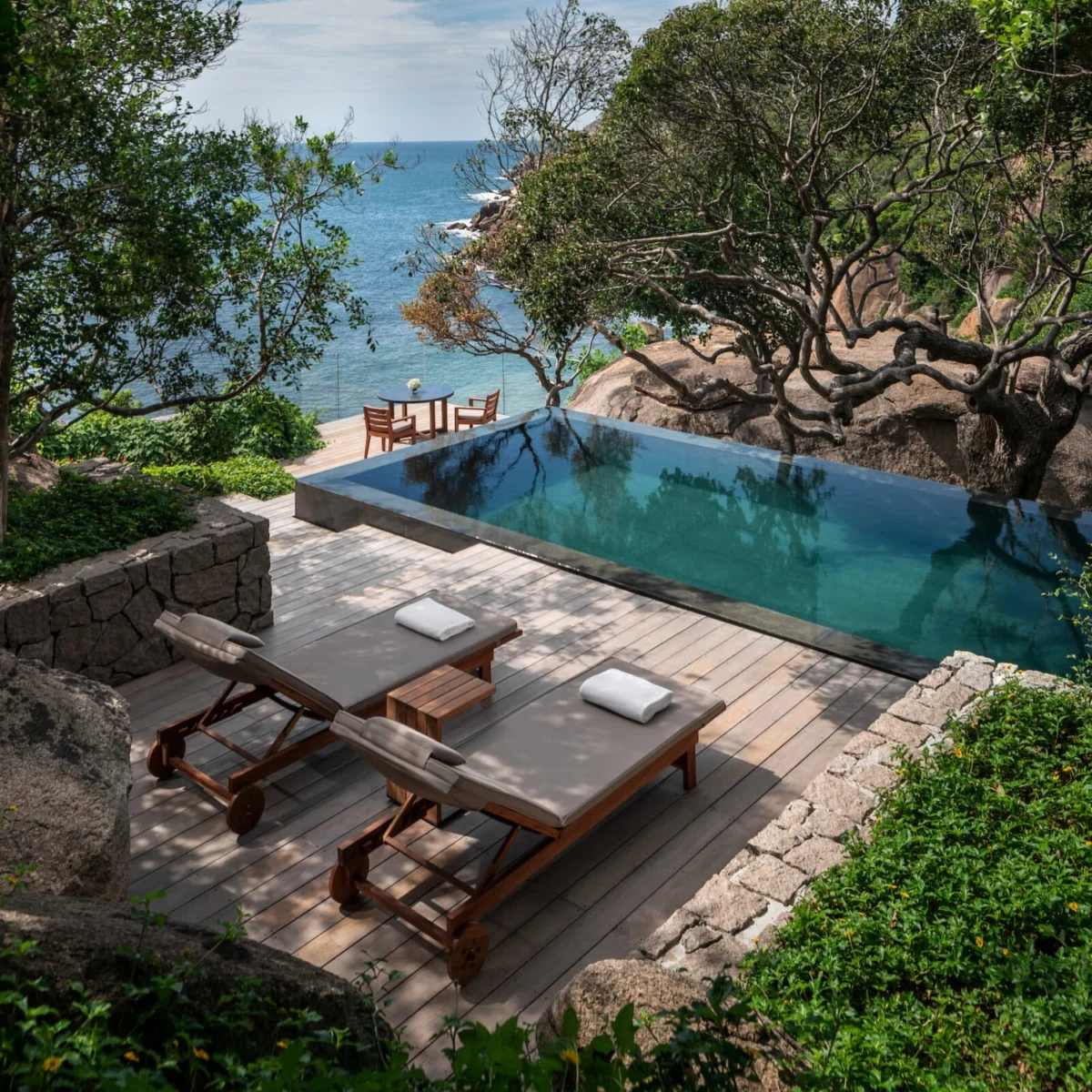
The definition of luxury in the global travel sector is undergoing a fundamental transformation, shifting away from material excess and toward the preservation of a traveler’s most limited resources: time, attention, and silence. For decades, the high-end hospitality industry focused on "more"—larger suites, gold-leafed interiors, Michelin-starred dining, and expansive spa facilities. However, a new paradigm is emerging among the world’s most affluent travelers, where the ultimate status symbol is no longer access to exclusive events, but the freedom to become entirely unreachable. As digital connectivity becomes a permanent condition of modern life, the ability to opt out of the "attention economy" has become the rarest luxury of all.

The Economic Engine of Wellness Tourism
The shift toward restorative, secluded travel is backed by significant economic data. According to the Global Wellness Institute’s (GWI) 2025 Global Wellness Economy Monitor, wellness travel has become a disproportionately valuable segment of the tourism industry. In 2024, wellness-focused trips accounted for only 8.3 percent of all tourism trips worldwide, yet they generated 17.6 percent of total global tourism spending. This indicates that the wellness traveler is not only more intentional but also significantly more profitable for the hospitality sector.
The GWI report highlights a stark spending gap between wellness-motivated travelers and the average tourist. International wellness travelers spent an average of USD 1,637 per trip in 2024, representing a 38 percent premium over the typical international tourist. The disparity is even more pronounced in domestic markets, where wellness travelers spent 137 percent more than their counterparts. These travelers are characterized by higher levels of education and a greater willingness to invest in specialized amenities that support mental and physical longevity.

Geographically, the center of gravity for this industry has shifted. For the first time, the Asia-Pacific region has surpassed Europe as the primary driver of wellness trips. This growth is attributed to a combination of rising disposable income in markets like China and India and a deep-seated cultural heritage in holistic health practices, such as Ayurveda, Traditional Chinese Medicine, and the Japanese Onsen tradition.
A Chronology of Luxury Evolution
The transition to "Quiet Luxury" in travel can be traced through a clear chronological progression over the last three decades:

- The Era of Opulence (1990s – early 2000s): Luxury was defined by physical grandeur. Brands competed on the basis of marble-clad lobbies, high thread counts, and "white glove" service. Success was measured by the visibility of wealth.
- The Era of Experience (2010s): Following the 2008 financial crisis, luxury shifted toward "ticking boxes." Travelers sought unique, Instagrammable experiences—hot air ballooning over Cappadocia or private dinners in the Louvre. Connectivity was a prerequisite.
- The Era of Essentialism (2020s – Present): In the post-pandemic landscape, the focus has pivoted to "Internal Wealth." Faced with burnout and "notification fatigue," travelers now seek environments that facilitate digital detoxing, nervous system regulation, and total privacy.
Industry analysts suggest that this shift is a direct response to the "always-on" nature of the modern executive lifestyle. When connectivity is inescapable, disconnection becomes a commodity.
The New Architecture of Stillness: Eight Global Benchmarks
As silence becomes a primary objective, a select group of retreats has redesigned the guest experience around the concept of "subtraction." These properties prioritize acoustic engineering, biophilic design, and geographical isolation to provide a sanctuary for the overstimulated mind.

1. FORESTIS — South Tyrol, Italy
Located 1,800 meters above sea level in the Dolomites, FORESTIS explicitly markets "Peace as a new luxury." The retreat is built on a site originally chosen as a tuberculosis sanatorium due to its unique microclimate. Today, the wellness approach is rooted in the four elements of its environment: pure mountain spring water, thin alpine air, high-altitude sunlight, and a temperate climate. The facility features dedicated Silence Rooms and treatment spaces designed to eliminate external decibel interference, allowing the sounds of the surrounding forest to serve as the primary therapeutic backdrop.
2. Four Seasons Resort Chiang Mai — Thailand
Set within the terraced rice paddies of the Mae Rim Valley, this resort focuses on the concept of "Soulful Awakening." Recognizing that modern travelers often suffer from disrupted circadian rhythms due to blue light exposure and global time-zone hopping, the resort offers programs centered on slow living. Through a combination of pranayama (breathwork), sound healing, and nutrition designed for hormonal balance, the property encourages a recalibration of the guest’s internal clock.

3. Amanoi — Vinh Hy, Vietnam
Amanoi leverages the geography of Nui Chua National Park to offer "sovereignty over space." Its Wellness Pool Villas are self-contained ecosystems where the guest never needs to leave their accommodation to receive world-class care. Each villa includes a 15-meter pool, steam room, cold plunge, and a dedicated treatment room with a resident therapist. This model caters to the "ultra-private" segment—travelers who require high-level service but wish to avoid the social performance often required in communal hotel spaces.
4. JOALI BEING — Raa Atoll, Maldives
JOALI BEING represents a shift toward "biophilic" hospitality. Located on the secluded island of Bodufushi, the resort’s architecture is designed to integrate seamlessly with the natural coastline. The wellness philosophy is structured around four pillars: Mind, Skin, Microbiome, and Energy. By focusing on the microbiome and cellular health, the resort moves beyond traditional spa aesthetics into the realm of functional medicine, all while maintaining the absolute isolation of a private island.

5. Six Senses Vana — Dehradun, India
In the foothills of the Himalayas, Six Senses Vana operates as a dedicated wellness "ashram" for the modern era. Unlike resorts that offer wellness as an add-on, Vana requires guests to engage in a minimum stay and follow a personalized itinerary. The retreat integrates Ayurveda, Sowa Rigpa (Tibetan Medicine), and Yoga. The objective is to create enough distance from one’s daily routine that stillness becomes a practiced skill rather than a fleeting moment of rest.
6. COMO Shambhala Estate — Bali, Indonesia
COMO Shambhala has pioneered the "Nervous System Rebalance" program, specifically targeting burnout and chronic stress. Utilizing wellness technologies alongside ancient Marma therapy and acupuncture, the estate treats the guest’s stress response as a clinical issue. In this context, quiet is not merely atmospheric; it is a necessary medical intervention for the restoration of the adrenal system.

7. Amanemu — Ise-Shima, Japan
Amanemu is a masterclass in the Japanese concept of Ma—the artistic use of empty space. Drawing on the ancient tradition of onsen (mineral hot spring) bathing, the 2,000-square-meter spa is designed around a thermal garden. The luxury here is found in the repetitive nature of the rituals: bathing, walking, and eating. By stripping away the need for novelty, the resort allows guests to find depth in simplicity.
8. Zulal Wellness Resort by Chiva-Som — Qatar
Located on the northern tip of Qatar, Zulal is the first major retreat to center its philosophy on Traditional Arabic and Islamic Medicine (TAIM). The resort utilizes the stark beauty of the desert-meets-sea landscape to provide "visual silence." The openness of the horizon is used as a psychological tool to counteract the density and clutter of urban life, providing a sense of mental expansion that is difficult to achieve in forested or mountainous terrains.

Implications for the Future of Hospitality
The rise of silence-driven travel has profound implications for the future of hotel design and operation. We are likely to see a shift in several key areas:
- Acoustic Engineering: Future luxury builds will likely invest more in soundproofing and "quiet zones" than in traditional decorative flourishes.
- Digital Sovereignty: Instead of high-speed Wi-Fi being the primary selling point, properties may market "Faraday cage" suites or signal-shielded zones that allow for true digital disconnection.
- The Rise of "Invisible Service": The traditional model of constant staff interaction is being replaced by tech-enabled or highly discreet service models that ensure guest needs are met without breaking their solitude.
Fact-Based Analysis: The Psychology of Subtraction
The move toward these retreats is a logical response to what psychologists call "Cognitive Overload." In an age defined by abundance, the brain’s filtering mechanisms are constantly taxed. The luxury of "subtraction"—removing choices, removing noise, and removing notifications—allows the prefrontal cortex to recover.

Statements from hospitality leaders suggest that this trend is not a temporary fad but a long-term structural change. Industry experts argue that as artificial intelligence and automation further accelerate the pace of professional life, the demand for "human-centric stillness" will only increase. The most successful wellness retreats of the next decade will be those that do not just provide a place to stay, but a place to disappear.
Ultimately, the highest form of luxury is now defined by control over one’s attention. In a world that is constantly demanding engagement, the ability to retreat into silence, privacy, and seclusion is the ultimate expression of personal sovereignty. For the modern wellness traveler, the most valuable amenity is no longer found on a menu or a floor plan—it is the sound of nothing at all.
