
 By Jia Lissa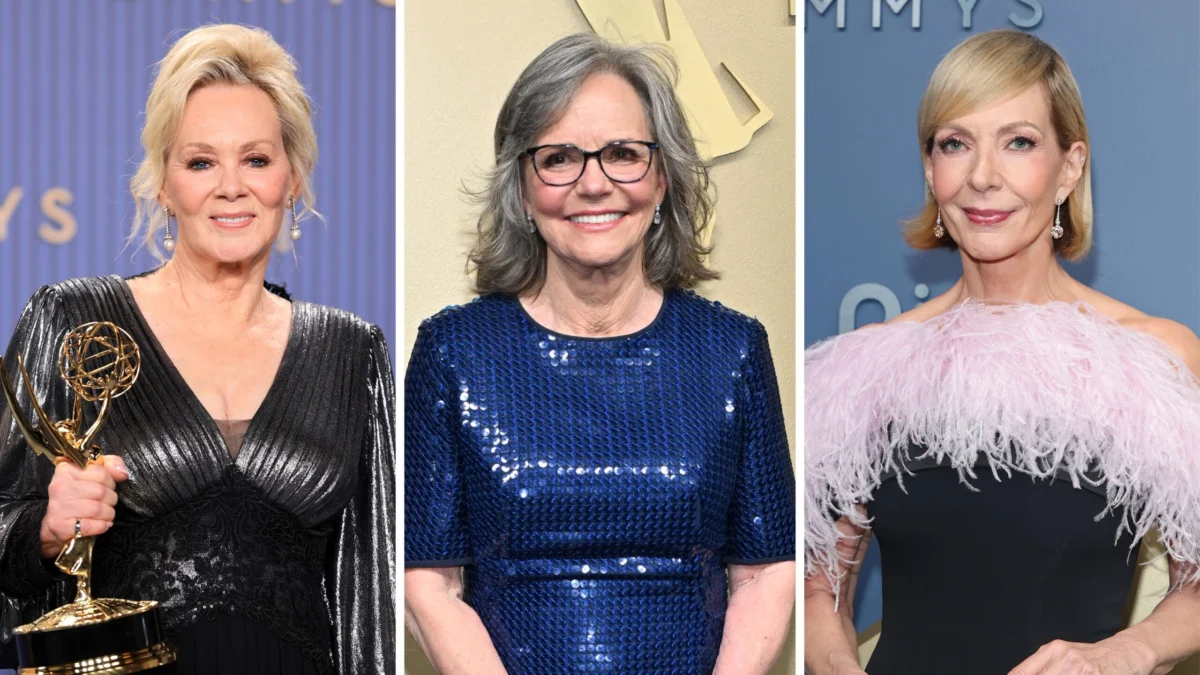
The recent 76th Primetime Emmy Awards ceremony has not only celebrated outstanding achievements in television but has also powerfully underscored a significant and evolving narrative within Hollywood: the undeniable resurgence and celebrated presence of mature female talent. This event, following closely on the heels of a similar observation at the 2025 Golden Globe Awards, has provided a compelling visual and statistical testament to the enduring appeal and creative vitality of actresses over 50, challenging long-held industry assumptions about age and career longevity. The prevalence of seasoned performers on the red carpet and as award recipients signals a potential, albeit gradual, shift in how Hollywood perceives and values women in their prime.
A Red Carpet Dominated by Experience
The 2024 Emmy Awards red carpet was a vibrant display of seasoned grace and undeniable star power. Among the most photographed and celebrated were actresses whose careers have spanned decades, each radiating confidence and accomplishment. Michelle Pfeiffer, at 68, captivated onlookers with her timeless elegance. Lisa Kudrow, 63, and Sheryl Lee Ralph, 69, also graced the event, with Ralph offering a particularly resonant statement about her upcoming 70th birthday. "I am 70 and I’m still doing it!" she declared, a sentiment echoed by her confident embrace of the spotlight. Her playful encouragement to "Take a close-up, zoom in, don’t be afraid" encapsulated a broader message of self-acceptance and defiance against age-related invisibility.
The statistical evidence from the awards ceremony further solidified this observation. A remarkable four out of the five winners in the female acting categories were over the age of 50. Sally Field, at 79, took home an award, as did Jean Smart, 75, and Allison Janney, 66. Rhea Seehorn, 54, also secured a win, demonstrating that the threshold for this celebrated "Old Lady Energy" is not rigidly defined but rather embraces a significant segment of experienced actresses. The Creative Arts Emmy Awards, held the preceding week, also recognized the contributions of veteran performers, notably honoring the legendary Julie Andrews, who at 90, continues to be a creative force. The average age of the female acting category winners at the main ceremony was a notable 63, a figure that directly contrasts with traditional Hollywood narratives often prioritizing younger talent.
Hosting the glittering three-hour event was Mariska Hargitay, 62, affectionately dubbed "America’s sweetheart sex cop." Her energetic and engaging performance, marked by a series of costume and hairstyle changes, underscored her enduring appeal and ability to command a major televised event. While younger talent was also recognized, with Shailene Woodley, 34, winning an award for best guest actress in a drama at the Creative Arts Emmys, the dominant narrative of the evening was undeniably shaped by the success of its more experienced female honorees.
Challenging Ageist Tropes in Hollywood
The prevalence of mature actresses at the Emmys serves as a powerful counterpoint to persistent industry biases that often relegate women past a certain age to limited or stereotypical roles. For years, research and anecdotal evidence have indicated that older women in Hollywood are frequently depicted as grumpy, frumpy, or senile, or are confined to supporting roles. A 2019 study, for instance, highlighted how older women were disproportionately cast in supporting rather than leading roles.
The challenges faced by these actresses were even articulated by winners themselves. Sally Field, speaking backstage after her Emmy win for her role in Remarkably Bright Creatures, candidly admitted, "It’s very hard to find projects for old women." This statement underscores that while the recent awards ceremony showcased success, the underlying system that creates opportunities for these seasoned performers remains a work in progress. The "juicy roles" that allow for complex and compelling characterizations may still be the exception rather than the norm, despite the evidence of audience appreciation.
Shifting Dynamics in Content Creation
The statistics from the 2025-2026 television season, as reported by The Center for the Study of Women in Television & Film, paint a complex picture. During this period, there was a decline in the percentage of women working as creators and directors on original U.S. streaming programs. Furthermore, the representation of female characters in major roles on streaming services saw a decrease, falling from 49% in the 2024-2025 season to 44% in 2025-2026. Broadcast programs experienced a more modest decline in major female roles, from 47% to 46%.
While these figures indicate a potential regression in the overall landscape of female representation behind and in front of the camera, the success of older actresses at the Emmys suggests a counter-trend within specific narrative spaces. It is plausible that a decline in the overall number of female characters disproportionately impacts older actresses, making their recent successes even more significant. This raises the question: what accounts for this surge in recognition for mature talent amidst broader statistical challenges?
Analysis of the "Old Lady Energy" Phenomenon
The resurgence of older actresses can be attributed to several interconnected factors. Firstly, it may signal that Hollywood is beginning to recognize that benching seasoned performers means overlooking some of the most gifted individuals in the industry. These actresses possess a wealth of experience, nuance, and a deep understanding of character that younger performers are still developing.
Secondly, the increasing difficulty for actresses to conform to the increasingly stringent and often unrealistic ideals of youthful beauty in Hollywood may be contributing to a greater appreciation for their individuality. In a landscape often criticized for its "cookie-cutter" ingenues, the unique presence and established personas of older actresses offer a refreshing departure. Their performances are less about meeting superficial beauty standards and more about delivering compelling portrayals that resonate with audiences on a deeper level. This shift in focus from appearance to performance could be a key driver of their renewed prominence.
Voices from the Industry
The positive impact of this shift is being felt by the actresses themselves. Allison Janney, a multiple Emmy winner, has spoken about the evolving landscape of roles available to women her age. "There are more and more and more interesting roles," she has stated, emphasizing a crucial change: "We don’t have to be the girlfriend or the wife anymore. We can be so many more things." This sentiment suggests a broader understanding within the industry that mature women can embody diverse and multifaceted characters, moving beyond traditional, often limiting, archetypes.
The implications of this trend are far-reaching. A more inclusive portrayal of women across all ages in television not only reflects a more accurate representation of society but also has the potential to inspire viewers and foster a greater sense of acceptance and appreciation for aging. As more opportunities arise for experienced actresses, the industry can tap into a rich reservoir of talent, leading to more authentic, engaging, and ultimately, more successful storytelling. The 76th Primetime Emmy Awards served as a powerful reminder that age is not a barrier to talent, but often a testament to it, and that "Old Lady Energy" is, in fact, a potent force to be reckoned with.
Broader Impact and Future Implications
The recognition of mature actresses at major industry awards like the Emmys has significant implications beyond individual accolades. It can influence casting decisions across the board, encouraging producers and executives to look beyond age demographics for talent. This, in turn, can lead to richer, more diverse storytelling that appeals to a wider audience. Audiences often express a desire for relatable characters, and seeing women their own age, or older, portrayed with depth and agency on screen can foster stronger connections to the content.
Furthermore, this trend can have a ripple effect on the careers of aspiring actresses. By witnessing the success and longevity of seasoned performers, younger women may feel more optimistic about their own career trajectories, understanding that their value extends far beyond their youth. It can also encourage a broader cultural dialogue about aging, challenging negative stereotypes and promoting a more positive and realistic view of later life stages.
While the statistical data regarding women’s representation in creative roles on streaming platforms presents a cautionary note, the Emmys’ celebration of older actresses offers a beacon of hope. It suggests that the creative power of experienced women is being acknowledged, and that the industry may be slowly but surely adapting to embrace a more inclusive and nuanced understanding of talent. The continued success of actresses like Field, Smart, Janney, Ralph, Pfeiffer, and Kudrow will be crucial in solidifying this shift and ensuring that "Old Lady Energy" becomes not just a celebratory observation, but a fundamental and integral part of Hollywood’s storytelling landscape for years to come.
