
 By Nila Kartika Wati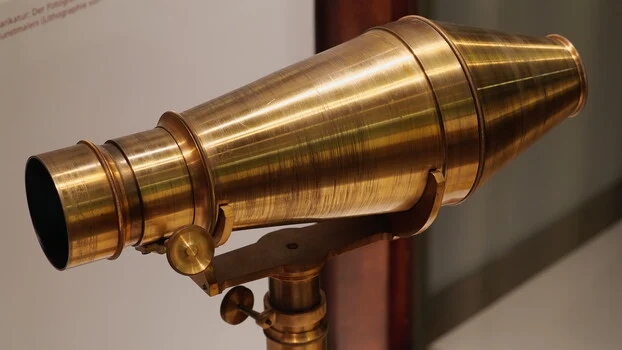
By May 1840, an astonishing feat of optical engineering had been completed in Vienna, a lens design conceived entirely on paper by a mathematics professor, Jozef Maximilián Petzval, before a single piece of glass had been ground for its construction. This revolutionary design, brought to life with the assistance of a team of military "human computers" tirelessly grinding through complex arithmetic, gathered approximately 20 times more light than the standard lenses adorning daguerreotype cameras of the era. Its immediate impact was profound, swiftly becoming the backbone of the burgeoning portrait photography industry for the next four decades.
The Dawn of Daguerreotypy and its Challenges
The year 1839 marked a pivotal moment in human history with Louis Daguerre’s public announcement of his photographic process, the daguerreotype. This intricate method produced highly detailed, unique images on polished silver-plated copper sheets. While a marvel, early daguerreotypy was fraught with practical limitations, primarily excruciatingly long exposure times. Depending on ambient light conditions and the sensitivity of the prepared plate, exposures could range from three to a staggering fifteen minutes. For landscape photography, this was merely an inconvenience, but for portraiture, it presented an almost insurmountable challenge. Subjects had to remain perfectly still for extended periods, often under harsh, direct sunlight or bright skylights, leading to stiff, often uncomfortable expressions. The dream of accessible, lifelike portraits remained largely out of reach due to the inherent slowness of the process, a bottleneck directly attributable to the light-gathering capabilities of the lenses available at the time. These early lenses, typically simple achromatic landscape objectives like those designed by Chevalier, operated at apertures around f/15 to f/16, severely restricting the amount of light reaching the sensitized plate.
Jozef Petzval: A Life Dedicated to Mathematics
Jozef Maximilián Petzval, born on January 6, 1807, in Szepesbéla, a town then part of the Kingdom of Hungary and now known as Spišská Belá in Slovakia, was a polymath with a formidable intellect. His early life set the stage for a distinguished academic career. After earning an engineering diploma from the University of Pest in 1828 and a doctorate in 1832, he quickly rose through the academic ranks, securing a professorship in higher mathematics at the same institution in 1835. His intellectual prowess soon attracted wider attention, leading to his appointment in 1837 to a prestigious chair at the University of Vienna. There, he remained a full professor of mathematics and mechanics until his retirement in 1877 at the age of 70.
Petzval was, first and foremost, a mathematician. His contributions to the field extended beyond optics, encompassing differential equations, acoustics, and analytical mechanics. Indeed, his name is still recognized in advanced optics through the "Petzval sum," a critical quantity used to assess and correct field curvature in lens designs, indicating how strongly a lens tends to bow its image into a bowl shape rather than laying it flat. For Petzval, the monumental task of designing a photographic lens, though ultimately transformative, was perhaps viewed as a demanding "side quest" that consumed a significant portion of his life and energy. His scientific environment in Vienna, a vibrant intellectual hub of the Austro-Hungarian Empire, provided the fertile ground for such groundbreaking work.
The Computational Breakthrough: Designing the Petzval Lens
Before Petzval, camera lenses were largely crafted through an iterative, empirical process, akin to furniture making. An optician would grind a lens shape, test it visually, refine it, and repeat until a satisfactory result was achieved. This trial-and-error method was time-consuming, expensive, and limited in its ability to produce highly corrected optics. While telescope optics had seen more advanced computational approaches, notably Joseph von Fraunhofer’s work since the 1810s in calculating achromatic objectives based on glass dispersion measurements, this level of rigor had not been applied to camera lenses.
Petzval fundamentally altered this paradigm. He began his work on the photographic lens by leveraging Fraunhofer’s principles, using a well-corrected telescope doublet as the front element of his proposed design. However, his true innovation lay in extending this computational approach to the entire lens system. Employing the sophisticated refraction mathematics available to him, Petzval meticulously traced light rays through a proposed four-element, three-group arrangement. He calculated precisely where various optical aberrations would manifest and, crucially, adjusted the curves of the lens elements and the types of glass on paper until the numerical results indicated optimal correction. This systematic, mathematical approach marked a radical departure from tradition, earning the Petzval portrait objective its credit as the first photographic lens designed by computation rather than by laborious trial and error. This methodological shift was arguably as significant as the lens’s performance itself, laying the groundwork for all future optical design.
The "Human Computers" and Imperial Support
The most famous, and perhaps most captivating, aspect of the Petzval lens story is the unique collaboration that brought its design to fruition: the deployment of a specialized team of "human computers." Recognizing the immense computational burden of Petzval’s ray-tracing calculations, Archduke Ludwig, the general director of artillery, intervened. He ordered a contingent of soldiers from the imperial and royal bombardier corps to be placed at Petzval’s disposal. This seemingly unusual pairing was, in fact, strategically sound. Artillery was one of the few military trades that routinely engaged in complex arithmetic, particularly in the calculation of ballistics tables, making these soldiers uniquely suited for the task.
While the exact roster of these calculators varies slightly in historical accounts—some name two senior fireworkers, Löschner and Hain, plus eight bombardiers, while others count eight gunners and three corporals—the core narrative remains consistent. For months, this dedicated squad meticulously performed the thousands of hand calculations required, working under Petzval’s direction. Their painstaking efforts culminated in the final lens design by May 1840. The modern description of this team as an "early human parallel computer" is a fitting, if anachronistic, tribute to their collective effort in solving a problem of unprecedented computational scale for its time. This episode highlights a remarkable early instance of interdisciplinary collaboration, bridging military resources with scientific innovation under imperial patronage.
Unprecedented Speed: The f/3.6 Revolution
The Petzval portrait objective was typically quoted with an aperture of f/3.6, with some Austrian sources citing f/3.7. Regardless of the minor discrepancy, the impact on light gathering was monumental. To appreciate the magnitude of this improvement, it’s essential to understand that the amount of light gathered by a lens scales with the square of the f-number ratio. Compared to the standard Chevalier achromatic landscape lens of 1839, which operated around f/15 to f/16, Petzval’s design offered an exponential leap.
Taking the f/16 to f/3.6 comparison, the ratio is approximately 4.4. Squaring this yields roughly 19.8, indicating that the Petzval lens gathered nearly 20 times more light. Even with conservative estimates, such as f/15 against f/3.7, the improvement was still around 16 times. Pushing the reference lens to f/17 increases the advantage to about 22 times. This range explains why published accounts confidently state figures between 16 and 22 times—they stem from slightly different assumptions about the older lenses. In terms of photographic "stops," a more intuitive measure for photographers, 20 times the light translates to a gain of just over four and a quarter stops. This single lens swap provided early photographers with a speed increase comparable to the entire leap from ISO 100 to ISO 1600 in modern digital photography, a truly staggering advancement.
Transforming Portraiture: From Ordeal to Discomfort
The practical consequence of this unprecedented speed was a dramatic reduction in exposure times for daguerreotype portraits. Where sitters previously endured a grueling three to fifteen minutes, the combination of Petzval’s faster optics and simultaneous advancements in photographic chemistry (such as the introduction of bromine and chlorine accelerators to sensitize plates in 1840-1841) slashed exposure times to less than a minute. Austrian accounts credit Petzval’s lens with helping reduce exposures from around 15 minutes to approximately 45 seconds, while other camera histories cite a drop from 10 minutes to about 30 seconds.
It is crucial to note that the lens alone did not deliver instantaneous exposures; claims of one-second exposures in 1840 are unsubstantiated. However, the combined innovations transformed portraiture from being barely possible to merely uncomfortable. Sitters were still required to maintain rigid poses, often aided by headrests and posing stands to prevent even slight movements during the multi-second exposure. Studios continued to rely on blinding direct sunlight or skylights to maximize illumination. The popular myth that sitters were forbidden to blink is largely theatrical; a blink within a 45-second exposure would likely be imperceptible. The true challenge, reflected in the stiff, unsmiling, and often faintly stunned faces in surviving daguerreotypes, was holding one’s head, hands, and shoulders perfectly still for an extended period while staring into intense light. Petzval’s lens, therefore, did not eliminate the discomfort but made portraiture a commercially viable and widespread practice, enabling countless individuals to capture their likeness for the first time.
The Bitter Taste of Innovation: Patent Battles and Financial Loss
Despite the profound impact of his invention, Petzval’s story is tinged with personal misfortune and a lack of financial reward. He entrusted his revolutionary portrait lens design to the Viennese optician Peter Wilhelm Friedrich von Voigtländer, who would go on to build it into the all-metal cameras that entered mass production in 1841. Petzval reportedly received a one-time payment of approximately 2,000 gulden in 1840. Crucially, this arrangement was made without a written contract and, more significantly, without any patent protection filed on the design beforehand.
The consequences were stark. Voigtländer, unburdened by royalties, amassed a considerable fortune from the widespread adoption of the Petzval lens. The design, unprotected, was freely copied by optical workshops across Europe and America for the next four decades. Voigtländer’s firm flourished, producing its 10,000th photographic objective by the end of 1861 and an estimated 18,000 by 1865—an output unparalleled by any previous optical manufacturer.
Petzval’s relationship with Voigtländer soured irrevocably by 1845 over disagreements regarding production rights. Petzval subsequently sought to collaborate with other Viennese opticians, including Franz Xaver Waibl and later Carl Dietzler. It was Dietzler who, in October 1857, secured an Austrian patent (number 10570) for Petzval’s second major lens design from 1840: a landscape and reproduction lens. However, Voigtländer, asserting that his initial payment had granted him rights to all of Petzval’s calculations, developed and marketed his own version, the "Orthoskop." Subsequent litigation in 1857 and 1858 proved futile in stopping Voigtländer.
The geographical fragmentation of patent law in the mid-19th century further complicated matters. Voigtländer strategically opened a factory in Braunschweig, then a separate German state, in 1849. This move placed his operations beyond the jurisdiction of Austrian patents. He maintained both his Vienna and Braunschweig plants for nearly two decades before consolidating all production in Braunschweig in 1868. An Austrian patent offered no protection in a different sovereign state. Dietzler eventually went bankrupt in 1862, and a disillusioned Petzval largely withdrew from the field of optics.
A Retreat from Optics: From Disputes to Solitude
Petzval’s later career was marked by further setbacks and a gradual retreat from public scientific discourse. In 1852, he engaged in a public dispute with Christian Doppler over wave theory, a debate in which he ultimately found himself on the wrong side when Ernst Mach provided a conclusive resolution in 1860-1861. A more devastating blow came in 1859 when his home was burgled, and the manuscript of a comprehensive treatise on optics he had been diligently writing was destroyed. This loss proved to be a turning point; he never returned to the subject.
He spent his later years living in an abandoned monastery on the Kahlenberg hills above Vienna, commuting down to the university for his lectures. He ceased his optics lectures in 1862 and fully retired from academia in 1877. In 1869, at the age of 62, he married his housekeeper, Katarina Schlegl, only to be widowed within a few years. His final stretch of life was spent in increasing isolation on the Kahlenberg with only his horse for company. He died in Vienna on September 17, 1891 (though some sources list the 19th).
The "Forgotten Genius" Myth vs. Reality
A pervasive narrative surrounding Petzval’s death claims he died "broke, forgotten, and embittered." While elements of this folklore resonate with the tragic arc of his later life, a closer examination of contemporary records reveals a more nuanced reality. The death notice placed by his caretakers in September 1891, reprinted in the trade journal Photographische Correspondenz, styled him as "k. k. Hofrath und Ritter des Franz Joseph-Ordens, o. ö. Universitätsprofessor in Pension" (Imperial and Royal Court Councillor and Knight of the Order of Franz Joseph, full university professor in retirement). In Austrian officialese, "in Pension" denoted the formal status of a state official receiving a pension, not merely someone who had stopped working. Furthermore, the notice indicated his burial at the Zentralfriedhof "im eigenen Grabe" (in a plot he owned). Such details contradict the notion of destitution. In 1905, the city of Vienna further honored him by moving his remains to an honored grave within the same cemetery.
However, the "forgotten" aspect of the legend holds considerable truth. The same obituary noted the sparse attendance at his funeral, with chairs set aside for mourners remaining largely empty, and that little was known about his life even to contemporary biographers. While honors continued to arrive—Hungary’s academy listed him abroad in 1873, and Czech mathematicians and physicists made him an honorary member in 1881—these were largely academic distinctions delivered by mail, offering little personal solace or recognition in his daily life. The "embittered" sentiment, while difficult to definitively document, is plausible given his isolated nature ("stets ein Sonderling," always a solitary oddity, as the obituary described him), the destruction of his life’s work in optics, and the commercial exploitation of his designs without fair compensation. The profound injustice lies in the fact that the man who provided the foundational lens for an entire industry received a mere 2,000 gulden, while others built fortunes upon his mathematical genius. He lost the financial rewards, the recognition, and the tangible culmination of his optical research.
Enduring Legacy: The Petzval Look in the Modern Age
The very optical "compromises" that made the Petzval lens so fast are precisely why its distinctive aesthetic continues to captivate photographers today. Petzval’s four-element, three-group design masterfully corrected spherical aberration and coma, allowing for sharp images even when shooting wide open. However, it intentionally left significant field curvature and astigmatism largely uncorrected. This means that while the center of the frame delivers sharp, high-contrast subjects, the focus planes curve towards the edges. Out-of-focus highlights near the periphery stretch into characteristic arcs that rotate around the center, creating the famous "swirly bokeh." The corners also become progressively softer and dimmer, as detail running radially from the center and detail running tangentially around it come into focus at different distances, making a truly sharp corner impossible. For the original purpose of portraiture, where the subject occupied the dead center of the frame, this unique falloff was not a flaw but a flattering characteristic, drawing the viewer’s eye directly to the subject. For landscapes, however, it was considered a defect, prompting Petzval to design his second, more corrected, lens.
In a testament to its enduring artistic appeal, the "Petzval look" has experienced a significant revival in the 21st century. Lomography, a company known for its analog photography ethos, successfully rebuilt the Petzval formula for modern digital and film cameras through a highly successful Kickstarter campaign in 2013, raising nearly $1.4 million. Today, Lomography offers contemporary versions like the Petzval 55mm f/1.7 MKII and the Petzval 80.5mm f/1.9 MKII, available for mirrorless and SLR mounts, some even featuring adjustable "bokeh control" rings to modify the strength of the swirl. Petzval, who dedicated months to suppressing aberrations, would likely find it ironic that photographers now pay a premium to reintroduce and control them. Other manufacturers, such as Lensbaby with its Burnside 35, offer similar swirled edge effects combined with adjustable vignettes. Even original brass Petzval lenses from the 1850s and 1860s remain sought after by collectors and large-format photographers, demonstrating that a design born of precise calculation retains its fundamental correctness.
For contemporary photographers utilizing these lenses, understanding the Petzval effect is key to harnessing its unique charm. The intensity of the swirl is primarily a function of the background’s busyness and its distance from the subject. A busy, textured background several feet behind a subject, shot wide open, will exhibit a pronounced swirl. A plain, distant wall, however, will show little to no swirling. Aperture settings and any available bokeh control rings allow for further manipulation, as stopping down or dialing back the control ring will diminish the effect. Ultimately, the Petzval lens demands a deliberate, compositional approach, rewarding careful placement of both subject and background, much like any good portrait technique.
The next time a photographer effortlessly captures a sharp portrait in a dimly lit room at f/1.4, perhaps lamenting a slight focus falloff, it serves as a powerful reminder. This capability, now taken for granted, is a direct legacy of a brilliant mathematics professor in Vienna who perceived a lens not as a craft but as a complex mathematical problem, and a dedicated team of artillerymen who meticulously performed the sums, forever changing the course of photographic history.
