
 By admin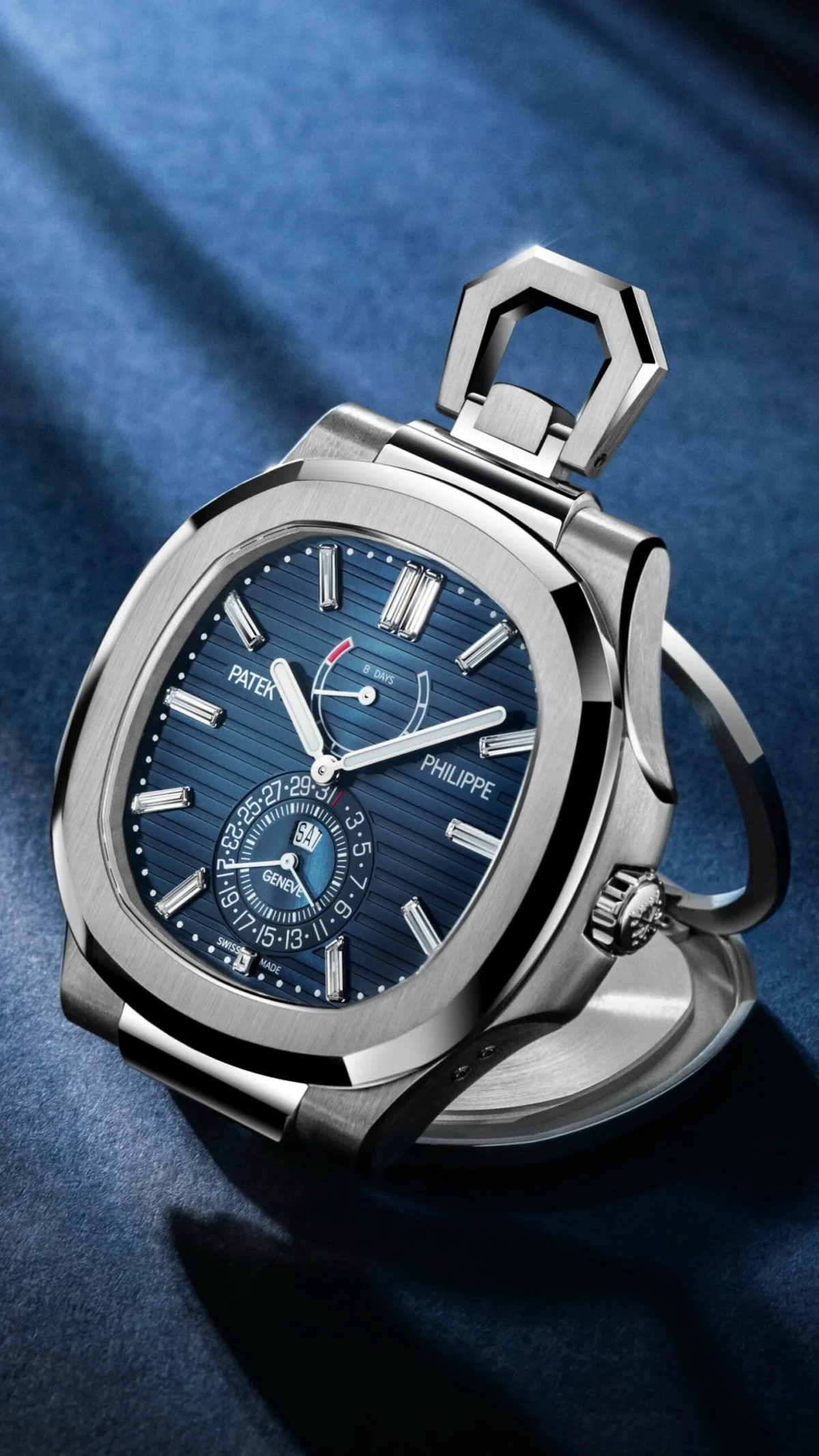
The landscape of high watchmaking underwent a seismic shift at Watches and Wonders Geneva 2026 as Patek Philippe, the last family-owned independent Genevan manufacture, unveiled a collection that systematically dismantled the traditional boundaries between grand complications and contemporary lifestyle aesthetics. For decades, the industry followed an unwritten code: high-mechanical complications were housed in conservative, precious-metal cases for formal wear, while innovation in materials and textures was reserved for entry-level sports models. This year, Patek Philippe has decisively abandoned that playbook, introducing a suite of timepieces that pair extreme mechanical mastery with bold, tactile elements including raw-silk shantung textures, denim motifs, and evocative lacquers.
The manufacture’s 2026 novelties signal a state of horological maturity where strict engineering no longer precludes a youthful, contemporary aesthetic. This evolution is not a sudden pivot but the culmination of a narrative that began with the birth of the luxury sports watch in 1976. Over the last half-century, this category has evolved into what industry analysts now define as "sports elegance"—a segment where Patek Philippe continues to exert undisputed dominance. By integrating high-complication movements into cases and straps traditionally considered "casual," the brand is effectively redefining the "dress-up" category for a new generation of collectors who value versatility as much as virtuosity.

The Nautilus at Fifty: A Legacy of Thinness and Exclusivity
The centerpiece of the 2026 presentation was the 50th-anniversary celebration of the Nautilus. Since its introduction in 1976, the Nautilus has transitioned from a controversial "steel luxury" experiment to the most sought-after silhouette in the world. Rather than opting for oversized or overly decorative tributes, Patek Philippe chose to honor the original "Jumbo" philosophy by emphasizing the pure essence of the design’s geometry and its historical thinness.
The anniversary lineup consists of four primary references. Leading the collection are two 41mm "Jumbo" models in white gold: the Reference 5810/1G-001, presented on a classic integrated metal bracelet, and the Reference 5810G-001, which utilizes a modern composite strap—a first for a precious-metal Jumbo. Complementing these is a 38mm variant in platinum (Ref. 5610/1P-001), featuring a platinum bracelet and the signature diamond set into the bezel at 6 o’clock, a hallmark of the manufacture’s platinum pieces.
Technically, these wristwatches are powered by the ultra-thin self-winding Calibre 240. First presented in 1977, just a year after the Nautilus debut, the micro-rotor movement allows these anniversary models to maintain a "Steinway Tower-slim" profile. In a move that surprised market spectators, Patek Philippe has designated these as limited editions: the 5810/1G-001 and 5610/1P-001 are capped at 2,000 pieces each, while the strap-based 5810G-001 is limited to 1,000 pieces.

Perhaps the most unexpected tribute is the Reference 958G-001 Nautilus desk watch. This white-gold masterpiece scales the iconic porthole DNA into a larger format, equipped with an 8-Day calibre. Limited to just 100 pieces, the desk watch serves as a bridge between Patek Philippe’s historic table clocks and its contemporary wrist-borne icons.
The Cubitus Expansion and Technical "Firsts"
Directly following the Nautilus in the geometric hierarchy is the Cubitus collection, which saw its most significant technical advancement to date. The Cubitus Perpetual Calendar Reference 5840P-001 represents the first grand complication for this relatively new line. Housed in a 45mm platinum case, the watch features a blue openworked dial with the collection’s signature horizontal relief motif.
The movement, the skeletonized square-shaped Calibre 28-28 Q SQU, is a feat of modern engineering. The piercing of the dial strips reveals the inner workings of the perpetual calendar mechanism, creating a visual depth where the raw mechanics of the movement serve as the primary texture. This release confirms that Patek Philippe intends for the Cubitus to be a platform for high-end horology, rather than just an aesthetic alternative to the Nautilus.

In the realm of astronomical complications, the manufacture introduced the Reference 6105-001G. This 47mm white-gold "titan" is the first Patek Philippe wristwatch to display the exact times of sunrise and sunset. The development of its Calibre 240 C LU CL LCSO spanned more than five years and resulted in six new patent applications. The watch utilizes a sky chart calibrated to the latitude of Geneva and features a patented system that allows for the simultaneous correction of the time and the sunrise/sunset indicators when transitioning between daylight savings and standard time.
Acoustic Mastery and the First Modern Automaton
The 2026 collection also reimagines acoustic complications through a contemporary lens. The Reference 5322G features a 24-hour alarm function and date indication, but it abandons the traditional reserve of a dress watch. Instead, it features a 41mm white-gold case with a "Clous de Paris" (hobnail) guilloched caseband and a heavily textured lacquer dial. The alarm is sounded by a traditional hammer striking a classic internal gong, merging 19th-century acoustics with 21st-century "urban-chic" design.
History was also made with the introduction of Reference 5249R-001, the first automaton wristwatch in Patek Philippe’s modern history. Drawing inspiration from a 1958 Louis Cottier pocket watch currently housed in the Patek Philippe Museum, this rose-gold Officer-style timepiece depicts Jean de La Fontaine’s fable The Crow and the Fox. Upon activation, the hours and minutes are revealed via a retrograde display, while the figures of the crow and fox animate against a rich Matara opaline dial. This piece represents a significant investment in "Metiers d’Art," proving that traditional storytelling remains central to the brand’s identity.

Sensory Experimentation and Material Innovation
Beyond mechanical complexity, the 2026 novelties are defined by an aggressive experimentation with textures and colors. The perpetual calendar chronograph Reference 5270, a cornerstone of the brand’s high-complication catalog, returned in three platinum versions with high-contrast lacquer dials: charcoal-grey, blue, and a striking fiery red, all featuring a black gradient (fumé) rim.
The manufacture further challenged conventions by pairing elite calendar watchmaking with casual textiles. The Reference 5204G-010 split-seconds chronograph with perpetual calendar now features a navy-blue composite strap with a textile motif and red stitching. Similarly, the white-gold Annual Calendar Reference 4946G-001 was presented with a "denim-motif" calfskin strap and a dial texture that mimics the unique sheen of raw-silk shantung.
Even the Golden Ellipse, which celebrated its own renaissance recently, expanded its presence with a new jumbo size (Ref. 5738G-001) and the return of the medium size (Ref. 3738G/100G-014). Both models utilize deep olive-green sunburst dials, a color palette that has become increasingly prominent in Patek Philippe’s modern catalog.

Industry Implications and Market Analysis
The 2026 releases suggest a strategic shift in Patek Philippe’s production philosophy. By increasing the number of limited editions—particularly within the Nautilus family—the brand is managing the intense secondary market pressure while rewarding long-term collectors. The inclusion of "casual" materials like denim and composite straps on watches costing hundreds of thousands of dollars is a calculated move to lower the "barrier of wearability."
Industry analysts note that Patek Philippe is successfully navigating the transition from a brand purchased for "special occasions" to one integrated into the daily life of the modern ultra-high-net-worth individual. The focus on "sports elegance" and technical firsts like the sunrise/sunset complication ensures that the manufacture maintains its lead over competitors in both the LVMH and Richemont groups, as well as independent rivals like Rolex/Tudor.
The 2026 collection makes a definitive statement: grand complications do not require a formal setting to be relevant. By matching heavy-duty engineering with progressive textures and an iconoclastic design language, Patek Philippe has not only honored its heritage but has set a thrilling and uncharacteristically bold tone for the future of luxury watchmaking. The message from Geneva is clear: horological maturity is not about playing it safe; it is about having the confidence to challenge the very codes that made you an icon.
