
 By admin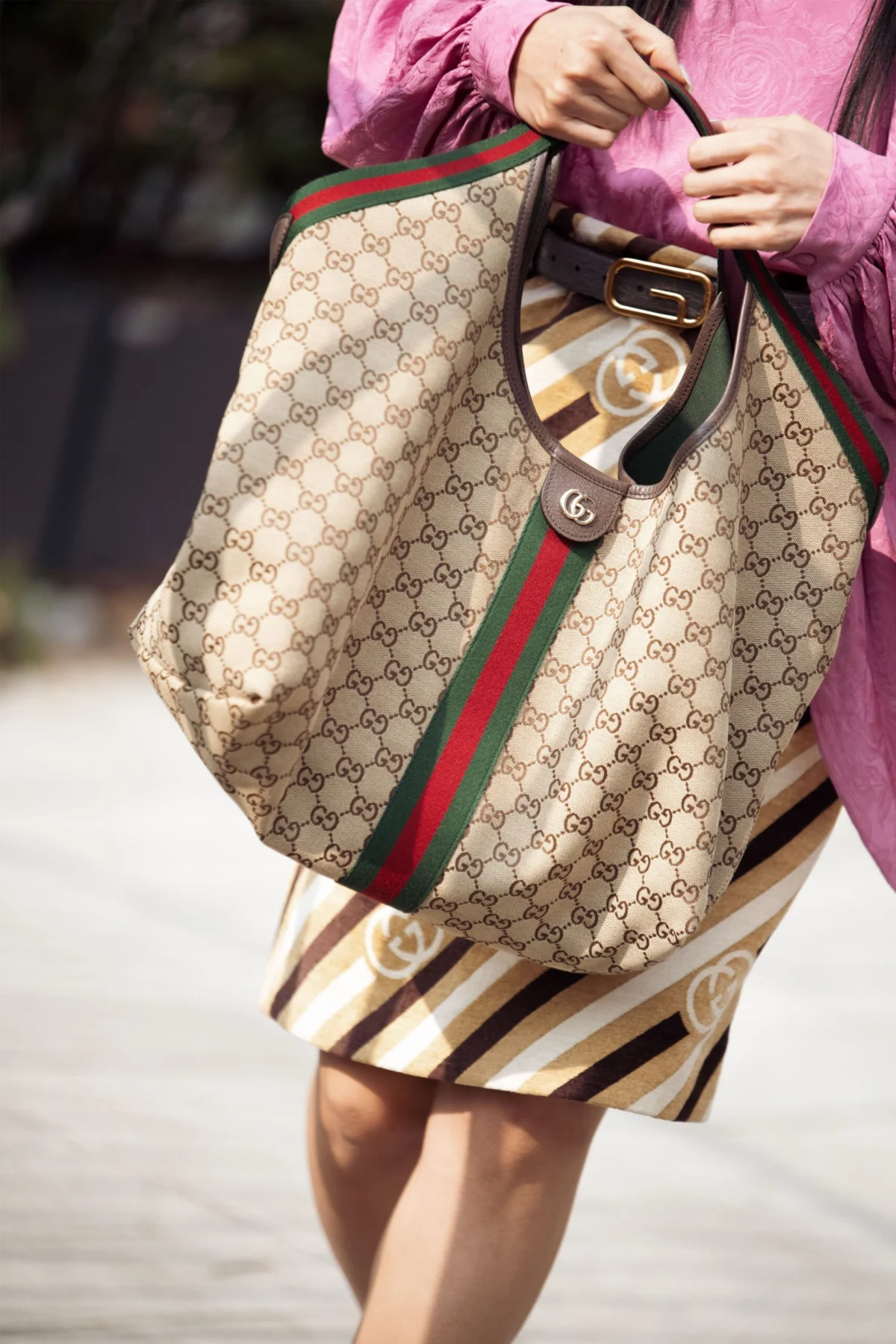
In a significant move that sent ripples through the exclusive world of high fashion, Gucci quietly slashed the price of its medium leather Mercato tote bag, a design by Demna for Spring/Summer 2026, by an estimated 20-25% in May. This reduction, first identified by analysts at Bernstein, saw the bag’s price drop from an initial $2,900, signaling a broader strategic pivot for Gucci and its parent conglomerate, Kering, in an effort to revitalize sales volume and reconnect with the crucial aspirational consumer demographic.
The Pandemic-Era Price Surge and Its Aftermath
The luxury industry’s current recalibration comes after a period of unprecedented price hikes during the pandemic boom. Between 2019 and 2024, the average price of personal luxury goods escalated by a staggering 52%, according to an analysis by HSBC. This aggressive pricing strategy was largely driven by brands seeking to boost profit margins, capitalize on surging demand from affluent consumers who had fewer outlets for discretionary spending, and reinforce an image of exclusivity. Supply chain disruptions and rising production costs also played a role, though often cited as secondary to margin expansion.

Iconic pieces saw dramatic increases. A medium Chanel Classic Flap bag, which retailed for approximately $1,000 in the 1980s, had already climbed to around $5,800 by 2019. Today, that same coveted accessory commands a price tag of $11,700 – more than doubling in just five years. Similarly, the Louis Vuitton Neverfull tote, launched in 2007 at roughly $645, now retails for over $2,000, tripling its original price. These examples illustrate a pervasive trend where many of luxury’s most recognizable handbags have seen their prices double or more in a relatively short span.
Macroeconomic Headwinds and Shifting Consumer Sentiment
However, the post-pandemic landscape brought with it a confluence of economic challenges that began to erode consumer spending power and appetite for increasingly expensive luxury goods. High cost-of-living inflation, particularly in the United States, coupled with a deceleration of macroeconomic growth in China—a critical market for luxury—and ongoing geopolitical instability in the Middle East, collectively dampened consumer confidence. This slowdown exerted significant pressure on luxury brands’ bottom lines. Luca Solca, an analyst at Bernstein whose team first highlighted Gucci’s price reduction, noted that this downturn was particularly impactful for "mega-brands who thrive on aspirational consumers."
The cumulative effect of these price hikes and economic pressures resulted in an estimated 50 million luxury shoppers withdrawing from the market. Aspirational consumers, who often save for significant luxury purchases, found themselves increasingly priced out or questioning the value proposition. This sentiment was amplified on social media platforms, where younger consumers, notably Gen Z, began to critically examine the "insane margins" of luxury goods. A survey conducted by Vogue Business late last year revealed that a striking 72% of Gen Z luxury shoppers would prefer a Walmart ‘Wirkin’ (a tongue-in-cheek affordable alternative) over an Hermès Birkin bag. Many respondents expressed that spending exorbitant amounts on new luxury items felt "distasteful" and that the products no longer justified their escalating costs.

Achim Berg, former senior partner at McKinsey and founder of the corporate think tank Fashion Sights, articulated the core issue: "There is a major disconnect in luxury, and that’s the underlying issue for the pricing discussion. A lot of people just don’t understand why the price has increased when the product hasn’t improved. And that is not a fringe issue. It is a core issue for the luxury industry [today]." This sentiment underscores a fundamental challenge to the luxury sector’s perceived intrinsic value.
Gucci’s Strategic Course Correction
Against this backdrop, Gucci’s price adjustment on the Mercato tote is a tactical response within a broader turnaround strategy for Kering. At the group’s Capital Markets Day in April, CEO Luca De Meo acknowledged past pricing strategies, stating that the group had "played with elasticity" on pricing, which had a "very big impact" on sales volume. The urgency for change is clear: Gucci has faced annual sales losses every year since fiscal 2022, with revenues down 22% in fiscal 2025 compared to the previous year. While Gucci’s Q2 2026 earnings call in July showed revenues down a more modest 2% to €1.41 billion, beating consensus expectations and signaling a potential improvement, the long-term trend necessitated bolder action. Kering’s struggles are not isolated, with LVMH’s fashion division also experiencing an 8% sales decline for fiscal 2025, reflecting a wider industry downturn.
Gucci’s decision to cut the price of a specific, newer style is seen by analysts as a "bold method to reach those customers again." Luca Solca, while acknowledging the inherent risk to brand equity, noted, "We find that outright price cuts would undermine brand equity. But there is no doubt that the mix must be adjusted downwards for mega-brands to address their affordability issue and reconnect with the bulk of their aspirational consumer audience. The sooner, the better. Gucci has been bold to bite the bullet, even if taking higher brand equity risk."

The Mercato tote, part of the SS26 Generation Gucci handbag collection under creative director Demna, predominantly features canvas shoulder bags and totes. The average price point for this collection is around $2,000, a significant 27% lower than the previous average Gucci bag price, as reported by the Wall Street Journal.
The Sanctity of the "It-Bag": Why Iconic Pieces Are Spared
Industry experts largely agree that reducing the price of newer bag styles, like the Mercato, is a less perilous undertaking than adjusting the prices of established iconic bags such as a Chanel Double Flap or a Lady Dior. The primary reason is consumer awareness: fluctuations in price for newer items are less noticeable to the general public. "The reality is, it is almost impossible to touch the prices of an iconic piece for a well-established brand," says Achim Berg. "For those, you need to fix the price or adapt below inflation, and you hope the market catches up with your price point over time."
Luxury analyst Robert Burke concurs, emphasizing that reducing the price of widely recognized bags sends a "big statement" that fundamentally undermines their value. Such a move would jeopardize years of investment in marketing and storytelling, making it difficult for luxury labels to justify their premium pricing. "It would be very unusual, because the last thing anyone wants is for the consumer to start to question the value of their goods. It’s too risky," Burke asserts.

Eric Fisch, HSBC’s US head of retail and apparel, explains the delicate balance: "Luxury’s value ultimately comes from a shared understanding between the company and the consumer of the brand’s intrinsic value. When a luxury house cuts prices, it implicitly signals a disconnect between price and value, which can dilute the brand’s overall image." Fisch suggests that a safer alternative for brands is to launch new products with different sizes, materials, or formulations that inherently justify a lower price point, thereby attracting aspirational shoppers without devaluing existing icons.
However, if a newer bag is initially overpriced, a course correction through price reduction is less likely to be perceived negatively. "Very few people will even recognize that you’ve changed the prices," says Berg. He also suggests that brands could "take the bag out entirely and replace it with a different SKU at a lower price point," indicating an acknowledgement of an initial misjudgment in pricing.
The resale market also plays a crucial role in luxury pricing decisions. During the pandemic boom, high resale values reinforced the narrative of luxury goods as investments. As luxury demand moderated and resale prices followed suit, the investment appeal diminished. Reducing the price of an iconic piece would not only alienate direct customers but also those attempting to resell the item, broadly devaluing the product across the market.
Diversifying the Product Mix: The "Good, Better, Best" Strategy

While outright price cuts on iconic items remain taboo, many luxury brands are strategically diversifying their product mix to address the aspirational consumer without compromising core brand equity. This involves creating a tiered pricing architecture, often referred to as a "good, better, best" strategy.
Brands like Ralph Lauren and Coach have successfully embraced this approach, offering items such as $12 tennis socks alongside £2,000 coats. Achim Berg highlights a "general renaissance for value for money," noting that Coach has always excelled here and is now "playing that more offensively." Similarly, brands like Polène and Sézane are thriving by offering products slightly below traditional affordable luxury price points, with boutiques that emulate luxury experiences but feature less intimidating entry barriers and clear value for money.
Gucci, under Luca De Meo’s direction, is actively pursuing this multi-tiered approach. Beyond the Mercato price adjustment, the brand aims to "elevate the top tier," offer a robust mid-price proposition of bags between €2,000-3,000, and critically, "redesign the entry-level without compromising quality," according to slides from De Meo’s presentation obtained by Vogue Business.
Burberry provides a compelling case study of this strategic shift. Following Daniel Lee’s appointment in 2022, the brand introduced new handbag styles, like the Knight bag (released in September 2023 at £2,490, or approximately $3,360), which significantly exceeded Burberry’s traditional average handbag price of £990. This move attracted criticism for being "too high across the board," particularly in leather goods.

In its late 2024 strategic update, new CEO Joshua Schulman, who joined in July of the same year, announced a course correction. While Burberry did not reduce prices on existing goods, it shifted its pricing architecture downwards. In 2025, the brand launched a new entry-level bag collection largely retailing below £2,000. Data from the Financial Times indicates that the proportion of Burberry bags priced over £2,000 on its site plummeted from nearly 30% in late 2023 to around 3% today. This strategy appears to be yielding results, with Schulman confirming in Burberry’s latest earnings call that "handbags, women’s handbags are becoming a more meaningful part of the business, and this has been a very deliberate strategy of finding our sweet spot with good, better, best pricing in a luxury context."
Louis Vuitton, a powerhouse in the luxury sector, is also employing a nuanced strategy. Robert Burke observes that "what [Louis Vuitton is] doing is quite smart. They’re introducing new handbags, and new products in the $2,000-$3,000, $3,500 range, but they still have the bags that [retail at] $12,000-$15,000." The challenge, Burke adds, lies in "pushing harder for interesting yet approachable fashion bags at entry level. That’s what’s been missing." The key is to create desire at all price points, even elevated ones, through compelling design. Chanel, for instance, is lauded for its ability to produce "really beautiful products and great design" that justify its high prices, avoiding the perception of being "overly distributed or too accessible."
The Search for a New Unifying Theme
Ultimately, industry experts like Achim Berg contend that overcoming the current challenges facing luxury fashion requires a new "unifying theme that drives desirability," akin to the emergence of the Chinese progressive customer or the streetwear boom a decade ago. He dismisses "quiet luxury" as "incredibly unhelpful" for achieving this broad appeal.

Until such a theme emerges to reignite widespread consumer desire and justify premium pricing, Berg predicts "much more repricing," particularly in the "affordable luxury space and everything that is not iconic and line-defining for brands," especially if brands remain under significant market pressure. The luxury industry is navigating a complex period of introspection and strategic adjustment, as it grapples with changing consumer expectations and a recalibrated global economic landscape.
