
 By Nila Kartika Wati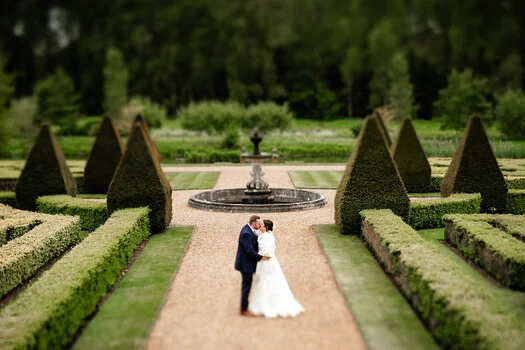
A recent photographic experiment by a Norfolk-based husband-and-wife wedding photography team has cast a new light on the integration of highly creative, yet technically demanding, optical tools within fast-paced professional environments. The photographers, reflecting on their journey from amateur enthusiasts to seasoned professionals, embarked on a deliberate test to reintroduce the unique aesthetic of the Lensbaby Composer Pro II with Edge 50 Optic into a live wedding setting at the historic Oxnead Hall, ultimately confirming its distinct artistic value while simultaneously highlighting its significant operational limitations for routine professional work. The undertaking provides valuable insights into the ongoing industry dialogue surrounding the balance between artistic expression, technical efficiency, and client expectations in contemporary wedding photography.
The Genesis of a Creative Reassessment
The narrative began with a nostalgic review of old photographs captured by Neil, one half of the photographic duo, years prior. These images, characterised by a distinctive dreamy quality and selective focus, stood apart from their more recent, technically perfect professional output. The common thread among these captivating photographs was their origin: each was taken using a Lensbaby, specifically the Composer Pro II with Edge 50 Optic. Unlike conventional lenses designed for edge-to-edge sharpness, the Lensbaby system allows photographers to manipulate the focal plane, creating a "sweet spot" of sharp focus that can be precisely positioned, while the surrounding areas dissolve into an ethereal, often swirled, blur. This effect occupies a unique visual space, often described as a hybrid of tilt-shift, vintage film aesthetics, and a surreal dreamscape.
As the photographers transitioned from hobbyists to established professionals specialising in wedding photography across Norfolk and beyond, the Lensbaby found itself relegated to storage, eventually being sold. The demanding nature of wedding photography, which prioritises consistency, speed, and technical precision for documenting irreplaceable moments, seemed incompatible with the manual, often unpredictable, characteristics of the Lensbaby. The market for wedding photography, valued at an estimated £2.5 billion annually in the UK alone, is fiercely competitive, with clients expecting flawless documentation alongside artistic flair. The perceived risk of using a non-standard lens for such high-stakes events led to its initial retirement from their professional kit.
The Digital Emulation: Photoshop’s Expanding Capabilities
Over the ensuing years, advancements in digital imaging technology and post-production software, particularly Adobe Photoshop, began to offer increasingly sophisticated ways to emulate the Lensbaby’s distinctive selective-focus effects. Modern photographers, armed with high-quality, sharp autofocus lenses, found they could recreate many of these dreamy blurs and selective focus points with remarkable control and precision in post-production. This capability often surpassed the inherent control offered by the physical lens itself, allowing for adjustments that could be applied or removed selectively, ensuring maximum flexibility and a consistent "keeper rate" – the percentage of usable images from a shoot. The ability to "fake" the look in post-production, combined with the inherent challenges of the physical lens, further cemented the Lensbaby’s status as an intriguing, but ultimately impractical, tool for professional wedding photographers.
Despite the efficacy of digital emulation, the original, organically produced Lensbaby images continued to resonate with the photographers. This persistent draw led to a critical internal question: had they been missing out on a unique artistic avenue by relying solely on post-production? This introspection paved the way for an unconventional decision: to bring the Lensbaby back into active service for a real wedding as an experimental "side quest."
The Oxnead Hall Experiment: A Test of Artistry and Pragmatism
The chosen venue for this intriguing experiment was Oxnead Hall, a prestigious wedding destination nestled in the Norfolk countryside. With its sprawling, meticulously maintained gardens, historic architectural elements, and signature wisteria-covered walls, the location presented an ideal canvas for the Lensbaby’s unique visual language. The picturesque setting, replete with diverse backdrops and romantic vistas, seemed perfectly aligned with the lens’s ability to create an atmospheric, painterly quality. The decision to select such a visually rich environment was deliberate, aiming to maximise the potential for the lens to "shine" and demonstrate its artistic strengths.
Strategic Deployment: Limiting Risk in a High-Stakes Environment
Recognising the inherent risks associated with integrating a manual-focus, selective-blur lens into a professional wedding workflow, the photographers devised a stringent operational plan to mitigate potential issues. The Lensbaby was strictly allocated for portrait sessions only, where the pace could be controlled, and the subjects were stationary. This strategic limitation was crucial; key moments such as the ceremony, exchange of vows, or dynamic confetti exits, which demand absolute technical reliability and rapid capture, were explicitly excluded from the Lensbaby’s purview. The manual focusing mechanism alone introduced a substantial element of risk, making its use for critical, unrepeatable moments untenable for a professional responsible for documenting a couple’s most important day.
The philosophy behind the experiment was clear: the Lensbaby would serve as a supplementary creative tool, an artistic embellishment rather than a primary workhorse. As the photographers noted, "experimentation has limits" when one is responsible for documenting somebody’s wedding day. This careful balance between artistic curiosity and professional accountability underscores a fundamental tension within the creative industries, where innovation must often be tempered by practical considerations and client expectations.
Operational Challenges and Industry Realities
The experiment at Oxnead Hall quickly brought the practical limitations of the Lensbaby into sharp focus, particularly concerning speed and workflow efficiency. Wedding photography operates at an extraordinarily rapid pace. Modern wedding timelines are often tightly scheduled, with multiple events occurring in quick succession. Couples typically have limited time for portrait sessions, and any delays impact the flow of the day, potentially leading to guest impatience, missed opportunities, or disruptions to the carefully choreographed schedule.
The Crucial Role of Speed and Precision in Wedding Documentation
A significant challenge identified was the sheer lack of speed. Contemporary professional photography relies heavily on advanced autofocus (AF) systems, which allow photographers to achieve precise focus almost instantaneously, freeing up cognitive resources to concentrate on composition, posing, lighting, and, crucially, interacting with the couple. This interaction is vital for eliciting natural expressions and fostering a comfortable, relaxed atmosphere, contributing significantly to the authenticity and emotional depth of the final images. The average portrait session at a wedding, even for a seasoned professional, rarely exceeds 15-20 minutes, making every second critical.
Manual Focus: A Workflow Bottleneck
The Lensbaby, being a fully manual lens, completely removes the benefit of autofocus. Photographers using it must manually adjust focus, often requiring multiple iterations to find the precise "sweet spot" and ensure it aligns with the intended subject. This process, compounded by the tilting mechanism used to control the focal plane, consumed valuable time and mental energy. The photographers reported instances of internal frustration, where they felt the creative flow was interrupted by technical adjustments. The constant need to verify focus, tilt angle, and the exact placement of the sharp zone meant a slower capture rate and less engagement with the subjects. The potential for "awkward silences" during these technical adjustments was a real concern, underscoring how even seemingly minor technical hurdles can impact the overall client experience and the photographer’s ability to forge a genuine connection.
Furthermore, the manual process introduced a higher degree of error. The risk of inadvertently focusing on a less desirable element, such as a bride’s ear instead of her eye, was ever-present, demanding meticulous attention and repeated checks. This contrasted sharply with the near-instantaneous, highly reliable focus acquisition offered by modern professional lenses, which boast AF speeds often measured in milliseconds and accuracy rates exceeding 95% in ideal conditions.
The ‘Keeper Rate’ Dilemma: Efficiency vs. Artistic Output
Another significant practical issue was the "keeper rate" – the percentage of technically successful and usable images from a given shooting sequence. While a professional photographer typically aims for a high keeper rate, often exceeding 70-80% with standard equipment, the Lensbaby yielded a significantly lower success rate. The experiment revealed that for every ten frames captured with the Lensbaby, only approximately three were deemed technically successful.
While this low hit rate did not imply a complete failure of the experiment – as the photographers confirmed that for every setup attempted, at least one "keeper" was achieved – it highlighted a fundamental inefficiency. To produce a comparable number of usable artistic shots, significantly more frames had to be taken, leading to increased shooting time, greater data storage requirements, and, crucially, a heavier post-production workload. For wedding photographers, who already manage extensive catalogues of images (often thousands per wedding) and demanding editing schedules, any factor that inflates the workload without a proportional increase in efficiency or revenue presents a significant operational challenge. The additional time spent in capture and post-processing simply did not align with the business model of high-volume, time-sensitive professional wedding photography.
Unexpected Triumph: The First Dance Revelation
Despite the challenges encountered during the daytime portrait sessions, the Lensbaby found its unexpected moment of triumph during the evening’s first dance. This was an unplanned deviation from the initial strategy, as important moments like the first dance typically demand the utmost technical reliability. However, operating as a husband-and-wife team provided a crucial safety net: Neil, the other half of the duo, was covering the dance floor with conventional, reliable equipment, ensuring that all essential shots were securely captured. This division of labour and the security of having "safe shots" in the bag afforded the opportunity for the Lensbaby to be deployed without the usual pressure.
Spontaneity Meets Opportunity: Capturing Dynamic Moments
The environment of the first dance – characterised by swirling lights, dynamic movement, and an atmosphere charged with emotion – proved to be an unexpectedly perfect setting for the Lensbaby. The lens’s inherent quirks, which had been a hindrance during static portraits, transformed into artistic assets. The selective focus, combined with the motion blur and the bokeh produced by the ambient lighting, worked harmoniously to create images that were not just unique but also deeply evocative. The "imperfections" of the lens, such as its softer focus and characteristic swirly bokeh, contributed to a sense of energy and character that perfectly suited the celebratory, fluid nature of the moment.
The Artistic Resonance of Controlled Imperfection
These photographs, unexpectedly, emerged as some of the most cherished images from the entire day. They possessed a distinct character and energy, conveying the atmosphere with an artistic flair that differed significantly from the technically perfect, yet sometimes sterile, images produced by conventional lenses. In an industry increasingly saturated with technically flawless photography, the unique, slightly imperfect aesthetic offered by the Lensbaby provided a refreshing alternative, standing out as truly distinctive and memorable. This success underscored the lens’s potential for specific, dynamic scenarios where its creative attributes align perfectly with the subject matter and environment.
Analysis and Broader Implications for Professional Photography
The Oxnead Hall experiment provided a definitive answer to the photographers’ long-standing question: had they been missing out by sidelining the Lensbaby? The answer, for their professional workflow, was largely no, despite the artistic successes. The experiment reaffirmed that while the Lensbaby is capable of producing beautiful, distinctive images that were loved by both the photographers and their clients, its operational demands are fundamentally misaligned with the requirements of commercial wedding photography.
Balancing Artistic Vision with Commercial Viability
The core learning revolves around the critical balance between artistic vision and commercial viability. Professional wedding photographers require speed, consistency, and reliability above almost all else. These attributes ensure that precious, unrepeatable moments are captured accurately, that client expectations for a comprehensive and high-quality album are met, and that the workflow remains efficient and profitable. The Lensbaby, by its very design, demands patience, extensive experimentation, and a willingness to accept a significantly lower hit rate. This combination is ideal for personal projects, artistic portrait sessions, or controlled studio environments where time is not a critical constraint. It is, however, a far less practical proposition when documenting a wedding day, where every second counts, and the stakes are exceptionally high.
The Evolving Landscape of Photographic Tools
This experiment also highlights a broader trend in the photography industry: the constant push for technological advancement often clashes with the enduring appeal of analogue or ‘imperfect’ aesthetics. While modern lenses and cameras are engineered for maximum sharpness, speed, and precision, there remains a significant demand for tools that introduce character, artistic blur, or vintage qualities. The challenge for manufacturers and photographers alike is how to bridge this gap effectively.
A Call for Innovation: The Future of Creative Optics
In light of their findings, the photographers issued a direct appeal to Lensbaby, proposing a future iteration of their creative optics. Their vision includes a version with modern autofocus capabilities, sharper optics within the "sweet spot," and a visual or tactile indicator for the precise placement of the focal plane. They even experimented with physical notches on their existing Lensbaby to aid in tactile focus acquisition, indicating a clear desire for improved usability without sacrificing the core creative effect.
This request, while seemingly contradictory to the Lensbaby’s ethos of embracing imperfection, addresses a critical pain point for professionals. The appeal is not to eliminate the creative effect – which they unequivocally loved – but to enhance its practical application. The analogy drawn to "nifty fifty" lenses – inexpensive yet disproportionately sharp – underscores a desire for a creative lens that offers superior optical performance in its focused area, providing a crisper foundation for the distinctive blur.
The photographers contend that the creative effect itself was never the impediment; rather, it was the cumulative burden of manual focus, slow shooting, compromised sharpness in the sweet spot, and an unacceptably low hit rate that rendered the Lensbaby impractical for wedding work. A Lensbaby with modern autofocus and genuinely sharp optics in the focal plane would, they argue, be a game-changer, opening up its unique artistic potential to a wider professional market without the current workflow compromises.
Bridging the Gap: Performance and Creativity
Such a hybrid lens would represent a significant step in marrying artistic intent with technical performance. It would allow photographers to achieve the coveted Lensbaby aesthetic with the speed and reliability demanded by professional assignments, thereby expanding the creative toolkit available to those working in fast-paced commercial sectors.
Industry Dialogue: The Quest for Hybrid Solutions
The experiment at Oxnead Hall serves as a compelling case study for the photography industry. It underscores the perpetual quest for tools that can deliver both cutting-edge technical performance and distinct artistic expression. While the Lensbaby, in its current form, remains a magnificent tool for personal projects and controlled creative work, its integration into the demanding rhythm of professional wedding photography presents insurmountable practical hurdles. The findings resonate with many photographers who grapple with similar trade-offs between innovative aesthetics and the rigorous demands of client-facing commercial work, fueling an ongoing dialogue about how technology can evolve to support both aspects seamlessly.
Ultimately, while the Lensbaby produced some of the most beautiful and character-filled images of the day, the rigorous demands of a wedding day mandate tools that prioritise speed, consistency, and reliability. For the foreseeable future, as the photographers prepare for their next wedding, the Lensbaby will remain at home, a cherished tool for personal artistry rather than a cornerstone of their professional kit, awaiting a potential technological evolution that could transform its practical utility.
