
 By Nila Kartika Wati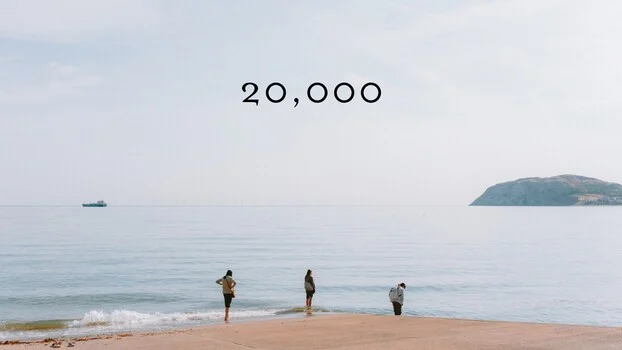
The inherent challenge in maintaining passion for any serious pursuit often leads to periods of waning motivation, a phenomenon acutely felt within the realm of photography. What begins as an exhilarating creative outlet can, over time, transform into a demanding chore, particularly when repeated outings yield no satisfying results. This common experience, where a photographer returns home empty-handed after multiple attempts, can amplify internal doubts and prompt considerations of abandoning the craft altogether. In response to this pervasive challenge, renowned photographer and content creator James Popsys has introduced a pragmatic yet profoundly insightful methodology: Non-Photography Goals (NPGs). This innovative approach, detailed in a recent video, offers a structured framework designed to circumvent creative stagnation by shifting the immediate focus away from the photographic outcome itself, thereby fostering persistence and increasing the likelihood of serendipitous discovery.
Understanding the Creative Slump: A Universal Challenge
The problem Popsys addresses is far from isolated. Creative professionals and hobbyists across various disciplines frequently encounter periods of burnout, creative block, or a general lack of inspiration. In photography, this can be particularly acute due to the often-unpredictable nature of light, subject matter, and environmental conditions. The digital age, while democratizing access to photography, has also inadvertently contributed to this dilemma. With virtually unlimited storage and the ease of capturing thousands of images, the pressure to produce a "masterpiece" with every outing can become overwhelming. When expectations consistently outweigh reality, the joy derived from the process diminishes, leading to the "dusty hard drive" syndrome where countless uncurated images reside, testament to effort without significant reward. Psychologists often refer to this as a form of performance anxiety or a dip in intrinsic motivation, where external pressures (the desire for a "good shot") overshadow the inherent pleasure of the activity. Data from surveys of creative professionals consistently highlight mental health challenges, including burnout, as significant factors impacting productivity and job satisfaction.
The Genesis of Non-Photography Goals (NPGs)
James Popsys, known for his accessible teaching style and candid reflections on the photographic process, developed the NPG concept as a personal coping mechanism to ensure he continued engaging with his passion even when inspiration was scarce. His insight stems from a clear understanding that the decision to quit an outing often precedes any genuine opportunity for a compelling photograph. By implementing a non-photography goal, he effectively removes the subjective decision to leave, forcing continued engagement with the environment. The core principle is deceptively simple: establish a target unrelated to photography and commit to achieving it before concluding the session.
Popsys’s preferred NPG, and perhaps the most illustrative, is a step count. The commitment to walking, for instance, twenty thousand steps before returning home, transforms the photographic excursion into a dual-purpose activity. The camera remains in hand, but the primary directive becomes physical exertion and exploration. This strategy bypasses common pitfalls such as over-planning or the pursuit of technically perfect but emotionally unengaging shots. As Popsys articulates, a meticulously planned shot of a subject one doesn’t genuinely connect with is unlikely to find a lasting place in a portfolio, regardless of its technical merit. Furthermore, extensive planning can inadvertently stifle spontaneity, a crucial ingredient for truly unique photographic captures. The step count, or any NPG, ingeniously circumvents these issues by fostering movement and prolonged exposure to potential photographic subjects, creating opportunities for "happy accidents."
Mechanism and Psychological Underpinnings of NPGs
The effectiveness of NPGs can be understood through several psychological lenses. Firstly, it acts as a "commitment device." By setting a clear, measurable, non-photographic target, individuals pre-commit to a certain duration or level of effort, making it harder to give up prematurely. This aligns with behavioral economics principles where pre-commitment helps overcome present bias (the tendency to favor immediate gratification over long-term goals).
Secondly, NPGs reduce cognitive load related to photographic performance. When the primary goal is, for example, to hit a step count, the pressure to "perform" photographically is diminished. This allows the photographer’s mind to wander more freely, to observe without immediate judgment, and to enter a state of relaxed awareness often conducive to creative insight. Mihaly Csikszentmihalyi’s concept of "flow" suggests that optimal experience occurs when challenges are balanced with skills, leading to deep absorption. While NPGs might not directly induce flow related to photography, they facilitate a state of engaged activity that can lead to unexpected photographic opportunities.
Thirdly, the strategy promotes perseverance. By ensuring continued presence in the field, NPGs increase the probability of encountering unique light, an interesting subject, or a fleeting moment that might otherwise be missed. This is akin to the "exposure principle" in learning and discovery – the longer one is exposed to an environment, the higher the chance of making a significant observation. Popsys openly admits that even with 20,000-step walks, a "standout shot" isn’t guaranteed, and often the most compelling frames emerge within the first few thousand steps. However, the NPG ensures he stays out long enough for those initial opportunities, and for any subsequent ones, to materialize.
Variations and Practical Application
Popsys is pragmatic about the limitations of any single approach and outlines several variations of NPGs to suit different conditions and moods. He acknowledges, for instance, that a rigid step count can be counterproductive in extreme weather or when hunger strikes, as one might prioritize hitting the number over genuinely observing the surroundings.
- Fixed Route (A to B and Back): This involves committing to a predetermined route, often chosen strategically for its potential photographic interest or simply because it leads back to a parked car. This method removes the decision to turn back prematurely, ensuring a full exploration of a specific area. It leverages the concept of a "closed loop," providing a clear start and end point.
- Fixed Time Block: Another variation involves dedicating a specific duration to a location, regardless of immediate photographic success. Popsys cites an example of spending ninety minutes in Rhosneigr while his car was being serviced. This forces prolonged engagement with a single environment, encouraging deeper observation and the ability to witness subtle changes in light or activity over time. This approach is particularly effective in urban settings or locations with dynamic conditions.
Each of these variations serves the same fundamental purpose: to remove the option of premature departure. By externalizing the decision-making process, the photographer is kept "in the game," increasing the window for inspiration and opportunity. This flexibility makes the NPG framework highly adaptable to individual preferences and varying circumstances.
Reframing Difficulty: Photography as a Valuable Challenge
Beyond the tactical implementation of NPGs, Popsys articulates a deeper philosophical shift that underpins his approach: viewing difficulty as an inherent feature, rather than a flaw, of photography. This perspective challenges the common inclination to seek instant gratification or guaranteed success. He draws a compelling analogy to golf: while hitting a perfect shot every time might be enjoyable for a brief period, it would quickly become tedious. The enduring appeal of golf, and indeed many complex skills, lies precisely in its difficulty, the rarity of perfection, and the continuous pursuit of improvement.
This reframing is critical for long-term engagement. If good photos were commonplace, their value would diminish. The very act of overcoming challenges—be it difficult light, uncooperative subjects, or simply a lack of inspiration—is what imbues the successful capture with meaning and satisfaction. When an empty memory card is interpreted not as proof of failure but as the "normal cost" of engaging in a valuable, challenging activity, the mental burden is significantly reduced. This mental resilience is what allows a photographer to venture out for the sixth consecutive time, knowing that the next compelling frame might be just around the corner. This perspective aligns with growth mindset theories, where challenges are seen as opportunities for learning and development, rather than insurmountable obstacles.
Broader Implications and the Future of Creative Practice
The principles embedded within James Popsys’s NPG concept extend far beyond the specific domain of photography. They offer a transferable model for sustaining motivation and fostering resilience in any creative, professional, or personal endeavor that involves periods of low reward.
- For Other Creative Arts: Writers facing writer’s block could commit to a fixed word count or time spent at their desk, irrespective of the quality of output. Musicians might commit to a certain number of practice hours, even if inspiration for new compositions is lacking. The goal is consistent engagement, allowing the creative well to replenish naturally.
- For Fitness and Well-being: The step count NPG is a direct application to fitness goals, providing a clear, measurable target that promotes physical activity even when motivation for a specific workout is low. The mental health benefits of regular outdoor activity are well-documented, with studies showing reductions in stress, anxiety, and depression. NPGs provide a structured way to consistently access these benefits.
- Challenging Traditional Productivity Paradigms: In an era often dominated by outcome-based metrics and the pressure to be constantly "productive," Popsys’s approach champions process over immediate product. It suggests that sustained engagement, even without immediate success, is a form of productivity in itself, laying the groundwork for future breakthroughs. This perspective offers a valuable counter-narrative to the relentless pursuit of "hustle culture."
Popsys’s ultimate advice, almost an aside, encapsulates the ideal state he aims to achieve with NPGs: to find something outdoors that makes one forget about photography entirely until a shot organically presents itself. Whether mountain biking, walking with a podcast, or simply conversing with a friend, this state of natural absorption allows the brain to relax its analytical grip, opening it up to more intuitive observation. The NPG, then, acts as a sophisticated "backup plan" for those days when natural absorption eludes the photographer. If the mind cannot naturally lose itself in the moment, the NPG provides a gentle, yet firm, push to remain present and engaged.
Conclusion: A Path to Sustained Engagement
James Popsys’s Non-Photography Goals represent more than just a trick for photographers; they embody a profound strategy for cultivating perseverance, managing creative expectations, and reframing the inherent difficulties of any valuable pursuit. By externalizing the decision to continue and embracing difficulty as a catalyst for growth, individuals can move beyond the cyclical nature of creative slumps. The goal is not to force a masterpiece but to consistently position oneself for opportunity, understanding that the most rewarding outcomes often emerge from sustained effort and a willingness to simply "stay in the game." As the photography community and other creative fields grapple with the challenges of motivation and burnout, Popsys’s practical and philosophically resonant approach offers a timely and effective pathway to sustained engagement and ultimately, richer, more meaningful creative experiences.
