
 By admin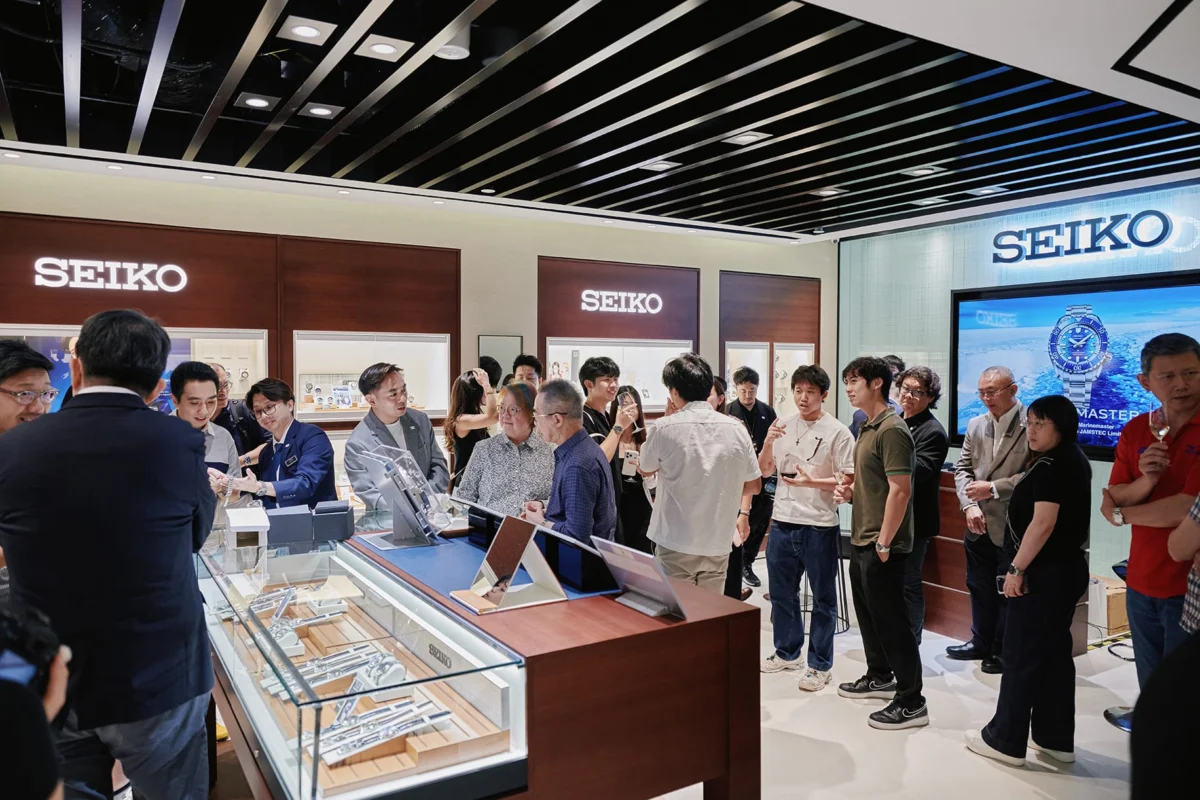
The global horological community recently turned its attention to Singapore as Seiko, the venerable Japanese watchmaker, hosted an exclusive evening for enthusiasts and readers of WOW (World of Watches) magazine. Held at the brand’s newly refurbished flagship boutique in Ngee Ann City, the event featured a rare appearance by Masanori Kawamura, the Lead Designer for the Seiko Prospex collection. This gathering served as a significant platform for the brand to reinforce its diving heritage while introducing the latest iterations of the Marinemaster, a nameplate that holds a storied position within the Seiko archives.

The evening was structured as an immersive educational experience, blending technical design theory with the practical history of saturation diving. Kawamura, a central figure in Seiko’s modern design language, engaged directly with collectors to explain the meticulous balance between preserving historical DNA and implementing cutting-edge manufacturing techniques. The presence of key executives, including William Hui, Managing Director of Thong Sia Group, and Wilfred Koh, General Manager of Thong Sia Singapore, underscored the strategic importance of the Southeast Asian market for Seiko’s premium "Professional Specification" (Prospex) line.
A Legacy Refined: The Historical Context of Prospex
To understand the significance of the event, one must look back to 1965, when Seiko released Japan’s first diver’s watch, the 150-meter water-resistant 62MAS. During his presentation, Kawamura traced the lineage from this foundational piece to the 1968 Hi-Beat 300m Diver (Reference 6159-7001), which is widely considered the spiritual ancestor of the modern Marinemaster.

The 1968 model was a breakthrough in horological engineering, featuring a one-piece (monocoque) case structure that eliminated the need for a case back, thereby significantly reducing the risk of water ingress. It also utilized a high-frequency movement that ensured precision even under the extreme pressures of professional diving. Kawamura explained that the modern Prospex philosophy is built upon these mid-century innovations, aiming to provide "tool watches" that exceed the ISO 6425 standards required for professional diving.
In the decades following the 1968 release, Seiko continued to pioneer technologies such as the "Tuna" shrouded case in 1975 and the world’s first quartz professional diver in 1986. The Marinemaster series eventually emerged as the flagship of the Prospex line, bridging the gap between Seiko’s accessible divers and the ultra-high-end offerings of Grand Seiko.

The Designer’s Perspective: Form Follows Function
Masanori Kawamura’s design philosophy is rooted in the Japanese concept of Monozukuri—the art of making things with a focus on excellence and continuous improvement. During the session, he emphasized that for a professional tool watch, aesthetics can never come at the expense of utility.
A central theme of Kawamura’s talk was the "sensory experience" of a watch. While many collectors focus on the dial and movement, Kawamura highlighted the importance of the bracelet and the clasp. He argued that these components are as vital to the watch’s robustness as the case itself. In professional diving, the security of the timepiece on the wrist is a safety requirement; on land, it is a matter of ergonomic comfort.

The new Marinemaster models showcased during the evening feature a redesigned bracelet with elliptical links and a refined clasp system. Kawamura noted that the goal was to create a watch that felt integrated with the wearer’s arm, reducing the "top-heavy" sensation often associated with high-depth-rated watches. By refining the taper of the bracelet and the finishing of the clasp, Seiko has managed to make a 200-meter diver feel as sophisticated as a luxury dress-sports watch.
Technical Specifications of the New Marinemaster Collection
The highlight of the evening was the hands-on session with the new Prospex Marinemaster references (SJE097, SJE099, and SJE101). These models represent a modern evolution of the 1965 design, characterized by a significantly slimmer profile than previous Marinemaster iterations.

The Caliber 6L37 Movement
At the heart of these new timepieces is the Caliber 6L37, a movement specifically developed for the Prospex line. It is the first movement in the 6L series designed to meet the rigorous durability and shock-resistance standards required for a diver’s watch.
- Frequency: 28,800 vibrations per hour (8 beats per second).
- Power Reserve: 45 hours.
- Accuracy: +15 to -10 seconds per day.
- Slimness: The use of the 6L37 allows the case thickness to be kept at approximately 12.3mm, making it one of the slimmest professional-grade divers in Seiko’s current catalog.
Aesthetic and Structural Details
The watches feature a 39.5mm case diameter, a "sweet spot" for modern collectors who are increasingly moving away from oversized tool watches. The dials incorporate a horizontal textured pattern, evoking the rhythmic motion of ocean waves.

- SJE097: A limited edition with a silver-white dial, celebrating the brand’s heritage.
- SJE099: A light blue dial variant.
- SJE101: A classic black dial version.
Each watch features a box-shaped sapphire crystal and a see-through case back—a rarity for the Marinemaster line, which traditionally utilized solid case backs for pressure resistance. Kawamura explained that modern gasket technology and case engineering now allow for a transparent view of the movement without compromising the 200-meter water resistance.
The Role of Thong Sia Group in the Regional Market
The event also served as a showcase for the newly revamped Seiko boutique at Ngee Ann City. The redesign of the store reflects Seiko’s global push toward a more premium retail experience. William Hui and Wilfred Koh of Thong Sia Group shared insights into the brand’s trajectory in Singapore and the wider region.

As the exclusive distributor for Seiko in Singapore, Malaysia, Hong Kong, Macau, and Brunei, Thong Sia Group has played a pivotal role in cultivating a sophisticated collector base. The boutique’s new layout is designed to facilitate deeper engagement between the staff and clients, moving away from a transactional retail model toward an experiential one.
"Singapore has one of the most educated watch-collecting communities in the world," noted a spokesperson for the group during the event. "Bringing a lead designer like Kawamura-san here is not just about showing new products; it’s about acknowledging the depth of knowledge our local fans possess."

Market Analysis: Seiko’s Premium Pivot
The release of the new Marinemaster and the hosting of high-level design seminars indicate a broader strategic shift for Seiko. Historically known for the "SKX" and "Turtle" series—robust, affordable watches often priced under $500—Seiko is increasingly moving the Prospex line into the $2,500 to $4,000 price bracket.
This "premiumization" strategy is supported by several factors:

- Vertical Integration: Seiko’s ability to manufacture every component in-house, from the hairsprings to the lubricants, provides a level of provenance that few Swiss competitors can match at this price point.
- Heritage Leveraging: By revisiting designs from 1965 and 1968, Seiko is tapping into the global trend for "neo-vintage" timepieces.
- Finishing Techniques: The use of Zaratsu polishing (historically reserved for Grand Seiko) and "Super-Hard Coating" on stainless steel cases adds tangible value that justifies the higher price entry.
Analysts suggest that by elevating the Marinemaster, Seiko is positioning itself to compete directly with mid-tier Swiss luxury brands. The focus on slimness and ergonomics, as championed by Kawamura, is a direct response to consumer demand for versatile watches that can transition from "ocean to office."
Conclusion and Future Outlook
The evening at Ngee Ann City concluded with a lively Q&A session, where Kawamura took the time to sign autographs and pose for photographs with attendees. This level of accessibility is rare in the luxury watch world and serves to strengthen the "Seiko cult" following that exists in Singapore.

As the watch industry continues to navigate a changing global economy, Seiko’s reliance on its heritage and its commitment to technical innovation appear to be a winning formula. The Marinemaster remains a symbol of the brand’s "Professional" aspirations, and with Masanori Kawamura at the design helm, the collection is poised to balance its rugged history with a more refined, contemporary future.
The success of the event underscores a growing appetite for transparency in design. Collectors are no longer satisfied with just a brand name; they want to understand the "why" behind the bezel click, the "how" of the movement’s shock resistance, and the "who" behind the aesthetic vision. In providing these answers, Seiko has not only sold a watch but has also deepened the cultural footprint of its most iconic diving series.
