
 By Nila Kartika Wati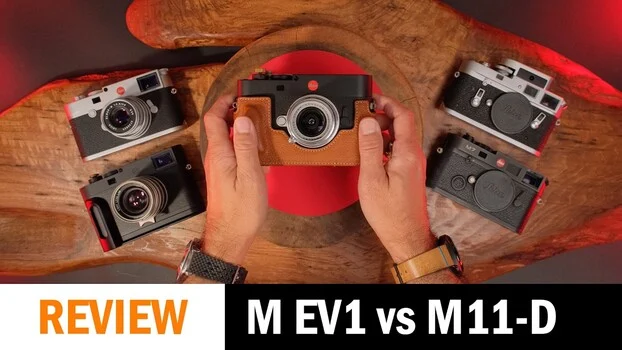
Leica Camera AG has introduced a significant evolution within its revered M series, traditionally defined by its distinctive optical rangefinder for the past seven decades. The new Leica M EV1 makes a bold departure by integrating a built-in electronic viewfinder (EVF), effectively splitting the M lineup into two distinct photographic philosophies. Positioned as the new entry point into the current M11 generation, the M EV1’s launch follows the strategic discontinuation of the standard Leica M11, signaling a deliberate reorientation of Leica’s digital M offerings. This move marks one of the most substantial design shifts in the M series’ storied history, reflecting a response to evolving photographic trends and user demands.
The Enduring Legacy of the Leica M Series: A Historical Perspective
For over 70 years, the Leica M series has stood as a bastion of minimalist design, precision engineering, and a unique photographic experience centered around its coupled optical rangefinder. Introduced in 1954 with the Leica M3, the rangefinder system allowed photographers to achieve precise focus through a split-image mechanism while simultaneously composing within bright frame lines that offered a view beyond the captured frame. This "seeing outside the frame" became a hallmark of the M experience, fostering an anticipatory style of street and documentary photography. Generations of photographers, from Henri Cartier-Bresson to Elliott Erwitt, embraced the M’s discretion, tactile feedback, and the unparalleled quality of its M-mount lenses.
The transition to digital in 2006 with the Leica M8 introduced a sensor but largely retained the core rangefinder experience, albeit with an LCD screen for review. Subsequent models, including the M9, M (Type 240), M10 series, and the initial M11, continued to refine the digital rangefinder while largely preserving its optical soul. External EVFs were offered as accessories, but they were often seen as compromises, clunky additions to an otherwise elegant system. The M EV1, therefore, represents not just an incremental update but a fundamental re-evaluation of what a "digital M" can and should be in the 21st century.
Leica’s Strategic Reshaping of the M11 Generation
The introduction of the M EV1, coupled with the discontinuation of the standard M11, reveals a calculated move by Leica to streamline its premium digital rangefinder offerings and cater to distinct user preferences. The M11, initially launched as the flagship, offered a high-resolution 60-megapixel full-frame sensor, robust build quality, and modern connectivity. Its discontinuation suggests a strategic pivot to differentiate the M lineup more clearly.
The current M11 generation now comprises three primary models, each targeting a specific niche:
- Leica M11-P: Likely positioned as the premium, traditional rangefinder experience, offering high-resolution imaging with the classic optical viewfinder and often incorporating advanced features like Content Authenticity Initiative (CAI) metadata.
- Leica M11-D: A specialized, screen-less variant, appealing to purists who prefer an uninterrupted, film-like shooting experience without the distraction of immediate review, often requiring an external EVF for precise composition with certain lenses.
- Leica M EV1: The new entry point, fundamentally altering the interaction by replacing the optical rangefinder with an integrated EVF, targeting users who prioritize precision, modern lens compatibility, and real-time visual feedback.
This tiered approach allows Leica to address different segments of its discerning clientele, from traditionalists to those seeking a more contemporary, technologically integrated shooting experience within the M framework.
The M EV1: A Deep Dive into its Core Features and Design Philosophy
At the heart of the Leica M EV1 is its integrated electronic viewfinder, a feature that distinguishes it from every non-film M camera that came before it. This high-resolution EVF replaces the mechanical rangefinder assembly, a complex and costly component that has defined the M’s form factor and user interaction. The decision to embed an EVF natively addresses several long-standing challenges faced by digital M users, particularly those working with wide-angle or specialized character lenses.
Key features and benefits enabled by the integrated EVF include:
- "What You See Is What You Get" Precision: Unlike an optical rangefinder, which shows a simplified, superimposed view, the EVF provides a direct, real-time preview of the sensor’s output. This means photographers can accurately judge exposure, white balance, depth of field, vignette, and the specific optical characteristics of their lenses before pressing the shutter.
- Enhanced Wide-Angle Composition: For lenses wider than 35mm (especially 21mm, 24mm, 28mm), optical rangefinders require accessory viewfinders that clip into the hot shoe, adding bulk and often obscuring parts of the frame. The M EV1’s native EVF eliminates this need, offering edge-to-edge accurate framing directly through the camera.
- Modern Lens Compatibility: Newer M-mount lenses often feature closer minimum focusing distances (e.g., 0.4m) that exceed the coupling range of traditional mechanical rangefinders (typically 0.7m or 0.5m with certain lenses). An EVF allows for precise focusing at these closer distances, expanding the creative possibilities with modern glass.
- Third-Party Lens Support: The EVF seamlessly accommodates a wider array of M-mount and adapted third-party lenses, including those from manufacturers like Voigtlander, which may focus even closer or have unique optical signatures. The EVF ensures accurate framing and focus regardless of the lens’s design or frame line support.
- Streamlined Workflow in Low Light: The ability to review images, zoom in for focus check (punch-in), and navigate menus entirely within the EVF is a significant ergonomic advantage. As noted by reviewers, in dark environments like concerts, this prevents the photographer from lifting the camera from their eye and spilling ambient light from the LCD screen, maintaining discretion and minimizing disturbance.
Expert Field Test: Take Kayo’s Two-Month Evaluation of the M EV1
Renowned photography reviewer Take Kayo of bigheadtaco embarked on an extensive two-month field test of the Leica M EV1, integrating it into his daily carry, including a vacation. His experience offers invaluable insight into the practical implications of this design paradigm shift, particularly when contrasted with his preferred Leica M11-D, which he describes as the "opposite end of the digital M experience."
Kayo articulates a fundamental dichotomy between the two approaches:
- The Rangefinder (e.g., M11-D): Speed and Anticipation. This philosophy prioritizes the ability to see outside the frame lines, offering a broader contextual view that aids in anticipating moments and reacting quickly in dynamic situations like street photography. It’s about immersion and flow, reducing distractions from chimping (checking the LCD) and fostering a more intuitive connection with the scene.
- The EVF (M EV1): Precision and Control. This approach emphasizes seeing exactly what the lens will render, allowing for meticulous composition, precise control over elements like flare and bokeh, and an accurate assessment of the final image before capture. It’s about deliberate creation and maximizing the potential of specialized optics.
Kayo’s primary lens during his M EV1 test was the Leica 21mm Super Angulon, a vintage optic he affectionately calls "the king of vignette." This choice was deliberate, highlighting a key advantage of the EVF. With an optical M, using such a wide lens typically necessitates an external accessory finder – a "chunky and ugly" attachment that Kayo admits he never bothered with during a nine-month loan of an M11-P. The M EV1’s integrated EVF completely negates this issue, allowing him to precisely place elements like flare, foliage, and blue sky within the frame, controlling the heavy vignette at apertures like f/4 and f/8 without needing to check the LCD. This real-time visual feedback proved transformative for his creative process.
The benefits extended beyond wide angles. Kayo lauded the EVF’s ability to facilitate focus down to the 0.4m close-focus distance of newer M lenses and even closer with third-party optics. The integrated workflow – review, playback, punch-in, and menu changes all occurring within the finder – significantly enhanced usability, particularly in challenging lighting conditions where an illuminated LCD would be disruptive. For photographers who consciously seek out the "fingerprint" of character lenses – their unique vignette, bokeh, and vintage flare – the EVF allows for unparalleled control over these artistic elements at the point of capture, rather than merely discovering them in post-processing software like Lightroom.
Market Positioning and Purchasing Considerations
Kayo’s buying advice offers a clear, structured progression for aspiring Leica M users, emphasizing that the M EV1 is a specialized tool rather than a first step into the system. His "ladder" outlines a logical journey:
- Start with a Film M: To genuinely understand and appreciate the rangefinder experience, Kayo recommends beginning with a film M camera, such as a Leica M4, M6, or his beloved M7. This immersion helps ascertain if the unique rangefinder workflow resonates with the photographer.
- Move to a Standard Digital M: Once comfortable with the rangefinder philosophy, the next step would be a digital M with both an optical finder and an LCD screen, such as the 40-megapixel Leica M10-R. This offers the best of both worlds – the classic rangefinder and the convenience of digital review.
- The M EV1 as a "Third M": Kayo firmly positions the M EV1 as a "third M" – a more playful, niche, and specialized pick for photographers who already own both film and digital M bodies. It’s for those who specifically desire the EVF experience without the compromises of external attachments. He is unambiguous: "this should not be a first Leica."
For individuals considering their very first Leica camera, regardless of their M aspirations, Kayo strongly recommends the Leica Q series (e.g., Leica Q3) as a gateway. The Q cameras are full-frame, fixed-lens compacts that offer an integrated EVF, autofocus, and a more conventional, approachable user experience, making them excellent entry points before committing to the significant investment of the M system.
Broader Industry Shift: The Ascendancy of Character Lenses
The M EV1’s design philosophy is deeply intertwined with a broader, significant trend in contemporary photography: the resurgence and widespread appreciation for "vintage and character lenses." This genre values unique optical imperfections – swirly bokeh, heavy vignetting, distinct flare patterns, and lower contrast – over clinical sharpness and technical perfection. From reissued classics like the collapsible Elmar to boutique manufacturers like Light Lens Lab reviving old formulas, there is a thriving market for optics that impart a specific "fingerprint" to images.
An optical rangefinder, by its very nature, cannot show these characteristics in real-time because the photographer is looking through a separate window, not directly through the taking lens. This often means discovering the full extent of a lens’s personality only after reviewing the image on an LCD or in post-production. The M EV1’s EVF fundamentally changes this dynamic. It places the lens’s unique flaws and charms "front and center in the moment you compose," allowing photographers to actively incorporate and control these elements as part of their creative vision.
This real-time feedback is invaluable for lenses known for their pronounced optical signatures, such as a swirly-bokeh 50mm or a heavily vignetting 21mm from the 1950s. Furthermore, the EVF addresses historical limitations of the M system by accurately framing focal lengths that never received dedicated frame lines in optical Ms, such as 40mm. This means a classic 40mm Rokkor lens can finally be framed precisely, unlocking new creative possibilities.
Implications and the Future of the Digital M
The Leica M EV1 represents a calculated risk and a forward-thinking evolution for a brand deeply rooted in tradition. By embracing the electronic viewfinder, Leica acknowledges the demands of a segment of its user base that prioritizes modern precision, compatibility with specialized lenses, and a "what you see is what you get" workflow. While it might initially shock some purists, the move is a pragmatic response to the evolving landscape of digital photography and the growing appreciation for distinct optical aesthetics.
Leica’s decision to discontinue the standard M11 and position the M EV1 as an "entry point" also signals a strategic intent to broaden the appeal of the M system, potentially attracting a new generation of photographers who value technological integration without sacrificing the tactile quality and premium feel synonymous with Leica.
Despite this technological leap, the core appeal of the M system – its robust build, intuitive controls, and access to some of the finest lenses in the world – remains intact. As Take Kayo notes, for those who crave the pure, unadulterated joy of shooting and staying "in flow" without chimping, the M11-D with its screen-less rangefinder still pulls him back, akin to the experience of driving a high-performance sports car. The M EV1, by contrast, is positioned as the precision tool, a testament to Leica’s commitment to offering diverse yet equally compelling experiences within its legendary M lineage. This dual approach ensures that the M system continues to cater to both its historical legacy and the dynamic future of photographic expression.
