
 By Nila Kartika Wati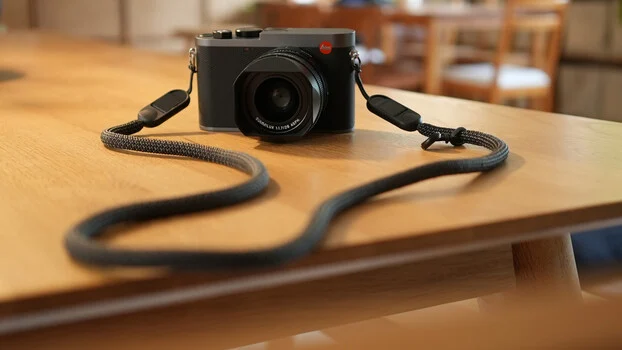
In the burgeoning segment of premium compact fixed-lens cameras, the Leica Q series has consistently maintained a commanding presence, synonymous with exquisite craftsmanship, optical excellence, and sophisticated imaging capabilities. While the Leica Q3, initially launched in May 2023, has established itself as a benchmark in this category, recent updates and the introduction of new variants further solidify its appeal, making it an even more compelling option for discerning photographers. These developments underscore a broader trend in photography where professionals and enthusiasts increasingly seek high-performance, portable solutions that do not compromise on image quality or creative control.
The Evolution of a Photography Icon: The Leica Q Series Legacy
Leica Camera AG, a name steeped in over a century of photographic innovation, has long been revered for its precision engineering and iconic designs. The brand’s foray into the full-frame compact digital camera market began with the original Leica Q (Typ 116) in 2015. This camera was an immediate success, praised for its integrated Summilux 28mm f/1.7 ASPH. lens, full-frame sensor, and intuitive controls, effectively carving out a new niche for high-end, fixed-lens cameras. It offered photographers a unique blend of portability and uncompromised image quality, distinguishing itself from both larger interchangeable lens systems and more basic compacts.
The successor, the Leica Q2, released in 2019, built upon this strong foundation by introducing a higher-resolution 47.3-megapixel sensor, weather sealing, and an improved electronic viewfinder (EVF). It refined the user experience while maintaining the beloved form factor and optical performance. The Q2’s success further solidified Leica’s strategic position in the premium compact segment, demonstrating a clear demand for cameras that could serve as both professional tools and discreet everyday companions. This chronological progression highlights Leica’s continuous commitment to evolving the Q series, responding to technological advancements and user feedback.
The Leica Q3: A Leap Forward in Imaging Technology
The third iteration, the Leica Q3, launched in May 2023, represents a significant technological advancement over its predecessors. At its core lies a newly developed 60.3-megapixel backside-illuminated (BSI) CMOS sensor, a substantial upgrade from the Q2’s 47.3-megapixel sensor. This higher resolution not only provides exceptional detail and clarity but also offers greater flexibility for cropping in post-production, effectively simulating longer focal lengths without significant loss of quality. The BSI architecture of the sensor enhances light gathering efficiency, leading to improved low-light performance and dynamic range – critical attributes for a camera designed for diverse shooting environments, from street photography to dimly lit interiors.
Powering this advanced sensor is Leica’s cutting-edge Maestro IV processor. This updated processing engine is instrumental in handling the massive data flow from the 60.3-megapixel sensor, enabling faster image processing, quicker buffer clearing, and enhanced overall responsiveness. The Maestro IV also contributes to improved noise reduction algorithms, delivering cleaner images at higher ISO sensitivities, and facilitates the Q3’s advanced video capabilities, which include DCI 4K and 8K resolution recording.
The standard Leica Q3 retains the acclaimed Summilux 28mm f/1.7 ASPH. lens, a testament to its optical excellence and versatility. This wide-angle lens is celebrated for its exceptional sharpness across the frame, beautiful bokeh at wider apertures, and minimal distortion, making it ideal for street photography, environmental portraits, and landscape work. For photographers seeking a different perspective, Leica later introduced the Q3 43 variant, featuring an APO-Summicron 43mm f/2 ASPH. lens. The "APO" designation signifies apochromatic correction, indicating superior chromatic aberration control and rendering of fine details. The 43mm focal length offers a more classic "normal" perspective, akin to human vision, making it well-suited for portraiture and more intimate scenes, expanding the Q3’s utility for a broader range of photographic styles.
Ergonomic Refinements and User Experience Enhancements
Beyond its internal upgrades, the Leica Q3 introduces several ergonomic and functional improvements that significantly enhance the user experience. Perhaps the most notable physical enhancement is the transition from a fixed 3-inch LCD screen to a tilting display. This articulated screen provides greater flexibility for composing shots from challenging low or high angles, a crucial feature for street photographers seeking discreet perspectives or architectural photographers capturing dramatic viewpoints. While this design change necessitated a slight increase in the camera body’s width and a revised button layout, the added versatility is widely regarded as a valuable trade-off.
Complementing the tilting LCD, the Q3’s electronic viewfinder (EVF) also received a substantial upgrade, now boasting a resolution of 5.76 million dots. This higher-resolution EVF offers a remarkably clear, bright, and detailed view of the scene, closely mimicking the experience of an optical viewfinder while providing real-time exposure and white balance information. Such improvements are vital for precise manual focusing and accurate composition, particularly in bright conditions where an LCD screen might be less visible.
Functionally, the Leica Q3 features a much faster and more sophisticated autofocus (AF) system. It employs a hybrid phase-detect and contrast detection system, a significant advancement over previous Q models. This hybrid approach allows for rapid and accurate subject acquisition, even in challenging lighting conditions. The improved AF system is more adept at identifying and tracking subjects as they move across the frame, making the Q3 highly capable for capturing dynamic scenes. Furthermore, the Q3 integrates modern connectivity options, including seamless wireless connectivity with Wi-Fi and Bluetooth, alongside a multifunctional USB-C port. This USB-C port serves for both high-speed data transfer and in-camera charging, streamlining workflow and enhancing convenience for photographers on the go.
The Aesthetic Statement: Introducing the Metal Grey Edition
Leica cameras are renowned not only for their technical prowess but also for their distinctive aesthetics and exclusive appeal. The company frequently releases special editions and color variants, catering to a clientele that values both performance and bespoke design. The recent introduction of the Leica Q3 Metal Grey Edition is a prime example of this strategy. Functionally identical to the standard Q3, this variant features a sophisticated metallic grey finish, contrasted with black control elements, and subtle red engravings for the feet and f-stop scales on the lens.
This approach mirrors the luxury watch industry, where limited-edition styles and unique finishes often command a premium, adding to the exclusivity and collector’s value of the product. Industry analysts note that such aesthetic variations serve to maintain brand desirability and appeal to consumers who view their camera not just as a tool, but as a statement piece. For many Leica enthusiasts, the style and tactile experience of using the camera are integral to its charm, and the Metal Grey Edition offers a fresh, understated take on the Q3’s iconic design. This strategic move by Leica reinforces its position in the luxury goods market, where craftsmanship and design are as critical as technological innovation.
Expanding Creative Horizons: Enhanced Video Features and Audio Integration
While the Leica Q series has traditionally been lauded for its still photography capabilities, the Q3 brings notable enhancements to its video functionality, expanding its appeal to content creators. A significant, albeit less-discussed, update is the capability to use external microphones through the USB-C port. This feature transforms the Q3 into a more versatile tool for capturing high-quality video with professional-grade audio, a crucial aspect for vlogging, short documentaries, or on-location interviews.
The implementation of USB-C for audio input is a modern solution, though it does present some minor practical considerations. Certain wireless microphone systems with integrated USB-C receivers might not fit directly due to the physical design around the port. However, practical workarounds, such as using a USB-C cable with a 3.5mm receiver, have proven effective with popular systems like the Hollyland Lark M2 and Lark Max 2. Additionally, the Q3 has demonstrated compatibility with professional microphones such as the Sony ECM-S1 and RØDE VideoMic NTG when connected via a suitable long USB-C cable. These developments mean that the Q3’s unique color profiles, fast autofocus, and quick crop options can now be fully leveraged for video creation, making it a capable companion for spontaneous content capture during travel or daily explorations. This flexibility positions the Q3 as a more holistic imaging device, adapting to the evolving demands of multi-media content creation.
Precision for Professionals: The Perspective Control Advantage
One of the most compelling and potentially underrated features introduced in the Leica Q3, particularly for architectural and landscape photographers, is its advanced Perspective Control function. This intelligent feature automatically detects the camera’s angle and displays a corrected framing guide on the screen when the camera is tilted upwards or downwards. In essence, it provides an in-camera simulation of the auto perspective correction commonly found in post-processing software like Adobe Lightroom, effectively combating converging verticals and other perspective distortions directly in the field.
While perspective correction can undeniably be performed in post-production, the integration of this feature directly into the Q3 streamlines the workflow significantly. For photographers who prioritize efficiency and wish to minimize time spent on post-processing, especially when shooting for personal projects or quick client turnarounds, this capability is invaluable. The Q3 can apply these corrections directly to JPEG files, delivering ready-to-use images with accurate perspectives. Crucially, for those who prefer maximum flexibility, the raw DNG files retain the original image data alongside the perspective-control metadata. This allows for fine-tuning or re-adjustment of the correction in compatible software if further modifications are desired.
For architectural photographers accustomed to carrying specialized tilt-shift lenses to achieve distortion-free images, the Q3’s Perspective Control offers a compelling alternative, reducing the amount of gear required without sacrificing precision. This innovation aligns with the growing desire among professionals for highly capable yet minimalist setups, enabling them to focus more on composition and less on technical corrections during the shoot. This feature underscores Leica’s commitment to providing sophisticated tools that cater to the nuanced needs of various photographic disciplines, enhancing both creative freedom and operational efficiency.
Market Analysis and Strategic Positioning
The Leica Q3’s release and subsequent enhancements, including the Metal Grey Edition and functional updates, reinforce Leica’s strategic positioning at the apex of the premium compact camera market. In an era where smartphone cameras are increasingly sophisticated, dedicated compact cameras must offer a distinct and superior value proposition. The Q3 achieves this through its combination of a large full-frame sensor, exceptional fixed-lens optics, robust build quality, and a meticulously crafted user experience.
Industry observers note that the Q3 embodies a growing philosophy among photographers: the pursuit of a "personal camera" that blurs the lines between professional utility and personal creative expression. This is a camera chosen not just for its technical specifications but for the joy it brings to the act of photography, for its ability to inspire and simplify the creative process. The Q3’s high-resolution sensor and versatile lens make it suitable for a wide array of applications, from candid street scenes and intimate portraits to detailed landscapes and architectural studies. Its compact form factor encourages it to be carried everywhere, ensuring that photographic opportunities are rarely missed.
The significant investment required for a Leica Q3 reflects not just the advanced technology within but also the brand’s heritage, its commitment to superior engineering, and the exclusive experience it provides. The camera’s performance, coupled with its iconic design and tactile controls, contributes to a holistic photographic journey that many find unparalleled. This premium positioning is further solidified by the release of aesthetic variants like the Metal Grey Edition, which cater to the luxury market segment and reinforce the camera’s status as a desirable object.
Conclusion: The Enduring Appeal of the Leica Q3
The Leica Q3, with its blend of cutting-edge technology, thoughtful ergonomic design, and strategic feature enhancements, continues to define excellence in the premium compact camera segment. From its powerful 60.3-megapixel BSI CMOS sensor and Maestro IV processor to its versatile Summilux 28mm f/1.7 ASPH. lens (or the APO-Summicron 43mm f/2 ASPH. in the Q3 43 variant), every aspect of the camera is engineered for superior performance. The introduction of a tilting LCD, an upgraded EVF, and a highly responsive hybrid autofocus system significantly enhances the user experience, making it more adaptable to diverse shooting scenarios.
Furthermore, the recent updates, including the aesthetically pleasing Metal Grey Edition, expanded video capabilities with USB-C microphone support, and the innovative Perspective Control feature, collectively make the Q3 an even more enticing proposition. These additions not only broaden its functional utility but also solidify its appeal to a wider range of photographers, from dedicated street and travel enthusiasts to architectural professionals seeking streamlined workflows.
Ultimately, the enduring appeal of the Leica Q3 lies in its ability to deliver uncompromising image quality within a compact and beautifully crafted form factor. It embodies the essence of a camera designed to be carried, used, and cherished, fostering a deeper connection between the photographer and their creative output. The experience of using a Leica Q3, characterized by its tactile controls, stunning optical performance, and robust build, transcends mere technical specifications, making it a standout choice in a competitive market and a testament to Leica’s legacy of photographic innovation.
