
 By Nila Kartika Wati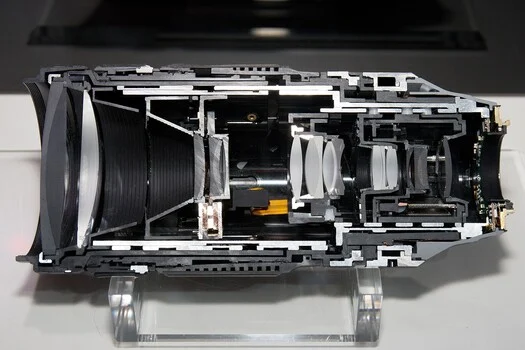
A subtle movement, imperceptible to the human hand, can dramatically impact photographic clarity. Tilting a 600mm lens by a mere tenth of a degree, a shift too small to register consciously, causes the projected image to slide approximately one millimeter across the camera sensor. This seemingly minor displacement becomes a critical challenge during an exposure, and it is precisely this millimeter of motion that nearly every modern still camera stabilizer is engineered to counteract. Whether achieved by precisely shifting an optical glass element within the lens or by magnetically floating the entire sensor assembly, the underlying mechanisms are complex, and their varied approaches explain why the "stop counts" advertised on product boxes are notoriously difficult to compare meaningfully. Understanding the intricate engineering behind these systems, from their fundamental operational principles to the evolving industry benchmarks, is essential for appreciating their impact on contemporary photography.
The Genesis and Evolution of Image Stabilization Technologies
The relentless pursuit of sharper images, particularly in challenging low-light conditions or with long telephoto lenses, has been a driving force in camera innovation. Image stabilization (IS) emerged as a groundbreaking solution, with its early implementations focusing on optical systems integrated within lenses. Canon pioneered this field, introducing its first EF 75-300mm f/4-5.6 IS USM lens in 1995. This marked a pivotal moment, enabling photographers to capture handheld shots at significantly slower shutter speeds than previously thought possible. Nikon quickly followed suit with its proprietary Vibration Reduction (VR) technology, further solidifying lens-based stabilization as a critical feature across the industry.
These foundational systems laid the groundwork for the sophisticated, multi-axis solutions prevalent in today’s cameras, fundamentally altering shooting paradigms for genres such as action, wildlife, and low-light photography. The chronological development of image stabilization reflects a continuous effort to enhance stability, adapting to advancements in sensor technology, processing power, and evolving photographic demands. This evolution has progressed from purely lens-based corrections to advanced in-body systems and, most recently, to highly integrated solutions where the lens and camera body communicate and collaborate seamlessly to achieve optimal stabilization performance.
Unpacking Lens-Based Optical Stabilization: The Shifting Glass Paradigm
Optical stabilization, known by various brand names such as IS (Canon), VR (Nikon), OSS (Sony), OS (Sigma), VC (Tamron), and O.I.S. (Panasonic), operates on a shared fundamental principle. At its core, a small, precisely engineered group of lens elements, termed the "correction group," is designed for minute lateral movement, perpendicular to the optical axis. This subtle sideways shift strategically bends the light path, effectively redirecting the projected image back to its intended position on the camera sensor. The result is that intricate details remain fixed on the same pixels throughout the entire duration of the exposure, thereby neutralizing the effects of camera shake.
The intelligence governing this precise movement originates from a gyroscope, specifically a microelectromechanical angular velocity sensor (MEMS gyro). These tiny sensors are integrated onto compact circuit boards within the lens assembly. Crucially, the gyro does not report the absolute orientation of the lens; instead, it measures the rate at which the lens is rotating. A dedicated high-speed processor then integrates this angular velocity data over time to calculate the precise degree to which the image has drifted from its target. This distinction between absolute position and rotational rate is significant, as a gyro’s signal can exhibit slow, cumulative drift over extended periods. This inherent drift presents a genuine engineering challenge and places a practical limit on the maximum effective exposure time a lens-based stabilizer can reliably maintain without introducing errors.
While the shifting lens group is the predominant method in still cameras, other light-bending techniques exist. Canon’s high-end broadcast lenses and stabilized binoculars, for instance, utilize a vari-angle prism. This innovative component comprises a bellows filled with a high-refractive-index liquid sealed between two glass plates. By precisely altering its wedge angle, this prism can steer the optical axis, offering a wider bandwidth of vibration frequency correction compared to a simple shifting lens group. Though not commonly found in consumer still cameras, its application demonstrates the diverse approaches to optical image manipulation.
The physical actuation of the correction group is typically achieved through a voice coil motor, a technology renowned for its precision and speed, familiar from its use in loudspeakers. By passing an electrical current through a coil of wire positioned within the magnetic field of a permanent magnet, a highly controlled force is generated. The direction and strength of this force are meticulously regulated by the current, enabling extremely rapid and accurate adjustments. Manufacturers like Tamron have refined these systems, describing their VC units as three-coil arrangements where the stabilizing element rides on low-friction ceramic balls to ensure smooth, responsive movement. Continuous feedback from position sensors, which monitor the actual location of the correction group, is fed back to the controller. This closed-loop system ensures that all corrections are based on verified, real-time positions, rather than blind, pre-programmed movements, thereby maximizing accuracy and responsiveness.
A fundamental limitation of gyroscopes is their inability to detect pure translational motion—that is, moving the camera in a straight line without any rotational component. In such a scenario, the gyro reports no activity, even though the image on the sensor has clearly shifted. Canon addressed this critical gap in 2009 with the introduction of Hybrid IS, notably in lenses like the EF 100mm f/2.8L Macro IS USM. By integrating an acceleration sensor alongside the gyroscopes, these lenses gained the crucial ability to also combat sideways drift. This linear motion is particularly dominant and problematic at close focusing distances, where even minute translational shifts can drastically alter framing and compromise sharpness, making Hybrid IS indispensable for macro photography.
In-Body Image Stabilization: The Floating Sensor Paradigm
In-body image stabilization (IBIS) represents a paradigm shift, focusing on stabilizing the image sensor itself rather than the optical elements within the lens. In an IBIS system, the camera’s image sensor is mounted on a meticulously engineered carriage that floats within the camera body. This carriage is suspended between an array of permanent magnets and electromagnetic coils, designed to remain perfectly flat while allowing precise movement in the plane of the image. Olympus, a recognized pioneer in multi-axis IBIS technology, has provided insights into its designs, with engineers detailing carriers riding on ceramic bearings often less than a millimeter across, maintaining flatness to within a few thousandths of a millimeter during motion. Such extreme micro-engineering is critical for image fidelity.
While marketing often highlights "five-axis" stabilization, the physical stage typically possesses three degrees of freedom. This apparent discrepancy is, however, technically accurate in describing the types of shake addressed. The most common forms of camera shake—pitch (up-down tilt) and yaw (left-right tilt), which frequently ruin handheld shots—are effectively canceled by sliding the sensor horizontally and vertically within the image plane. Roll, the rotational movement around the lens axis often caused by wrist twists, is uniquely addressed by IBIS. This is achieved by precisely controlling the coils to cause the entire sensor carriage to rotate. Finally, horizontal and vertical shift, the pure sideways translational movements that gyroscopes alone cannot detect, are corrected using the same sliding motion as pitch and yaw. Thus, three physical degrees of freedom successfully mitigate five distinct types of camera shake.
The correction of roll is a particular strength of IBIS, as lens-based systems are inherently incapable of addressing it. Shifting a lens group translates the image, but it cannot rotate it. Only a sensor capable of rotation, or subsequent software processing, can effectively correct roll blur. Roll presents a unique challenge in measurement protocols because its blur effect, unlike pitch and yaw, does not depend on focal length. Instead, it scales with the distance from the center of the frame, meaning it is precisely zero at the image’s absolute center and progressively worsens towards the periphery. For example, in 35mm equivalent terms, roll blur is most pronounced roughly 13 mm out from the center, corresponding to the 60% image height often checked in industry standards. This implies that a camera lacking roll correction might produce a seemingly sharp image in the center but suffer from noticeable smearing or blurring in the corners, a critical distinction for overall image quality.
The two shift axes, horizontal and vertical translation, are largely insignificant at normal shooting distances but become enormously critical in macro photography. At infinity focus, a millimeter of camera sway sideways results in negligible image displacement on the sensor. However, at 1:1 magnification, that identical millimeter of sway translates to a full millimeter of image movement across a sensor that might only be 24 mm tall. For photographers engaging in handheld macro work, these shift axes are performing the majority of the heavy lifting. This is precisely why dedicated macro systems, whether lens-based or integrated, often incorporate accelerometers alongside gyros to detect and correct for such crucial linear movements.
The Power of Synergy: Coordinated Stabilization Systems
Recognizing the complementary strengths of optical and in-body stabilization, manufacturers have developed sophisticated coordinated systems. Canon terms it Coordinated Control IS, OM System calls it Sync IS, Panasonic refers to it as Dual I.S., and Nikon brands it Synchro VR. In each iteration, the camera body and the lens cease to operate as independent rivals and instead function as a cohesive unit, sharing vital stabilization data over the lens mount. This real-time, high-speed data exchange ensures that both systems work in concert, preventing redundant corrections and optimizing overall performance.
The most pronounced benefits of coordinated stabilization manifest when using long telephoto lenses. The arithmetic behind image displacement dictates that the movement from a tilt is directly proportional to the focal length. For example, a tenth of a degree of pitch might move the image approximately 0.04 mm at 24mm, but this escalates to a substantial 1 mm at 600mm. The sensor carriage in an IBIS system has a physical limit to how far it can travel before exceeding the clean image circle projected by the lens. A correction group situated within a long telephoto lens, however, possesses significant optical leverage. A comparatively small movement of these internal lens elements can swing the image a considerable distance. This allows the lens to absorb the larger angular corrections associated with telephoto focal lengths, while the body’s IBIS system can then focus on correcting roll, translational shifts, and performing fine-tuning adjustments that the lens cannot.
The published specifications clearly illustrate this advantageous division of labor. The OM System OM-1 Mark II, for instance, claims an impressive
