
 By Nila Kartika Wati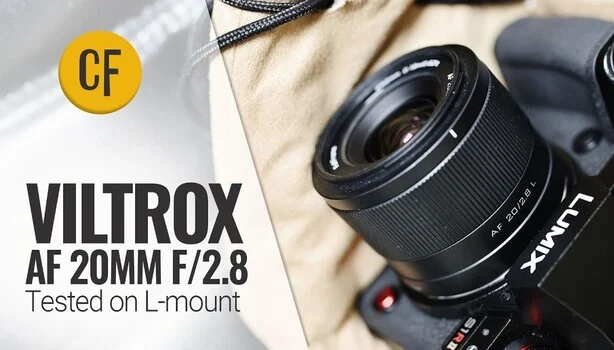
Viltrox has expanded its portfolio of cost-effective autofocus lenses with the release of the AF 20mm f/2.8 Air for the L-mount system, priced at an accessible $168. This introduction marks a significant development for L-mount shooters, providing one of the most budget-friendly full-frame 20mm autofocus lenses currently available on the market. The lens is part of a quartet of new Viltrox prime lenses made available for the L-mount system this week, reinforcing the company’s commitment to offering diverse and affordable optical solutions across various camera platforms.
Contextualizing Viltrox’s Market Strategy and the L-Mount Alliance
Viltrox, a Chinese lens manufacturer, has steadily carved out a niche in the photographic industry by delivering competitively priced, high-performance autofocus lenses for a range of mirrorless systems. Historically, the company has focused on Sony E-mount, Nikon Z-mount, and Fujifilm X-mount, earning a reputation for democratizing access to focal lengths and apertures that might otherwise be prohibitively expensive from first-party manufacturers. The expansion into the L-mount system is a strategic move that aligns with Viltrox’s overarching goal of broadening its market reach and catering to a wider audience of photographers and videographers.
The L-mount Alliance itself is a collaborative effort initiated by Leica Camera AG, later joined by Panasonic and Sigma, with subsequent additions including DJI, Ernst Leitz Wetzlar GmbH, Astrodesign, and Blackmagic Design. This alliance aims to establish a universal mirrorless lens mount standard, fostering interoperability and providing users with an expansive ecosystem of cameras and lenses from multiple manufacturers. While the L-mount has seen robust development from its founding members, particularly with high-end optics from Leica and Sigma, and versatile offerings from Panasonic, there has been a notable gap in the entry-level and budget-friendly segment for full-frame autofocus primes. Viltrox’s entry, particularly with a batch of four new primes, is poised to address this specific market demand, lowering the barrier to entry for many who might have found L-mount optics beyond their budget. This move enhances the overall attractiveness of the L-mount system, making it a more viable option for a broader spectrum of users, from enthusiasts to professionals seeking affordable secondary lenses.
In-Depth Review: Design, Build, and Initial Impressions
The Viltrox AF 20mm f/2.8 Air lens underwent rigorous testing on a borrowed Panasonic Lumix S1R Mark II, a camera renowned for its 44-megapixel full-frame sensor, providing a challenging platform to assess the lens’s optical capabilities. Esteemed lens reviewer Christopher Frost, known for his detailed and objective analyses, put the Viltrox optic through its paces. Frost had previously reviewed an E-mount variant of this lens, making this L-mount iteration a crucial test to determine consistency in performance across different mounting systems.
Weighing in at under 200 grams, the Viltrox AF 20mm f/2.8 Air lives up to its "Air" moniker, indicating its remarkably light and compact design. Despite its minimal weight, the lens conveys a solid feel in hand, a testament to its construction quality. It features a metal mount, which is a critical element for durability and secure attachment to the camera body, especially considering the frequent lens changes typical of professional workflows. A modern convenience integrated into the lens design is a USB-C port, strategically placed for future firmware updates. This allows Viltrox to continuously refine lens performance, address potential bugs, and add compatibility features without requiring users to send the lens in for service. This forward-thinking inclusion is increasingly common in third-party lenses and is highly valued by users.
However, certain design choices reflect the lens’s budget-conscious positioning. Notably, the Viltrox AF 20mm f/2.8 Air lacks weather-sealing. While this is a common omission in lenses at this price point, it means photographers need to exercise caution when shooting in challenging environmental conditions, such as rain, dust, or extreme humidity. The single focus ring, while turning smoothly, is constructed from plastic. Despite this, the autofocus motor performs admirably, operating quickly and nearly silently, which is a significant advantage for both still photography and video recording where unwanted operational noise can be detrimental. The combination of a lightweight design, fast autofocus, and silent operation makes the lens highly suitable for travel, street photography, and even casual vlogging setups where portability and discreet operation are paramount.
Performance Analysis: Image Quality and Optical Characteristics
Image quality, as is often the case with budget-friendly optics, presents a mixed narrative with the Viltrox AF 20mm f/2.8 Air. At its widest aperture of f/2.8, center sharpness is reported to be exceptionally high, approaching near-perfection with excellent contrast right from the outset. This indicates a well-corrected optical design in the central portion of the frame, making it suitable for subjects positioned centrally, such as portraits or focused details within a wider scene.
The corners, however, tell a different story. They exhibit a noticeable weakness that persists even when the lens is stopped down to f/4 or f/5.6. Christopher Frost attributes this characteristic primarily to field curvature, an optical aberration where the plane of sharpest focus is not flat but curved. When Frost refocused specifically on the edges of the frame, sharpness improved, confirming the presence of significant field curvature. This phenomenon implies that achieving critical sharpness across the entire frame simultaneously can be challenging, particularly for subjects that extend from the center to the edges, such as architectural shots or landscapes with prominent foregrounds and backgrounds. Photographers using this lens for such applications may need to employ techniques like focus stacking or accept a compromise in edge-to-edge sharpness.
Vignetting, or the darkening of the image corners, is pronounced at f/2.8 and never fully resolves even when stopped down significantly. This heavy vignetting can be a stylistic choice for some photographers, adding drama or drawing attention to the center of the frame, but for those seeking a uniformly lit image, it will necessitate post-processing correction. Furthermore, shooting in raw format reveals a distinct mustache distortion pattern. While in-camera corrections typically hide this aberration in JPEG files, raw shooters will need to apply lens profiles in their editing software to rectify it, adding an extra step to their workflow.
Despite these optical compromises, the lens boasts several commendable attributes. It delivers strong, well-defined sunstars when stopped down to f/8 and beyond, a desirable trait for landscape and architectural photographers capturing scenes with bright light sources. Coma, an aberration that distorts points of light into comet-like shapes, is controlled better than might be expected from a lens in this price category, making it a surprisingly capable option for night sky photography, especially given its wide 20mm focal length. The lens also features an impressive close-focusing distance of 19 cm, allowing photographers to get exceptionally close to their subjects, creating dramatic wide-angle perspectives with a degree of subject isolation, even with a relatively modest f/2.8 aperture for a wide-angle lens.
The Ascendance of the 20mm Focal Length
The 20mm focal length is steadily gaining traction as a preferred wide-angle option for full-frame photography, subtly displacing the long-standing dominance of 24mm. Christopher Frost aptly characterizes 20mm as "the new 24mm," a trend observable in the evolution of modern zoom lens designs, which increasingly commence at 20mm rather than 24mm. This shift is not arbitrary; it is driven by practical considerations for contemporary content creation.
For videographers, the additional width offered by a 20mm lens is invaluable, especially when employing digital stabilization. Features like in-body image stabilization (IBIS) or electronic stabilization often involve a slight crop into the frame to counteract camera shake. Starting at 20mm provides more visual information to begin with, ensuring that even after stabilization crops, a sufficiently wide field of view is retained. This allows for greater flexibility in post-production and ensures that the desired wide perspective is preserved.
In still photography, the 20mm focal length strikes a compelling balance. It is wide enough to impart a dramatic sense of scale, perspective, and immersion without descending into the extreme distortions often associated with ultra-wide or fisheye lenses. At 20mm, photographers can capture expansive landscapes, grand architectural shots, or dynamic street scenes, all while maintaining a relatively natural perspective that avoids making composition an arduous battle against exaggerated distortion. The Viltrox AF 20mm f/2.8 Air, with its compact size and remarkably low price point, significantly lowers the barrier for any photographer curious about exploring wider perspectives. Furthermore, Viltrox’s strategic decision to launch this focal length across multiple popular mirrorless mounts—Sony E, Nikon Z, Fuji X (though 20mm on APS-C equates to roughly 30mm full-frame equivalent), and now L-mount—ensures that this increasingly popular focal length is accessible to a broader user base across various camera systems simultaneously.
Practical Considerations and Copy Variation
One crucial practical detail for users of the Viltrox AF 20mm f/2.8 Air pertains to its 52mm filter thread. Due to the lens’s wide angle of view and relatively heavy native vignetting, it demands the use of very thin filters. Christopher Frost noted that even his slim Marumi circular polarizer introduced a discernible touch of corner shading. This implies that standard-thickness filters, which are more common, would exacerbate the existing vignetting problem, potentially leading to unacceptable dark corners or visible filter edges in the frame. Photographers planning to use filters with this lens should invest in ultra-slim or "nano" filters specifically designed for wide-angle lenses to mitigate these issues.
The bokeh, or background blur, produced by the lens is described as reasonably smooth. However, as is typical for wide-angle lenses, especially those with a maximum aperture of f/2.8, achieving significant background separation requires photographers to get very close to their subject. This characteristic is inherent to the physics of wide-angle optics and should be expected. Stopping down the lens to f/4 brings close-up shots back to full sharpness, indicating that the lens performs optimally for near subjects at slightly narrower apertures.
An interesting observation from Frost’s review concerns the possibility of copy variation. He suspects that the pronounced field curvature observed in the L-mount sample he tested might be specific to that particular copy. This inference is drawn from the fact that the E-mount sample of the same lens he tested earlier did not exhibit the same degree of field curvature. Copy variation is a known phenomenon in lens manufacturing, particularly with budget-oriented lenses, where minor deviations in element alignment during assembly can lead to differences in optical performance between individual units. This suggests that while the general characteristics discussed are likely representative, individual performance might vary slightly. Prospective buyers might consider purchasing from retailers with a flexible return policy to ensure they receive a well-performing copy.
Broader Market Implications and Future Outlook
The introduction of the Viltrox AF 20mm f/2.8 Air for L-mount carries significant implications for the photographic industry. For L-mount users, it represents a substantial expansion of affordable lens options, making the system more attractive to a wider demographic. Historically, L-mount lenses, especially full-frame autofocus primes, have tended to reside in the premium segment due to the brand positioning of Leica, Panasonic’s focus on high-performance optics, and Sigma’s commitment to high-quality Art series lenses. Viltrox’s entry democratizes access to key focal lengths, fostering greater inclusivity within the L-mount ecosystem. This move could potentially drive increased adoption of L-mount cameras by users who were previously deterred by the higher cost of entry-level lenses.
For Viltrox, this expansion solidifies its position as a major third-party lens manufacturer capable of supporting multiple complex mirrorless systems. By consistently delivering value-oriented lenses across various mounts, Viltrox strengthens its brand recognition and loyalty among photographers seeking performance without exorbitant price tags. This strategy also puts competitive pressure on established brands, potentially encouraging them to offer more diverse and affordable options in the future.
The broader market trend towards the 20mm focal length, facilitated by accessible lenses like the Viltrox AF 20mm f/2.8 Air, underscores the evolving needs of modern content creators. As digital stabilization becomes more prevalent and video capabilities in cameras continue to advance, the demand for wider fields of view that can withstand cropping will only grow. The affordability of lenses like this Viltrox offering ensures that photographers and videographers, regardless of their budget, can experiment with and leverage these contemporary focal lengths. The Viltrox AF 20mm f/2.8 Air, therefore, is not just another lens release; it is a signal of the ongoing democratization of advanced photographic tools and a testament to the dynamic evolution of the lens market.
