
 By Nila Kartika Wati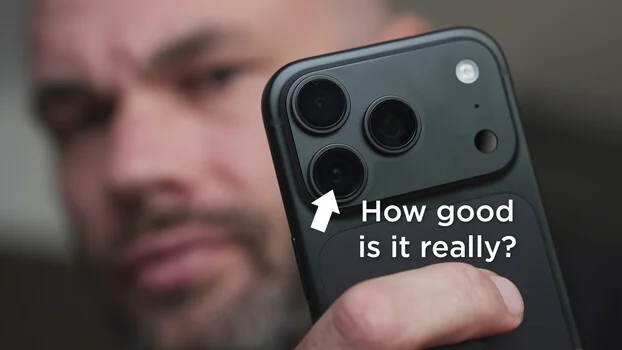
Following Apple’s highly anticipated keynote, the technological community eagerly awaited the real-world performance evaluation of the iPhone 18 Pro, particularly its new variable aperture lens. Initial predictions regarding its capabilities and limitations have now been rigorously tested, revealing a blend of confirmations and surprises as the device makes its way into reviewers’ hands. Comprehensive side-by-side comparisons with its predecessor, the iPhone 17 Pro, across various lighting conditions and aperture settings, offer critical insights into Apple’s latest photographic hardware and software innovations.
The Single Hardware Innovation: A Closer Look at the Main Lens
Apple’s keynotes are renowned for their selective emphasis, often highlighting only the most significant advancements. A long-standing principle among tech analysts suggests that features not explicitly mentioned as upgraded likely remain unchanged. This rule appears to hold true for the iPhone 18 Pro’s camera system. Extensive testing and corroboration with reviewers who engaged directly with Apple engineers confirm that the ultra-wide, telephoto, and front-facing cameras have been carried over directly from the iPhone 17 Pro without any hardware modifications.
Furthermore, a deeper dive into the specifications and comparative image analysis strongly suggests that the main camera itself retains the same sensor as its 17 Pro counterpart. If this assessment is accurate, the sole physical alteration to the iPhone 18 Pro’s primary imaging system resides within the optical pathway: specifically, the introduction of new glass elements and a sophisticated set of aperture blades positioned in front of the existing sensor. This focused upgrade underscores Apple’s strategic decision to enhance versatility through a variable aperture rather than pursuing a wholesale sensor or multi-camera redesign for this generation.
Unpacking the Variable Aperture: A Technical Overview
The iPhone 18 Pro’s main lens represents a significant departure from its predecessor by introducing a variable aperture mechanism, allowing it to dynamically adjust from f/1.48 to f/4. The iPhone 17 Pro, by contrast, featured a fixed aperture of f/1.78. Apple’s marketing prominently featured the f/1.48 setting, touting a "50 percent more light" capture capability compared to the f/1.78 lens. This claim is technically accurate, as a half-stop increase in aperture (from f/1.78 to f/1.48) indeed allows approximately 50% more light to reach the sensor, translating to improved low-light performance or faster shutter speeds under similar conditions.
The integration of a variable aperture in a smartphone is not entirely unprecedented; earlier devices like the Nokia 808 PureView and some Samsung Galaxy S-series phones (e.g., S9, S10) experimented with similar technology. However, Apple’s implementation marks a renewed commitment to optical flexibility within its premium smartphone lineup. The initial hypothesis among many photography enthusiasts was that this wider aperture would primarily serve to allow the lens to "breathe" in challenging low-light scenarios, while most standard shots would benefit from a slightly stopped-down setting (e.g., f/2 or f/2.8) to optimize sharpness and depth of field. This strategy aimed to leverage the lens’s sweet spot, mitigating the optical compromises often associated with extreme wide-open apertures.
Challenging Initial Assumptions: Wide-Open Performance Surprises
One of the most surprising findings from the rigorous testing concerned the performance of the iPhone 18 Pro’s lens at its widest aperture, f/1.48. Initial expectations, based on general optical principles that often see lenses perform sub-optimally at their maximum aperture, predicted a noticeable drop in sharpness and an increase in aberrations. However, comparative analysis between the iPhone 17 Pro at f/1.78 and the iPhone 18 Pro at f/1.48 revealed a far more refined optical performance than anticipated.
At the center of the frame, images captured by both phones exhibited remarkable similarity, with only a marginal, almost imperceptible, advantage potentially leaning towards the 17 Pro in highly magnified views (e.g., 400 percent zoom). This minimal difference defied predictions of a significant performance gap. While moving towards the corners of the frame, the 18 Pro at f/1.48 did exhibit the expected softening, a common characteristic of nearly all lenses at their widest settings, the degree of this softness was considerably less pronounced than hypothesized. This suggests that Apple’s optical engineers have achieved a commendable level of correction and design for the new lens elements, allowing for a surprisingly robust wide-open performance that pushes the boundaries of what is typically expected from smartphone optics.
Diffraction Concerns Allayed: The f/4 Performance
Another key area of scrutiny involved the performance at the narrowest aperture, f/4. In photography, diffraction is an optical phenomenon where light waves spread out as they pass through a small opening (aperture), leading to a reduction in image sharpness. This effect becomes more pronounced with smaller apertures and particularly noticeable with sensors featuring densely packed, smaller photosites, a characteristic of modern high-resolution smartphone sensors like the 48-megapixel units found in recent iPhones.
Given the compact sensor size typical of smartphones – often described as fingernail-sized – and the high pixel count, there was a strong expectation that shooting at f/4 would result in a visibly softer image due to diffraction. However, extensive testing, including extreme magnification, revealed that these concerns were largely unfounded. The f/4 setting did not exhibit the anticipated visible softening; in fact, images captured at f/4 often appeared marginally sharper than those at f/1.48. While an optimal aperture of around f/2.8 was identified for peak sharpness, the performance across the entire f/1.48 to f/4 range was remarkably consistent. This narrow performance band implies that in practical photography, discerning a difference in sharpness between these settings would be challenging for the average viewer, reinforcing the notion that the lens’s versatility, rather than a dramatic shift in peak optical quality, is its primary benefit.
Comparative Image Quality: A Familiar Landscape
Despite the optical improvements at the extreme ends of its aperture range, the overarching conclusion from direct comparisons is that in standard lighting conditions, the iPhone 18 Pro’s camera produces images largely indistinguishable from those of the iPhone 17 Pro. Numerous matching scenes, shot simultaneously on both devices, yielded photographs that to the critical eye showed no significant leap in overall image quality. This finding suggests that while the variable aperture adds a layer of technical sophistication and flexibility, it does not translate into a fundamentally different or superior aesthetic in typical everyday shooting scenarios. The core image processing, color science, and dynamic range capabilities appear to remain consistent with the previous generation, reinforcing the idea of an iterative rather than revolutionary hardware upgrade.
The Nuances of Depth of Field and Sensor Size
The introduction of a variable aperture naturally leads to questions about its impact on depth of field (DoF). It is crucial to distinguish between f-number as a measure of exposure and its role in determining DoF. While an f-number (e.g., f/4) denotes the same exposure value regardless of sensor size, the actual depth of field achieved is heavily dependent on the physical size of the sensor behind the lens. A smaller sensor inherently yields a greater depth of field at any given f-number compared to a larger sensor, such as those found in full-frame or medium format cameras.
For the iPhone 18 Pro, its variable aperture range of f/1.48 to f/4, when translated to full-frame equivalents in terms of depth of field, corresponds roughly to f/5.2 to f/14. This represents a genuine spread in DoF capabilities, but it firmly positions the iPhone’s camera at the deeper end of the DoF scale. Consequently, in outdoor environments or scenes with distant subjects, the visual difference in background blur between f/1.48 and f/4 is minimal and often imperceptible. Only in specific scenarios, such as when photographing subjects in close proximity, was a slight, though not dramatic, change in background separation observed.
A critical consideration for users attempting close-up photography with the iPhone 18 Pro’s main camera is its minimum focusing distance. The device intelligently, and often subtly, switches to the ultra-wide camera for macro shots if the main lens cannot achieve focus. If users are unaware of this automatic hand-off, their chosen aperture setting for the main lens becomes irrelevant, and the resulting image quality may be compromised by the different optical characteristics of the ultra-wide lens. This highlights the importance of understanding the phone’s computational photography decisions, particularly for specialized applications like macro work.
Addressing the Videography Perspective
A significant portion of the debate surrounding the variable aperture’s utility centers on its application in videography. Proponents argue that it enables filmmakers to maintain the "180-degree shutter rule" (shutter speed approximately double the frame rate for natural motion blur, e.g., 1/48s for 24fps video) across a wider range of lighting conditions. This is a valid application, as adjusting the aperture allows for exposure control without compromising the desired shutter angle.
However, a common misconception arises from misinterpreting f-numbers and equivalency charts. While the f/1.48 to f/4 range offers some flexibility, it is often insufficient to manage exposure in bright daylight while adhering to the 180-degree shutter rule. Shooting at 1/48th of a second and f/4 in direct sunlight would almost certainly result in severely overexposed footage. Consequently, videographers will still require neutral density (ND) filters, just as they did with previous iPhone models, to achieve cinematic motion blur in bright conditions.
Moreover, the increasing sophistication of computational videography raises questions about the necessity of optical solutions like variable apertures for certain effects. Software solutions, such as ReelSmart Motion Blur, can convincingly add motion blur in post-production. Given that modern iPhones already perform extensive real-time processing on video frames, Apple could potentially integrate computational motion blur directly into the camera pipeline, alleviating the need for users to manually manage shutter angles and external filters. This represents a potential future direction where software could effectively mimic optical phenomena, further blurring the lines between traditional and computational imaging.
The True Game-Changer: Native Manual Controls
Perhaps the most significant and universally welcomed advancement in the iPhone 18 Pro’s camera system is not a hardware feature but a software one: the long-awaited integration of manual control over shutter speed and aperture directly within the native camera application. While third-party camera apps have offered such controls for years, their utility has often been limited. Photos captured through these apps, when overriding Apple’s default computational pipeline (e.g., locking ISO or shutter speed), frequently exhibited significantly reduced dynamic range and overall image quality compared to the stock app. This is because Apple’s native camera leverages multi-frame capture and sophisticated blending algorithms to produce its signature "iPhone look."
With the 18 Pro, users can now directly manipulate aperture and shutter speed while still benefiting from Apple’s powerful computational photography engine. This capability empowers photographers with creative control without sacrificing image quality. Curiously, ISO remains an automatic setting, likely because the phone continues to capture multiple exposures at varying ISO values for blending, rendering a single user-selectable ISO value largely meaningless in this computational context. However, for videography, the absence of ISO control remains a point of contention, as visibility into the current ISO setting would greatly assist in assessing scene lighting and making informed exposure decisions.
Another highly valuable software addition is the ability to fine-tune and lock white balance within the native app. This feature is particularly impactful for videographers, as accurate white balance is crucial for consistent color grading and often a source of subtle dissatisfaction in automated settings. This new control streamlines workflows by eliminating the need to resort to third-party applications for fundamental color management. The frustrating aspect for many users of older devices is that these crucial software enhancements, despite being purely software-based, have not been extended to the iPhone 17 Pro, underscoring Apple’s strategy of tying new software features to its latest hardware releases to encourage upgrades.
Strategic Software Limitations and the Upgrade Dilemma
The iPhone 18 Pro’s camera system, while demonstrating surprising optical refinement in its new variable aperture and delivering crucial manual software controls, does not present a revolutionary leap in overall image quality for the average user. The performance at its extreme aperture settings exceeded low expectations, and the central range remains consistent with its predecessor. However, the lack of a "meaningful jump" in photographic output in everyday scenarios poses a critical question for consumers.
For users contemplating an upgrade specifically for camera performance from an iPhone 17 Pro, the consensus among reviewers remains consistent with previous years: it is likely unnecessary. The 18 Pro represents the pinnacle of Apple’s current smartphone camera technology, but its advancements over the immediately preceding model are incremental rather than transformative. The core experience, particularly in standard photographic conditions, remains largely the same. Conversely, individuals upgrading from phones several generations older (e.g., iPhone 15 Pro or earlier) will undoubtedly be thrilled by the substantial improvements in computational photography, low-light performance, and overall versatility that have accumulated over time.
Apple’s strategy appears to be a dual approach: offering a refined optical component (the variable aperture) while simultaneously unlocking more powerful software controls within its proprietary ecosystem. The decision to withhold these software enhancements from the 17 Pro, despite their apparent software-only nature, is a clear tactic to incentivize upgrades. This reinforces a broader trend in the smartphone industry where hardware innovations are increasingly paired with exclusive software features to maintain product differentiation and drive sales in a mature market. The iPhone 18 Pro, therefore, stands as a testament to Apple’s continuous, albeit often subtle, evolution in mobile imaging, primarily appealing to power users seeking granular control and those upgrading from significantly older devices.
