
 By admin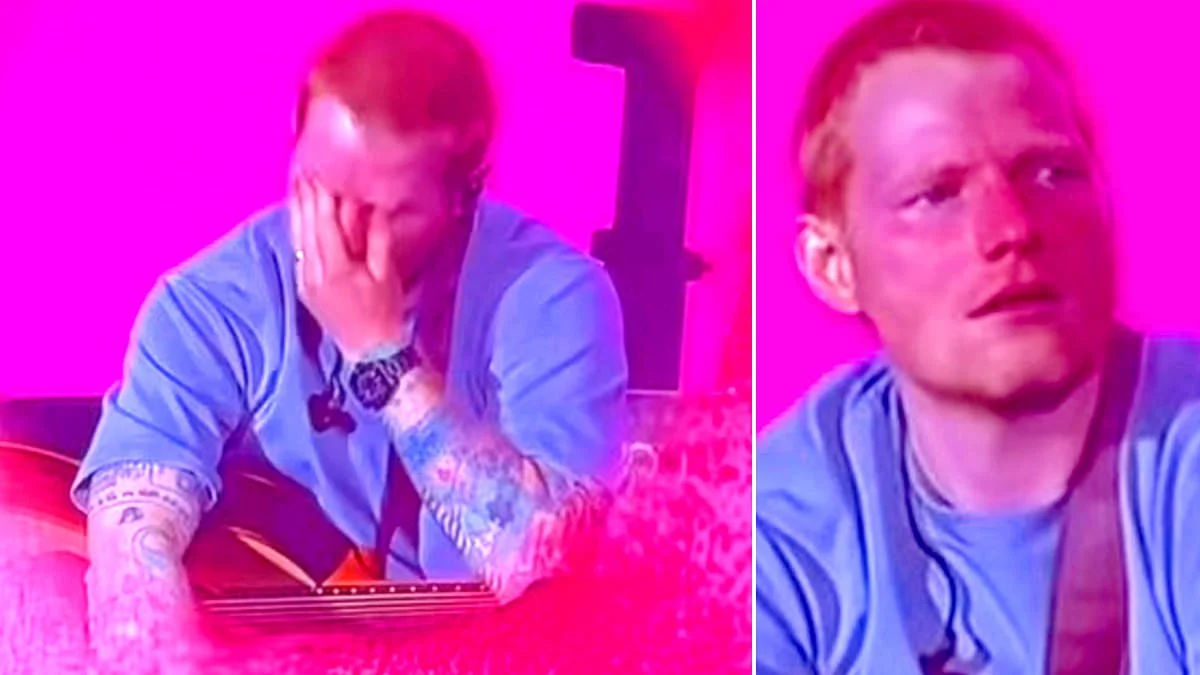
The global music landscape witnessed a rare moment of vulnerability and political discourse on Saturday night as British singer-songwriter Ed Sheeran brought his "Loop Tour" to Philadelphia’s Lincoln Financial Field. The 35-year-old artist, typically known for maintaining a strictly apolitical stance, broke down in tears twice during a performance that served as both a musical event and a public reckoning. Addressing a capacity crowd, Sheeran navigated the complexities of the Israel-Gaza conflict, the fallout from the removal of his opening act, Macklemore, and the subsequent departure of several other supporting artists.
The evening was marked by a palpable tension between the singer’s desire to provide a "safe space" for entertainment and his perceived necessity to address the humanitarian crisis in the Middle East. Sheeran’s emotional display occurred at both the commencement and the conclusion of the concert, reflecting the immense pressure facing high-profile entertainers in a polarized global climate.
The Philadelphia Address: A Duality of Music and Politics
Sheeran opened the Saturday night concert with an uncharacteristic monologue, signaling a departure from his long-standing policy of avoiding political commentary. Visibly moved, he informed the audience that he could no longer remain silent regarding the ongoing violence in Israel and Gaza. He described the situation as "catastrophic and unjustifiable," acknowledging the "horrific" events of October 7 in Israel while simultaneously condemning the scale of devastation and loss of civilian life in Gaza.
As the show concluded, the emotional weight of the evening appeared to peak. Sheeran paused to compose himself before thanking the Philadelphia fans for their presence. "The world is a scary place right now," he told the crowd. "America is a scary place right now. This gives hope." However, he also issued a poignant apology to the parents in attendance, recognizing that many families had purchased tickets expecting an evening of pure escapism rather than a discourse on Middle Eastern geopolitics.
"The one thing that I would like to apologize for is the first bit of the show where it wasn’t about music and I had to talk," Sheeran stated. "I understand that people have children here and I understand that families didn’t buy a ticket to hear that first bit of the show, but that was something I felt like I needed to say."
The Catalyst: The Removal of Macklemore and Stadium Ultimatums
The emotional intensity of the Philadelphia show cannot be viewed in isolation from the events of the preceding weeks. The "Loop Tour" has been plagued by controversy since the removal of rapper Macklemore (Benjamin Haggerty) from the lineup. Macklemore, a vocal supporter of the "Free Palestine" movement, was reportedly ousted following pressure from stadium owners and corporate stakeholders.
According to statements attributed to Macklemore, Sheeran had informed him of an ultimatum issued by Robert Kraft, owner of the Kraft Group and Gillette Stadium. The rapper alleged that Kraft had mobilized other stadium owners, threatening to bar the tour from their venues if Macklemore remained on the bill. This development sparked a fierce debate over corporate censorship and the limits of artistic expression within privately owned, multi-million dollar venues.
On Tuesday, Sheeran released a statement via Instagram attempting to clarify his position. He asserted that the decision to remove Macklemore was made by the tour’s promoters rather than himself personally. He emphasized his commitment to his fans and the hundreds of crew members and support acts whose livelihoods depend on the tour’s continuation. "I would never let down the fans who had made plans, nor would I abandon the touring crew," Sheeran noted, while acknowledging his own "personal views" which he had previously chosen not to share publicly.
The Ripple Effect: Mass Departure of Support Acts
The removal of Macklemore triggered a domino effect among the tour’s other supporting artists. Finneas O’Connell, the Academy Award-winning producer and brother of Billie Eilish, was the first to pull out in solidarity. In a public statement, Finneas remarked that "artists must not be silenced when they speak up for the oppressed," a sentiment that resonated through the industry.
Following Finneas’s lead, several other acts withdrew from the tour:
- Lukas Graham: The Danish pop-soul band cited ethical concerns regarding the tour’s management.
- Beoga: The Irish folk band, long-time collaborators of Sheeran, withdrew their support in a move that signaled deep internal divisions within Sheeran’s professional circle.
- Aaron Rowe: The rising singer-songwriter also exited the lineup, citing a desire to stand with his peers.
These departures left Sheeran to perform the Philadelphia show largely solo, a stark contrast to the collaborative nature of his previous stadium tours. The logistical and financial implications of these withdrawals are significant, as tour organizers have had to scramble to fill slots or adjust the show’s format, all while facing a surge of ticket resales on the secondary market.
Chronology of the Controversy
The escalation of the "Loop Tour" crisis followed a specific timeline of events that transformed a standard concert series into a focal point for political activism:
- Early October 2025: Macklemore makes public comments in support of a "Free Palestine" during a performance, drawing both praise and sharp criticism.
- Mid-October 2025: Reports emerge of tension between tour promoters and venue owners, specifically regarding the Gillette Stadium date in Massachusetts.
- Late October 2025: Macklemore is officially removed from the tour. Sheeran issues a statement attributing the decision to promoters and citing the need to protect the tour’s viability.
- October 28 – November 1, 2025: Finneas, Lukas Graham, and Beoga announce their withdrawals. Pro-Palestine activists begin organizing protests at upcoming tour stops.
- November 2, 2025: Protesters gather outside Lincoln Financial Field in Philadelphia. Ticket prices on secondary markets drop to as low as $24 as some fans seek to divest from the event.
- November 2, 2025 (Evening): Sheeran delivers his emotional address in Philadelphia, apologizing for his previous silence and condemning the humanitarian crisis in Gaza.
Market Reaction and Public Sentiment
The controversy has had a measurable impact on the tour’s commercial performance. While Sheeran remains one of the world’s most successful touring artists, the Philadelphia stop saw a notable shift in market dynamics. Before the show commenced, tickets on platforms like StubHub and SeatGeek were listed for as little as $24, a significant decrease from the original face value and usual secondary market premiums associated with a Sheeran stadium show.
Public sentiment remains sharply divided. On one hand, Sheeran has faced criticism from activists and fellow musicians, such as Pink Floyd’s Roger Waters, who accused him of failing to take a stand against corporate censorship. On the other hand, a segment of his fan base has expressed support for his attempt to maintain the tour’s primary focus on music and unity, appreciating his apology to parents who felt the political discourse was inappropriate for a family-oriented event.
Analysis: The Intersection of Art, Commerce, and Human Rights
The events in Philadelphia underscore a growing challenge for global entertainers. In an era of instant digital communication and heightened social awareness, the "neutral artist" is becoming an increasingly difficult role to maintain. Sheeran’s struggle highlights the tension between two competing responsibilities: the contractual and financial obligation to fulfill a multi-million dollar tour, and the moral pressure to address global atrocities.
Furthermore, the involvement of stadium owners like Robert Kraft introduces a complex layer of corporate governance into the arts. If venue owners can dictate the political content or the personnel of a touring act, it sets a precedent that could fundamentally alter the independence of performing artists. Sheeran himself addressed this concern during his speech, stating, "I am deeply worried about the idea that venues’ pre-approved content performance… it should never happen in the free world."
Future Implications for the Loop Tour
As Ed Sheeran continues his tour, the industry will be watching closely to see if his Philadelphia address has successfully mitigated the backlash or if the departures of his support acts will continue to haunt the remaining dates. Sheeran has vowed to continue, stating, "I will never stop doing this. I love doing this so much."
However, the tour’s identity has been irrevocably changed. What was intended to be a celebration of "unity, love, and family" has become a case study in the difficulties of navigating the most complex political issues on the planet. Sheeran’s decision to speak "from the heart" in Philadelphia may have provided him with personal catharsis and a path forward, but the broader questions regarding free speech in entertainment and the role of corporate interests in the arts remain unresolved.
The "Loop Tour" serves as a reminder that even for the world’s biggest stars, the stage is no longer a vacuum. The echoes of global conflict, the demands of social justice, and the influence of corporate power are now as much a part of the performance as the music itself. For Ed Sheeran, the road ahead involves balancing these discordant notes while attempting to keep his message of unity alive in a world he himself described as "scary."
