
 By Nila Kartika Wati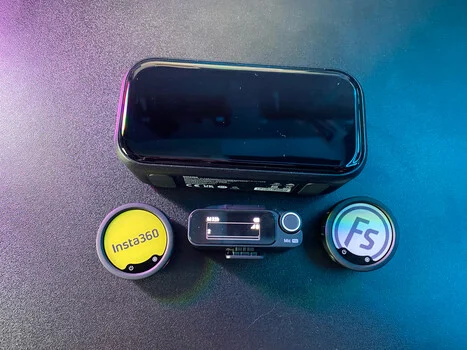
The wireless microphone market, a critical segment for content creators, broadcasters, and professional videographers, has long been dominated by established players offering robust and reliable solutions. The entry of the Insta360 Mic Pro marks a significant development, as it seeks to carve out its niche not merely as another audio capture device, but as a comprehensive system designed for multifaceted contemporary content creation workflows. This strategic move positions Insta360, traditionally known for its innovative action cameras, as a serious contender in the professional audio landscape, challenging the status quo set by industry giants like DJI and Rode. The fundamental question surrounding the Mic Pro isn’t its basic functionality—as modern wireless systems generally perform well—but rather its capacity to deliver unique advantages that compel creators to choose it over deeply entrenched alternatives.
Navigating a Crowded Market: The Competitive Landscape
The global market for wireless microphones has seen consistent growth, driven by the proliferation of digital content, live streaming, and remote production. Major players have invested heavily in R&D, leading to advancements in signal stability, audio fidelity, and user experience. DJI’s offerings, often lauded for their seamless integration with their drone and camera ecosystems, and Rode’s extensive range of professional audio equipment, known for its robust build and pristine sound, represent formidable benchmarks. For any new entrant, differentiating a product requires more than just meeting industry standards; it demands innovation that addresses emerging creator needs or resolves persistent workflow bottlenecks. Insta360’s decision to enter this arena suggests a calculated approach, leveraging its reputation for user-centric design and ecosystem integration.
Unprecedented Versatility: A Core Design Philosophy
One of the most striking attributes of the Insta360 Mic Pro, immediately apparent upon practical application, is its exceptional versatility. This system transcends the conventional role of a simple clip-on lavalier microphone, adapting seamlessly to a variety of recording scenarios. Its design allows for traditional clip-on usage, ideal for interviews or on-camera presentations, where discreet placement and clear voice capture are paramount. However, its capabilities extend far beyond this. In specific situations, the Mic Pro can effectively serve as a replacement for a more cumbersome shotgun microphone, offering directional audio capture without the need for additional bulky equipment. This flexibility is particularly beneficial for creators operating in dynamic environments where space and setup time are limited.
Moreover, the system’s ability to connect directly to a diverse array of devices—including smartphones and computers—significantly broadens its utility. This direct connectivity eliminates the need for additional adapters or complex audio interfaces when switching between different recording platforms, a common scenario for modern content creators who frequently transition between filming with dedicated cameras, capturing social media content on phones, or engaging in computer-based tasks like podcasting or video conferencing. This multi-device compatibility positions the Mic Pro as a central audio tool, simplifying gear management and streamlining workflows for individuals constantly moving between various content creation modalities.
Innovative Interface: The E-Ink Display Advantage
A notable design innovation distinguishing the Insta360 Mic Pro transmitters is the incorporation of color E-Ink displays. Initially, this feature might appear to be a cosmetic novelty, but its practical benefits quickly become evident in real-world use. Unlike conventional LCD or OLED screens, E-Ink technology consumes power only when the display content changes, meaning that once information is displayed, it remains visible without continuously drawing power from the transmitter’s battery. This translates to significantly extended battery life for the transmitters, a crucial advantage for prolonged recording sessions in the field where recharging opportunities are scarce.
Beyond power efficiency, the E-Ink displays offer a level of customization previously uncommon in wireless microphone systems. Through the dedicated Insta360 app, users can personalize the information displayed on each transmitter, allowing for quick and intuitive identification. In multi-transmitter setups, where distinguishing between individual units can become confusing, especially during rapid deployment, customized labels or icons provide immediate visual cues. This seemingly minor enhancement profoundly improves operational efficiency, eliminating the need to connect to an app or perform trial-and-error checks to ascertain which transmitter is assigned to which speaker. It represents a thoughtful design choice that directly addresses a common pain point for creators working with multiple audio sources.
The accompanying charging case, a fundamental component of any portable wireless system, exhibits robust construction designed to withstand the rigors of travel and frequent use. Its solid build quality suggests durability, making it suitable for being transported within a camera bag without undue concern for damage. However, a minor logistical oversight concerns the lack of integrated storage for essential accessories such as connection cables and windshields. While the transmitters and receiver have dedicated slots, the absence of a compartment for these smaller, yet critical, components necessitates separate storage, slightly detracting from the "all-in-one" portability ideal. Addressing this in future iterations would further enhance the system’s practical utility.
Audio Fidelity and Advanced Features: The Foundation of Performance
Ultimately, the true measure of any microphone system lies in its audio quality. Despite a plethora of innovative features, if the captured sound is subpar, the system’s utility is severely compromised. The Insta360 Mic Pro addresses this fundamental requirement with several key advancements, most notably its support for 32-bit float recording. This advanced recording format offers an exceptionally wide dynamic range, effectively eliminating the risk of digital clipping (audio distortion from signals that are too loud) and significantly mitigating concerns about signals recorded too quietly falling into the noise floor. For content creators working in unpredictable environments, where audio levels can fluctuate wildly—from sudden shouts to hushed whispers—32-bit float provides an invaluable "safety net," offering immense flexibility in post-production to recover and normalize audio levels without introducing artifacts or unwanted noise. This capability is particularly empowering for solo creators or field journalists who may not have the luxury of a dedicated audio engineer monitoring levels in real-time.
Initial assessments of the microphone’s inherent sound profile indicate a clean and clear output, though with a slight tendency towards a mid-heavy characteristic. While not inherently problematic, this coloration suggests that recordings might benefit from minor equalization adjustments in post-production to achieve a more neutral or desired tonal balance, depending on the speaker’s voice and the specific content requirements. Once properly equalized, however, the Mic Pro demonstrates its capacity to deliver high-quality audio competitive with more established high-end wireless systems, suitable for professional broadcast, documentary, and cinematic applications.
A standout feature is the innovative three-microphone array within each transmitter, which allows for dynamic selection between multiple polar patterns: Cardioid, Figure-8, Omnidirectional, and a specialized Voice Focus mode. This is a significant departure from standard lavalier microphones, which typically offer only an omnidirectional pattern.
- Omnidirectional: Captures sound equally from all directions, ideal for capturing ambient sounds or when the speaker’s position relative to the mic may vary.
- Cardioid: Primarily captures sound from the front, rejecting sounds from the sides and rear, excellent for isolating a single speaker and reducing background noise.
- Figure-8 (Bidirectional): Captures sound equally from the front and rear, rejecting sounds from the sides, perfect for two-person interviews conducted face-to-face.
- Voice Focus: A proprietary mode likely utilizing advanced signal processing to further enhance vocal clarity and intelligibility, specifically tailored for speech in potentially noisy environments.
This multi-pattern capability dramatically enhances the system’s flexibility, enabling creators to optimize audio capture for diverse situations beyond simple "talking head" videos.
Advanced Noise Cancellation: A Game Changer for Outdoor Recording
Perhaps one of the most compelling strengths of the Insta360 Mic Pro is its sophisticated AI noise cancellation system. Offering two distinct levels—"weak" and "strong"—this feature excels at reducing unwanted background noise without compromising the natural quality of the human voice. The critical challenge for any noise cancellation technology is to achieve effective noise reduction without introducing an artificial, "processed" sound to the primary audio source, which can be as distracting as the original noise itself. The Mic Pro’s implementation largely succeeds in this regard, adeptly minimizing environmental distractions while maintaining vocal clarity and a relatively natural timbre.
For content creators frequently recording outdoors, this capability is invaluable. Wind noise, traffic sounds, distant conversations, and general environmental ambience are common culprits that can quickly degrade audio quality, necessitating extensive and often time-consuming post-production work. The Mic Pro’s ability to effectively mitigate these challenges at the point of capture significantly streamlines the editing process and improves the overall quality of field recordings. This feature alone positions the Mic Pro as a highly attractive option for vloggers, mobile journalists, and documentary filmmakers who regularly face unpredictable acoustic environments.
Range and Connectivity: Understanding Real-World Performance
While Insta360 advertises an impressive maximum range of up to 400 meters, it is crucial to approach such headline figures with a practical understanding of real-world wireless performance. As with most 2.4 GHz wireless systems, actual operational range can be significantly influenced by environmental factors. During testing, instances of signal dropouts were observed when the transmitter’s position relative to the receiver was obstructed by the user’s body. This phenomenon is not unique to the Mic Pro but is a common characteristic of 2.4 GHz transmissions, where the human body can act as a significant barrier to radio signals, particularly when line of sight is compromised or during movement.
For creators involved in landscape videography or dynamic on-location shoots, this necessitates careful consideration. While direct, unobstructed line-of-sight communication between the transmitter and receiver typically yields stable results, scenarios involving the subject walking away from the camera, turning their back, or placing considerable distance between themselves and the receiver can lead to signal degradation. Therefore, while the theoretical 400-meter range suggests broad coverage, practical application dictates a more cautious approach, emphasizing optimal placement and maintaining line of sight where possible to ensure consistent audio capture. This highlights the importance of understanding the physics of 2.4 GHz wireless transmission rather than solely relying on advertised maximums.
Ecosystem Integration: A Strategic Advantage for Insta360 Users
A significant strategic advantage of the Mic Pro, particularly for existing users, is its seamless integration within the Insta360 camera ecosystem. Certain compatible Insta360 cameras can establish a direct connection with the Mic Pro transmitters, bypassing the need for the dedicated receiver unit. This capability dramatically simplifies the setup, reducing the number of individual components required, mounted, and managed. For creators striving for a minimalist, lightweight, and efficient filming rig—especially in run-and-gun scenarios—eliminating the receiver unit from the camera setup is a substantial benefit.
This direct connectivity not only streamlines the physical configuration but also enhances the overall user experience, allowing creators to focus more on content creation rather than technical setup. It exemplifies Insta360’s commitment to building a cohesive and user-friendly ecosystem, where different products complement each other to offer a more integrated and efficient workflow. For those already invested in Insta360 cameras, this integration presents a compelling reason to choose the Mic Pro, maximizing the utility of their existing gear.
Strategic Positioning and Broader Impact
The Insta360 Mic Pro is clearly positioned not as a niche product but as a versatile audio solution for a broad spectrum of content creators who operate across varied environments and platforms. It caters specifically to individuals who frequently transition between different recording devices—from professional cameras to smartphones and computers—and who require a single, adaptable microphone system to cover all these needs without investing in multiple specialized units. Its feature set, combining high-quality audio with 32-bit float recording, multiple polar patterns, and effective AI noise cancellation, makes it particularly well-suited for dynamic, outdoor, and mobile content creation.
The product’s design ethos suggests Insta360’s ambition to compete head-on with established names in wireless audio, moving beyond reliance solely on its brand recognition in the action camera market. The emphasis on practical features like the E-Ink display, robust noise cancellation, and flexible connectivity underscores a commitment to addressing real-world creator challenges. While minor improvements could be considered—such as integrated accessory storage in the charging case and a slightly more neutral sound profile out-of-the-box—these do not detract significantly from the system’s overall value proposition.
In conclusion, the Insta360 Mic Pro presents a very convincing option in the competitive wireless microphone market. Its blend of commendable audio quality, exceptional noise cancellation, innovative E-Ink displays, and remarkable versatility across devices positions it as a strong contender. For creators within the Insta360 ecosystem, the direct camera connectivity offers an undeniable advantage. For others, its ability to seamlessly integrate into diverse workflows, adapting to different cameras, phones, and computers without requiring multiple systems, makes it a highly recommendable choice. The Mic Pro signifies Insta360’s serious foray into professional audio, demonstrating that it can deliver a comprehensive, high-performing system capable of meeting the rigorous demands of modern content creation.
