
 By admin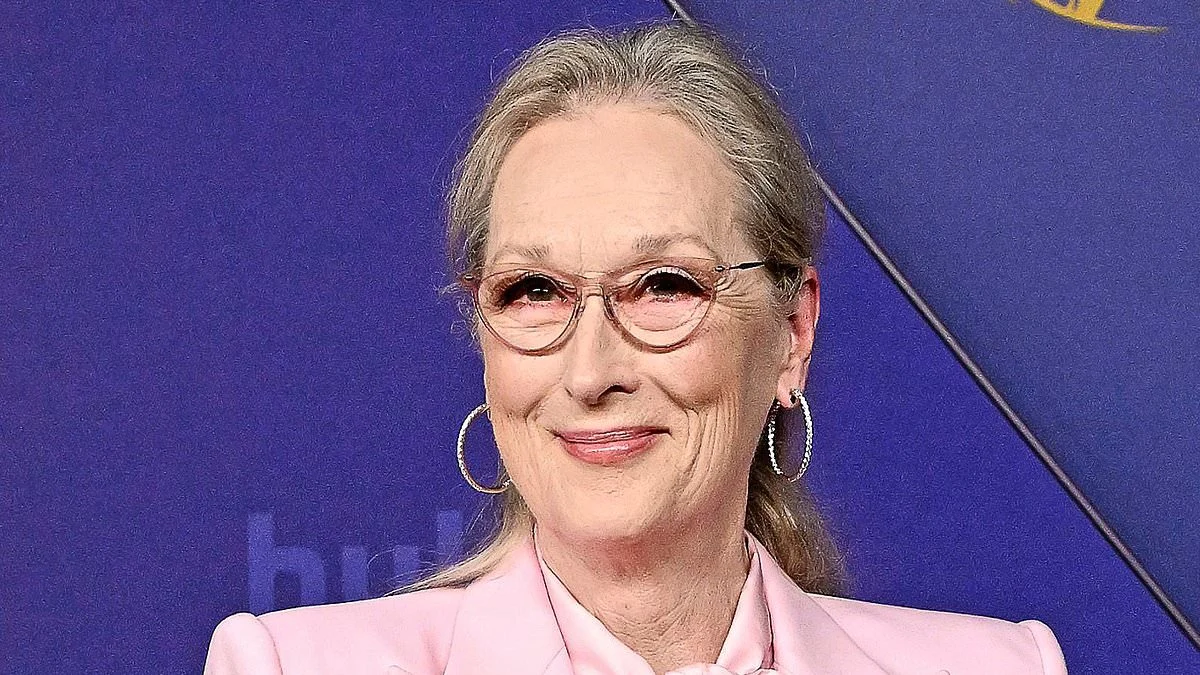
The announcement that Academy Award-winning actress Meryl Streep has been cast to voice Aslan in Netflix’s upcoming adaptation of The Chronicles of Narnia has ignited a significant cultural and theological debate. Directed by Greta Gerwig, the film, titled The Magician’s Nephew, is a reimagining of C.S. Lewis’s seminal work, focusing on the origin story of the magical realm. However, the decision to cast a woman in the role of Aslan—a character traditionally depicted as a male lion and a literary incarnation of Jesus Christ—has drawn sharp criticism from Christian groups and long-time fans of the series, who view the move as an unnecessary "gender swap" driven by modern social ideologies.
The project is currently slated for a theatrical release on February 12, 2027, followed by a streaming debut on Netflix on April 2, 2027. As the first major adaptation of The Magician’s Nephew, the film represents a pivotal moment for Netflix, which acquired the film and television rights to the entire Narnia library in a landmark 2018 deal. Despite the anticipation surrounding Gerwig’s creative vision, the casting of Streep, 77, has overshadowed much of the early production buzz, raising questions about fidelity to the source material and the intersection of religious symbolism with contemporary Hollywood storytelling.
The Theological Significance of Aslan in C.S. Lewis’s Canon
To understand the intensity of the backlash, one must look at the specific role Aslan plays within the Narnian universe. C.S. Lewis, a renowned Christian apologist and scholar, did not view Aslan as a mere allegory for Christ, but rather as a "supposal." In his own writings, Lewis explained that he asked himself, "What might Christ become like if there really were a world like Narnia, and He chose to be incarnate and die and rise again in that world as He has done in ours?"
Consequently, Aslan is depicted throughout the seven books as the "King of Kings" and the "Son of the Emperor-Beyond-the-Sea." His masculinity is a central tenet of this portrayal, reflecting the traditional Christian view of Jesus of Nazareth. Critics of the casting argue that by changing the gender of the voice actor, the production risks severing the character’s connection to its theological roots.
Political commentator Isabel Brown summarized this sentiment on social media, stating, "Aslan is more than an allegory for Christ; he is how the creatures of Narnia experience Christ in their world just as we experience Jesus Christ as an incarnate man in ours. To cast Meryl Streep as Aslan is a slap in the face to the genius of Lewis, but also a deliberate mockery of Christianity."
Greta Gerwig’s Creative Vision and the David Bowie Influence
Director Greta Gerwig, whose previous works include the critically acclaimed Little Women (2019) and the global phenomenon Barbie (2023), has defended the casting choice by focusing on the ethereal and "cosmic" nature of the character. In a recent interview with Empire, Gerwig explained that she sought a performer who could embody a rare combination of "wisdom of experience" and "fresh wonder."
"I wanted someone who was profound but not pretentious, who had gravitas but not morose self-seriousness," Gerwig told the outlet. She emphasized that Streep’s age and legendary status in the acting world made her a unique fit for a character that exists outside the traditional bounds of mortality. "I wanted someone who was older than 70… and also to be one of the greatest actors to ever do it. That list is not a long one."
Furthermore, Gerwig revealed an unconventional inspiration for her version of Aslan: the late singer David Bowie. This aesthetic choice suggests a more androgynous or avant-garde interpretation of the Great Lion, departing from the rugged, patriarchal portrayal seen in previous adaptations. While some fans expressed curiosity about this "wild combination," others viewed it as further evidence that the film is drifting too far from Lewis’s original intent.
Chronology of Narnia on Screen: From Neeson to Streep
The history of The Chronicles of Narnia in cinema has been marked by both massive commercial success and creative challenges. The modern era of Narnia films began in 2005 with The Lion, the Witch and the Wardrobe, produced by Walden Media and distributed by Disney.
- 2005: The Lion, the Witch and the Wardrobe is released, featuring Liam Neeson as the voice of Aslan. The film is a massive hit, grossing over $745 million worldwide.
- 2008: Prince Caspian follows, though it sees a dip in box office returns, earning approximately $419 million.
- 2010: The Voyage of the Dawn Treader is released by 20th Century Fox after Disney dropped the franchise. It earns $415 million.
- 2018: Netflix announces a multi-year deal with the C.S. Lewis Company to develop films and series based on the books.
- 2023: Greta Gerwig is officially attached to write and direct at least two Narnia films.
- 2024: Reports of Meryl Streep’s casting as Aslan emerge, sparking immediate public discourse.
Liam Neeson’s portrayal of Aslan was widely praised for its deep, resonant authority, which many fans felt captured the "terrifying but good" nature of the character described in the books. The shift to Streep represents a fundamental change in the auditory profile of the character, moving from a bass-heavy, paternal tone to a more lyrical and potentially maternal one.
Social Media Reactions and the "Woke" Controversy
The reaction on platforms like X (formerly Twitter) has been largely polarized. A significant portion of the discourse centers on the term "woke," a colloquialism often used to describe perceived progressive overreach in media.
One user commented, "Stripping the Christian themes out of Narnia leaves you with something that is a completely different story. Aslan is based on the story of Jesus. Jesus is male, and Aslan is obviously a male lion." Another fan addressed Streep directly: "Dear Meryl Streep… They are using you and your good name to blaspheme Christians. Is this what you want to be remembered for?"
Conversely, a segment of the audience has defended the casting, arguing that a voice-over role for a mythical creature does not necessarily dictate the character’s gender within the narrative. They point to Streep’s immense range and Gerwig’s track record of revitalizing classic stories with depth and nuance. "Meryl Streep voicing Aslan with a David Bowie-inspired design? That is such a wild combination, but I’m very curious to see how Greta Gerwig pulls it together," one supporter noted.
Strategic Implications for Netflix and the Narnia Brand
Netflix’s investment in the Narnia franchise is one of its most ambitious intellectual property plays to date. By starting with The Magician’s Nephew—the sixth book published but the first in internal chronological order—Gerwig is attempting to build the world from its literal creation. The book details the origins of the wardrobe, the lamppost, and the White Witch (Jadis).
However, the streaming giant faces a delicate balancing act. The Narnia books have sold over 100 million copies and remain a staple of Christian literature and children’s fantasy. Alienating the core Christian demographic, which historically bolstered the box office of the 2005 film, could pose a financial risk. The "Go Woke, Go Broke" narrative, often cited by critics of modern Hollywood, refers to the potential for significant financial losses when a franchise pivots away from its traditional audience to satisfy progressive trends.
Industry analysts suggest that Netflix may be betting on Gerwig’s ability to attract a broader, more secular audience that values prestige filmmaking over theological accuracy. Following the $1.4 billion success of Barbie, Gerwig is one of the few directors with the "blank check" status required to make such bold creative departures.
Comparative Analysis: The "Incarnation" vs. The "Allegory"
The debate also touches upon literary theory. As noted by author Louis Markos in A To Z With C.S. Lewis, the distinction between allegory and incarnation is vital. If Aslan were merely an allegory, his gender might be seen as incidental. However, if he is the "Christ of Narnia," his male identity becomes a point of doctrinal importance for many readers.
In the world of talking animals and living trees, Lewis chose a lion—the "King of Beasts"—to represent the Second Person of the Trinity. In nature, the male lion is distinguished by its mane and its role as a protector, imagery Lewis utilized to convey the "Lion of Judah" motif found in the Bible. Critics argue that a female voice inherently alters this biological and symbolic hierarchy, potentially confusing the "cosmic" order Lewis established.
Conclusion and Future Outlook
As production continues on The Magician’s Nephew, the conversation surrounding Meryl Streep’s casting is unlikely to subside. For Netflix, the controversy provides a double-edged sword: while it ensures the film remains a topic of intense public interest, it also risks a pre-emptive boycott from a segment of the audience that views the adaptation as a subversion of a beloved classic.
The ultimate success of the film will likely depend on whether Gerwig can reconcile her "Bowie-inspired" artistic sensibilities with the profound moral and spiritual weight of Lewis’s text. Whether Streep’s Aslan will be accepted as a "wise and wondrous" creation or rejected as a "deliberate mockery" will remain one of the most watched storylines in the lead-up to the 2027 release.
For now, the project stands as a high-stakes experiment in how far a classic work of literature can be stretched before it loses the essence that made it a masterpiece in the first place. With three years left until the film reaches audiences, both the filmmakers and the fans are bracing for a long and spirited debate over the soul of Narnia.
