
 By Nila Kartika Wati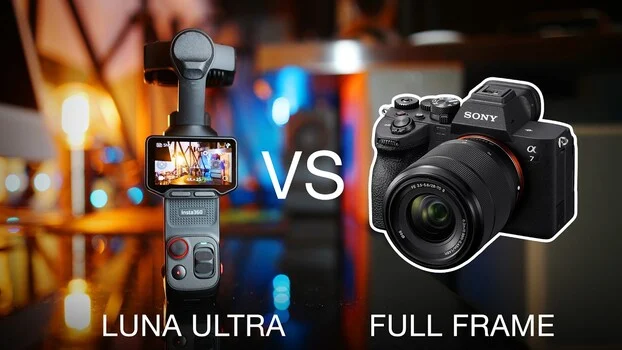
The landscape of portable video production is undergoing a significant transformation with the introduction of devices that challenge long-held limitations. Historically, pocket cameras, celebrated for their convenience, have often demanded a trade-off in creative control, primarily through a fixed wide-angle perspective and the hope that post-production could salvage footage. This paradigm is now being robustly questioned by innovations such as a dual-lens system featuring optical zoom and a wirelessly detachable screen, a combination that addresses multiple traditional compromises simultaneously.
This compelling case for a new era in compact filmmaking is comprehensively articulated through the Ben Harvey Photography YouTube channel, where seasoned architect and photographer Ben Harvey provides an in-depth assessment of the Insta360 Luna Ultra. Harvey, a creator with nearly a decade of experience documenting his work and insights, particularly with portable devices like the DJI Pocket 3, offers a candid and experienced perspective on what he terms the inherent "compromise" of convenience in small cameras. His analysis suggests that the Luna Ultra represents a significant departure from this norm, positioning itself as a potent tool for creators seeking professional-grade results without the burden of a large, complex setup.
Technical Innovation: A Dual-Lens System and Optical Zoom
At the core of the Insta360 Luna Ultra’s disruptive potential lies its sophisticated imaging architecture. The camera integrates two high-resolution 8K sensors, enabling a versatile dual-lens configuration. The primary lens is a 20mm f/1.8 unit paired with a substantial 1-inch sensor, a combination typically found in larger, more professional compact cameras, offering superior low-light performance and dynamic range. Complementing this is a 60mm f/2.8 telephoto lens, mounted on a slightly smaller yet still capable sensor, providing a crucial capability: optical zoom.
This optical zoom functionality is where the Luna Ultra truly distinguishes itself from its predecessors and many contemporaries in the pocket camera segment. Unlike digital zoom, which merely crops and interpolates pixels, optical zoom physically adjusts the lens elements to achieve magnification, preserving image quality and detail. Harvey’s demonstration vividly illustrates the power of the 60mm lens, showcasing a level of background separation – often referred to as bokeh – that is simply unattainable with fixed wide-angle pocket cameras. This ability to isolate subjects from their backgrounds lends a significantly more cinematic and professional aesthetic to footage, moving beyond the flat, all-in-focus look often associated with smaller cameras.
Furthermore, the camera’s 8K sensors provide an additional layer of flexibility. Even at the 60mm focal length, Harvey demonstrates the capacity to push further into a six-times digital crop without a significant degradation in perceived quality, all while the camera’s integrated gimbal maintains smooth tracking of the subject. This combination of optical telephoto and high-resolution digital cropping offers an unprecedented range of framing options for a device of this size.
To underscore its image quality prowess, Harvey conducts a compelling side-by-side comparison, pitting the Luna Ultra against a professional-grade setup: a Sony a7 IV mirrorless camera paired with a Sony 20-70mm f/4 lens, both recording in 4K. The central question posed by this comparison is whether the quality gap, if any, justifies the considerable bulk and complexity of carrying the larger mirrorless rig. This directly speaks to the Luna Ultra’s ambition to bridge the performance divide between professional cameras and ultra-portable devices.
Beyond image capture, the Luna Ultra supports 10-bit log recording, a feature crucial for professional color grading workflows. This allows for a much greater latitude in post-production, preserving more highlight and shadow detail, and enabling filmmakers to achieve specific looks and color palettes that would be impossible with standard 8-bit footage. Integrated wireless audio capabilities further streamline the production process, eliminating the need for separate external audio recorders or cumbersome cable setups.
The Detachable Screen: A Game-Changer for Solo Creators
While the advanced optics are a significant draw, it is the detachable screen that Ben Harvey consistently highlights as a revolutionary feature, particularly for solo content creators. The traditional workflow for filmmakers working alone often involves a frustrating "walk-back-and-review" loop: setting up a shot, hitting record, walking into frame, performing the action, walking back to the camera to review the footage, and often repeating the process due to compositional errors or focus issues. This iterative and time-consuming method can severely impede productivity and creative flow.
The Luna Ultra’s detachable screen effectively severs this restrictive loop. While connecting a phone via an app has been a feature on pocket cameras since models like the DJI Pocket 2, Harvey notes that he primarily used such functionality only for firmware updates, finding the phone interface less intuitive for critical on-set monitoring. The ability to physically hold a dedicated monitoring screen in hand while the camera films from a distance – for example, across a beach or mounted on a car – fundamentally alters the solo shooting experience.
Harvey illustrates this with a practical filmmaking sequence: an establishing shot, followed by a medium shot, a detailed close-up, and finally, a piece-to-camera at three-times zoom. He emphasizes how each setup is completed significantly faster than usual because he can continuously monitor composition, focus, and exposure in real-time from his vantage point. This immediate feedback loop is invaluable for maintaining creative precision and efficiency. In another compelling demonstration, Harvey mounts the camera on the exterior of a car and films himself driving, wirelessly monitoring the framing and his performance from the comfort of the cabin using the detached screen and a wireless microphone.
This innovative approach echoes established workflows on professional film sets, where a director or cinematographer often monitors a wireless video feed from a separate screen, rather than hovering directly over the camera operator. By applying this principle to a pocket camera, the Luna Ultra effectively separates the "point of capture" from the "point of judgment," empowering creators to frame shots from the viewer’s actual perspective, leading to tighter, more intentional compositions. This is a fundamental technique borrowed from high-end production and democratized for the individual filmmaker.
Expanding Creative Horizons: Beyond Traditional Pocket Camera Limitations
The Luna Ultra’s design also unlocks creative avenues previously inaccessible to pocket cameras. The 15 cm minimum focusing distance on its longer 60mm lens is a standout feature. Action cameras and traditional wide-angle pocket cameras often struggle with close-up detail work, either due to their fixed wide-angle perspective making subjects too small or their minimum focusing distance being too far. The Luna Ultra, however, opens the door to truly professional B-roll footage – the kind of intimate, detailed shots of textures, objects, or subtle actions that add significant production value and narrative depth. This capability allows creators to weave a more visually rich and compelling story, moving beyond generic wide shots.
The ability to achieve genuine background separation with the optical zoom and capture detailed close-ups revolutionizes the potential for cinematic storytelling from a device that fits in a pocket. No longer is convenience synonymous with a flat, undifferentiated visual style. Instead, creators can achieve sophisticated visual language, once reserved for larger camera systems, with unprecedented portability.
Acknowledging the Nuances: Challenges and Iterative Improvements
Despite its groundbreaking features, Ben Harvey offers a balanced assessment, candidly addressing the Insta360 Luna Ultra’s initial rough edges. He notes instances of "weak-signal" warnings when the screen is detached, indicating areas where wireless reliability could be improved. Another reported issue was the absence of an eye-log alert preview at launch, which could impact focus verification for some users. A minor but significant design flaw identified was with the ND filters, which reportedly slide off their magnetic mounts and drop the moment they are levered free, posing a risk of loss or damage.
However, it is important to note that the rapid pace of technological development in this sector often involves iterative improvements. A recent firmware update has already addressed several of these initial complaints, demonstrating Insta360’s commitment to refining the user experience post-launch. For the ND filters, Harvey suggests a simple yet effective physical improvement: adding fingernail grooves on both sides to facilitate safer removal.
Practical concerns also extend to the physical design of the detachable screen itself. Harvey raises the understandable worry of a separate component that could be easily lost or scratched during production, especially in dynamic outdoor environments. Furthermore, the long-term replaceability of the integrated battery within such a compact device remains an unknown, a common concern with highly integrated electronics.
In a direct comparison with potential competitors like the rumored DJI Pocket 4 Pro, Harvey’s ultimate argument is highly pragmatic: the side-by-side quality between these advanced pocket cameras is becoming so close that the deciding factor for users should shift from abstract dynamic range figures or slow-motion specifications to practical features and the overall enjoyment of the user experience. This perspective highlights the Luna Ultra’s success in differentiating itself through workflow enhancements rather than merely incremental spec bumps.
Market Positioning and Broader Implications
The Insta360 Luna Ultra arrives at a pivotal moment for the content creation industry. The "creator economy" continues its exponential growth, with millions of individuals globally producing video content for platforms ranging from YouTube and TikTok to independent documentaries and vlogs. A significant portion of these creators operate as solo entities, constantly seeking tools that streamline their workflow without compromising on quality.
The Luna Ultra directly targets this demographic, offering a solution that addresses many of the logistical and creative pain points faced by independent filmmakers. By democratizing features like optical zoom, 10-bit log recording, and particularly remote monitoring, it lowers the barrier to entry for achieving professional-looking results. This represents a strategic move by Insta360 to carve out a distinct niche in a competitive market, traditionally dominated by brands like DJI in the gimbal camera space and GoPro in the action camera segment.
The implications for the future of portable filmmaking are substantial. The Luna Ultra sets a new benchmark for what can be expected from a "pocketable" camera, pushing the boundaries of miniaturization without sacrificing critical creative controls. It suggests a future where the distinction between professional and consumer-grade cameras becomes increasingly blurred, particularly for run-and-gun documentary work, travel vlogging, and social media content where agility and discreet operation are paramount.
This innovation may also influence subsequent designs from competitors, potentially leading to a new wave of pocket cameras that integrate similar advanced optical systems and remote monitoring solutions. The emphasis on user experience, workflow efficiency, and robust creative control, as highlighted by Ben Harvey’s extensive review, underscores a maturing market that values practical functionality as much as raw technical specifications.
Conclusion
The Insta360 Luna Ultra, as meticulously reviewed by Ben Harvey, stands as a testament to engineering ingenuity and a keen understanding of modern content creation demands. By integrating a dual-lens system with optical zoom, high-resolution sensors, advanced recording capabilities, and crucially, a wirelessly detachable monitoring screen, it directly confronts and largely overcomes the traditional compromises associated with pocket cameras. While initial iterations may present minor rough edges, the commitment to firmware updates and the camera’s core innovation firmly position it as a disruptive force. For solo creators and independent filmmakers striving for cinematic quality in a portable package, the Luna Ultra offers a compelling vision of a future where convenience no longer necessitates compromise, profoundly shifting expectations for what a small camera can achieve.
