
 By Nila Kartika Wati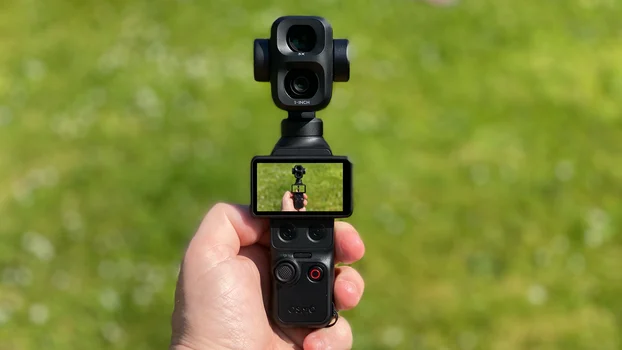
The landscape of content creation cameras has seen relentless innovation over recent years, with action cameras gaining power, mirrorless systems shrinking in size, and smartphones consistently advancing their imaging capabilities. However, 2026 marks a distinctive period, characterized by an intensified battle among major manufacturers to produce what is widely considered the ultimate camera for the burgeoning creator economy. At the forefront of this competitive arena, DJI, a company renowned for its aerial and stabilization technologies, has once again made a significant move with the introduction of its latest portable offerings: the Osmo Pocket 4 and, more notably, the ambitious Osmo Pocket 4P.
Contextualizing the Creator Camera Landscape
The global creator economy, estimated to be a multi-billion dollar industry, fuels an insatiable demand for versatile, high-quality, and portable imaging tools. This demand has driven camera manufacturers to rethink traditional design philosophies, leading to a convergence of features previously found only in disparate camera categories. Creators today require devices that offer professional-grade image quality, robust stabilization, intuitive operation, and seamless integration into fast-paced workflows. DJI has consistently demonstrated an acute understanding of these needs, leveraging its expertise in gimbals and compact design to carve out a significant niche in the market.
A Chronology of Innovation: The DJI Pocket Series Evolution
DJI’s journey in the compact camera space began years ago, challenging preconceived notions of what a pocket-sized device could achieve.
- 2018: The Genesis with Osmo Pocket: DJI first introduced the Osmo Pocket, a revolutionary device that combined a miniaturized 3-axis mechanical gimbal with an integrated camera. It offered unparalleled stabilization in a form factor small enough to fit into a pocket, instantly appealing to vloggers and travelers seeking effortless, shake-free footage.
- 2020: Refinement with Pocket 2: Building on the success of its predecessor, the Pocket 2 brought improvements in sensor size, audio capabilities, and a wider field of view, further solidifying its position as a go-to tool for on-the-go content creation.
- 2023: The Game-Changer, Osmo Pocket 3: Three years ago, DJI elevated the series significantly with the Osmo Pocket 3. This iteration introduced a larger 1-inch sensor, a pivotal upgrade that dramatically enhanced low-light performance and dynamic range, previously a limitation for such compact cameras. Coupled with its established 3-axis gimbal and an intuitive user interface, the Pocket 3 quickly became an industry benchmark, widely adopted by vloggers, filmmakers, and digital nomads for its ability to deliver high-quality footage in a truly portable package. Its success underscored the market’s readiness for advanced compact cameras that didn’t compromise on core imaging capabilities.
The 2026 Dual Launch: Osmo Pocket 4 and Osmo Pocket 4P
Fast forward to 2026, and DJI has unveiled not one, but two successors, reflecting a strategic segmentation of its portable camera offerings. The Osmo Pocket 4 arrived first, offering meaningful enhancements over the Pocket 3, including improved battery life, refined tracking algorithms, expanded dynamic range, and significantly enhanced slow-motion capabilities. These upgrades represented a solid, evolutionary step for the series, addressing common user feedback and further optimizing the core Pocket experience.
However, the subsequent introduction of the Osmo Pocket 4P – often referred to as the Pocket 4 Pro by the community – signaled a more ambitious undertaking. Positioned by DJI as a device designed to introduce an entirely new level of creative flexibility, the 4P made its global debut at the prestigious Cannes Film Festival, a clear statement of its intended professional-grade capabilities.
The launch, however, was marked by a somewhat disjointed global rollout. The Pocket 4P initially became available in the Chinese market two months prior to its wider international release. As of its global availability, the device is still pending authorization for sale in the United States, creating a staggered release schedule that has generated both anticipation and frustration among potential users in various regions. Despite these logistical challenges, early access units, such as the Pocket 4P Vlog Combo provided for extensive real-world testing weeks before its broader launch, have allowed for a comprehensive assessment of its advancements.
Deep Dive into the Osmo Pocket 4P’s Core Innovations
Upon first interaction, the Pocket 4P maintains a familiar form factor, ensuring existing Pocket users feel immediately at home. The responsive touchscreen, intuitive menu system, and overall shooting experience represent a thoughtful evolution rather than a radical redesign. Yet, beneath this familiar exterior lies a significant architectural shift: the dual-lens system.
Dual-Lens System: A Paradigm Shift for Versatility
The most significant physical departure in the Pocket 4P is the integration of a dual-lens setup. For the first time in the series’ history, users have access to both a 20mm equivalent wide-angle lens and a dedicated 60mm equivalent medium telephoto lens. This single addition fundamentally transforms the camera’s utility, extending its creative reach far beyond what its compact predecessors could offer.
Traditionally, Pocket cameras excelled in wide-angle capture, ideal for vlogging, landscapes, and action shots where a broad field of view is paramount. However, tasks requiring subject isolation, compelling portraits, or intimate interviews often presented challenges due to the inherent characteristics of wide lenses. The 60mm lens directly addresses these limitations. It enables subjects to stand out more naturally from their surroundings, introduces noticeable background compression, and creates a greater separation between foreground and background elements. For talking-head videos, interviews, and portrait-oriented content, the 60mm lens quickly becomes the preferred choice, delivering footage with a natural bokeh effect due to its wider aperture, which imparts a distinctly more professional aesthetic. This dual-lens strategy effectively positions the Pocket 4P as a more versatile tool capable of handling a broader spectrum of cinematic and journalistic shooting scenarios.
Advanced Imaging Capabilities
The image quality delivered by the Pocket 4P is undeniably impressive. The 20mm wide-angle lens produces detailed footage with excellent color reproduction and robust dynamic range. Leveraging D-Log 2 provides substantial flexibility in post-production, allowing for extensive color grading and effective recovery of highlights and shadows. The jump to 17 stops of dynamic range is particularly evident in challenging lighting conditions, such as sunrise and sunset, where preserving subtle details in extreme light and shadow is critical.
A notable observation from testing indicates that this impressive 17-stop dynamic range is currently exclusive to the 1x (20mm) lens. While the 3x (60mm) lens also performs admirably, a software update enabling D-Log 2 for both lenses simultaneously would significantly enhance its creative utility, streamlining the workflow for professional users. Additionally, the need to manually select log profiles when switching between lenses introduces an unnecessary step; an automatic shift to a standard log profile when transitioning from D-Log 2 on the 1x to the 3x lens could be a beneficial software refinement.
Beyond these points, DJI has introduced false color monitoring, a feature typically found in higher-end cinema cameras. This allows creators to accurately evaluate exposure levels during filming, greatly aiding those who meticulously color grade their footage. A recent firmware update has also added 10-bit HDR as a profile choice, further expanding the camera’s versatility and dynamic capture capabilities. This update also addressed an initial exposure shift observed when transitioning between the 1x and 3x lenses, demonstrating DJI’s responsiveness to early user feedback.
Enhanced Zoom Workflow
The Pocket 4P introduces a redesigned zoom workflow that leverages its dual-lens architecture. A single press of the dedicated zoom button instantly switches to the 3x (60mm) camera. A subsequent double press activates a claimed lossless 6x zoom, providing significant reach without apparent degradation on smaller screens. For continuous adjustments, holding the button allows for smooth zooming from 1x all the way to 12x. While the 6x lossless zoom performs commendably, particularly for social media content, it is important to note that true lossless zoom typically implies optical magnification. As with most compact systems, viewing highly magnified digital zoom footage on larger displays will inevitably reveal some image quality degradation, though the 12x digital zoom remains surprisingly usable for its class.
ActiveTrack 8.0: Intelligent Subject Tracking
DJI’s ActiveTrack technology has consistently set industry standards, and ActiveTrack 8.0 in the Pocket 4P represents its most capable iteration yet. The system maintains smooth and reliable tracking across the entire zoom range, from 1x through to 12x. Instantaneous face detection, activated with a single press of the 5D button, ensures quick subject acquisition. Whether the subject is walking towards the camera, moving laterally across the frame, or being filmed during dynamic activities like hiking, the system consistently maintains a lock. For solo content creators, this feature remains one of the Pocket 4P’s most powerful assets, effectively acting as a virtual camera operator. However, some early observations suggest that ActiveTrack 8.0 occasionally struggles to reacquire subjects once they are lost from the frame, a behavior that appears less pronounced in the Pocket 4’s ActiveTrack 7.0. This is an area that could potentially be optimized through future software updates.
Revolutionary Accessories and Ecosystem Integration
Beyond the camera unit itself, DJI has introduced accessories that significantly enhance the Pocket 4P’s functionality, most notably the Frame Tap.
Frame Tap: Remote Control Reinvented
Every new camera generation often features an accessory that unexpectedly redefines its use cases. For the Pocket 4P, that accessory is the Frame Tap. Its flexibility is difficult to overstate; it allows users to remotely monitor framing, control the gimbal’s movement, activate ActiveTrack, adjust zoom levels, and effectively operate the camera from a distance. During extensive field testing, the Frame Tap consistently performed without issue at distances approaching 30 meters.
For solo creators, the Frame Tap opens up entirely new possibilities. It transforms the compact camera into a remotely operable system, allowing for creative shots that would otherwise be impossible without a second operator. Imagine setting up the camera on a cliff edge, a remote beach, or a challenging vantage point, and then being able to precisely control framing, tracking, and zoom from a safe or more convenient distance. This capability profoundly changes the approach to filming, feeling less like an accessory and more like having an additional crew member. While its utility is undeniable, it lacks a built-in microphone, and a more integrated method for attaching it directly to the camera could mitigate the risk of misplacement in dynamic shooting environments.
Audio Performance and Battery Life
Audio quality in the Pocket 4P remains excellent. Its three built-in microphones produce clear and crisp recordings, further bolstered by DJI’s continued provision of redundant AAC audio recording as a backup file – a critical feature that, while rarely needed, offers invaluable security when audio issues arise. The included Mic Mini 2, part of the Vlog Combo, also performs well, although it lacks internal storage, a feature present in some other wireless microphone systems.
Battery life has seen a significant improvement compared to the Pocket 3. The increase from 1,300 mAh to 1,545 mAh provides noticeably longer recording sessions, a welcome upgrade for extended shoots. Existing Pocket 3 users will appreciate that the battery extension grip remains compatible with the Pocket 4P, offering further power longevity and improved ergonomic balance. It was noted during testing that the camera tends to become quite warm during prolonged use and charging. While this did not lead to any overheating warnings or performance degradation, it is a point worth mentioning for potential users.
Market Positioning and Pricing Strategy
The Osmo Pocket 4P is offered in various configurations, with the Vlog Combo being the most comprehensive and, for many creators, the most sensible option. While the standard camera unit is capable, the additional accessories bundled in the Vlog Combo – including the Mic Mini 2 and the pivotal Frame Tap – significantly enhance the overall user experience and unlock the full potential of the 4P. For those considering a purchase, a thorough comparison of the cost difference between the standard package and the Vlog Combo is highly recommended, as the added functionality often justifies the investment for everyday creative workflows.
DJI appears to have struck a judicious balance with its pricing strategy. Considering the advanced technology packed into the Pocket 4P, including its dual-lens system, sophisticated 3-axis mechanical gimbal, improved tracking, D-Log 2 capabilities, and internal storage, alongside the accessories in the Vlog Combo, it represents a strong value proposition. Notably, DJI has managed to keep the pricing competitive, positioning the Pocket 4P below several comparable creator-focused cameras currently on the market. Ultimately, the perceived value will depend on individual usage patterns, but against its feature set and closest competitors, the Pocket 4P is strategically priced to attract a broad audience.
Target Audience and Market Impact
The Osmo Pocket 4P appeals to a surprisingly broad demographic. Casual users will appreciate its inherent simplicity and pocketability. Travel vloggers will find its combination of portability and advanced features invaluable for documenting their journeys. Dedicated content creators, particularly those producing YouTube videos or client work, will benefit immensely from the improved image quality, the expanded creative flexibility of the dual-lens system, and the enhanced tracking. Even professional filmmakers may find the Pocket 4P a compelling option as a lightweight B-camera or for situations where deploying larger, more cumbersome equipment is impractical. The Frame Tap accessory, in particular, elevates its utility within the wider Pocket ecosystem, opening up creative opportunities previously difficult to achieve with such a compact device.
The introduction of the Pocket 4P has significant implications for the competitive landscape. By offering professional features like a dual-lens system and false color monitoring in a highly portable form factor, DJI is challenging the traditional segmentation of the camera market, potentially drawing users away from entry-level mirrorless cameras and even high-end smartphones that struggle to match the 4P’s mechanical stabilization and dedicated optics.
Conclusion: A New Benchmark for Portable Filmmaking
After extensive evaluation, the DJI Osmo Pocket 4P stands as DJI’s most complete and ambitious content creation camera to date. The Pocket 3 set a formidable benchmark for compact cameras, and the Pocket 4 refined that foundation. The Pocket 4P, however, fundamentally expands it. What truly distinguishes this device is not any single groundbreaking feature, but rather the seamless synergy of its combined elements: the additional lens, the revolutionary Frame Tap, the enhanced tracking, extended battery life, and the D-Log 2 capabilities collectively create a camera that feels noticeably more capable and versatile in everyday use.
While no camera is entirely without its limitations – areas such as D-Log 2 support across both lenses, more granular photo controls, and streamlined charging solutions could still see improvements – these do not significantly detract from the overall user experience.
For existing Osmo Pocket 3 owners, the Pocket 4P offers a genuinely compelling reason to upgrade, moving beyond mere iterative improvements to deliver transformative creative flexibility. For those entering the Pocket ecosystem for the first time, the 4P is undoubtedly the recommended model, providing the most advanced and versatile experience available. In the race to produce the ultimate camera for content creators seeking maximum flexibility in the smallest possible package, DJI, despite a fragmented launch campaign, may have indeed produced one of the most capable cameras of 2026, once again raising the bar for portable filmmaking.
