
 By admin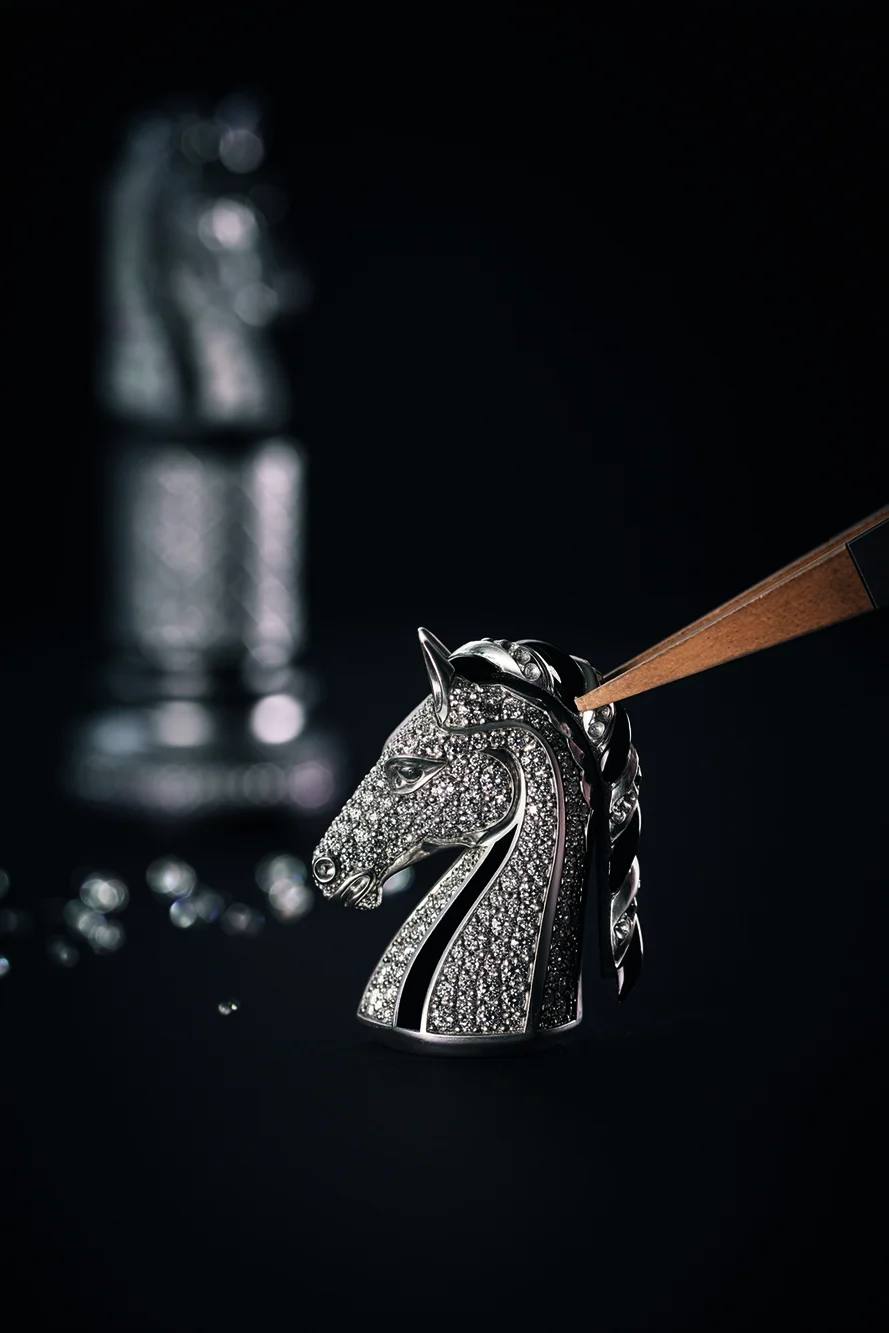
The Watches & Wonders Geneva 2026 exhibition served as a pivotal stage for Chanel to articulate its unique position within the high horology sector, moving beyond its traditional reputation as a couture house to solidify its status as a premier watch manufacture. Central to this demonstration was the unveiling of the "Coco Game" capsule collection, a 14-piece series that explores the intersection of play, strategy, and technical mastery. While the brand’s permanent catalog continues to evolve—notably with the introduction of the J12 Bleu, a model resulting from five years of metallurgical and ceramic research—the Coco Game capsule represents the "unfettered soul" of the Maison’s creative studio.

Under the leadership of Frédéric Grangié, CEO of Chanel Watches and Fine Jewelry, and Arnaud Chastaingt, Director of the Watchmaking Creation Studio, the brand has adopted a strategy that prioritizes vertical integration and artistic autonomy. The Coco Game collection is the latest manifestation of this philosophy, utilizing the motifs of traditional board games and digital nostalgia to showcase a level of craftsmanship that challenges the conventions of the Swiss watch industry.
The Chessboard: A Masterpiece of High Horology and Miniature Sculpture
The undisputed centerpiece of the 2026 capsule is "The Chessboard," a unique horological set that transcends the definition of a traditional timepiece. This creation was reportedly sold to a private collector before the Watches & Wonders event officially commenced, underscoring the high demand for Chanel’s artisanal "objects of time."

The technical specifications of The Chessboard are formidable. The base is crafted from black obsidian, providing a dense, volcanic foundation for a playing surface composed of 64 squares of alternating black and white highly resistant ceramic. Chanel’s manufacture at La Chaux-de-Fonds dedicated over 1,000 hours to the development of this ceramic alone, ensuring a finish that is both aesthetically pristine and structurally durable. The board is framed by a perimeter set with 516 brilliant-cut diamonds.
The 32 game pieces function as miniature sculptures, each referencing the iconography of the House of Chanel. The 16 black pawns are sculpted from a high-tech ceramic that is seven times harder than steel, accented with white gold and diamonds. The major pieces are equally intricate:

- The Kings: Represented by lions, a symbol of Gabrielle Chanel’s zodiac sign (Leo). The white King is snow-set with 764 diamonds, while the black King is carved from ceramic and set with 142 diamonds.
- The Bishops: Modeled as couture mannequin busts, paying homage to the brand’s dressmaking heritage.
- The Knights: Sculpted horses rising from bases featuring the iconic Chanel quilted pattern.
- The Rooks: Miniatures of the Vendôme column, referencing the Place Vendôme in Paris, the spiritual home of Chanel Fine Jewelry.
The "secret" horological element is found within the white and black Queens. Each Queen is dressed in an intricate diamond-tweed suit and conceals a high-precision quartz movement. The 25mm black lacquer dials are hidden beneath the pedestals, and the pieces can be detached and worn as pendants on a white gold, diamond, and onyx chain.
Technical Innovation and the Patented Tweed-Setting Technique
Beyond the spectacle of the chessboard, the collection introduces significant technical advancements in gem-setting. The "Gabrielle Watch," limited to just 10 pieces, features a depiction of Mademoiselle Chanel in her iconic white suit. This suit is rendered using a newly patented "tweed-setting" technique.

According to Frédéric Grangié, this process required 10 iterations and the expertise of two master setters to perfect. The goal was to replicate the tactile, woven texture of fashion tweed using only hand-set gemstones. By varying the heights and angles of the stones, the artisans managed to capture the essence of fabric in a rigid medium. This innovation exemplifies Chanel’s broader strategy: using the resources of its high jewelry workshop in La Chaux-de-Fonds to solve creative challenges that traditional watchmaking tools cannot address.
Digital Nostalgia and the Evolution of the J12
The Coco Game capsule also pivots toward the aesthetic of 8-bit digital gaming, a theme that has appeared in previous Chanel collections, such as the 2023 Cybernetic models. The "Coco Game Long Necklace" (limited to five pieces) features a pixelated rendering of Gabrielle Chanel, a design that took four months to finalize using blackened titanium and 193 diamonds.

The J12 line, the backbone of Chanel’s horological identity since its launch in 2000, receives several thematic updates within the capsule:
- J12 Coco Game Charms: Limited to 55 pieces, this model features a pixelated lacquer charm suspended from the crown, set against a matte white ceramic case.
- J12 Coco Game 38mm: This model incorporates a pixelated character laser-cut from a carbon plate that functions as the seconds hand. It is available in three versions, including an Haute Horlogerie edition set with baguette diamonds.
- J12 X-Ray Coco Game: The technical pinnacle of the J12 capsule, limited to 12 pieces. This skeletonized watch requires 1,600 hours of sapphire crystal machining. It is powered by the manual-winding Caliber 3.1, an in-house movement that requires seven days of manual assembly per unit. The sapphire link bracelet is further embellished with a central line of baguette-cut diamonds.
Strategic Vertical Integration and the Chanel Ecosystem
The complexity of the Coco Game collection is made possible by Chanel’s aggressive pursuit of vertical integration over the last three decades. The brand’s horological journey began in 1987 with the Première watch, but it was the acquisition of the G&F Châtelain manufacture in 1993 that provided the technical foundation for its current success.

Today, the Chanel Manufacture in La Chaux-de-Fonds houses a comprehensive suite of mētiers, including movement design, case manufacturing, and high-jewelry gem-setting. Furthermore, Chanel has established a strategic ecosystem of partnerships with independent watchmakers and specialized firms:
- Kenissi: Chanel holds a significant stake in this movement manufacture, which produces the high-performance Caliber 12.1 and 12.2 used in the J12 series.
- Les Cadraniers de Genève: Owned by F.P. Journe (in which Chanel also holds a stake), this firm produces the brand’s most complex dials, such as those found in the Mademoiselle Privé Pique-Aiguilles series.
- Romain Gauthier: Chanel’s investment in this independent watchmaker facilitated the creation of Calibre 1, the movement powering the Monsieur de Chanel.
Frédéric Grangié emphasizes that these investments are not merely financial; they are protective. By supporting independent savoir-faire, Chanel ensures that its creative studio has access to the highest level of traditional craftsmanship while remaining free to experiment with non-traditional designs.

Analysis of Implications: A Shift in the Luxury Watch Market
The Coco Game collection and the broader strategy of the Chanel Watch Creation Studio suggest a shift in how luxury consumers view "fashion" watches. Historically, watches from couture houses were often dismissed by enthusiasts as aesthetic accessories with outsourced, generic movements. Chanel has systematically dismantled this perception.
By developing in-house calibers (Caliber 1 through Caliber 5) and winning multiple categories at the Grand Prix d’Horlogerie de Genève (GPHG), Chanel has forced the industry to recognize it as a legitimate manufacture. The use of capsule collections like Coco Game allows the brand to maintain a high level of "creative churn," bringing more new designs to market annually than many legacy Swiss brands.

This approach serves two purposes: it creates a sense of urgency and exclusivity for collectors, and it allows the brand to test experimental techniques—like the tweed-setting or sapphire machining—before potentially integrating them into permanent lines.
Chronology of Chanel’s Horological Milestones
- 1987: Launch of the Première, Chanel’s first watch, designed by Jacques Helleu.
- 1993: Acquisition of the G&F Châtelain manufacture in La Chaux-de-Fonds.
- 2000: Introduction of the J12, the first luxury watch to utilize high-tech ceramic as a primary material.
- 2011: Launch of the J12 Chromatic, introducing titanium ceramic.
- 2016: Debut of the Monsieur de Chanel, featuring the brand’s first in-house high-end movement, Calibre 1.
- 2018: Chanel acquires a 20% stake in F.P. Journe.
- 2019: Chanel acquires a stake in Kenissi; launch of the J12 with Caliber 12.1.
- 2023: Introduction of the "Cybernetic" pixel-themed J12 models.
- 2026: Launch of the "Coco Game" capsule collection at Watches & Wonders Geneva.
Broad Impact and Future Outlook
The success of the Coco Game capsule demonstrates that there is a significant market for watches that prioritize narrative and artistic expression alongside mechanical precision. Arnaud Chastaingt’s vision—that a watch is an "identity marker" rather than just a measuring tool—resonates with a modern demographic that values individuality over traditional gender-coded horology.

As Chanel continues to expand its manufacture and its partnerships with independent watchmakers like MB&F (as hinted at by Grangié), the industry can expect a continued blurring of the lines between high fashion, high jewelry, and high horology. The "Coco Game" is not merely a collection; it is a statement of intent that Chanel intends to play by its own rules in the world of fine watchmaking.
