
 By Nila Kartika Wati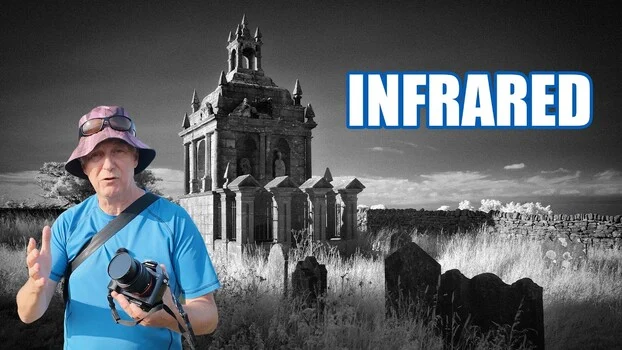
Most people believe infrared photography only works under harsh midday sun in the middle of summer. A single shoot at an isolated hilltop church puts it to the test, offering a compelling argument for a more nuanced and artistic approach to capturing the invisible spectrum. This photographic expedition by acclaimed landscape photographer Jason Friend not only redefines conventional wisdom surrounding infrared imaging but also delves into the burgeoning ethical considerations posed by advanced digital manipulation techniques.
The Unseen Spectrum: A Brief History and Science of Infrared Photography
Infrared (IR) photography taps into the portion of the electromagnetic spectrum that is invisible to the human eye, with wavelengths longer than visible red light but shorter than microwaves. Ranging approximately from 700 nanometers (nm) to 1 millimeter (mm), this light interacts with subjects in unique ways, producing often ethereal and surreal images. Foliage, for instance, reflects a significant amount of infrared light, appearing bright white in black-and-white IR images—a phenomenon often referred to as the "wood effect" or "glowing foliage." Skies, conversely, tend to darken dramatically, and water can appear unusually still and dark, creating a dreamlike contrast.
The journey of infrared photography began in the early 20th century, primarily for scientific and military applications. Early pioneers like Robert W. Wood experimented with sensitizing photographic plates to IR radiation. During the film era, IR photography was a niche pursuit, challenging due to the specialized films required, their sensitivity to heat, and the need for darkroom handling. Film stocks like Kodak High-Speed Infrared film became legendary for their distinct aesthetic. The advent of digital photography, however, has democratized IR imaging. Modern digital sensors, particularly CMOS and CCD sensors found in mirrorless cameras, are inherently sensitive to infrared light, albeit usually blocked by an internal hot mirror filter designed to produce "normal" visible light images. Removing this filter (a full-spectrum conversion) or adding an external IR filter over the lens transforms a standard camera into an infrared capture device, making the medium far more accessible than a decade ago. This technological evolution has paved the way for photographers like Friend to push creative boundaries without the historical logistical hurdles.
St. Andrew’s Church: A Remote Canvas in the Pennines
The chosen location for Friend’s illuminating experiment is St. Andrew’s Church, a redundant chapel perched approximately 300 meters above sea level on Greyar Hill in the North Pennines. The North Pennines, designated an Area of Outstanding Natural Beauty (AONB) and a UNESCO Global Geopark, is renowned for its dramatic upland landscapes, heather moorlands, and rich industrial heritage. Such an isolated and atmospheric setting provides a perfect backdrop for the otherworldly qualities of infrared photography, offering expansive views and minimal light pollution.
The term "redundant chapel" signifies a church building that is no longer used for regular worship, often due to declining congregations or structural issues. These historic structures frequently find new life through preservation trusts or, as in this case, become evocative subjects for artists and photographers drawn to their solitary grandeur and historical resonance. While the church itself contributes to the scene’s gravitas, Friend’s true artistic focus is directed toward the Hopper mausoleum nestled within the church’s graveyard. Mausoleums, often elaborate above-ground structures for entombment, frequently possess intricate architectural details and stand as solemn monuments to enduring legacies. The Hopper mausoleum, with its distinct form and likely weathered texture, is precisely the kind of subject Friend anticipates will translate strikingly into the unique tonal palette of infrared, promising to reveal details and textures that visible light might render as commonplace. The interplay of this man-made structure with the natural, often dramatically rendered, infrared landscape creates a compelling visual narrative.
Jason Friend’s Innovative Approach: Beyond the Midday Myth
Jason Friend, a prominent figure in landscape photography, challenges a long-held dogma within the infrared community: the notion that optimal IR results are exclusively achieved under a blazing noon sun. This belief stemmed from the fact that midday offers the highest intensity of infrared radiation, ensuring sufficient "light" for exposure. However, Friend argues that while abundant IR light is present, the quality of that light—its directionality, softness, and shadow-casting ability—is often overlooked. He posits that treating infrared light with the same discerning eye applied to visible light photography, particularly in landscape genres, yields superior artistic results.
Friend advocates for shooting a few hours before or after midday, rather than during the peak intensity. This timeframe, often referred to as the "shoulder hours" or akin to the "golden hour" in visible light photography, is characterized by softer, more directional light. This quality of light sculpts the landscape, revealing form, texture, and depth through the interplay of light and shadow. In infrared, this translates to more nuanced tonal variations, adding drama and dimensionality to skies, foliage, and architectural elements. The stark, flat light of high noon, while providing ample IR, tends to wash out these crucial details, producing less engaging compositions.
For his expedition to Greyar Hill, Friend came prepared. He utilized a full-spectrum converted Sony camera body, paired with an infrared filter. This setup effectively transforms the camera into a dedicated black-and-white infrared capture device. Full-spectrum conversions are particularly favored by IR enthusiasts because they allow for flexibility, enabling the use of various external IR filters (e.g., 720nm, 850nm) to capture different IR wavelengths and achieve varied artistic effects. His choice of a Sony body, which he retains specifically for IR while upgrading other gear, underscores the practical utility of older mirrorless bodies for this niche, offering high-resolution sensors and excellent live-view capabilities crucial for precise IR composition.
The Craft of Capture: On-Site Workflow and Artistic Decisions
Friend’s approach on Greyar Hill meticulously blends technical precision with artistic intuition. His initial steps involve working handheld to scout angles and compositions. This fluid process allows him to quickly assess how the mausoleum interacts with its surroundings—the gravestones, the distant landscape, and the ambient light—before committing to a fixed position. Once satisfied with potential vantage points, he plants his tripod, a critical piece of equipment for achieving sharp images, especially when using filters that might necessitate slightly longer exposures.
His technical settings reflect a standard best practice for landscape photography: a base ISO for optimal image quality and minimal noise, and an aperture of f/11. The f/11 setting provides a good balance of depth of field, ensuring both foreground elements and the primary subject are sharp, while mitigating diffraction which can soften images at smaller apertures. To prevent camera shake, particularly crucial for maximizing sharpness, Friend employs a two-second self-timer. This allows any vibrations from pressing the shutter button to dissipate before the exposure begins. A careful read of the histogram is paramount, especially in infrared photography where tonal values can be counter-intuitive. Friend focuses on protecting shadow detail, knowing that modern RAW files offer significant latitude for highlight recovery but less so for severely underexposed shadows.
Initially, Friend’s lens choice tops out at 28mm. In the absence of a wider lens, he "zooms with his feet," physically moving his body to adjust the framing and perspective. This active engagement with the scene demonstrates a deep understanding of spatial relationships and compositional dynamics. He meticulously fusses over the placement of gravestones within the frame, ensuring nothing overlaps or "pierces" the Hopper mausoleum—a common compositional pitfall that can create visual distractions. Later in the shoot, he switches to a Sony E 20mm lens. This wider focal length allows him to exaggerate the foreground, pulling the viewer into the scene, and to incorporate more of the surrounding elements, such as a distant tree and the broader expanse of the graveyard, enhancing the sense of place and isolation. He experiments with both landscape orientation and mentally guesses at a square crop, acknowledging the camera’s inability to preview such an aspect ratio in real-time, leaving the final decision for post-processing.
Post-Processing and the Digital Darkroom: Shaping the Invisible
Friend’s post-processing workflow is as deliberate and thoughtful as his capture process, transforming raw infrared data into refined artistic statements. Each raw file first enters Adobe Lightroom, a standard for initial image management and global adjustments. Here, he performs essential corrections: cropping to refine composition, vertical corrections to ensure architectural lines are straight, and dust cleanup, a necessary task for any landscape photographer.
The files then move to Silver Efex Pro, a dedicated monochrome conversion software renowned for its powerful tools and presets. This specialized program allows for granular control over tonal ranges, contrast, and texture, critical for shaping the unique aesthetic of infrared images. Friend leverages its presets as starting points, then fine-tunes with control lines and area selections, selectively applying adjustments to specific parts of the image without affecting others. He carefully lifts shadows to reveal detail, but with a keen eye to prevent the overall contrast from flattening, maintaining a rich, dynamic range. Skies, a hallmark of dramatic IR photography, are often darkened further to enhance their moody presence and create stark contrast with the bright foliage. On one particular frame, he opts to add grain, a rare choice for him, to impart a filmic quality and enhance the texture, adding to the image’s timeless appeal.
The Ethical Frontier: AI, Authenticity, and the Art of Photography
Perhaps the most thought-provoking aspect of Friend’s post-processing involves the use of Lightroom’s generative removal tool. In one composition, he utilizes this AI-powered feature to seamlessly remove an unwanted building from the background. This action immediately prompts an open question from Friend: does this cross an ethical line? He openly invites viewers to weigh in on this complex issue, recognizing its significance in the contemporary photographic landscape.
The rise of generative AI tools in photography, such as Adobe Photoshop’s Generative Fill, has ignited a fervent and often contentious debate across the entire field. The core of this discussion revolves around authenticity versus artistic license. Where does "enhancement" end and "fabrication" begin? For photojournalism, the line is often rigid, with strict rules against altering factual content. However, in fine art or landscape photography, the boundaries are more fluid. Friend’s own reasoning is compelling: "infrared already shows a world your eyes never see." He argues that since the infrared image is inherently a departure from visible reality, presenting a transformed world, perhaps the ethical strictures against digital manipulation can be relaxed. This perspective suggests that if the medium itself is an interpretation rather than a direct replication of reality, then further artistic alterations, even those involving AI, might be seen as an extension of that interpretive process.
This debate is not confined to individual artists but reverberates through the entire industry. Photo contests have seen numerous disqualifications of images later revealed to be AI-generated or heavily manipulated with AI tools, leading to revisions of submission guidelines. Stock photography agencies are grappling with policies regarding AI-generated content, balancing the demand for unique visuals with concerns about authenticity, copyright, and the potential for "deepfakes." The public perception of photography is also at stake; as AI becomes more sophisticated, discerning what is "real" in an image becomes increasingly challenging. Friend’s transparent use and open questioning of generative removal make his work a valuable case study for this ongoing, critical dialogue, inviting photographers and viewers alike to ponder the evolving definition of a photograph in the digital age.
Democratizing the Invisible: The Evolving Landscape of Infrared Photography
Friend’s project at Greyar Hill is emblematic of several broader trends within the photographic community. The increasing accessibility of infrared photography, primarily through full-spectrum camera conversions and readily available clip-in or screw-on filters, has fostered a new generation of IR enthusiasts. The ability to give "second lives" to older mirrorless camera bodies, which might otherwise be traded in, by converting them into dedicated infrared cameras, represents an economically viable and environmentally conscious approach for many photographers. This trend is supported by manufacturers who have, indirectly, facilitated this by producing robust, sensitive sensors and versatile mirrorless platforms.
Furthermore, Friend’s emphasis on "golden-hour thinking" for infrared extends beyond this specific niche. It reinforces a fundamental principle of photography: that directional light and long shadows are crucial shapers of form and mood, regardless of the specific wavelengths the sensor records. This paradigm shift encourages photographers to move beyond the technical novelty of IR and embrace its artistic potential, integrating it into a broader understanding of light and composition. This costs nothing for aspiring IR photographers, working with existing conversions or filters, and merely requires a shift in timing and observation.
A New Paradigm for Photographic Practice: Lessons from Greyar Hill
The expedition to St. Andrew’s Church on Greyar Hill offers more than just stunning infrared images; it provides a multi-layered lesson for the photographic community. It champions an artistic approach to a traditionally technical genre, demonstrating that creative vision, informed by a deep understanding of light, can elevate even the most niche photographic practices. Jason Friend’s meticulous planning, on-site execution, and sophisticated post-processing workflow serve as a practical guide for aspiring and experienced photographers alike.
Moreover, his candid exploration of generative AI’s ethical dimensions underscores the profound questions facing contemporary photographers. As technology continues to blur the lines between capture and creation, the industry must collectively define new ethical frameworks. Friend’s willingness to pose the question and invite public discourse, particularly within a medium already characterized by its departure from visible reality, positions infrared photography as a particularly useful lens through which to examine the broader implications of AI in art.
In essence, the Greyar Hill shoot is a microcosm of the dynamic state of modern photography—a blend of historical context, technological innovation, artistic intent, and ethical introspection. It challenges conventions, expands artistic horizons, and compels us to consider the very nature of truth and beauty in an increasingly mediated visual world. Friend’s work, therefore, serves not only as an inspiration for captivating imagery but also as an urgent invitation to engage with the evolving principles that govern our craft.
Ultimately, the choice of Friend’s favorite frame and his justification for retaining the generative removal of the background building are revealed in his accompanying video, providing a final, personal perspective on the complex decisions inherent in creating compelling photographic art today. The broader conversation, however, remains open, inviting every photographer and viewer to weigh in on the ever-shifting landscape of photographic authenticity.
