
 By admin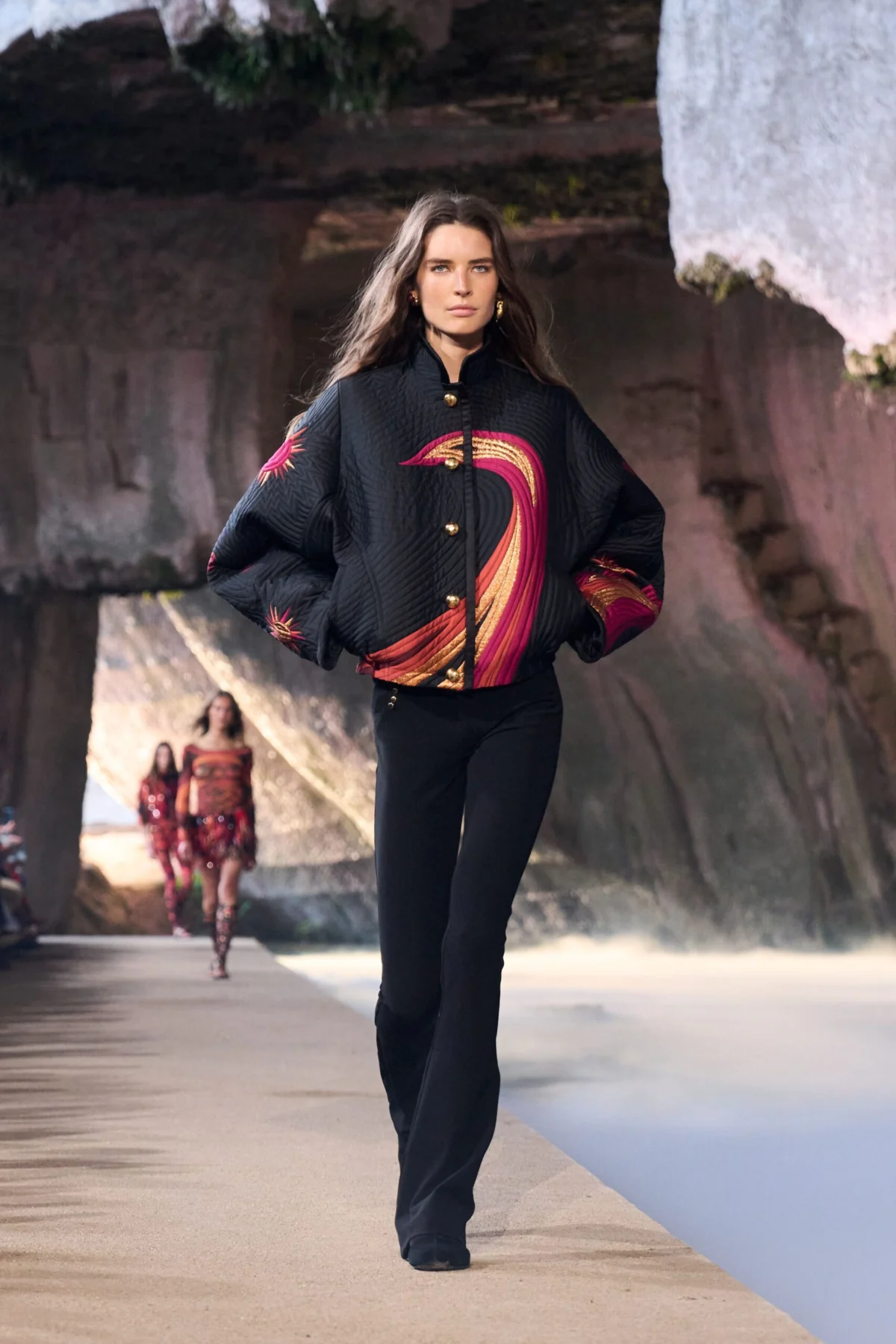
For her highly anticipated Spring 2026 Emilio Pucci show, creative director Camille Miceli orchestrated a captivating presentation in Ortigia, the historic heart of Siracusa, Sicily. The picturesque island, steeped in ancient Greek mythology and Mediterranean charm, provided a dramatic backdrop for a collection that skillfully navigated the legacy of the Florentine house with a distinctly contemporary vision. Miceli’s invitation extended beyond the typical fashion elite, embracing a loyal coterie of friends, family, and industry insiders, all drawn by the promise of authentic Sicilian hospitality, exemplified by local delicacies such as cannolis and pasta alla Norma, under the Mediterranean sun. The show unfolded beneath the grand, brooding arches of the Grotta dei Cordari, an ancient quarry whose theatrical ambiance naturally evoked the presence of a Greek chorus, seamlessly blending history with haute couture.
Miceli, whose dual Italian and Parisian heritage affords her a unique perspective, demonstrated a profound understanding of Sicily’s inherent allure. While acknowledging the island’s picturesque charm, she also tempered it with a pragmatic Parisian sensibility. "Let’s be honest," Miceli remarked, with characteristic directness, "Sicily is a trend. Everyone wants to come here." This statement, far from being dismissive, underscored a strategic awareness of the island’s burgeoning appeal as a luxury destination, a trend amplified by recent cultural phenomena and a global yearning for authentic, experiential travel. Her choice of Ortigia, with its faded grandeur, ancient palazzos adorned with crinoline-like balconies, and a palpable sense of decadent history, was not merely aesthetic but deeply resonant with Pucci’s own history of vibrant prints set against timeless backdrops.
The Strategic Allure of Destination Shows in Luxury Fashion
The decision to host a major fashion show in a location like Ortigia is indicative of a broader strategic shift within the luxury fashion industry. In an increasingly competitive global market, brands are moving beyond traditional runway venues in fashion capitals to create immersive, experiential events designed to generate significant media attention, foster deeper emotional connections with consumers, and reinforce brand narratives. This trend, gaining considerable momentum post-pandemic, sees houses like Chanel, Dior, and Louis Vuitton regularly staging elaborate shows in exotic or historically significant locales, from ancient temples to remote deserts. These destination shows serve multiple purposes: they offer unparalleled visual content for digital platforms, create memorable experiences for VIP clients and press, and project an image of global reach and cultural sophistication. For Emilio Pucci, under LVMH’s majority ownership, leveraging Sicily’s current cultural cachet allows the brand to tap into a wider audience and solidify its identity as a purveyor of sophisticated, yet accessible, luxury rooted in a rich Mediterranean sensibility. The economic impact of such events on local economies, while often difficult to quantify precisely, includes increased tourism, hospitality, and local employment, further enhancing the brand’s association with cultural enrichment.
Camille Miceli’s Evolving Vision and Pucci’s Approachable Luxury
After four years at the helm of Emilio Pucci, Camille Miceli has evidently found her stride, articulating a clear and compelling vision for the Florentine house. Her tenure, marked by a deliberate shift towards a more "unpretentious" and "approachable" luxury, has seen her expertly blend archival prints with fresh, contemporary interpretations. Miceli’s philosophy positions Pucci as a brand that is neither snobby nor intimidating, but rather infused with a cool, bohemian sensuality that invites engagement. "Pucci is not pretentious," she insisted. "We’re not snobby. We’re approachable." This ethos resonates strongly with current consumer preferences, particularly among younger demographics who increasingly value authenticity, inclusivity, and effortless style over overt displays of wealth or exclusivity.
Miceli’s design "recipe"—a precise balance of charm, clarity, and a studied lack of hauteur—appears to be a winning formula. The clothes she designs possess an immediate appeal, requiring no complex decoding. They are feminine, infused with a buoyant joy that stands in contrast to the often somber or overly conceptual offerings found elsewhere in high fashion. This directness, combined with a sophisticated understanding of comfort and wearability, has been instrumental in repositioning Pucci as a relevant and desirable brand for the modern woman who seeks both elegance and ease in her wardrobe. Miceli, who previously held key roles at Dior, Louis Vuitton, and Chanel, brings a wealth of commercial acumen and design experience, allowing her to bridge the gap between high fashion aspiration and everyday practicality, a crucial factor for a brand like Pucci aiming for broader market penetration while retaining its luxury cachet.
"Alba": A Multifaceted Exploration of Dawn
The collection, aptly named Alba—Italian for dawn—unfolded not as a singular moment of awakening, but as a layered exploration of transitional states. In Miceli’s nuanced world, dawn doesn’t merely break; it refracts into multiple conceptual dimensions. There is the literal Sicilian sunrise, its vibrant hues directly informing the collection’s color palette, reminiscent of the dramatic volcanic landscapes of Mount Etna. This connection to the natural world grounds the collection in a tangible, almost primal beauty.
Beyond the literal, Alba also draws inspiration from a conceptual sunrise, specifically referencing Olafur Eliasson’s acclaimed "The Weather Project" at the Tate Modern, which immersed viewers in a glowing, transcendent artificial sun. This artistic influence manifested in a series of sensuous, loose-knitted tunics that shimmered with a slightly hallucinogenic glow, evoking a sense of ethereal beauty and contemplative introspection. This nod to contemporary art elevates the collection beyond mere fashion, situating it within a broader cultural dialogue about perception, light, and experience.
Finally, Miceli’s Alba acknowledges the dawn that arrives after a long night out—a moment of ambiguous transition when the music fades, eyeliner smudges, and the vibrant energy of the evening gives way to the quiet possibilities of a new day. This captures a free-spirited, daring Pucci en déshabillé, embracing a relaxed, almost undone elegance that perfectly encapsulates the bohemian sensuality Miceli champions. This multifaceted interpretation of "dawn" speaks to the complexities of modern life, where endings and beginnings often blur, and personal style must adapt to an array of experiences, from quiet contemplation to vibrant celebration.
The Collection’s Narrative: Yogi Meets Rave Girl
Miceli’s Spring 2026 collection presented a compelling duality, catering to heroines who seamlessly oscillate between the disciplined tranquility of a yogi and the uninhibited energy of a rave girl. In 2026, Miceli posits, duality is not merely a choice but almost a dress code, reflecting a contemporary lifestyle that demands versatility and expresses varied facets of identity. This conceptual framework informed the collection’s key motifs and silhouettes.
A house signature, fringes of sequins, were reimagined with heightened intensity, flickering like controlled flames and injecting a vibrant, almost electric energy into the garments. These "Fiamme" (flame) prints rippled across the collection, a testament to Pucci’s enduring association with dynamic patterns, yet rendered with a modern, almost kinetic voltage. Miceli expertly explored and reinterpreted Pucci staples, presenting foulard dresses that draped elegantly, pareos artfully slung across well-honed hips, and tops designed to generously reveal equally disciplined abs—all imbued with a confident, body-conscious sensibility. Notably, some pieces carried a subtle, darker undercurrent, adding a layer of sophisticated edge to the otherwise joyous collection.
The collection seamlessly transitioned from day to night, or perhaps, from the tranquil pre-dawn to the after-party glow. Slip dresses, recalling the minimalist aesthetic of the 1990s, offered a sleek, understated elegance. Liquid jerseys brought back the iconic Marmo print, recontextualizing its fluid patterns for a contemporary audience. For evening, elements like intricate fishnet, shimmering sequins, and flashes of antique gold firmly anchored pieces in after-dark territory, providing glamorous options for celebratory moments. The collection’s finale, featuring model Angelina Kendall in a top composed entirely of intricate jewelry, served as a stunning articulation of this opulent, yet free-spirited, evening wear vision. Alba, in Miceli’s hands, was less about a gentle, singular new beginning and more about that ambiguous, liminal moment between endings and possibilities—a fluid state where one is not entirely sure whether to head home to bed or embrace the day with a sun salutation. Pucci, under Miceli’s direction, demonstrated its capacity to cater to both, embodying the multifaceted nature of modern luxury.
Pucci’s Enduring Legacy and Sicilian Roots
The choice of Sicily as the backdrop for the Spring 2026 collection was not merely a nod to a current trend but a deeply rooted homage to Emilio Pucci’s own historical connection to the island. The Marchesa Emilio Pucci, a pioneer of resort wear and vibrant prints, was among the first designers to be captivated by Sicily’s unique beauty. In the 1950s, he created iconic prints inspired by the island, immortalized in a now-mythic image shot in Palermo’s Piazza Armerina, where a young woman in a Pucci bathing suit appears to merge seamlessly with the ancient mosaics beneath her. This historical precedent provides Miceli with a rich tapestry from which to draw, allowing her to connect contemporary designs with the brand’s authentic heritage.
Miceli’s particular appreciation for Ortigia’s "faded grandeur"—the balconies looping around palazzos like delicate crinolines, theatrical yet gently crumbling—speaks to a sophisticated understanding of beauty that embraces imperfection and the passage of time. Her assertion that she loves "the disused, decadent side" of Sicily highlights a romanticism that goes beyond superficial aesthetics. In Sicily, this appreciation for the aged and imperfect is less an aesthetic choice and more a profound cultural and civic commitment, reflecting a history of resilience and a deep connection to the past. By integrating this sensibility into the collection, Miceli imbues Pucci with a layer of authenticity and soulful depth that resonates far beyond fleeting fashion trends.
Industry Context: The Blurring Lines of Luxury and Lifestyle
The Spring 2026 collection from Emilio Pucci, under Camille Miceli, must be viewed within the broader context of a luxury market undergoing significant transformation. The traditional distinctions between casual wear, resort wear, and formal attire are increasingly blurred, giving rise to a more lifestyle-oriented approach to luxury. Brands are no longer just selling clothes; they are selling a dream, an experience, and a complete lifestyle. Pucci, with its heritage of vibrant, resort-ready prints, is uniquely positioned to capitalize on this shift. Miceli’s focus on approachability, comfort, and versatile pieces that transition effortlessly from day to night, from beach to city, aligns perfectly with the demands of a modern consumer who seeks flexibility and effortless chic.
Moreover, the emphasis on "unpretentiousness" and "bohemian sensuality" reflects a growing consumer desire for luxury that feels genuine and relatable, rather than aloof or exclusive. This trend is particularly evident in the post-pandemic landscape, where comfort and well-being have taken precedence, influencing design aesthetics across the industry. Pucci’s ability to combine high-quality craftsmanship and sophisticated design with a sense of joyous freedom makes it particularly appealing in this evolving market. As a brand within the LVMH portfolio, Pucci benefits from strategic support and global reach, allowing Miceli’s vision to be amplified on an international stage, competing with established luxury players while carving out its distinct niche.
Implications for Emilio Pucci and the Luxury Market
Camille Miceli’s Spring 2026 collection in Ortigia marks a significant moment in Emilio Pucci’s contemporary trajectory. It solidifies her successful navigation of the brand’s storied heritage with a forward-looking, commercially astute vision. By embracing Sicily’s rich cultural tapestry and acknowledging its contemporary appeal, Miceli not only delivered a visually stunning collection but also reinforced Pucci’s identity as a purveyor of sophisticated, joyful, and deeply resonant luxury. The collection’s duality—the yogi and the rave girl, the literal and conceptual dawn—speaks to a modern consumer base that values versatility and self-expression.
The show’s strategic choice of location underscores the growing importance of experiential marketing and authentic storytelling in the luxury sector. For Pucci, this means strengthening its brand narrative, attracting new demographics eager for accessible yet aspirational luxury, and reaffirming its place in a competitive market. Miceli’s confident hand, blending archival reverence with modern relevance, suggests a bright future for Emilio Pucci, where the brand continues to evolve, embracing both its vibrant past and the dynamic possibilities of its future. This approach ensures Pucci remains a beacon of effervescent style, capable of dressing its clientele for any moment, from the quiet contemplation of dawn to the exuberant energy of a long night out, embodying a unique blend of heritage and contemporary allure.
