
 By admin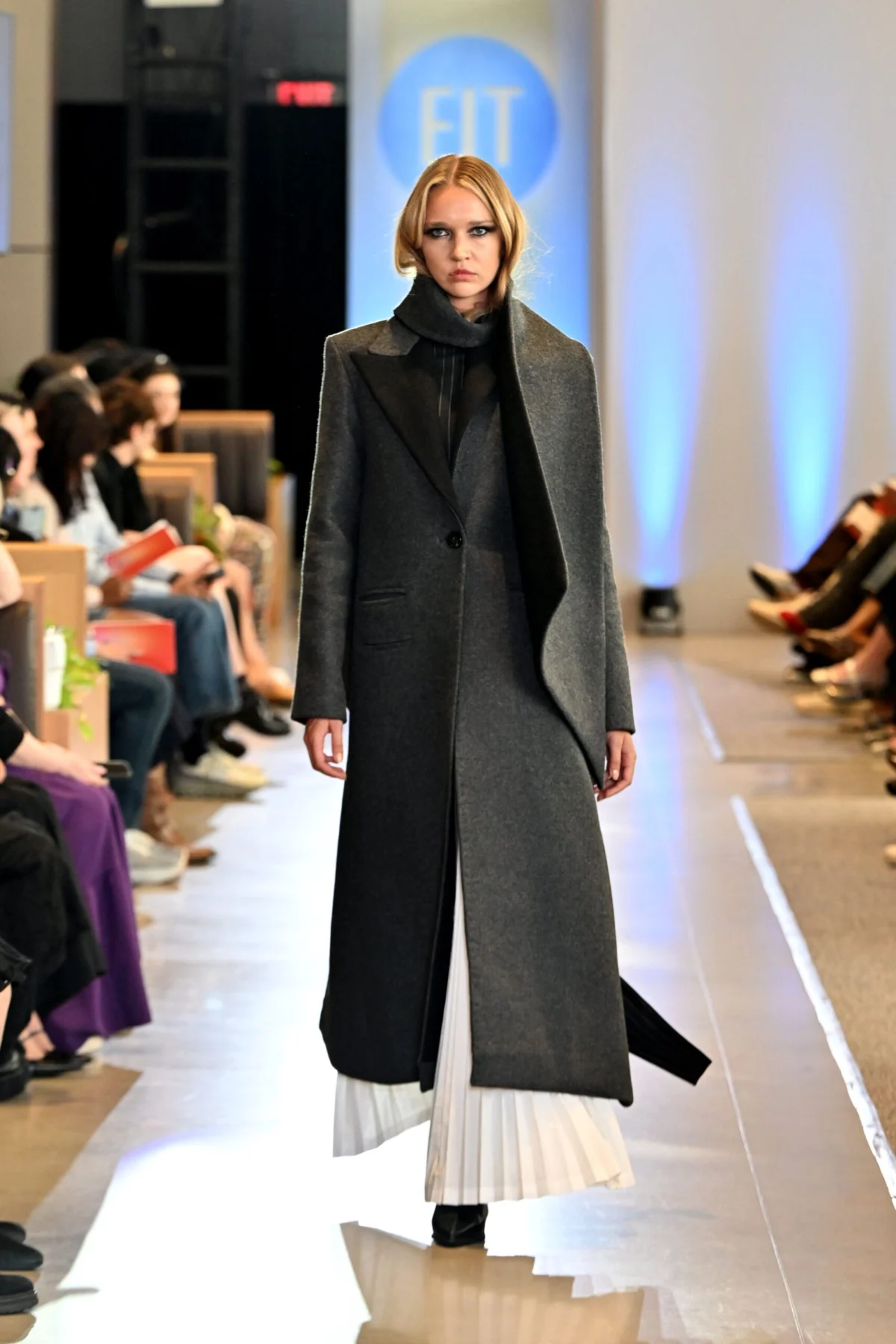
The graduating class of 2026 from the Fashion Institute of Technology (FIT) is emerging into a fashion landscape undergoing unprecedented transformation, marked by a cautious traditional retail sector and the accelerating integration of artificial intelligence (AI) into the luxury market. Far from adopting a reactive stance, these nascent designers and industry professionals are instead embracing adaptive dialogue and innovative integration, signaling a proactive approach to the challenges and opportunities ahead. As Jason S. Schupbach, who took the helm as FIT president just four months prior, articulated, "We are not sitting on the sidelines as the industry is happening. We’re going to go through the transformation with the industry at the same time." This philosophy underscores a strategic pivot within one of the world’s most prestigious fashion institutions, preparing its students not merely to survive, but to lead in an evolving global industry.
Navigating the Evolving Fashion Ecosystem: AI and Retail Dynamics
The current climate for emerging fashion talent is undeniably complex. The traditional retail sector, a historical launchpad for new brands, faces ongoing structural challenges, including intense competition from e-commerce, shifting consumer preferences towards sustainability and experiential shopping, and the lingering effects of global economic uncertainties. Industry reports from entities like McKinsey & Company and Business of Fashion consistently highlight a cautious investment environment for new ventures, with established retailers prioritizing agility and data-driven inventory management. This necessitates that young designers possess not only creative prowess but also a robust understanding of business models, supply chain resilience, and digital marketing strategies.
Concurrently, the "AI dam" in the luxury sector has not merely begun to break; it has burst forth, ushering in a new era of technological integration. From generative design tools that can rapidly iterate concepts and patterns to predictive analytics for trend forecasting and optimized inventory management, AI is reshaping the entire value chain. Luxury brands are exploring AI for personalized customer experiences, virtual try-ons, and even enhancing sustainable practices through material sourcing and waste reduction. This rapid technological adoption, while promising efficiency and innovation, also raises questions about the future of traditional design roles and the essence of human creativity. FIT’s response has been to embed these conversations directly into its curriculum, fostering an environment where students learn to harness AI as a tool rather than perceive it as a threat. Dynamic business classes are now interwoven with workshops on AI ethics and practical applications, ensuring graduates are not only fluent in creative expression but also technologically adept and ethically grounded.
President Schupbach emphasized this balanced perspective, stating that while AI "creates new jobs, other jobs go away—that’s all typical, but we want to be part of the conversation." He sagely reminded observers that ultimately, "a humanoid algorithm isn’t what’s sending a finished product down the runway; it’s the students’ ability to physically execute a garment that is." This highlights a critical distinction between algorithmic generation and human craftsmanship, reaffirming the enduring value of tangible skill and tactile expertise in an increasingly digital world. The institution’s strategy is to cultivate a generation of designers who can seamlessly blend cutting-edge technology with artisanal mastery.
The Annual FIT Fashion Show: A Canvas for Future Trends and Craftsmanship
The annual FIT Fashion Show, a cornerstone event in the academic calendar, serves as a vital platform for graduating students to showcase their final collections to industry leaders, critics, and prospective employers. This year’s iteration featured nearly 80 distinct designs, each representing countless hours of conceptualization, material selection, pattern-making, and meticulous construction. Held in a prominent venue, the event is not merely a graduation ceremony but a professional debut, often attracting scouts from major fashion houses and retail giants looking for the next wave of talent.
Despite a relatively subdued color palette dominating many of the evening’s presentations, a palpable undercurrent of hope and resilience resonated through the students’ work. This subtle optimism, perhaps a reflection of the collective spirit navigating a world in flux, was paired with an undeniable sense of polish and sophisticated execution. The garments on display demonstrated a high level of technical proficiency and creative ingenuity, a testament to FIT’s rigorous curriculum and the students’ dedication.
A standout example of this refined craftsmanship was the collaboration between Hye Ji Jo and Naïma Naas, whose tailored coat, playfully dubbed "hunchback," captivated with its delightfully airy silk chiffon scalloping. The garment’s seemingly classic front gave way to a striking red ruffled backside, a dramatic reveal that encapsulated a retrofuturistic aesthetic. This stylistic inclination, merging historical references with forward-thinking design elements, is a pervasive trend observed across much of the creative industry recently. Examples abound, from Meruert Tolegen’s Rococo renaissance interpretations to Colleen Allen’s subtly Victorian bustle-backed gowns, all signaling a desire to recontextualize the past within a contemporary framework. This retrofuturism, often imbued with a sense of romantic escapism or critical commentary, reflects a broader cultural moment grappling with rapid technological advancement by revisiting foundational aesthetics.
Tyler Mervine, recipient of the prestigious Critic Award, presented a collection that delved into profound philosophical themes, particularly the immortality of human memory and creation. His charcoal coat, featuring an infinite draped loop, was a direct manifestation of this concept, drawing inspiration, in part, from Gabriel García Márquez’s seminal novel Chronicle of a Death Foretold. Mervine’s work served as a powerful counterpoint to the omnipresent discussions around AI, subtly asserting that while artificial intelligence may be proliferating in global luxury ateliers, it is the human hand, mind, and soul that imbue garments like his fringed corset with narrative, emotion, and an enduring sense of artistic value—at least, for now. His collection emphasized the irreplaceable essence of human storytelling through design, a narrative often lost in purely algorithmic creations.
Diverse Expressions and Thematic Resonance
The evening’s progression also offered moments of levity and unexpected turns. A charming children’s clothing interlude provided a playful contrast, with the typical thudding bass of a fashion show soundtrack temporarily swapped for the infectious optimism of The Jackson 5’s "ABC." This segment was more than just a diversion; it symbolized a hopeful planting of seeds for the next generation of designers, photographers, and stylists, illustrating the industry’s cyclical nature and the continuous need for fresh perspectives from the earliest stages of engagement. It also highlighted childrenswear as a growing and specialized segment within the fashion market, requiring its own unique considerations for comfort, durability, and imaginative design.
Brightness and tactile innovation continued to shine through the knitwear category, notoriously challenging to master due to its intricate techniques and material demands—a point many students jokingly lamented during post-show interviews. Despite the technical difficulty, designers in this category showcased remarkable skill and conceptual depth. Many chose to emphasize the textile’s inherent lightness and fluidity, creating pieces that offered a gentle counterpoint to the metaphorical "heaviness of world events" often dominating contemporary discourse. Beatrice Xuan Mak, another Critic Award winner, paid homage to the vibrant culture and natural beauty of her home country, Malaysia, through her colorful and textured knit creations. Rachel Marino, also a Critic Award recipient, presented felted bulbous sculptures that explored form and volume, transforming textile into wearable art. These diverse expressions underscored fashion’s capacity to reflect, interpret, and even provide respite from global realities, proving its enduring role as both a mirror and a medium for societal sentiment.
Industry Collaboration and Future Pathways: The Macy’s Partnership
A significant highlight of the evening, and a critical component of FIT’s commitment to bridging academic excellence with professional opportunity, was the presentation of the show in partnership with Macy’s. This collaboration offers an invaluable direct pathway for emerging talent into the commercial retail space, an increasingly rare opportunity in today’s fragmented market. The ultimate winner of the competition, Marina Malkhasian, whose pleated garments spoke of a warmer remembrance of her childhood in Russia before the conflict, will see her pieces produced and sold in select Macy’s stores come next spring.
This partnership is not merely a symbolic gesture; it represents a tangible commitment from a major retailer to invest in and support new design talent. The commercial viability of this initiative was unequivocally demonstrated by the success of last year’s winner, whose collection famously sold out on its inaugural night at Macy’s flagship store in Herald Square. This serves as a powerful testament to consumer appetite for fresh, innovative designs from young creators, and crucially, for garments that embody physical craftsmanship and unique artistic vision. For Malkhasian, this means unparalleled exposure, invaluable experience in commercial production, and direct market feedback, accelerating her trajectory from student to established designer. For Macy’s, it offers a strategic avenue to refresh its offerings with exclusive, cutting-edge designs, appealing to consumers seeking uniqueness and supporting new talent. This model of collaboration is becoming increasingly vital for educational institutions to provide real-world pathways for their graduates, moving beyond theoretical knowledge to practical market integration.
Broader Implications: The Enduring Value of Human Creativity
The FIT Class of 2026’s fashion show was more than just an exhibition of new designs; it was a potent commentary on the current state and future trajectory of the fashion industry. It highlighted a pivotal moment where technological advancement, particularly in AI, is compelling a re-evaluation of core principles—from design processes to retail strategies. Yet, amidst this technological surge, the show unequivocally reaffirmed the enduring, irreplaceable value of human creativity, physical craftsmanship, and the narrative power of fashion.
The students’ work, characterized by its adaptive nature, intellectual depth, and artisanal execution, demonstrates that the future of fashion will not be dictated by algorithms alone. Instead, it will be shaped by designers who are skilled in harnessing new tools while remaining profoundly connected to the human experience—its memories, hopes, and complexities. The emphasis on physical execution, the philosophical underpinnings of design, and the emotional resonance of garments like Malkhasian’s, all underscore that the soul of fashion remains intrinsically human.
Educational institutions like FIT are at the forefront of this evolution, tasked with preparing designers for a dynamic future. Their success lies in fostering not only technical skills but also critical thinking, ethical awareness, and an entrepreneurial spirit. The Macy’s partnership serves as a crucial bridge, validating the commercial potential of these young talents and providing a vital launchpad. In a world increasingly dominated by digital interactions, the act of creating and wearing a beautifully crafted garment remains a profoundly human experience, a tangible connection to artistry and identity. The Class of 2026, with their blend of innovation and dedication to craft, stands ready to define the next chapter of this enduring narrative, proving that while tools may evolve, the essence of design will forever be rooted in the human imagination.
