
 By Nila Kartika Wati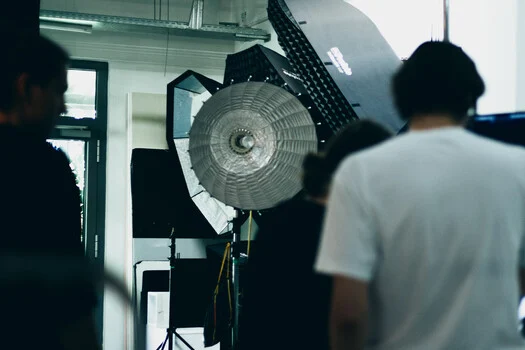
In the fast-evolving landscape of professional photography, where demands for both speed and unparalleled image quality often conflict, the choice of lighting equipment remains paramount. For seasoned photographers navigating high-pressure environments, the ability to rapidly adapt lighting scenarios without sacrificing aesthetic integrity is a non-negotiable requirement. While the market is saturated with myriad lighting solutions, from accessible softboxes to robust hard reflectors, a select few stand out for their exceptional performance and enduring build quality. Among these, the Briese Focus.2 77 and Focus.2 180 light modifiers have consistently proven themselves as foundational tools for achieving a distinctive, high-caliber illumination that caters to the most discerning clients and creative visions. This analysis delves into why these two specific Briese reflectors, despite their intricate setup, represent an apex of lighting technology, offering a unique blend of versatility, efficiency, and superior light rendition that sets them apart in the professional arena.
The Enduring Legacy of Briese Lighting: A Commitment to Craftsmanship
Briese Lichttechnik, a German manufacturer renowned for its precision-engineered lighting systems, has carved a niche in the high-end photography and film industries since its inception. Founded on a philosophy that prioritizes quality, durability, and optical excellence over mass production and cost-cutting, Briese has consistently delivered products that stand the test of time and rigorous professional use. Their reflectors, particularly the parabolic series, are celebrated for their ability to produce a remarkably crisp yet naturally rendered light, characterized by exceptional detail, rich tonal transitions, and a distinct dimensionality that is challenging to replicate with conventional modifiers. This commitment to craftsmanship positions Briese as a counterpoint to a broader industry trend of planned obsolescence, offering tools that are not merely temporary assets but long-term investments for professionals.
The Focus.2 series, while representing an earlier generation of Briese reflectors, continues to be a cornerstone of many top-tier studios and rental houses globally. Its design embodies a principle where the light source is adjustable within the parabolic reflector, allowing for precise control over the beam angle and character of the light – a feature central to its unparalleled versatility. This mechanical ingenuity enables a single modifier to transition seamlessly between a focused, hard light with significant fall-off and a broad, soft illumination, all without the need to swap out equipment.
The Focus.2 System: A Paradigm of Versatility Through Optical Control
The defining characteristic of Briese Focus.2 reflectors lies in their unique focusing mechanism. Unlike standard softboxes or fixed parabolic dishes, Briese modifiers allow the user to adjust the position of the flash head (or continuous light source) within the reflector’s parabolic curve. This physical adjustment changes the focal point of the light, fundamentally altering its spread and intensity distribution.
- Spot Mode (Focused): When the light source is moved closer to the parabolic apex, the reflector acts as a highly efficient focusing mirror, concentrating the light into a tight, powerful beam. This results in a hard, directional light with pronounced contrast, deep shadows, and excellent specularity, ideal for dramatic effects or highlighting specific textures and details. The light fall-off can be quite steep, creating a distinct separation between subject and background.
- Flood Mode (Defocused): Conversely, when the light source is moved away from the apex, deeper into the reflector, the light disperses more broadly. This creates a softer, more enveloping illumination with a gentler fall-off and reduced contrast. In this mode, the Briese reflector can deliver a remarkably even field of light, akin to a large softbox but often with a more crisp quality due to the highly reflective internal surface.
This optical control, achieved by a simple mechanical adjustment, is what grants Briese reflectors their legendary adaptability. A photographer can fine-tune the light character in mere seconds, reacting to changes in subject position, mood, or creative direction during a shoot. This agility is particularly invaluable in dynamic editorial or fashion photography environments where time is often a critical constraint.
Operational Speed and Uncompromised Quality: A Professional Workflow Advantage
While the initial setup of a Briese reflector can be more involved than assembling a conventional softbox – requiring a certain familiarity with its frame and tensioning system – this initial investment of time pays dividends in operational speed on set. Once assembled, the ability to manipulate the light’s character through focus adjustments eliminates the need to dismantle and reassemble different modifiers, reposition light stands extensively, or introduce multiple light sources to achieve varied effects. This streamlined workflow translates directly into significant time savings during a shoot, allowing photographers to generate a wider range of looks and compositions with greater efficiency.
The quality of light produced by Briese reflectors is often described as "sculptural" or "dimensional." This is due to the precise parabolic geometry and the highly reflective internal surface, which together create a light that is both powerful and refined. Details are rendered with exceptional clarity, and reflections exhibit a distinct sparkle without becoming harsh. For applications like high-end fashion, beauty, product, or jewelry photography, where the nuanced rendering of textures, materials, and form is paramount, the Briese light quality becomes an indispensable asset. It provides a unique blend of softness and crispness that few other modifiers can achieve, imparting a sense of volume and depth to the subject that prevents images from appearing flat or overly diffused.
The Indispensable Duo: Focus.2 77 and 180 Explained
For many professionals, the combination of the Briese Focus.2 77 and Focus.2 180 represents the ultimate versatile lighting kit. These two reflectors, while sharing the core Briese design philosophy, offer distinct characteristics that complement each other perfectly.
Focus.2 77: Precision and Portability
The Briese Focus.2 77, a smaller variant in the Focus.2 lineup, is highly regarded for its portability and its ability to deliver exquisite, controlled light in a compact form factor. It is particularly well-suited for:
- Portraiture: When focused, the 77 produces a hard-ish light with deep shadows and even highlights, creating dramatic and sculpted facial lighting. The light fall-off is controlled, exhibiting only about a 1.3-stop difference between the center and 3 meters away, making it a focused yet manageable source for dramatic effects without becoming overly harsh or difficult to edit.
- Close-up and Detail Work: Its ability to retain specularity and render fine details makes it exceptional for capturing textures in clothing, accessories, and particularly reflective surfaces like jewelry. The precise control over light quality allows photographers to highlight intricate details while maintaining overall image volume.
- Location Shooting: Its relatively smaller size compared to its larger siblings makes the 77 a practical choice for on-location shoots where space and setup time may be limited.
When defocused, the 77 softens considerably, providing a more even illumination suitable for full-body shots or broader portrait styles, all while retaining the signature Briese crispness and detail rendition. This adaptability, from a dramatic spot to a softer flood, makes the 77 an incredibly versatile single-source solution.
Focus.2 180: The Master of Illumination
The Briese Focus.2 180 is a significantly larger reflector, offering a broader and often softer light character while retaining the precise control of the Focus.2 system. Its substantial size allows it to function effectively in multiple roles:
- Key Light: When focused, the 180 delivers an incredibly directional and powerful light. At its tightest focus, it can create a dramatic 5-stop difference over a 3-meter range, yielding a highly concentrated beam that is almost black on the periphery. This is ideal for powerful, high-contrast images or for isolating subjects from complex backgrounds.
- Fill Light: Paradoxically, the 180 can also function as one of the softest specular fill lights available. When defocused to its "flood" setting, it provides a remarkably even and enveloping illumination. This makes it excellent for subtly lifting shadows without flattening the image, preserving the three-dimensionality inherent in the Briese light quality.
- Versatile Main Source: Many photographers find the 180’s sweet spot to be in its mid-focused positions (e.g., between positions 2 and 8). Here, it offers a balanced light with a manageable fall-off (around 3.5 stops over 3 meters), allowing for strong subject emphasis while still retaining crucial background detail. This versatility makes the 180 capable of handling an entire shoot on its own, adapting from full-body to tighter compositions with simple focus adjustments.
The ability of the 180 to transition from an extremely powerful, focused beam to a broad, soft light with exceptional clarity underscores its status as a "jack of all trades" in the professional lighting kit.
Synergy on Set: The 77 and 180 in Concert
The true power of Briese lighting, however, is often realized when the Focus.2 77 and 180 are employed together. This pairing offers an unparalleled range of creative possibilities and operational efficiencies for complex photographic productions, such as high-end fashion editorials.
Consider a scenario in a large studio setting for a prominent fashion magazine, where a model is showcasing a multi-textured ensemble from a new collection – perhaps a dark blue coat, a black belt, and a beige skirt, all requiring distinct rendering while maintaining a dramatic mood. In such a situation, the Briese Focus.2 77 could be strategically positioned as the primary key light, focused to precisely illuminate the model’s face and the intricate details of the upper garment. Its ability to create controlled highlights and shadows would sculpt the face and emphasize the unique textures of the coat.
Simultaneously, the Briese Focus.2 180 could be deployed as a sophisticated fill light. Set to a moderately defocused position, it would provide a broad, soft illumination to gently lift the shadows on the lower part of the outfit – the belt and skirt – ensuring that all fabric textures are visible and dimensionality is preserved, without compromising the overall dramatic aesthetic established by the 77. This setup allows for nuanced control over light ratios, ensuring that no part of the intricate garment is lost in shadow, and every detail contributes to the overall visual narrative.
This combined approach drastically reduces the need for multiple, cumbersome light sources, V-flats, or flags. The assistant’s workload is significantly lightened, as light stands require minimal repositioning, and the ability to instantly change light quality with a turn of the focus knob allows the photographic team to maintain a rapid pace. This efficiency is crucial in professional environments where models, stylists, makeup artists, and clients are all on tight schedules. Furthermore, the characteristic fall-off of Briese lights grants the model greater freedom of movement within the set, leading to more natural poses and a wider variety of dynamic images, a distinct advantage over setups that restrict movement due to precise light placement.
Efficiency Beyond Illumination: Power and Longevity
Beyond their optical performance, Briese reflectors offer significant advantages in terms of power efficiency and equipment longevity. In contrast to many softboxes, which can be highly inefficient, often requiring flash heads to be pushed to 1,200 W or more to achieve adequate light output, Briese parabolic reflectors are remarkably efficient. Their highly reflective surfaces and focused light path mean that photographers can often achieve superior results at significantly lower power settings, frequently in the range of 250 to 300 W, even for substantial setups. Only in exceptionally large studio environments or for lighting vast scenes might the power need to be increased towards 1,000 W.
This power efficiency has several critical implications for professional photographers:
- Faster Recycle Times: Lower power settings translate directly to quicker flash recycle times. In fast-paced shooting environments, this allows for more rapid firing sequences, increasing the number of usable frames captured within a given timeframe and enhancing the photographer’s ability to capture fleeting moments or expressions.
- Extended Equipment Lifespan: Operating flash packs and tubes at lower power levels significantly prolongs their operational lifespan. High-wattage usage puts considerable stress on capacitors and flash tubes, leading to premature wear and failure. By requiring less power, Briese modifiers contribute to the long-term reliability and reduced maintenance costs of expensive flash equipment.
- Reduced Heat Output: Lower power usage also means less heat generated by the flash head, which can be beneficial for both the model’s comfort and the longevity of sensitive materials on set.
- Portability for Location Shoots: For location shoots relying on battery-powered strobe units, power efficiency translates to longer battery life and fewer recharges, enhancing mobility and reducing logistical complexities.
These practical benefits underscore Briese’s value proposition beyond mere light quality, highlighting its contribution to a more sustainable and efficient professional workflow.
The Philosophy of Enduring Quality: Briese in an Era of Obsolescence
In an era increasingly defined by planned obsolescence, where products are designed with a limited lifespan to encourage continuous consumption, Briese stands as an outlier. Its reflectors are built to last, often spanning decades of rigorous professional use with proper care. This commitment to enduring quality is a core differentiator, contrasting sharply with the decreasing material quality observed in many modern light modifiers, where thinner fabrics, less reflective coatings, and more malleable metals are becoming commonplace.
Briese’s philosophy aligns with other premium brands in the professional imaging and grip industries – such as Arri, Avenger, Matthews, and Dedolight – all household names in the movie industry known for their robust, reliable, and meticulously engineered equipment. These brands prioritize durability and performance, understanding that professional tools are significant investments meant to deliver consistent results over many years. A Briese reflector, much like a vintage Profoto Pro-5 pack from the 1980s that still functions reliably today, is a piece of equipment that can be passed down through generations, a testament to its construction and the company’s commitment to excellence. This long-term value proposition directly challenges the prevailing disposable culture, offering professionals a sustainable and economically sound choice in their equipment procurement.
Accessibility and Investment: Navigating the High-End Market
The perception of Briese lighting as an exclusive, high-cost investment is often accurate for new equipment. However, the professional market offers various avenues for access. While owning a full Briese setup might be likened to owning a luxury vehicle, the rental market makes these tools accessible for most professional productions. The average rental cost for a Briese reflector, typically around USD 150 per day, is well within the budget of most commercial and editorial shoots, reflecting the value it adds to the final output.
Furthermore, a robust secondary market exists for used Briese equipment. In regions with strong photographic industries, such as Germany, pre-owned Briese reflectors can be found for significantly less than their new counterparts, sometimes at 50% or more off the price of a similar-sized new offering from other premium brands like Profoto. This availability in the used market democratizes access to this high-caliber lighting, allowing professionals to invest in top-tier equipment at a more manageable entry point, thereby extending the lifecycle of these durable tools.
Broader Implications for Professional Photography
The integration of Briese Focus.2 77 and 180 into a professional workflow has broader implications for the photography industry. It reinforces the value of investing in quality tools that enhance creative control, optimize production efficiency, and ultimately elevate the standard of photographic output. In an increasingly competitive market, the ability to deliver images with exceptional detail, dimensionality, and a distinctive aesthetic quality becomes a crucial differentiator for photographers.
Moreover, the operational speed afforded by Briese’s focusing mechanism allows for greater artistic freedom. Photographers can experiment with light much more fluidly, responding to spontaneous moments or subtle shifts in mood without disrupting the flow of the shoot. This enhanced agility not only benefits the photographer but also improves the experience for models and clients, fostering a more collaborative and productive creative environment. Clients, while often focused on speed, invariably appreciate the superior results that such tools facilitate, even if they do not explicitly understand the technical nuances behind the light.
In conclusion, the Briese Focus.2 77 and 180 stand as exemplary light modifiers that embody a philosophy of uncompromising quality, innovative design, and practical efficiency. They offer a unique blend of versatile light shaping, power economy, and enduring build quality that makes them an indispensable duo for professional photographers seeking to achieve distinctive, high-caliber results in demanding environments. Their continued relevance in a rapidly changing technological landscape serves as a testament to the enduring value of investing in tools designed for excellence, not obsolescence. For those committed to mastering the art of light, the Briese Focus.2 system remains a beacon of photographic possibility.
