
 By admin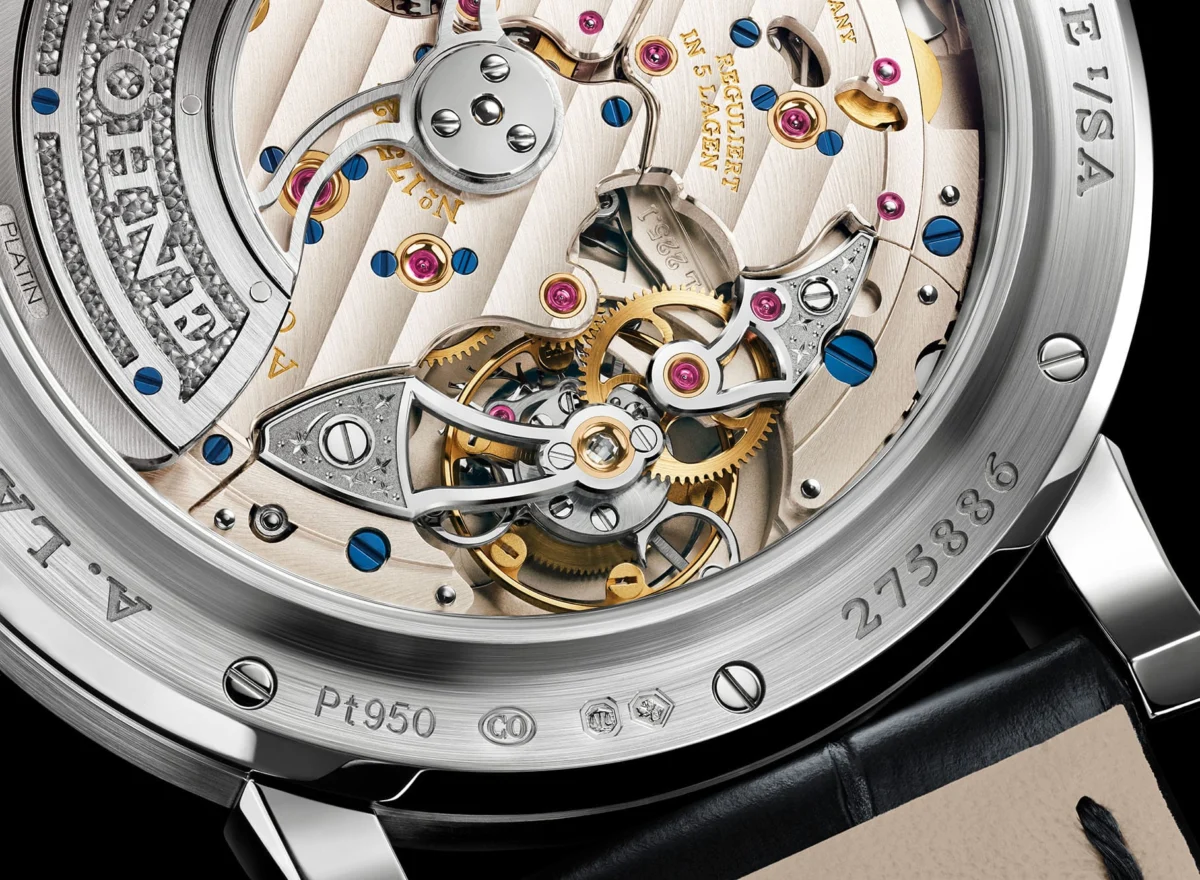
At the most recent iteration of Watches & Wonders Geneva, the global horological spotlight followed a familiar, high-velocity rhythm. On "Day Zero," digital platforms were flooded with high-resolution renders and instant critiques, as enthusiasts and collectors debated the merits of every new release within seconds of their unveiling. However, for A. Lange & Söhne, the preeminent powerhouse of Saxon watchmaking, these "novelties" are not the result of recent trends or reactive marketing. Instead, they represent the culmination of strategic decisions made half a decade ago. Led by CEO Wilhelm Schmid, the Glashütte-based manufacture continues to operate on a timeline that prioritizes generational permanence over seasonal hype, anchored by what Schmid describes as a philosophy of absolute discipline.
The brand’s recent presentation was headlined by a trio of sophisticated calendar complications: the Lange 1 Tourbillon Perpetual Calendar "Lumen" and two new iterations of the Saxonia Annual Calendar. While some industry observers interpreted this as a pivot toward calendar-centric collections, Schmid clarifies that the releases are part of a deliberate, long-term roadmap designed to address distinct market segments simultaneously. The "Lumen" model, priced in the vicinity of €500,000, serves as a horological flagship, while the annual calendars provide a sophisticated entry point for collectors who appreciate high complications but operate within different fiscal parameters. This multi-tiered approach ensures that the brand maintains its elite status while rewarding the loyalty of a diverse collector base.

The Chronology of Saxon Precision and the Five-Year Horizon
To understand the current state of A. Lange & Söhne, one must look back to the brand’s modern foundational tenets established by Walter Lange and Günter Blümlein in the early 1990s. Following the reunification of Germany, the duo sought to restore Glashütte to its former glory as the heart of German precision watchmaking. The brand’s official "rebirth" in 1994, marked by the introduction of the Lange 1, the Arkade, the Saxonia, and the Tourbillon "Pour le Mérite," set a standard for technical transparency and aesthetic rigor that remains unchanged.
In the contemporary manufacturing environment, the lead time for a new complication is approximately five years. This timeline is dictated by the brand’s refusal to utilize modular "off-the-shelf" solutions. Every movement is developed in-house, requiring extensive research, development, and testing phases. Consequently, the watches seen at Watches & Wonders Geneva today were conceptualized in 2019 or earlier. This long-term production cycle acts as a natural buffer against market volatility and fleeting aesthetic trends. While other brands may pivot to smaller case sizes or specific dial colors in response to social media feedback, A. Lange & Söhne remains committed to its internal design codes, trusting that its disciplined approach will align with the market when the product eventually reaches the boutique floor.
Debunking the Myth of Artificial Scarcity
One of the most persistent narratives in the luxury watch industry is the idea that top-tier manufacturers artificially suppress production volumes to drive secondary market prices and brand "hype." Wilhelm Schmid addressed this misconception with remarkable candor, confirming that the manufacture operates at a hard capacity of between 4,000 and 5,000 watches per year. This ceiling is not a marketing tactic but a reflection of the physical and human limitations inherent in high-end horology.

The primary bottleneck is the availability of master watchmakers capable of performing the brand’s signature "double assembly" process. At A. Lange & Söhne, every movement is fully assembled and regulated, then completely taken apart. Each component is then cleaned and decorated—often with hand-engraved balance cocks and Glashütte stripes—before being assembled a second time. This process ensures both mechanical perfection and aesthetic flawlessness, but it is incredibly time-consuming.
"I am a businessman; my education is in business, not watchmaking," Schmid noted during the fair. "If I could produce more watches, I would. But as long as you cannot substitute human beings with robots and AI, that is what you get." The brand’s commitment to artisanal quality means that increasing production would necessitate a compromise in finish or reliability—a trade-off that Schmid insists the brand’s clientele would never accept.
Technical Analysis of the 2024 Calendar Novelties
The Lange 1 Tourbillon Perpetual Calendar "Lumen" represents the intersection of traditional Saxon craftsmanship and contemporary material science. The "Lumen" series, which began in 2010 with the Zeitwerk, utilizes a semi-transparent sapphire crystal dial treated with a special coating. This coating filters out most visible light but allows UV rays to pass through, charging the luminous pigments on the date discs and indicators beneath the dial. This allows the outsized date and various indicators to glow consistently throughout the night.

Technically, the "Lumen" execution of the Lange 1 Perpetual Calendar required a reimagining of the display. While standard models focus on daytime legibility, the "Lumen" must maintain the "character" of the Lange 1 while ensuring the nighttime "glow" does not appear cluttered. The solution involved placing luminous material underneath the crystal so that the contours of the numerals are outlined by a surrounding glow, rather than the numerals themselves being plump with lume.
The Saxonia Annual Calendar, presented in a 36mm case, addresses a growing demand for classical proportions. The annual calendar complication, which requires adjustment only once a year at the end of February, is powered by the self-winding calibre L085.1 SAX-0-MAT. This movement features the patented Zero-Reset function, which allows the seconds hand to jump to zero when the crown is pulled, facilitating precise time setting.
The Visual Mirroring of the Lange 1 Family
A cornerstone of the A. Lange & Söhne design philosophy is the intentional mirroring between automatic and hand-wound models within the Lange 1 family. This legacy, tracing back to Günter Blümlein, serves as a "secret handshake" for horological insiders. In the hand-wound Lange 1, the outsized date is typically positioned on the right side of the dial, while the time display is on the left. In the automatic versions, these elements are often mirrored.

This design discipline extends to the entire portfolio. For instance, the brand maintains a strict rule that the iconic outsized date will never appear in the 1815 collection, which is reserved for more traditional, Arabic-numeral designs inspired by historic pocket watches. By adhering to these rigid aesthetic boundaries, the brand prevents the dilution of its sub-collections, ensuring that each family maintains a distinct identity that is recognizable even from a distance.
Managing Expectations in a Digital-First World
In an era where 99.9% of watch enthusiasts experience a timepiece through a smartphone screen rather than on their wrist, Schmid emphasizes the importance of expectation management. The brand’s strategy is to "under-promise and over-deliver." While high-resolution photography can capture the architecture of a movement, it cannot convey the tactile resistance of a chronograph pusher or the specific weight of a platinum case.
Schmid notes that many collectors are genuinely surprised when they finally handle a Lange watch in person. The uniform pressure required to operate the push-buttons on a Datograph or a Triple Split is a result of meticulous calibration that transcends visual marketing. For the manufacture, the "moment of truth" occurs in the boutique, where the physical sensation of the watch must exceed the digital hype generated during the fair.

Future Outlook: Identity as an Anchor
As the luxury watch market enters a period of stabilization following the post-pandemic boom, A. Lange & Söhne remains focused on its mid- to long-term perspective. The brand’s future is built on a foundation of rising global interest in artisanal watchmaking. While the entry price for a Saxon masterpiece remains high, the brand benefits from a growing "aspirational" audience that admires the brand’s values long before they are in a position to acquire a piece.
Schmid’s vision for the future is one of "predictable unpredictability." While the specific complications launched each year may surprise the public, the set of values those watches represent—hand-finishing, mechanical innovation, and Saxon discipline—will remain constant. By sticking to its DNA regardless of market fluctuations, A. Lange & Söhne ensures that it remains not just a manufacturer of timepieces, but a custodian of a specific horological culture.
The enduring appeal of the brand lies in the knowledge that every watch is a product of human struggle and skill. As Schmid concluded, "Our customers do not buy it just because of how it looks and how it feels, but also the idea that very talented and skilled people struggled to build it." In an increasingly automated world, this commitment to the human element remains the ultimate luxury.
