
 By Nila Kartika Wati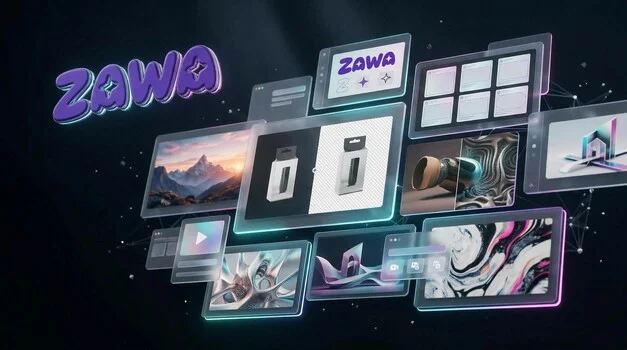
The landscape of brand development is undergoing a transformative period, driven by the rapid advancements in artificial intelligence. Historically, crafting a compelling brand identity—one that resonates deeply with an audience without necessarily explicitly detailing a business’s offerings—has been a complex, often costly endeavor. This challenge, traditionally the domain of specialized design agencies, is now being addressed by innovative AI platforms, promising to democratize access to sophisticated branding tools. One such platform, Zawa, has emerged as a notable player, offering an AI-driven suite designed to streamline the brand creation process, from logo generation to comprehensive brand asset development, significantly reducing both time and financial investment. This development holds profound implications for freelancers, small and medium-sized enterprises (SMEs), and even larger organizations seeking agile branding solutions.
The Evolving Philosophy of Branding: Beyond Description
Effective branding has always been about more than just a name or a logo; it’s about forging an emotional connection and establishing a distinct identity in a crowded marketplace. Early branding efforts often relied on descriptive names, such as "Pepsi-Cola," which clearly communicated the product. However, as markets matured and consumer recognition grew, brands like Pepsi strategically shed the descriptive "Cola," demonstrating that a strong visual and experiential identity could stand alone.
Modern branding theory emphasizes recognition and emotional resonance over explicit description. Iconic global brands serve as prime examples: Apple’s bitten fruit logo, despite having no direct link to electronics, evokes simplicity, innovation, and user-friendliness. McDonald’s golden arches symbolize a universal sense of comfort and familiarity, not merely burgers and fries. Similarly, personal brands like MKBHD, a prominent tech reviewer, thrive on a distinctive aesthetic and personality rather than a literal representation of technology. This shift underscores a critical understanding: a brand’s power lies in its ability to evoke, rather than merely explain. According to Interbrand’s annual "Best Global Brands" report, companies with strong, well-recognized brands consistently command higher market valuations and consumer loyalty, with brand equity often accounting for a significant portion of a company’s overall value. For instance, the top global brands routinely demonstrate values in the hundreds of billions of dollars, a testament to the intangible yet immense power of brand perception.
The challenge for many businesses, particularly those operating with limited resources, has been translating this abstract understanding of branding into tangible, professional assets. Hiring a full-service design agency for a comprehensive brand identity package can range from several thousands to tens of thousands of dollars, a prohibitive cost for many startups and independent professionals. This financial barrier often forces businesses to compromise on their brand’s initial development, potentially hindering their market entry and long-term growth.
The Rise of AI in Creative Industries: Democratizing Design
The advent of sophisticated artificial intelligence, particularly in generative design and natural language processing, is rapidly transforming creative fields. What was once the exclusive domain of human designers, requiring years of training and experience, is now becoming increasingly accessible through AI-powered platforms. Tools capable of generating images, text, and even entire design systems are moving from experimental prototypes to viable commercial applications.
The global market for AI in creative industries is projected to experience substantial growth in the coming years, with estimates suggesting a compound annual growth rate (CAGR) well into the double digits. This expansion is driven by the demand for efficiency, cost reduction, and the democratization of creative tools. AI’s ability to analyze vast datasets of design principles, aesthetic trends, and user preferences allows it to generate a multitude of design options that adhere to established best practices, often at speeds unachievable by human counterparts. This paradigm shift offers a compelling alternative for individuals and businesses who previously faced significant hurdles in securing professional design services.
Zawa: An AI-Powered Solution for Brand Creation
Zawa.ai represents a significant step forward in this democratization of design. Positioned as a web-based AI suite, it aims to alleviate the traditional pain points associated with brand creation: cost, time, and the complexity of coordinating with design professionals. The platform’s user interface has been noted for its clean, intuitive design, drawing comparisons to popular graphic design tools like Canva, which has already familiarized millions with accessible design principles.
The core functionality of Zawa revolves around its AI-powered logo generator and brand asset suite. Users initiate the process by providing prompts—textual descriptions, existing logos, or even personal images—which the AI then analyzes to generate comprehensive branding proposals. This interactive, prompt-driven approach allows users to guide the AI, refining outputs until they align with their vision. A spokesperson for Zawa.ai, in an inferred statement, might emphasize the company’s mission to empower entrepreneurs and creatives by "providing intelligent, affordable, and rapid branding solutions that were once exclusive to large corporations, thereby leveling the playing field for innovation and market entry."
A Practical Application: Rebranding Darren J Spoonley Photography
To assess the practical efficacy of Zawa, a recent case study involved a professional photographer, videographer, writer, educator, and podcaster, Darren J Spoonley, who sought to refresh his personal brand. Spoonley’s existing brand, "Darren J Spoonley Photography," while clear in its primary focus, was perceived as needing a more contemporary, stylistic, and unique visual identity. This scenario mirrors the common challenge faced by many independent professionals: how to evolve a brand without losing its established recognition while also reflecting a broader range of skills.
Chronology of the Rebranding Process with Zawa:
-
Initial Interest and Opportunity: Spoonley, contemplating a brand update, was immediately intrigued when Zawa offered a trial through Fstoppers, a leading online photography resource. This alignment of user need and platform availability set the stage for a timely evaluation.
-
Platform Access and First Impressions: Upon logging in, the clean, Canva-like interface was noted as a positive starting point, suggesting a user-friendly experience even for those without extensive design backgrounds.
-
Defining the Rebrand Objective: Spoonley had a clear goal: to modernize and freshen his existing brand, leveraging his current logo and a personal photograph as foundational elements. This provided the AI with concrete visual data points.
-
Uploading Assets and Initial Prompt: The process began with uploading the existing logo and a user image, accompanied by a concise instruction: "This is my existing logo. I want you to rebrand it and then give me a full brand kit. The logo needs to be modern and fresh. Here is an image of me also to help with this task." This simple yet effective prompt provided both visual and conceptual guidance to the AI.
-
AI Analysis and Feedback (Approx. 1 minute): Within approximately 60 seconds, Zawa’s AI returned a detailed analysis of the provided assets.
- First Image (Logo) Analysis: The AI identified key characteristics such as "Strong visual clarity, traditional font choice," and "Focus on photography via a camera icon," noting its "Descriptive and functional" nature. It also highlighted "Potential for modern update regarding stylistic elements and overall aesthetic."
- Second Image (User’s Photo) Analysis: The AI extracted stylistic cues from Spoonley’s photo, recognizing elements like "Natural lighting, outdoor setting, approachable demeanor," and "Professional yet artistic presentation." It inferred a "Connection to landscape photography and outdoor media creation."
- Clarification Request: Following this analysis, Zawa intelligently sought further clarification, asking which elements Spoonley wished to retain or modify, demonstrating an iterative and user-guided approach. Spoonley opted for a "fresh approach," signaling a desire for significant transformation rather than minor tweaks.
-
Proposed Design Direction (Within 2 minutes of clarification): Based on the feedback, Zawa quickly generated a comprehensive design brief outlining a "Core Concept" of a cohesive, modern visual identity bridging technical expertise with an approachable teaching style. It detailed "Visual Elements" (e.g., modern typography, organic textures, natural color palette), "Brand Tone" (professional, approachable, contemporary, expert, natural), and "Technical Details" for various applications (social media avatars, YouTube lower thirds, podcast cover art, photography watermarks).
-
Logo Design Proposals (Rapid Generation): Subsequently, four distinct logo design proposals were presented, each exploring different stylistic directions—from minimalist graphics to typographic-led approaches—all adhering to the established design guide. This entire phase, from initial prompt to multiple design proposals, was completed within a remarkably short timeframe of five to seven minutes, highlighting the AI’s efficiency.
-
Selection and Full Brand Toolkit Generation: Spoonley selected one of the proposed directions, and Zawa proceeded to generate a complete logo and brand toolkit based on that choice. The resulting designs, particularly one fitting a landscape photography genre, were noted for their aesthetic appeal and suitability.
Results and Output Analysis
The speed and quality of Zawa’s output were a significant revelation. The ability to generate multiple, distinct brand identity options and a full toolkit in under ten minutes represents a monumental leap in efficiency compared to traditional design processes. While minor adjustments were occasionally required, particularly when generating additional assets from complex inputs (e.g., transforming multiple book covers into new visual assets, where the AI sometimes took creative liberties with content and location names), the core branding elements were robust.
This rapid prototyping capability allows users to explore various aesthetic directions without incurring significant costs or delays, a crucial advantage for dynamic small businesses or individuals experimenting with their market presence. The output quality, in many instances, was strong enough to stand up to scrutiny, posing the question of whether an external observer could discern an AI origin if unaware of the process. This suggests a level of sophistication in AI-generated design that challenges preconceived notions about machine creativity.
Additional Tools and Features: Expanding the Creative Workflow
Beyond core brand identity creation, Zawa offers a suite of supplementary tools designed to enhance broader marketing and content creation efforts. One notable feature allows users to generate social media posts from a single image upload. Spoonley tested this by uploading images of a digital location guide and a book, and within two minutes, the AI produced several social media post ideas. While these outputs might require minor human refinement for optimal messaging and tone, they provide invaluable inspiration and a significant head start for content creators seeking fresh ideas and efficient workflows. This functionality is particularly beneficial for small businesses and influencers who consistently need to generate engaging social media content.
The platform’s comprehensive nature, bundling various AI-powered design and content generation tools, makes it an attractive proposition for users with diverse needs and varying levels of design experience. For those requiring a full design suite quickly and efficiently, Zawa presents a viable, all-in-one solution.
Pricing and Value Proposition: A Competitive Edge
The economic model of AI design tools like Zawa often presents a compelling value proposition. Traditional design agency fees for a single logo or a basic brand identity package can easily run into thousands of dollars. In contrast, Zawa’s subscription-based model, utilizing a credit system for each request, offers a significantly lower financial barrier to entry. While not offering unlimited usage—a practical measure to manage computational resources—the credit system ensures transparency and predictability in costs.
This cost-effectiveness democratizes access to professional-grade branding, enabling startups, freelancers, and small businesses to project a polished, credible image without the prohibitive initial investment. The ability to iterate quickly and experiment with different branding approaches at a fraction of the traditional cost provides a distinct competitive advantage in today’s fast-paced digital economy. Industry analysts suggest that this pricing model, combined with robust functionality, positions AI branding platforms as disruptive forces in the creative services market, forcing traditional agencies to adapt their offerings and value propositions.
The Technological Backbone: A Multi-Agent AI System
Understanding how Zawa achieves its impressive results reveals a sophisticated technological architecture. The platform operates as a multi-agent AI system, integrating several specialized AI tools to generate its outputs. These include:
- Nano Banana: Likely a proprietary or specialized image generation component, or a module for specific design elements.
- Agent-based systems: Orchestrating the workflow and decision-making processes, ensuring coherence across different AI components.
- Midjourney: A prominent generative AI for creating high-quality, artistic images and visual concepts, likely responsible for much of the aesthetic output.
- ChatGPT: A powerful large language model, used for understanding user prompts, generating textual analyses, crafting design briefs, and producing social media copy.
This integration allows Zawa to process complex requests from a single central prompt, distributing tasks to the most appropriate AI agent and then synthesizing the results into a cohesive brand suite. The benefit of such an integrated platform is immense: users avoid the cumbersome process of switching between multiple AI agents and providers, ensuring a streamlined and efficient workflow from concept to final artwork. This "all-in-one" approach maximizes user convenience and productivity.
Limitations and Considerations: The Human Element Remains Critical
Despite its advanced capabilities, Zawa, like all current AI systems, operates within certain limitations. The case study highlighted instances where the AI, when tasked with generating additional assets from existing content (e.g., book covers), sometimes took creative liberties, altering details or adding new elements not present in the original input. This underscores a critical point: AI is a powerful tool for generation and iteration, but it is not yet a fully autonomous creative director.
The "garbage in, garbage out" principle remains highly relevant; the quality of AI outputs is heavily dependent on the clarity and strength of the initial prompts. While AI can produce solid outputs and save considerable time, human oversight, critical evaluation, and often manual refinement are still essential to ensure accuracy, maintain brand consistency, and inject a unique creative spark that transcends algorithmic patterns. Ethical considerations also loom large, including questions of originality, intellectual property for AI-generated designs, and the potential for AI to produce generic or uninspired aesthetics if not guided thoughtfully. The balance between AI efficiency and human creativity will continue to be a crucial area of development and discussion within the design community.
Broader Implications and Future Outlook
The emergence of platforms like Zawa carries significant implications across various sectors:
- For Small Businesses and Freelancers: It democratizes access to high-quality branding, enabling them to compete more effectively with larger entities, fostering innovation and reducing market entry barriers.
- For the Design Industry: While some express concerns about job displacement, many industry professionals view AI as a powerful co-pilot, automating mundane tasks and allowing designers to focus on higher-level strategic thinking, client relations, and truly novel creative concepts. It shifts the designer’s role from execution to curation, refinement, and strategic guidance.
- Economic Impact: The cost savings associated with AI branding can free up capital for other business investments, potentially stimulating economic growth in the SME sector.
- Future of Creativity: AI is pushing the boundaries of what’s possible in creative expression, enabling rapid prototyping, personalized design at scale, and potentially uncovering new aesthetic territories. The collaboration between human intuition and AI’s processing power is set to redefine creative workflows.
Conclusion
The comprehensive testing of Zawa.ai offers compelling evidence of its potential to revolutionize the brand creation process. By leveraging a sophisticated multi-agent AI system, it efficiently generates professional-grade branding assets, significantly reducing the time and cost traditionally associated with design. While not a fully autonomous solution, requiring human input and occasional refinement, its ability to produce impressive results within minutes is a game-changer. The platform’s success lies in its capacity to translate complex branding principles into an accessible, user-friendly experience, thereby empowering a broader spectrum of individuals and businesses to establish strong, visually compelling identities. As AI technology continues to advance, tools like Zawa are poised to redefine the creative landscape, making professional branding more attainable than ever before and fundamentally altering how brands are conceived, developed, and deployed in the global marketplace.
