
 By admin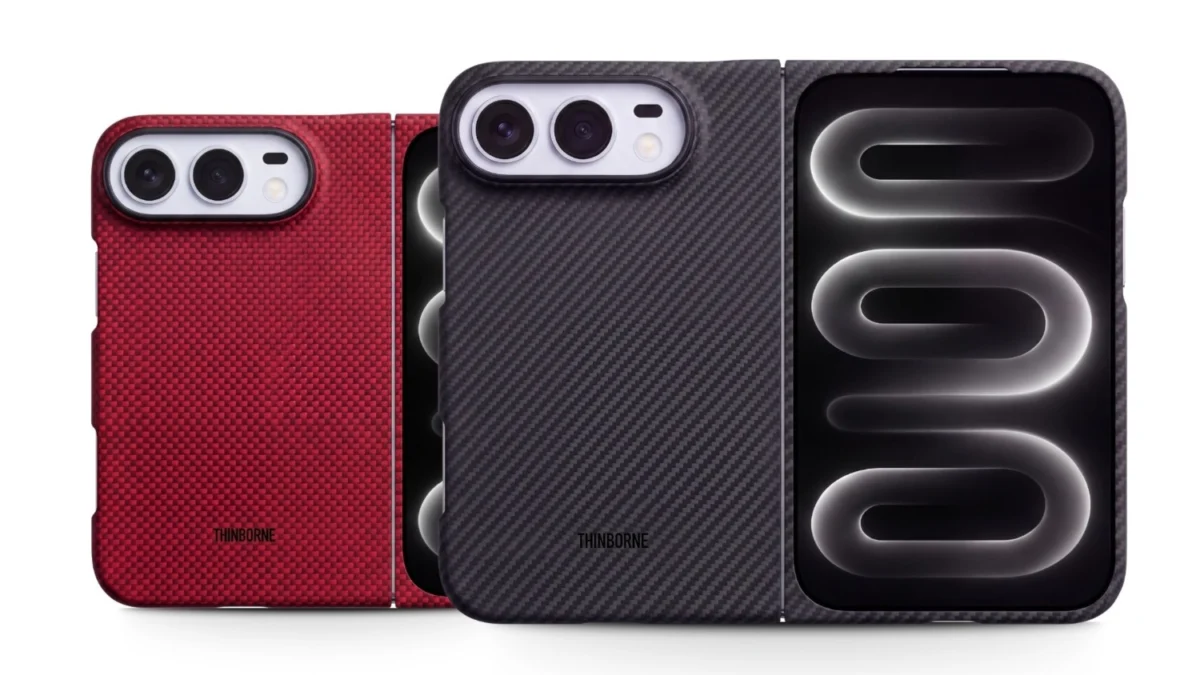
The landscape of the premium smartphone market is on the precipice of a significant transformation as anticipation builds for Apple’s foray into the foldable device sector, reportedly titled the iPhone Duo. As hardware leaks and supply chain reports suggest a device that prioritizes a slim profile and high-end aesthetics, the accessory market is already responding with specialized solutions. ThinBorne, a manufacturer known for minimalist protective gear, has unveiled its flagship case for the anticipated iPhone Duo, utilizing aerospace-grade 600D aramid fiber. The product aims to address the primary concern of foldable device owners: maintaining the structural integrity and thinness of a dual-screen device without sacrificing protection or modern functionality such as MagSafe and Qi2 compatibility.
The Evolution of the Apple Foldable: A Chronological Context
The development of a foldable iPhone has been the subject of industry speculation for nearly a decade. While competitors like Samsung and Huawei pioneered the category as early as 2019, Apple has historically maintained a cautious "wait-and-see" approach, focusing on perfecting the durability of the folding mechanism and the crease-free nature of the display.
The timeline of the iPhone Duo’s development can be traced back to 2016, when Apple filed its first significant patents regarding flexible display substrates. By 2018, the company was reportedly testing prototype foldable screens from LG Display and Samsung Display. In 2020, reports emerged from the supply chain suggesting that Apple had begun internal drop tests for two distinct foldable designs: a clamshell "Flip" style and a book-style "Duo" design. By late 2023, industry analysts, including Ming-Chi Kuo and Ross Young, pointed toward a 2026 release window, citing Apple’s rigorous standards for hinge longevity and screen resilience.
The iPhone Duo is expected to represent the pinnacle of Apple’s industrial design, likely featuring a chassis thinner than the current iPhone 15 Pro Max when unfolded. This anticipated form factor presents a unique challenge for accessory manufacturers. Traditional protective cases, which often add 2.0 mm to 3.0 mm of thickness, would render a foldable device unwieldy. ThinBorne’s entry into this space with a 0.90 mm profile reflects a strategic alignment with the "thin-is-king" philosophy expected of the Duo.
Material Science: The 600D Aramid Fiber Advantage
At the core of ThinBorne’s solution is 600D aramid fiber, a material more commonly associated with aerospace engineering and military-grade body armor. In the context of smartphone protection, aramid fiber offers a high strength-to-weight ratio that exceeds that of traditional polycarbonate or silicone.
The "600D" designation refers to the denier—the linear mass density of the fiber. In the world of aramid textiles, a lower denier count indicates a finer, more tightly woven fabric. While many competitors use 1500D aramid fiber, which is thicker and easier to manufacture, the 600D variant used by ThinBorne allows for a thinner wall construction while maintaining high tensile strength. This allows the case to achieve its 0.90 mm (0.035 in) thickness and a weight of approximately 21.5 grams (0.76 oz).
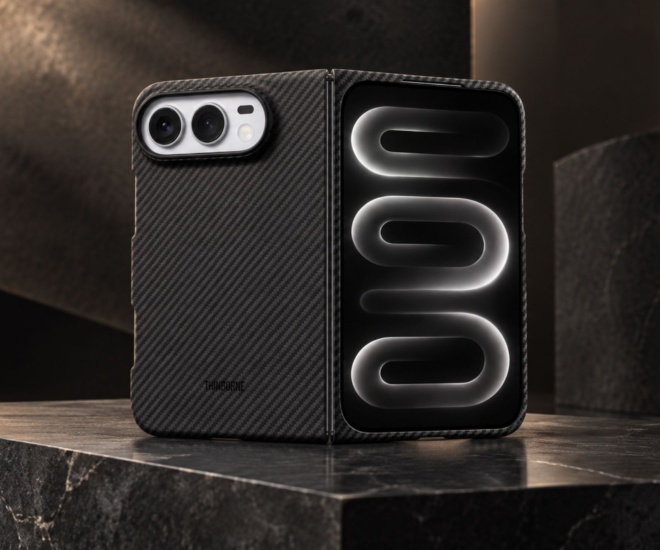
Beyond the physical dimensions, the use of aramid fiber provides a tactile advantage. The fine-woven pattern creates a naturally grippy, matte texture that resists fingerprints and oil—a common complaint with high-gloss luxury devices. By opting for a material that is inherently strong, ThinBorne eliminates the need for internal bracing or thick corner bumpers, allowing the iPhone Duo to retain its intended silhouette.
Engineering for the Foldable Form Factor
Protecting a foldable device like the iPhone Duo is exponentially more complex than designing a case for a static slab smartphone. A foldable case must account for the hinge movement, the shifting centers of gravity, and the requirement that the case remain securely attached to two separate moving halves without the use of permanent adhesives that could damage the phone’s finish.
ThinBorne’s approach focuses on precision molding. Because the iPhone Duo is expected to feature minimal bezels, the case must snap onto the frame with tolerances measured in microns. The 0.90 mm thickness is particularly critical here; it ensures that when the device is folded, the gap between the two halves is not exacerbated by the case material.
Furthermore, the integration of MagSafe and Qi2 technology into such a thin profile is a notable engineering feat. MagSafe requires a specific array of magnets to ensure alignment and charging efficiency. In a 0.90 mm case, there is virtually no room to "hide" these magnets. ThinBorne has utilized ultra-thin N52 neodymium magnets, which are embedded directly into the aramid layers. This allows the iPhone Duo to remain compatible with the vast ecosystem of Apple’s magnetic accessories—including chargers, wallets, and car mounts—without adding a visible "bump" to the back of the case.
Market Positioning and Consumer Expectations
The anticipated price point of the iPhone Duo—rumored to be in the $1,500 to $2,000 range—places it firmly in the ultra-luxury segment of the consumer electronics market. Owners of such devices typically fall into two categories: those who require rugged, "survivor-style" protection, and those who prioritize the "naked" feel of the device but recognize the necessity of basic scratch and minor drop protection.
ThinBorne is explicitly targeting the latter. By offering a case that mimics the look and feel of the device itself, the company is positioning its product as an "invisible" layer of security. Industry analysts suggest that as smartphones become more expensive, there is a growing trend toward "stealth wealth" accessories—products that are high-quality and expensive but lack overt branding or flashy colors. The ThinBorne color palette—Classic Black, Crimson Red, and Navy Blue—reflects this understated approach.
Technical Specifications and Compatibility Data
To understand the impact of ThinBorne’s design, it is helpful to compare it to industry averages for premium cases:
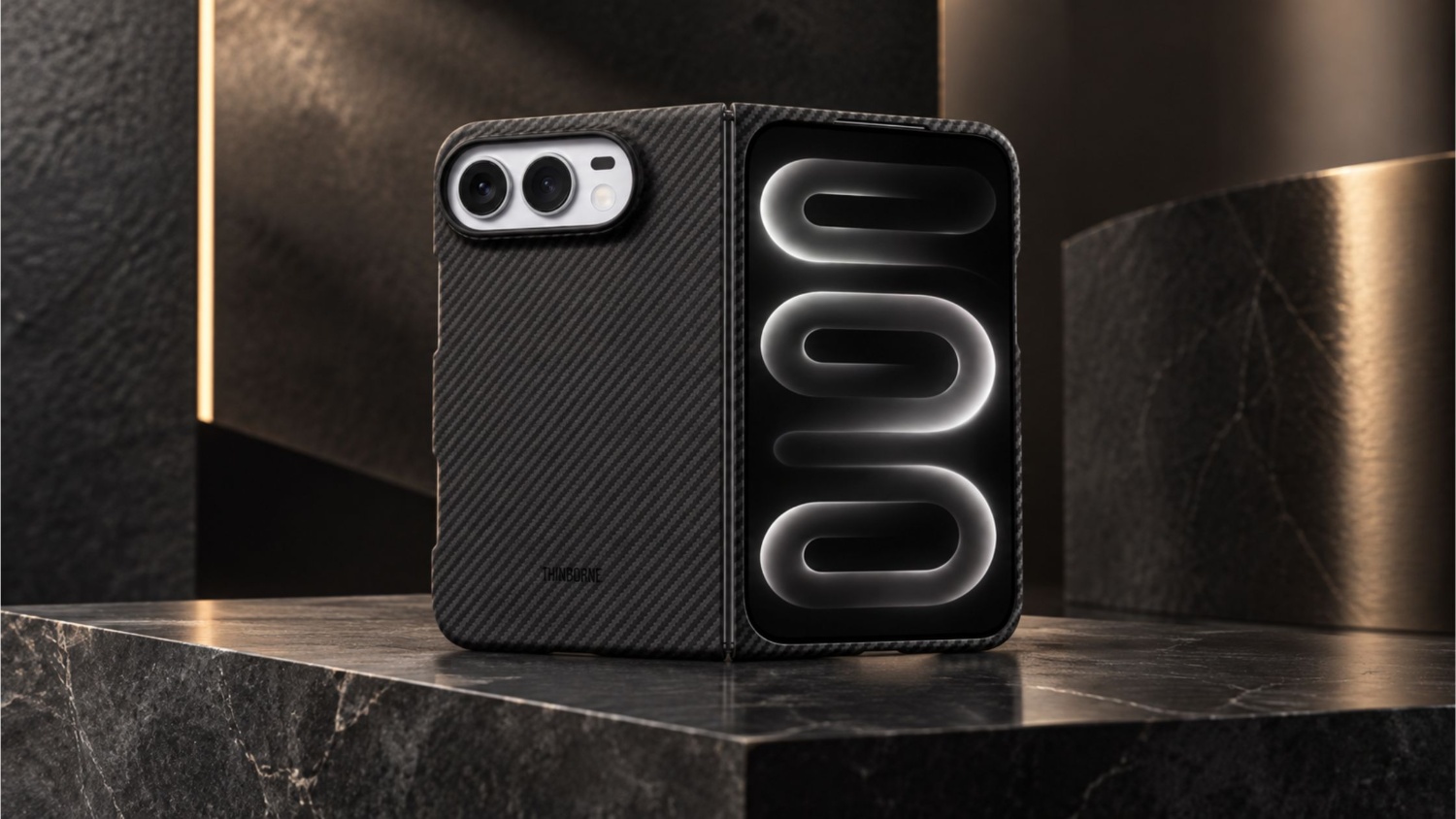
- Thickness: ThinBorne (0.90 mm) vs. Standard Premium Case (1.5 mm – 2.2 mm).
- Weight: ThinBorne (21.5 g) vs. Standard Rugged Case (45 g – 60 g).
- Material: Aerospace-grade 600D Aramid vs. TPU/Polycarbonate blends.
- Charging Compatibility: Full MagSafe and Qi2 support.
The inclusion of Qi2 compatibility is particularly significant. As the new global standard for wireless charging based on Apple’s MagSafe technology, Qi2 ensures that the iPhone Duo will be compatible not just with Apple-branded chargers, but with a new generation of universal magnetic chargers. This future-proofing is essential for a device expected to be at the center of a user’s digital life for several years.
Broader Implications for the Accessory Industry
The launch of ThinBorne’s iPhone Duo case signals a shift in the third-party accessory market. As Apple moves toward more complex hardware designs, the "one-size-fits-all" approach of mass-market case manufacturers is becoming less viable. The need for specialized materials like aramid fiber and high-precision manufacturing processes suggests a bifurcation in the market: low-cost silicone covers for entry-level models and high-performance, material-science-driven cases for the premium and foldable segments.
Furthermore, the focus on "careful users" represents a growing niche. As device insurance programs like AppleCare+ become more prevalent, consumers are becoming more willing to use thinner cases. They rely on the case for day-to-day scratch protection and grip, while relying on insurance for catastrophic screen failures. ThinBorne’s design caters perfectly to this modern ownership model.
Final Analysis: The Intersection of Luxury and Utility
As the tech world awaits the official unveiling of the iPhone Duo, the role of the accessory has evolved from a mere afterthought to a critical component of the user experience. A device that folds is inherently a statement of engineering prowess; to cover it in a bulky, plastic shell is, for many, a contradiction of the device’s purpose.
ThinBorne’s use of 600D aramid fiber and its commitment to a sub-1mm profile provide a solution that respects the original design language of the iPhone Duo. By integrating MagSafe and Qi2, the case ensures that the transition to a foldable form factor does not come at the cost of the convenience features users have grown to depend on. In the high-stakes world of premium smartphone accessories, ThinBorne has opted for restraint, relying on the inherent quality of its materials and the precision of its fit to appeal to the most discerning of Apple’s customer base. The result is a product that does not seek to change the iPhone Duo, but rather to preserve it.
