
 By admin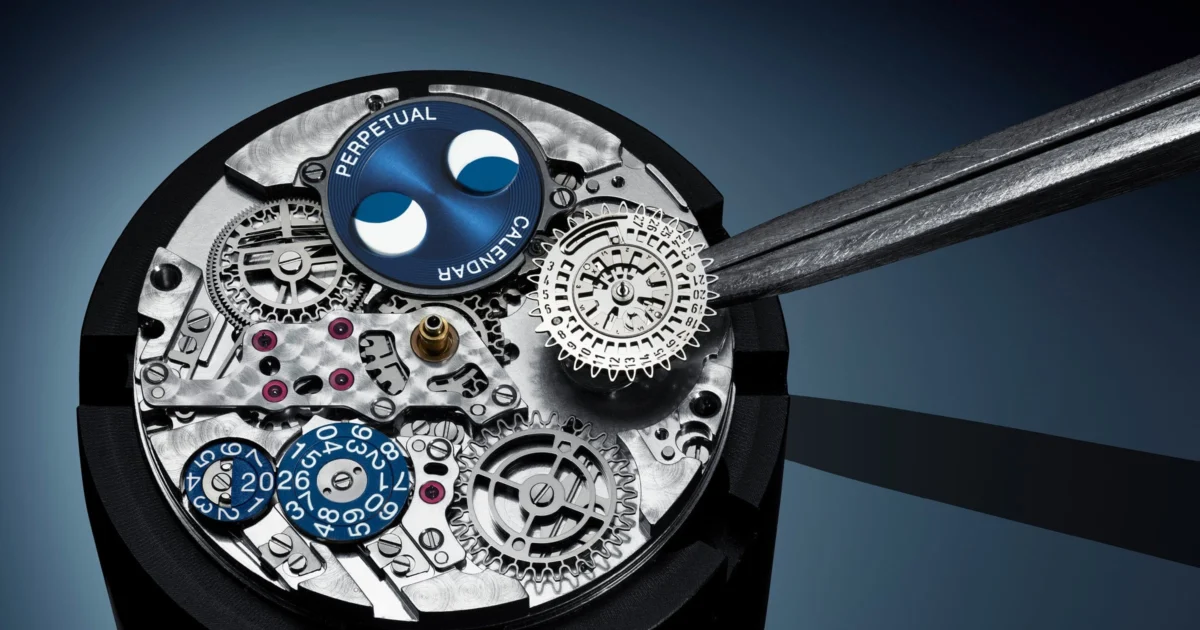
The 2026 edition of Watches and Wonders Geneva served as a definitive stage for IWC Schaffhausen to celebrate a momentous milestone: the 90th anniversary of its iconic Pilot’s Watch collection. Established in 1936 with the release of the "Special Pilot’s Watch" (Ref. IW436), the lineage has evolved from a functional tool for aviators into a cornerstone of luxury sports watchmaking. To mark nearly a century of dominance in the skies, the "Engineers of Schaffhausen" utilized the 2026 fair to debut two groundbreaking technical advancements—Ceralume® and IWC-ProSet™—signaling a shift from traditional watchmaking toward advanced material science and high-precision mechanical logic.
The presentation, led by IWC CEO Chris Grainger-Herr, emphasized the role of the IWC Experimental (XPL) division. This specialized research and development arm is tasked with pushing the boundaries of shock resistance, anti-magnetism, and material aesthetics. By integrating these innovations into the Big Pilot’s collection, IWC has addressed long-standing limitations in perpetual calendar functionality and low-light legibility, reinforcing its position as a leader in technical horology.

A Nine-Decade Legacy of Aviation Excellence
The history of IWC’s involvement with aviation is rooted in the mid-20th century, a period characterized by the need for high-contrast, anti-magnetic, and robust timekeeping instruments. Following the 1936 original, the brand produced the oversized 55mm Big Pilot’s Watch (Ref. IW431) for the German Air Force in 1940, known as the B-Uhr. This was followed by the legendary Mark 11 in 1948, which served the British Royal Air Force for decades.
In 2026, IWC’s tribute to this history was not merely aesthetic. While the DNA of the collection remains visible in the oversized crowns and legible dials, the new novelties represent a departure from the "functional austerity" of the past. The brand is now leveraging advanced manufacturing techniques, such as LIGA (Lithographie, Galvanoformung, Abformung), to create components with tolerances and complexities that were previously impossible to achieve. This historical trajectory from the Ref. IW436 to the 2026 Ceralume® models illustrates a transition from surviving the cockpit environment to mastering the physics of the materials themselves.
Ceralume®: The Evolution of Luminous Materials
One of the most visually arresting reveals at Watches and Wonders was the Big Pilot’s Watch Perpetual Calendar Ceralume® (Ref. IW505801). This timepiece introduces a patented luminous ceramic technology that allows the entire watch case to emit light. Unlike traditional watches where luminescence is applied only to the dial and hands, Ceralume® integrates high-performance Super-LumiNova® pigments directly into the ceramic matrix.

The development of Ceralume® required years of collaboration with RC Tritec, a Swiss specialist in luminescent materials. The primary technical challenge lay in the molecular structure of the components. Zirconium oxide, the base for IWC’s technical ceramics, and Super-LumiNova® have different molecular sizes. Ensuring a homogeneous mixture was critical; any inconsistency in the blend would result in "patchy" luminescence or compromised structural integrity of the case.
According to technical briefings provided during the event, the Ceralume® case can emit a bright green glow for up to eight hours in total darkness. This is achieved by mixing the ceramic powders with the luminous pigments before the sintering process, which occurs at temperatures exceeding 1,000 degrees Celsius. The result is a 46.5mm timepiece that maintains its presence regardless of lighting conditions, solving the visibility challenges often faced by pilots and divers in low-light environments.
IWC-ProSet™: Redefining Perpetual Calendar Logic
While Ceralume® addressed material aesthetics, the introduction of IWC-ProSet™ (Professional Setting) addressed a decades-old mechanical "pain point" for collectors of complicated watches. Traditionally, perpetual calendars—most notably those based on the legendary 1985 Kurt Klaus design—could only be adjusted forward. If a user accidentally set the date too far ahead, or if the watch stopped and needed to be reset after a trip across the International Date Line, the only solution was to wait for time to "catch up" or send the watch to a service center.

The IWC-ProSet™ mechanism, featured in the new 42mm and 43mm Big Pilot’s Perpetual Calendars, allows for bidirectional adjustment of all calendar indications via the crown. This system replaces the traditional "grand lever" architecture with a gear-based logic. The mechanism utilizes a series of multiple functional layers and flexible, retractable "fingers" that allow the calendar wheels to move backward without damaging the delicate components.
This innovation is particularly significant for the Calibre 82665, which powers these new models. By utilizing LIGA-manufactured components, IWC has created a program wheel that can synchronize the date, day, month, and year indications in both directions. This removes the "danger zone" associated with traditional perpetual calendars, where adjusting the watch near midnight could lead to mechanical failure.
Technical Analysis of the New Calibre Platforms
The 2026 novelties are built upon two distinct movement platforms, each optimized for specific performance metrics:

- Calibre 52616 (Ceralume® Model): This movement features the Pellaton winding system and a 7-day power reserve (168 hours). It is designed for the larger 46.5mm case and utilizes a traditional moon phase accurate to one day in 577.5 years.
- Calibre 82665 (ProSet™ Models): This newer movement is equipped with a 60-hour power reserve and focuses on the bidirectional ProSet™ functionality. It features a silicon hairspring and a nickel-phosphorus escape wheel, enhancing resistance to magnetic fields.
Furthermore, IWC has significantly improved the accuracy of its moon phase indication. While the brand has offered 577.5-year accuracy since 2003, the latest generation of perpetual calendars with ProSet™ technology features an astronomical moon phase accurate to one day every 1,040 years. This refinement places IWC at the pinnacle of astronomical timekeeping within the luxury pilot watch segment.
The 2026 Novelty Lineup: References and Materials
IWC’s 2026 collection offers a diverse range of materials and sizes to cater to different collector profiles:
- Ref. IW505801 (Ceralume®): 46.5mm case, fully luminous ceramic, Calibre 52616.
- Ref. IW339601 (Le Petit Prince): 43mm white ceramic case, IWC-ProSet™, Calibre 82665. This model commemorates the 20th anniversary of IWC’s partnership with the Antoine de Saint-Exupéry Youth Foundation.
- Ref. IW329601 (Le Petit Prince): 42mm stainless steel case, blue dial, IWC-ProSet™, Calibre 82665.
- Ref. IW329602 (Mainline): 42mm 18-carat 5N gold case, IWC-ProSet™, Calibre 82665.
The inclusion of the "Le Petit Prince" editions highlights IWC’s ability to blend technical innovation with literary storytelling. The white ceramic version, in particular, represents a high-contrast aesthetic that has become a signature of the brand’s modern identity.

Broader Impact on the Luxury Watch Industry
The advancements showcased at Watches and Wonders 2026 suggest a strategic pivot for IWC. By focusing on "user-centric complications" like the ProSet™, the brand is appealing to a new generation of enthusiasts who value practicality and ease of use alongside traditional craftsmanship. The move to bidirectional adjustment addresses one of the most common frustrations in high-end horology, potentially forcing other manufacturers to rethink their own perpetual calendar architectures.
The IWC Experimental (XPL) division’s success with Ceralume® also indicates that the future of the brand lies in proprietary materials. Following the introduction of Ceratanium® (a titanium-ceramic hybrid) and the Spring Protect shock-absorption system, Ceralume® confirms that IWC is no longer content with using off-the-shelf ceramic components. By owning the R&D process for these materials, IWC creates a "moat" of exclusivity that is difficult for competitors to replicate.
Conclusion and Future Outlook
As IWC Schaffhausen enters its tenth decade of aviation-inspired watchmaking, the 2026 collection demonstrates a brand at the height of its creative and technical powers. The transition from the functional requirements of 1936 to the "LIGA wizardry" and material science of 2026 reflects a broader trend in the industry where engineering excellence is the primary driver of luxury value.

Industry observers and journalists at Geneva noted that IWC now possesses one of the most comprehensive calendar portfolios in the industry, ranging from the standard perpetual calendar to the highly complex "Eternal Calendar" capable of accounting for the Gregorian calendar’s leap-year exceptions until the year 3999. With the addition of Ceralume® and ProSet™, IWC has not only honored its 90-year history but has also set a high-tech trajectory for the century to come. Collectors can expect these technologies to eventually migrate to other families, such as the Ingenieur or Aquatimer, further solidifying IWC’s reputation as the "Engineers of Schaffhausen."
