
 By Nila Kartika Wati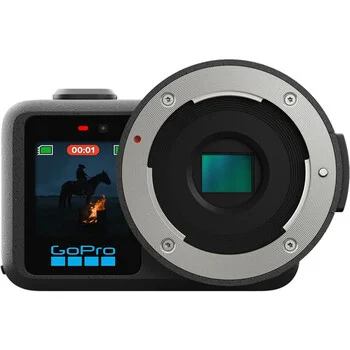
The iconic action camera pioneer, GoPro, has announced a transformative merger agreement with Starman Optical, a privately held optics company, in a deal valued at $285 million. This strategic move is poised to redefine GoPro’s corporate identity, steering it beyond its traditional consumer electronics focus into the burgeoning sectors of AI data center hardware and defense, while maintaining its Nasdaq listing and commitment to its established camera product lines. The announcement, made on a Tuesday morning, marks a significant turning point following years of financial turbulence that have plagued the once high-flying action camera manufacturer.
The Deal at a Glance: Financial Mechanics and Strategic Rationale
Under the terms of the merger agreement, GoPro shareholders are slated to receive a collective cash payout of $285 million. This translates to approximately $1.14 for each outstanding share, representing a substantial 29.5% premium over the stock’s last closing price before the announcement. Crucially, existing GoPro shareholders will also retain a close to 10% ownership stake in the newly merged entity, allowing them to participate in its future growth. A significant financial upside of this transaction is the full repayment of GoPro’s approximately $92 million in outstanding debt upon the deal’s closure, which is projected to result in a largely debt-free balance sheet for the combined company. The boards of directors for both GoPro and Starman Optical have unanimously approved the merger, which is anticipated to finalize by the end of 2026, pending the customary shareholder and regulatory approvals.
This merger is not merely a financial restructuring but a profound strategic reorientation. Starman Optical brings to the table its specialized expertise in U.S.-made optical transceivers—critical hardware components essential for high-speed data transmission within modern data centers. The combined company aims to capitalize on the escalating global demand for AI infrastructure, along with opportunities within government, defense, robotics, and aerospace sectors. A key selling point in these new markets will be the appeal and strategic advantage of American-made components, aligning with current geopolitical trends emphasizing supply chain security and domestic manufacturing capabilities. While the strategic compass clearly points towards these new, high-growth areas, GoPro has reassured its user base that it will continue to support its existing lineup of cameras, alongside its subscription services and cloud platform. Nicholas Woodman, GoPro’s founder and CEO, articulated the vision, stating that the deal is expected to enable the company to "grow across consumer, commercial and defense markets as a leading American imaging and optical solutions company, addressing important areas of national security related to cameras, optics and AI infrastructure." He further expressed enthusiasm for combining forces with the Starman team, emphasizing the opportunity to "capitalize on this opportunity and play an important role in America’s future."
GoPro’s Trajectory: From Market Leader to Financial Headwinds
To fully grasp the significance of this merger, one must revisit GoPro’s tumultuous journey. The company, founded by Nicholas Woodman in 2002, single-handedly pioneered and dominated the action camera market, transforming how individuals captured extreme sports and adventure. Its initial public offering (IPO) in June 2014 was a spectacular success, valuing the company at nearly $4 billion on its first day of trading. At its peak, GoPro cameras were synonymous with adventure, capturing breathtaking footage from mountaintops, surf breaks, and skydives. The company’s innovative product development, including the compact, rugged HERO series, cultivated a loyal global following and created an entirely new product category.
However, the rapid ascent was followed by a protracted period of decline. GoPro struggled to diversify beyond its core action camera market. Attempts to enter the drone market with the Karma drone in 2016 were marred by technical issues and fierce competition from established players like DJI, leading to its eventual recall and discontinuation. The rise of increasingly capable smartphone cameras also chipped away at GoPro’s market share, as casual users found less need for a dedicated action camera. Furthermore, intense competition from lower-cost alternatives and other innovative camera companies like Insta360 began to squeeze margins and reduce market penetration.
Financial Distress and the "Going-Concern" Warning
The financial pressures mounted over several years, culminating in a critical juncture in recent months. In June, GoPro issued a stark warning to its shareholders, indicating that it might not be able to survive the next 12 months without securing new funding. This "going-concern" warning, a legally mandated disclosure by companies facing significant doubt about their ability to continue operating, underscored the severity of its financial predicament. The warning was directly linked to a particularly brutal first quarter of 2024. During this period, sales plummeted by 26% year-over-year, landing at a mere $99 million. Camera unit sell-through also experienced a sharp decline of 29%, amounting to approximately 313,000 units sold. Compounding these woes, the company reported a substantial net loss of $80.8 million for the quarter.
Exacerbating an already challenging forecast was a sudden and significant spike in memory component costs, part of a broader supply chain shock impacting the technology sector. This unforeseen increase in input costs further eroded profitability and intensified the urgency for a strategic intervention. Facing these formidable headwinds, GoPro’s board initiated a comprehensive review of strategic alternatives, exploring options ranging from securing new investments to potential mergers or acquisitions.
A Founder’s Timely Intervention and the Markiplier Effect
In a testament to his commitment to the company he founded, Nicholas Woodman personally stepped in during July. He agreed to provide $20 million in senior secured notes, a form of debt financing, to provide GoPro with much-needed liquidity and buy the company critical time while its board continued to evaluate strategic options. This personal injection of capital highlighted the precariousness of GoPro’s situation and the urgency of finding a viable path forward.
Adding an unusual and intriguing subplot to GoPro’s narrative was the sudden emergence of YouTuber Mark Fischbach, widely known by his online persona Markiplier, as a significant shareholder. Just a day or so prior to the merger announcement, Fischbach disclosed an 8.5% stake in GoPro through a Schedule 13G filing with the U.S. Securities and Exchange Commission, effectively making him the company’s largest individual shareholder. Fischbach, a prolific content creator with tens of millions of subscribers across various platforms, had previously used GoPro cameras, including the high-end Mission 1 Pro ILS cinema camera, for shooting behind-the-scenes footage for his own film projects and had become a vocal proponent of the brand. His unexpected investment sent GoPro’s beleaguered stock soaring, drawing immediate comparisons to the "meme-stock" phenomenon that characterized the GameStop saga. For Fischbach, if the merger successfully closes at the announced premium to where shares had been trading, his timely investment could prove to be remarkably profitable, demonstrating a savvy market move that capitalized on undervalued assets.
Starman Optical: The New Engine of Growth
The core of GoPro’s strategic pivot lies with Starman Optical. While less known to the general public, Starman Optical operates in a critical segment of the high-tech industry: the manufacturing of U.S.-made optical transceivers. These devices are fundamental to modern data communication, converting electrical signals into optical signals for transmission over fiber optic cables and then back again. They are the backbone of the internet, powering the vast networks within data centers, telecommunication networks, and high-performance computing clusters.
Starman’s specialization in American-made components is particularly salient in the current geopolitical climate. As global supply chains face increasing scrutiny and fragmentation, and with growing concerns over national security implications of foreign-made technology, the demand for domestically manufactured critical components is surging. This is especially true for government, defense, and national security applications, where supply chain integrity and trustworthiness are paramount. The merger positions the combined entity to directly address this demand, leveraging Starman’s manufacturing capabilities and optical expertise.
Navigating New Frontiers: AI, Defense, and National Security
The strategic intent behind this merger is unambiguous: to reposition GoPro as a leading American imaging and optical solutions provider, with a strong focus on AI infrastructure and defense markets.
The demand for AI infrastructure is exploding, driven by the rapid advancements in artificial intelligence and machine learning. Training and deploying AI models require massive computational power and, critically, ultra-fast, high-bandwidth data transfer capabilities. Optical transceivers are indispensable for connecting the myriad GPUs and other processing units within AI data centers, enabling the seamless flow of vast datasets. By combining Starman’s optical transceiver technology with GoPro’s long-standing expertise in imaging and sensor technology, the merged company aims to offer integrated solutions that cater to the exacting demands of AI infrastructure developers and operators.
Concurrently, the pivot towards the defense and aerospace sectors represents a significant diversification. High-performance imaging, robust optical components, and secure data transmission are crucial for a wide array of defense applications, including surveillance, reconnaissance, drone technology, guided systems, and secure communications. The "American-made" distinction provides a competitive edge in these highly regulated and sensitive markets, where government contracts often prioritize domestic suppliers for national security reasons. The combined company envisions supplying components and systems for robotics, aerospace, and other government-related projects, leveraging the synergies between advanced optics, imaging, and data transfer.
The Future of GoPro’s Consumer Business
A practical and pressing question for existing GoPro users and enthusiasts is the fate of its core consumer camera business and product roadmap. The language in the merger announcement is designed to be reassuring, explicitly stating that GoPro will continue to support its existing cameras, its subscription platform (GoPro Quik, for instance), and its cloud services. This suggests that while the strategic center of gravity is undeniably shifting towards industrial and defense applications, the consumer division will not be immediately abandoned.
However, it is reasonable to infer that future investments and innovation resources may be disproportionately allocated to the new, high-growth industrial segments. While popular models like the HERO series and specialized cinema cameras such as the Mission 1 Pro ILS will likely continue to be manufactured and supported, the pace of new product development and marketing efforts for consumer cameras might evolve. The company that emerges from this merger will still produce cameras, but its primary revenue streams and growth drivers are clearly slated to originate from its new focus areas in optics for data centers and defense, rather than solely from the next iteration of the action camera.
Market and Regulatory Outlook
The market’s initial reaction to the merger has been positive, reflected in the stock premium offered to shareholders. However, the path to integration and successful execution of this ambitious strategic pivot will be complex. Analysts will be closely watching several factors, including the ability of the combined management team to integrate two distinct corporate cultures and operational models, the speed at which the company can penetrate and scale in the highly competitive AI infrastructure and defense markets, and its capacity to manage the transition while maintaining its existing consumer business.
The merger is subject to both shareholder and regulatory approval. Given the strategic nature of American-made components in defense and AI, regulatory bodies, including potentially the Committee on Foreign Investment in the United States (CFIUS) if foreign ownership is involved or deemed sensitive, might scrutinize the deal. However, as both entities are U.S.-based, the primary hurdles will likely involve anti-trust considerations and ensuring fair market competition, along with the standard shareholder approval process. The projected closing by the end of 2026 suggests a deliberate and thorough process for these approvals.
Broader Industry Implications
This merger could be indicative of broader trends in the technology sector, where established consumer electronics brands, facing saturation or intense competition in their traditional markets, are seeking new avenues for growth by pivoting into industrial, enterprise, or defense applications. It highlights the increasing convergence of advanced imaging, optical technology, and data infrastructure, driven by the ubiquitous demand for AI and secure, high-speed data. The emphasis on "American-made" components also underscores a growing national strategic imperative to reshore critical technology manufacturing and secure supply chains.
Ultimately, the merger of GoPro with Starman Optical represents a monumental and potentially existential transformation for the action camera pioneer. It is a bold gambit to leverage its existing optical and imaging heritage into new, higher-value markets, aiming to secure a vital role in America’s technological future, far removed from the surf breaks and ski slopes where its legacy began.
