
 By Nila Kartika Wati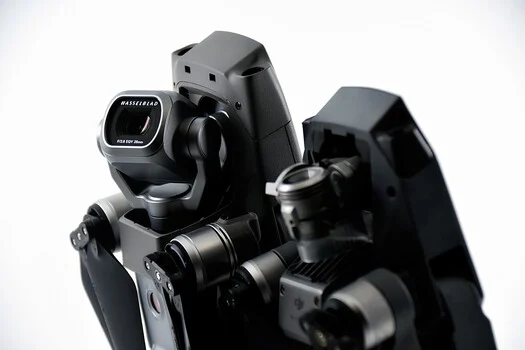
Despite its designation, a camera sensor marketed as "1-inch" does not actually measure an inch in any of its physical dimensions, a discrepancy that often surprises consumers and underscores a deep-rooted historical quirk in photography and video technology. For instance, the active imaging area within a Sony RX100 series camera, widely recognized for its "1-inch type" sensor, measures 13.2 x 8.8 millimeters. Applying the Pythagorean theorem to these dimensions yields a diagonal measurement of approximately 15.86 mm. This figure falls significantly short of a true inch, which is defined as 25.4 mm. The "1 inch" label found on specification sheets is not a direct measurement of the imaging area itself but rather an optical-format designation, a category label whose origins predate modern silicon chips by decades, tracing back to the era of glass vacuum tubes.
Unpacking the Misleading Measurement
The active imaging area of a typical 1-inch type sensor, commonly featuring a 3:2 aspect ratio, presents a stark contrast to its nominal size. With sides measuring 13.2 x 8.8 mm, the diagonal comes out to 15.86 mm. This means the largest dimension of the sensor’s light-gathering surface is barely more than half the 25.4 mm an inch represents. The "1-inch" nomenclature, therefore, acts as an arbitrary classification rather than a literal metric. While the term "optical format" is technically correct within industry parlance, its adoption by consumer marketing can lead to misinterpretations, suggesting a larger sensor than what is physically present. The most accurate description of this sensor’s diagonal would be approximately five-eighths of an inch, or 16 millimeters, a far less impressive figure from a marketing standpoint than a full inch. This perceived difference in size contributes significantly to the commercial value of retaining the historical, albeit misleading, name.
To contextualize this further, photographers often benchmark sensor sizes against the full-frame format, which typically measures 36 x 24 mm with a diagonal of 43.3 mm. Comparing the diagonal of a 1-inch type sensor (15.86 mm) to that of a full-frame sensor reveals a crop factor of approximately 2.7x (43.3 / 15.86 ≈ 2.7). This crop factor is a critical practical metric for users, indicating how a lens’s focal length will appear on a smaller sensor compared to a full-frame system. For example, a 35mm lens mounted on a camera with a 1-inch type sensor will produce a field of view equivalent to a 95mm lens on a full-frame camera. This 2.7x multiplier offers a tangible understanding of the sensor’s photographic behavior in terms of perspective and depth of field, making it a far more informative piece of data than the "1-inch" label.
A Journey Through Time: The Vacuum Tube Legacy
The perplexing naming convention for camera sensors is not a modern marketing ploy but a historical artifact from the early days of television and electronic imaging. Before the advent of solid-state silicon chips, television cameras relied on vacuum tubes to capture images. One of the most prominent of these was the vidicon, introduced by RCA around 1950. The vidicon, along with its contemporaries like the Plumbicon, Newvicon, and Saticon, formed a family of imaging tubes that were integral to broadcast and industrial cameras for several decades.
These tubes were encased in sealed glass cylinders, and the industry standardized their sizing based on the outer diameter of this glass envelope. Thus, a "1-inch tube," a "2/3-inch tube," or a "1/2-inch tube" referred specifically to the external circumference of the glass housing, not the image-capturing element within. Engineers discovered that the usable, light-sensitive target area inside these tubes generally had a diagonal measurement that was roughly two-thirds of the tube’s outer diameter. Consequently, a tube designated as "1 inch" would produce a picture with a diagonal of approximately 16 mm. This was a practical rule of thumb rather than a rigid standard, leading to slight variations (e.g., two-thirds of 25.4 mm is 16.93 mm, so 16 mm was a close approximation). Modern "type" designations, such as "1-inch type," inherit this proportional relationship, typically reflecting an active diagonal about 1.5 to 1.6 times smaller than the nominal "tube" diameter, though exceptions exist. The number, therefore, always described the "plumbing" of the device—its external dimensions—and the actual image area was consistently smaller.
The transition from vacuum tubes to solid-state sensors—first Charge-Coupled Devices (CCDs) in the 1980s, then Complementary Metal-Oxide-Semiconductor (CMOS) sensors—occurred over the 1980s and 1990s. To ensure backward compatibility and streamline the integration of new technology, manufacturers opted to retain the established tube vocabulary. This decision was crucial for lens makers and camera engineers, as it allowed them to often adapt existing optical designs or create new ones that would cover the same "image circle" as the legacy tubes. A CCD sensor designed to produce the same 16 mm image circle as a 1-inch vidicon was subsequently labeled a "1-inch type sensor," and the designation became firmly entrenched. Companies like Sony subtly acknowledge this historical lineage by printing "1.0-type" rather than a simple "1 inch," signifying its status as a category label rather than a direct measurement. This historical continuity meant that the "two-thirds shrinkage" factor was permanently embedded into the naming convention of silicon-based imaging sensors, explaining why a modern 1-inch type sensor’s diagonal is roughly two-thirds of the nominal one-inch tube diameter.
The Pervasive Nature of Legacy Naming
The "inch-type" optical format system extends beyond the 1-inch designation, permeating the naming conventions of numerous compact camera and smartphone sensors, creating a complex web of fractional measurements that seem to defy logic. Sensors commonly found in budget compact cameras and many smartphone modules, such as the 1/2.3-inch type, measure approximately 6.17 x 4.55 mm with a diagonal of 7.66 mm. Similarly, 1/1.7-inch sensors are about 7.6 x 5.7 mm, and 2/3-inch sensors are roughly 8.8 x 6.6 mm. In each case, these fractional inch numbers bear no direct, measurable relationship to the actual dimensions of the sensor itself. Each fraction represents a notional tube diameter, a legacy naming scheme carried forward and extrapolated, often beyond any actual tubes that were ever commonly manufactured. Finer values, such as 1/2.3, evolved more as lens-coverage conventions rather than direct callbacks to specific vacuum tube sizes. Attempting to interpret these as literal fractions of an inch is a futile exercise, as they were never intended to describe the chip’s physical size.
Even widely adopted modern camera formats bear the indelible mark of this historical nomenclature. The "Micro Four Thirds" system, for instance, explicitly references the 4:3 aspect ratio and the underlying 4/3-inch type designation. Olympus and Kodak collaborated to establish the original Four Thirds system around a 4/3-type solid-state sensor, a classification directly inherited from the old video-tube optical-format system. The Micro Four Thirds system subsequently retained this sensor size, which measures 17.3 x 13 mm with a diagonal of approximately 21.6 mm. Following the historical rule, a 4/3-inch tube would nominally have had an outer glass diameter of about 33.9 mm, with two-thirds of that being 22.6 mm. The sensor’s 21.6 mm diagonal thus aligns reasonably well with this historical approximation, confirming the enduring influence of the old rule. This demonstrates that a hugely popular contemporary camera format continues to utilize a naming convention derived from imaging tubes that largely ceased production before many of its current users were born.
In contrast, other sensor formats offer names that provide a more direct, albeit still generalized, indication of their dimensions. Full-frame sensors are nominally 36 x 24 mm, a size directly descended from 35mm film frames. APS-C (Advanced Photo System type-C) refers to a family of sizes, typically around 23.5 x 15.6 mm on most cameras, with Canon bodies being slightly smaller. "Medium format" is an even broader category, encompassing sensors like the 44 x 33 mm chips found in Fujifilm GFX and Hasselblad X2D cameras, a common size within a historical category that has seen much larger film and sensor dimensions. While these names are not precise caliper specifications either, they do reference the actual imaging area being purchased, unlike the "inch-type" designations which evoke the external dimensions of a long-obsolete vacuum tube.
The Strategic Position of the 1-Inch Sensor
Despite the convoluted naming, the 1-inch type sensor has genuinely earned its prominent position in the photographic landscape. It strikes a crucial balance, offering roughly four times the sensor area of a common 1/2.3-inch compact camera sensor while remaining significantly smaller and lighter than APS-C or full-frame systems. This unique sweet spot has made it the default choice for premium pocket cameras, offering a compelling blend of image quality and portability.
Modern examples highlight this versatility:
- The Sony RX100 VII integrates a 20-megapixel 1-inch stacked sensor with an impressive 24-200mm equivalent zoom lens into a compact body weighing around 300 grams, making it an ideal travel companion.
- The Sony RX10 IV leverages the same sensor class behind a versatile 24-600mm equivalent lens, catering to users who desire a single camera solution for a wide range of subjects, from portraits to distant wildlife.
- The Sony ZV-1 II, designed with vloggers in mind, employs the same sensor size, optimized for video capture and selfie framing.
- Canon’s PowerShot G7 X Mark III and DJI’s Osmo Pocket 3 further underscore the dominance of the 1-inch class within the premium-compact niche, demonstrating its broad appeal across different photographic and videographic applications.
The 2.7x crop factor associated with 1-inch type sensors represents a practical trade-off for these size advantages. Key photographic characteristics like depth of field and a sensor’s total light-gathering capability scale directly with its area. Consequently, a 1-inch camera operating at f/2.8 will yield a background blur effect roughly comparable to a full-frame sensor at around f/7.6. Similarly, in low-light scenarios, comparing noise performance requires careful consideration: to match brightness, a full-frame camera’s ISO would need to be raised by approximately the square of the crop factor, assuming images are compared at the same output size and both sensors are comparably capable. Therefore, while a 1-inch camera offers superior image quality to smaller sensors, it cannot replicate the shallow depth of field or pristine shadow detail achievable with a full-frame system. The inherent physical limitations are not negated by clever marketing. In return, the smaller sensor allows for compact, lightweight lenses with impressive zoom ranges, all within a package that conveniently fits into a jacket pocket. For many photographers seeking an everyday or travel camera, this compromise often delivers greater practical value than the pursuit of raw sensor size alone.
The drone industry also heavily relies on the 1-inch sensor class for similar reasons. DJI, a leading drone manufacturer, has integrated 1-inch sensors into several of its consumer aircraft, such as the DJI Air 3S. This format hits a "sweet spot" between delivering excellent image quality and minimizing the weight that a small flying camera system must carry. A smaller, phone-sized 1/2.3-inch chip would compromise image quality, while a larger Four Thirds sensor, though offering cleaner images, necessitates a heavier overall system due to the larger image circle it requires. This translates to bigger lenses, a more robust gimbal, and a beefier airframe, all of which impact flight time and portability. The 1-inch class effectively balances these competing demands, making it a recurring choice in applications where the interplay of size, weight, and image quality is paramount.
The Enduring Rationale and Ethical Considerations
The persistence of the "inch-type" naming convention is not solely attributable to inertia or a desire for marketing advantage; there are legitimate, practical reasons for its continued use within specific sectors of the industry. Critically, the inch-type number still reliably maps to the image circle a lens is designed to cover. For an industry that spent four decades designing and manufacturing C-mount lenses and industrial optics around 1-inch and 2/3-inch tubes, maintaining a shared vocabulary was essential when tubes transitioned to chips. This continuity allowed for significant cost savings and reduced engineering complexity, as much of the existing optical glass could often be carried over or adapted to the new solid-state sensors, even as other optical parameters like cover glass, ray angles, and resolution demands were redesigned. Fields such as security cameras, machine-vision systems, and microscope cameras continue to operate within this framework, where the "type" number provides engineers with an immediate understanding of which lens will adequately illuminate and fill the sensor’s frame. A wholesale shift to millimeter-based designations would disrupt this established shorthand, impacting thousands of products and workflows.
However, the commercial benefit derived from this historical convention cannot be understated and warrants clear articulation. The label "1 inch" instinctively conveys a sense of substantiality and quality, positioning the product as a significant upgrade from, for example, a smartphone camera. While the 1-inch type sensor generally does offer superior image quality compared to most phone sensors, the number itself performs rhetorical work that its true 16 mm diagonal could never achieve. Manufacturers effectively print a number approximately 60% larger than the sensor’s actual diagonal, using a unit that consumers instinctively interpret as a physical measurement, all without technically making a false claim about direct dimensions. This situation did not arise from an intentional design to deceive; it is a genuine engineering convention with a history spanning over 70 years. Yet, the fact that it inherently flatters the product is precisely why no major manufacturer is actively pursuing a switch to more transparent, millimeter-based labeling for consumer-facing products.
Therefore, the next time a camera’s specification sheet proudly proclaims a "1-inch sensor," a mental translation is advisable. Recognize that the actual imaging area measures approximately 13.2 x 8.8 mm, yielding a diagonal of roughly five-eighths of an inch, and that the practical crop factor is around 2.7. The name itself is a fascinating relic from the era of vacuum tubes, a historical costume worn by a thoroughly modern and capable piece of technology. The sensor itself is often excellent for its intended purpose, but its advertised size remains a testament to the enduring power of legacy conventions.
